In the season-three premiere of Euphoria, a child on a sun-scorched southwestern ranch dips a heavy tin mug into a bucket of raw cow’s milk and hands it to a weary Rue (Zendaya). She slurps it down with an exhausted sigh, proclaiming, “That’s the best f*cking milk I’ve ever had.” The beverage is depicted as so profoundly restorative that Rue instantly begins romanticizing the ranchers’ unplugged, hyper-traditional lifestyle—ignoring its underlying political ideologies in favor of the comforting, pastoral illusion that a cold glass of milk can cure modern chaos.
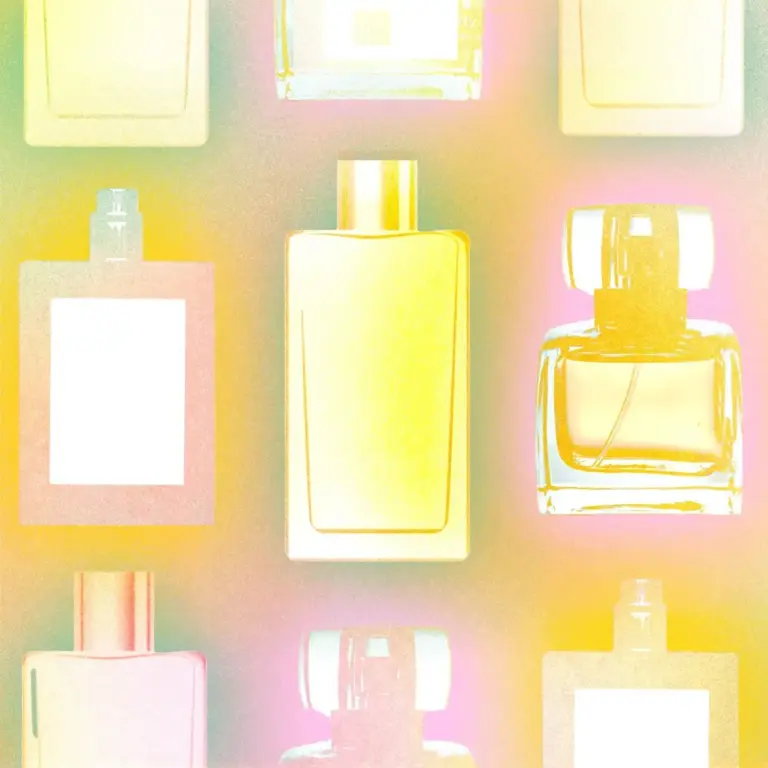
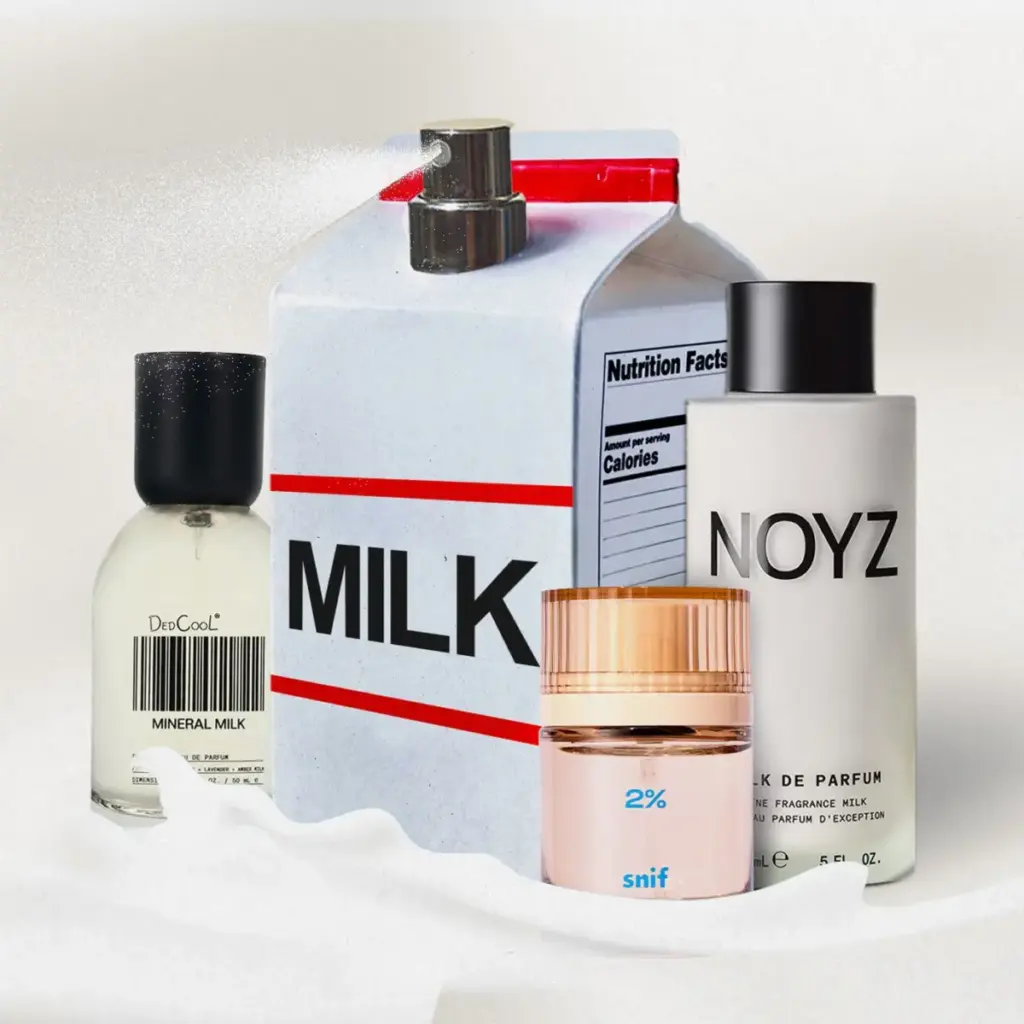
This television moment captures a wider cultural paradox. Milk—both as a literal agricultural commodity and an abstract olfactory concept—is experiencing a remarkable renaissance. On grocery store shelves and farm-to-table blogs, whole milk and raw milk are surging in popularity amidst wellness crazes like "proteinmaxxing" and dietary trends influenced by GLP-1 weight-loss medications. Concurrently, the beauty and fragrance industries are undergoing a massive "lactonic" boom. From skincare lines like Rhode’s Glazing Milk and Herbivore’s Coco Rose Milky Body Mist to a deluge of perfumes including DedCool’s Milk, Commodity’s Milk Orchid, Snif’s 2%, and NOYZ’s Mylk de Parfum, milk has become the dominant sensory trend of the decade.
This investigative piece explores why a substance so deeply tied to infancy, nostalgia, and basic nourishment has colonized the contemporary beauty market. By examining intersecting cultural phenomena—including economic inflation, shifting wellness paradigms, social media tradwife aesthetics, and the post-pandemic craving for self-soothing—we trace how a liquid concept transformed into one of the most lucrative and psychologically complex marketing categories in modern luxury.
Detailed Chronology: The Evolution of the Milk Movement
To understand how milk transitioned from a breakfast staple into a multi-million-dollar fragrance and beauty category, one must look at how the beauty and wellness industries evolved over the past decade.
2016–2019: The Skincare Foundation
The modern obsession with milk in beauty began quietly in the mid-2010s. In 2016, both Glossier—with its cult-favorite Milky Jelly Cleanser—and Milk Makeup launched, introducing consumers to the lexicon of "milk" as a marker of gentle, hydrating, and barrier-friendly care. At the time, these brands used the term as a textural descriptor: lightweight, soothing, and easily absorbed. Yet, it laid the subconscious groundwork for consumers to associate the word "milk" with clean, minimalist, and non-threatening self-care routines.
2020–2021: The Pandemic Perfume Boom
When the COVID-19 pandemic swept the globe, consumer habits shifted drastically. As Vox and Business Insider reported, color cosmetics like lipstick experienced steep sales declines, while skincare and fragrance skyrocketed. Perfumes became a primary vehicle for escapism and self-soothing.
It was in this climate of uncertainty that DedCool launched its signature "Milk" perfume in 2020. Designed as a skin scent that reacts uniquely to individual body chemistry, it arrived at the exact moment consumers were desperate for comfort. It was not overtly sweet or cloying; instead, it offered an elusive, soft, and intimate aroma that signaled safety without sensory overload.
.jpg)
2022–2024: The Proliferation of Lactonic Notes
Following DedCool’s success, independent and luxury fragrance houses rushed to capture the market. Commodity introduced its multi-tiered Milk fragrance, while indie and mainstream brands alike began experimenting with "lactonic" (milky) accords.
Simultaneously, macro-economic and political shifts began to influence the cultural landscape. High inflation, global political instability, and social media rabbit holes transformed consumer desires. The psychological need for safety manifested in a massive trend toward gourmand and comfort fragrances. By late 2024, the dairy industry noted its first major increase in whole-milk consumption in years—breaking a downward trend that had persisted since the 1970s.
2025–Present: The Cereal-Milk and Wellness Convergence
The trend reached its zenith between late 2025 and 2026. Brands flooded the market with hyper-specific dairy-inspired scents: The Nue Co. launched First Milk, formulated by master perfumer Frank Voelkl to evoke the primal memory of early connection; Snif introduced 2%, an eau de toilette smelling explicitly of sweet cereal milk, accompanied by body mists evoking nostalgic breakfast cereals; and NOYZ brought its Mylk de Parfum collection to market in oversized, toner-style formats.
Concurrently, wellness culture embraced high-protein diets ("proteinmaxxing") and the widespread adoption of GLP-1 weight-loss medications—taken by roughly 12% of U.S. adults by 2025—which elevated dairy as a primary source of accessible, un-ultra-processed nutrition.
Supporting Context & Metrics: Economics, Health, and Cultural Shifts
The milky perfume explosion does not exist in a vacuum. It is anchored by shifting metrics in agriculture, diet culture, and consumer spending patterns.
The Macroeconomics of Dairy
According to data from the U.S. Department of Agriculture (USDA) and the New York Times, 2024 marked a historic turning point for the U.S. dairy industry. After decades of declining whole-milk consumption due to the rise of plant-based alternatives (oat, almond, soy), whole-milk sales experienced their first sustained bump in decades.
Rachel Kyllo, Chief Marketing Officer for Dairy Brands at Dairy Farmers of America (DFA)—who has spent 39 years in the industry—notes a direct psychological link between economic uncertainty and the return to dairy:

"I think as people are looking for a beverage that harkens back to a simpler time, and also a product that isn’t ultra-processed, it just takes them to milk. It’s just a simple, real, farm-to-table nostalgic kind of beverage, and then you couple that with the nutrition that folks are looking for today."
The Wellness Paradox: Proteinmaxxing and GLP-1s
Paradoxically, the surge in dairy consumption and milk-themed beauty coincides with the era of "proteinmaxxing"—the dietary push to maximize protein intake while minimizing calories. While many farmers have pivoted toward protein-dense crops like peas, lentils, and chickpeas (as reported by Reuters), consumers continue to look to dairy for accessible, bioavailable protein.
However, this desire for "clean" or "real" nourishment has a dark side. The romanticization of raw milk has been heavily propelled by social media "tradwife" aesthetics and political figures like Robert F. Kennedy Jr., who famously championed unpasteurized milk despite FDA and CDC warnings regarding food safety and foodborne illnesses. Even as viral sensations like Utah’s Ballerina Farm temporarily paused raw milk sales due to failed health inspections, the cultural cachet of milk as an emblem of a pre-industrial, "pure" lifestyle remains deeply embedded in the public consciousness.
Fragrance Market Convergence
In the beauty space, the milk trend sits at the intersection of three massive movements:
- The Vanilla Obsession: Consumers’ enduring love affair with warm, enveloping vanilla notes.
- Skin Scents: Fragrances engineered to blend with personal pheromones rather than project loudly.
- Scent Layering: The practice of piling multiple mists, lotions, and perfumes to craft a hyper-customized signature scent.
As Lorna McKay, co-founder of the Perfume Society, observes:
"Milky is not a material or an ingredient; it’s a concept and a feeling. A perfumer will make a milky fragrance—they’ll call it lactonic or all sorts of things—but there’s not a milky ingredient. It’s the feeling that the people get when they wear these ingredients."
Official Statements & Industry Perspectives
Industry leaders, perfumers, and agricultural executives offer unique insights into why milk has become the ultimate vehicle for modern emotional expression.

Carina Chaz, Founder and CEO of DedCool
As a pioneer of the modern skin-scent category with her 2020 launch of Milk, Carina Chaz views the trend as an organic response to an increasingly noisy world:
"It was a noninvasive, everyone-likes-this scent profile. It changes on everyone’s skin. We’re seeing a lot of milk, and it’s not only in fragrance; it’s in so many different categories in beauty. I think it makes sense. It’s something you can interpret in any way."
Kara Kowalski, Director of Fragrance and Formula Development at Snif
Discussing the creation of 2%—a fragrance featuring lactones, fresh dairy accord, vanilla, praline, and a milk-carton aesthetic—Kowalski points directly to the psychology of comfort:
"When the world is uncertain and we don’t know what to do, we want to go back to our creature comforts. I know in perfumery, we say that’s why gourmands are trending, because they’re comfortable. I think, in some way, milk does that too."
Malena Higuera, CEO of NOYZ
For indie brand NOYZ, which launched Mylk de Parfum in an oversized, toner-style format priced accessibly at $95 for 150ml, the milk concept is tied to the democratization of luxury and self-care:
"The Mylks really kind of allow you to have this entire experience that’s sensorial in the form itself. It’s so much for us, too, about how if we feel good on the outside, we actually feel good on the inside. [We’re] flipping that script about self-care in a way that it is about the micro-luxuries that are within reach."
Veronique Lagrange, Executive Director of the California Dairy Innovation Center
From a food science perspective, Lagrange emphasizes that milk’s appeal lies in its straightforward authenticity:

"Dairy products, overall, offer a wide variety of options that are not only less processed, but also more affordable, and things you can find in your grocery store at a whole range of prices. I think consumers understand that milk is very much less processed, more real, more natural."
Future Outlook: Where is the Lactonic Trend Headed?
As we look toward the future of the beauty and wellness markets, the milk-perfume phenomenon shows no signs of curdling. Far from being a fleeting TikTok micro-trend, the embrace of lactonic notes represents a fundamental shift in how consumers utilize fragrance.
For younger generations, milky perfumes offer an antidote to the heavy, aggressive, hyper-gendered perfumes of previous decades. As Lorna McKay notes, these scents are genderless, soft, and non-typecast—allowing wearers to express vulnerability and introspection rather than traditional power or seduction.
Whether consumers are seeking a micro-luxury after a grueling workday, yearning for the innocent safety of childhood cereal bowls, or subconsciously chasing the pastoral comfort depicted on prestige television, milk fragrances have secured a permanent place on vanity tables. They provide an olfactory security blanket in an unpredictable world—proving that sometimes, the most radical thing a fragrance can do is simply make you feel safe.
More Milk Fragrances to Try:
- DedCool – Xtra Milk & Mineral Milk
- Commodity – Milk & Milk Orchid
- The Nue Co. – First Milk
- Snif – 2%
- NOYZ – Only Human Mylk de Parfum
- Bath & Body Works – Milk Moisturizing Body Lotion
- Dossier – Milky White
- Arcadia by Amna – No. 6 Milk Musk