Executive Overview
Fashion has always been a cyclical beast, but a quiet yet profound revolution is currently taking place across the sartorial landscape. Moving far beyond the predictable, mass-produced Y2K revivals dominating TikTok feeds, a growing movement of adults is turning to their own pasts for style inspiration. This is not merely about irony or fleeting aesthetic trends; it is a deeply personal, psychological journey back to childhood. By integrating elements of their early wardrobes—be it a fluffy pink sweater, a butterfly-print tank top, or a faux-fur-collared cardigan—wearers are actively engaging with a practice that experts are beginning to recognize as both therapeutic and psychologically liberating.
This deep dive explores the intersection of fashion, memory, and healing. Through personal narrative, insights from leading fashion psychologists, and an examination of therapeutic concepts like "wardrobe ethnography" and "inner child work," we investigate how clothing is evolving from a tool of external performance into a profound mechanism for internal reconciliation and emotional recovery.
Detailed Chronology: A Journey from Grief to Self-Discovery
To understand the weight of this trend, one must trace its roots back to moments of profound vulnerability. For many, the adoption of childhood-inspired aesthetics does not stem from a simple desire for whimsy, but rather from a search for comfort during times of intense emotional turbulence.
The Catalyst: Finding Solace in the Pandemic and Personal Loss
The modern resurgence of childhood garments in adult wardrobes often accelerates during periods of collective or individual crisis. The author’s personal turning point arrived roughly a year ago, following the sudden death of a brother. Plunged into a profound emotional nadir, the process of navigating online retail outlets became an exercise in seeking anything to feel again.
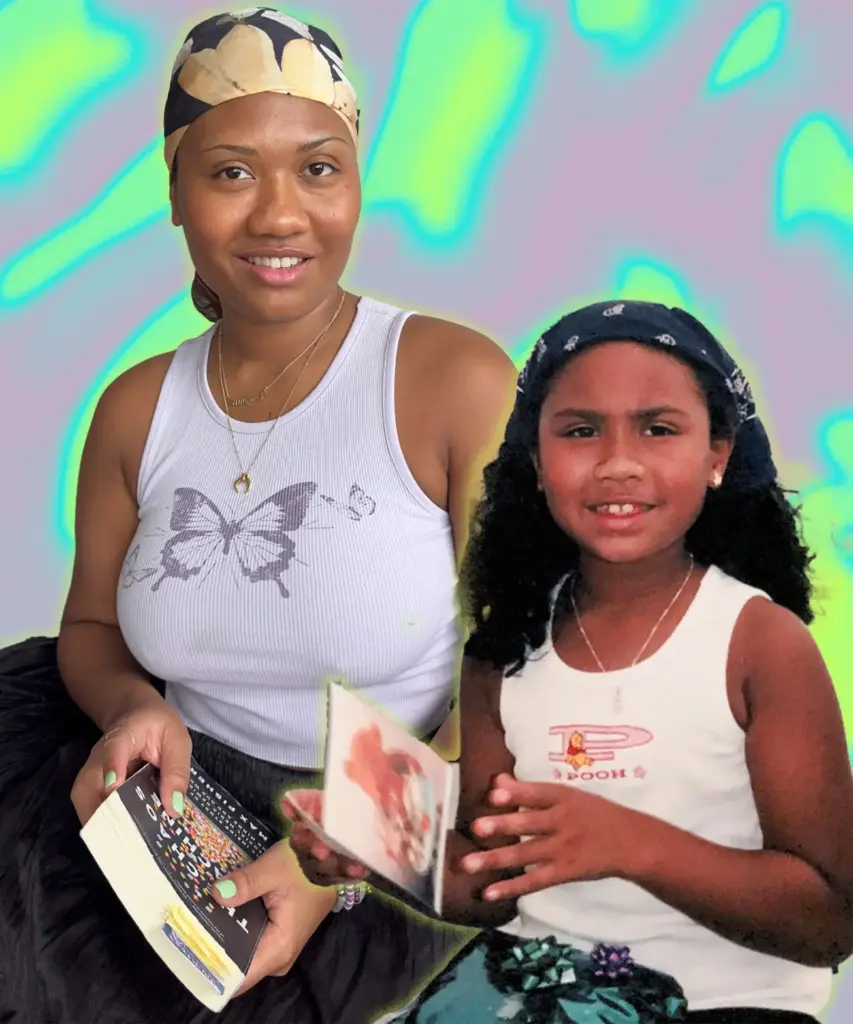
Amidst the endless scroll, an impulse purchase broke through the numbness: a short, purple butterfly-print tank top. To an adult eye governed by modern minimalist standards, the piece might have seemed overly "girly" or kitschy. Yet, it unlocked a visceral memory. It was a direct descendant of the beloved staples of the early 2000s—garments worn during a time when life was unburdened by adult liabilities. That initial spark of warmth proved that clothing could be more than fabric; it could act as an emotional anchor.
The Epiphany of the Pink Sweater
The psychological shift crystallized completely with the arrival of a second package: a pink, off-the-shoulder sweater meticulously designed to mirror a cherished childhood garment. Unboxing the fluffy textile felt less like opening an online order and more like crossing a threshold in time.
Standing in a London apartment at age 28, the wearer was instantly transported back to an 11-year-old self living in a Canadian suburb, sliding into a favorite sweater for a school portrait. The sensory memory was overwhelming: the imagined scent of coconut-scented long hair, the presence of a faint upper-lip down, the backdrop of a radio alarm clock playing softly, and, crucially, a complete absence of digital notifications and existential dread.
Donning the sweater did not just evoke nostalgia; it established a profound connection. For the first time, the clothes were dictating the identity rather than the wearer selecting clothes to fit a preconceived notion of maturity. The little girl from the past was not gone; she was simply waiting to be acknowledged.
Supporting Context & Metrics: The Science of Wardrobe Ethnography
While the cultural appetite for nostalgia is well-documented, the mechanisms driving its psychological impact are rooted in established behavioral science. Why do certain fabrics and silhouettes hold the power to heal? The answer lies in how we construct our identities through textiles.
Understanding Wardrobe Ethnography
To contextualize this phenomenon, fashion psychologists point toward a framework known as wardrobe ethnography. This concept posits that an individual’s closet is not a random collection of items, but a physical archive of every decision, influence, lifestyle shift, and identity phase experienced up to that point in life.
Every garment tells a story about who we were, what we valued, and how we navigated the world during a specific era. When adults intentionally reintroduce elements of their childhood wardrobes into their daily rotation, they are engaging in a conscious curation of their personal history. It is a form of self-archiving that allows the wearer to reclaim past versions of themselves that may have been prematurely discarded in the relentless pursuit of "professionalism" and adulthood.
+-----------------------------------------------------------------+
                 THE WARDROBE ETHNOGRAPHY CYCLE
+-----------------------------------------------------------------+
  [Past Identity] -----> [Archived in Closet] -----> [Conscious Recall]
        ^                                                   |
        |                                                   v
  [Healing & Integration] <--------------------- [Sartorial Expression]
+-----------------------------------------------------------------+
The Psychology of Playful Textures and Colors
Childhood clothing is inherently characterized by elements that modern adult fashion frequently brands as "unserious": bright neon palettes, eccentric prints, tactile faux furs, playful patches, and unapologetic shimmer.
From a cognitive perspective, wearing these items stimulates areas of the brain associated with play, safety, and uninhibited expression. Even for individuals whose childhoods were marked by hardship or imperfection, the idealized memory of youthful freedom—symbolized by a birthday cardigan or a brightly colored hair accessory—serves as a psychological sanctuary. It breaks the monotony of corporate monotone and societal expectations, offering a wearable rebellion against emotional burnout.
Official Statements and Expert Perspectives
To gain a deeper understanding of how fashion intersects with mental health, we turn to leading voices in the field of fashion psychology.
Shakaila Forbes-Bell on the Power of Intentional Dressing
Shakaila Forbes-Bell, a prominent fashion psychologist and author, emphasizes that the act of getting dressed is never a superficial endeavor. Every outfit is a decision, and every decision triggers a psychological and social reaction.
"In fashion psychology, there is a concept called ‘wardrobe ethnography.’ It describes your wardrobe as a mirror of all the choices you’ve made up to this point in your life," explains Forbes-Bell. "These choices say something about who you were at a specific time—what influenced you, what you saw in yourself, the lifestyle you led back then. I believe it can be very liberating to wear clothes that remind you of your childhood."
Forbes-Bell notes that revisiting these aesthetic markers can prompt deep introspection and accelerate personal healing. By understanding the semiotic language of our clothes—what they mean, how they make us feel, and the messages they project—we reclaim agency over our public and private identities.
"It’s not just a rudimentary act to get dressed every day. It’s a decision—and every decision has a reaction," Forbes-Bell adds. "Understanding the language of clothing and knowing what it means and how you feel in it can give you the power to transmit the right message with your clothes that truly corresponds to you."
The Intersection with Inner Child Therapy
The phenomenon of wearing childhood-inspired garments does not exist in a vacuum; it shares a direct methodology with inner child work, a well-established psychological practice used to process trauma, mend emotional fractures, and integrate dissociated parts of the psyche.
Healing Through Tactile Metaphor
In therapeutic contexts, connecting with the inner child often involves dialogue, visualization, and creative expression. Sourcing a vintage-style piece of clothing functions as a physical, tangible extension of this therapeutic work.
When a grieving or stressed adult wears a garment reminiscent of their youth, they are offering a non-verbal validation to their younger self. It acts as a safety blanket, providing a somatic anchor during moments of acute anxiety or grief. While sartorial choices alone cannot replace comprehensive trauma therapy, they serve as a powerful, everyday complement to clinical healing.
Pop Culture Parallels: The 30 Going on 30 Effect
This emotional release finds a brilliant cinematic parallel in iconic media, such as the famous dressing-room scene from the 2004 film 30 Going on 30. When protagonist Jenna Rink (played by Jennifer Garner) prepares for her first night out as an adult, she rejects the drab, hyper-mature corporate expectations of her age. Instead, to the tune of Whitney Houston’s I Wanna Dance With Somebody, she gleefully selects her most vibrant dress, oversized jewelry, and colorful hair clips, stepping out into the world with unbridled joy.
Channeling this energy in real-world styling—such as pairing a faux-fur-collared thrift-store cardigan with a sheer top, a black miniskirt, and tights for a dinner with friends—acts as a psychological high-five to the younger self. It is a declaration that growing up does not require the abandonment of joy, color, and wonder.
Future Outlook: Reclaiming Authenticity in Modern Style
As we look toward the future of fashion and personal expression, the movement toward inner-child dressing signals a broader cultural shift away from algorithmic trend-following and toward radical authenticity.
What’s Next for Mindful Wardrobes?
- Personalized Archives Over Fast-Fashion Micro-Trends: Consumers are increasingly valuing garments with narrative depth over disposable items dictated by social media algorithms. The focus is shifting toward pieces that tell an intimate, personal story.
- The Integration of Therapy and Style: Mental health advocates and stylists are expected to collaborate more closely, viewing the closet not merely as storage, but as a dynamic wellness tool. Workshops combining wardrobe curation with inner-child healing are likely to gain traction.
- Redefining "Professionalism": As remote and hybrid work environments dismantle rigid corporate dress codes, individuals are finding greater flexibility to inject personal nostalgia and playfulness into their daily wear, permanently blurring the lines between comfort, memory, and high fashion.
Conclusion: Dressing for the Audience of One
Ultimately, the renaissance of childhood aesthetics in adult wardrobes is a testament to the resilience of the human spirit. Whether one chooses to wear a tailored power suit that commands authority or a bright pink, youth-inspired sweater chosen by an 11-year-old self, the underlying motivation remains unchanged: agency.
By listening to the whispers of our past, we give ourselves permission to show up fully in the present—unapologetic, multifaceted, and entirely dressed for ourselves.