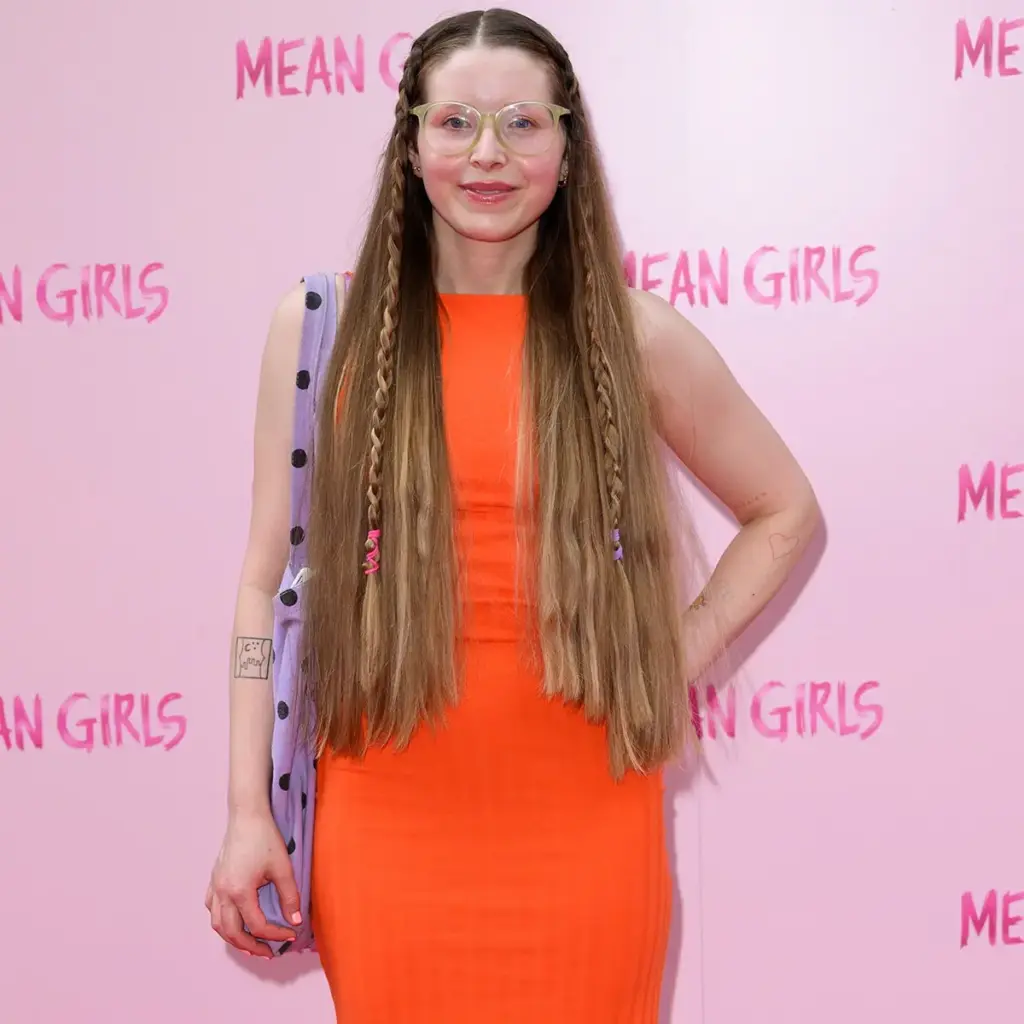
The modern digital creator economy has fundamentally altered how public figures, legacy actors, and independent artists monetize their crafts. Once tethered to traditional casting calls, network television residuals, and rigid studio contracts, today’s artists are increasingly taking control of their financial destinies through direct-to-consumer subscription platforms. A striking example of this paradigm shift is actress and writer Jessie Cave, best known globally for portraying Lavender Brown in the final three installments of the Harry Potter film franchise.
In a landscape where public perception frequently conflates early exposure in blockbuster franchises with generational wealth, Cave’s recent revelations expose a starkly different reality. Launching an OnlyFans account in March 2025 initially brought waves of professional embarrassment and personal hesitation for the mother of four. Yet, within a remarkably brief period, the venture morphed into a financial lifeline, enabling her to comfortably support her family and continue producing her unique brand of independent, puppet-based theatrical art.
Cave’s journey is far from an isolated incident. Across the entertainment and digital sectors, a diverse cohort of celebrities—ranging from Disney Channel alumni and reality television stars to mainstream actors and YouTube creators—have leveraged subscription platforms to redefine their financial independence. This investigative report examines Jessie Cave’s pivot to OnlyFans, the startling economics behind her initial success, and the broader cultural phenomenon of legacy talent embracing digital subscription platforms to sustain their creative endeavors.
Detailed Chronology: From Hogwarts to the Digital Frontier
The Illusion of Childhood Wealth
For millions of fans worldwide, association with the multi-billion-dollar Harry Potter universe implies a trajectory of perpetual financial security. However, Jessie Cave’s experience paints a sobering picture of the economic realities faced by supporting actors in major cinematic properties. Portraying Lavender Brown—Ron Weasley’s overly affectionate girlfriend in Harry Potter and the Half-Blood Prince and both parts of Harry Potter and the Deathly Hallows—secured Cave a permanent place in pop culture history, but it did not provide long-term wealth.
During a candid appearance on the popular UK talk show This Morning, Cave addressed persistent public misconceptions regarding her bank account. "People just assume I’m rich and I have loads of money and no I don’t," Cave remarked, pointing out the logistical realities of her tenure in the franchise: she secured a relatively modest supporting role, and production wrapped roughly two decades ago.
Navigating the Stigma of OnlyFans
As the realities of supporting a family alongside partner Alfie Brown set in—compounded by the soaring costs of childcare and the volatile economics of being a contemporary "struggling artist" performing one-woman puppet shows—Cave began looking for alternative revenue streams. In March 2025, she officially launched her OnlyFans account.
The decision was fraught with anxiety. "So, it was embarrassing," Cave admitted, reflecting on her initial reservations. "Because on a certain level, I would have really liked to get a job. But you know what it’s like, you have kids. It costs so much for childcare."
Rather than leaning into traditional adult content, Cave carved out an eccentric, highly specialized niche. She described her aesthetic as a "slutty Mormon" vibe, focusing primarily on non-sexual, hair-focused content. Elaborating on her Before We Break Up Again podcast, she explained: "It’s very much geared toward people who have an interest or fetish with hair. I do a lot of videos with my hair on Instagram and I have now for a while. I just noticed that I always get comments. They’re never sexually depraved or lascivious. It’s never dirty comments, but I do get lots of interest in the hair thing and I just thought, ‘F–k it, I’m going to do something that is very niche.’"
Supporting Context & Metrics: The Financial Realities
The economic transformation experienced by Cave following her digital pivot shattered her own conservative expectations. Initially anticipating that a modest short-term injection of cash might buy her creative breathing room, the financial reality far exceeded her projections.
Unprecedented Early Returns
In an interview published by The Times on August 7, Cave revealed the stunning magnitude of her digital earnings. Within just her first 24 hours on the platform, she raked in an impressive £15,000.
"I thought I’d make five grand, be on it for a few months and it would buy me time to work out what we’re going to do," Cave shared with the publication. "But it’s now been over a year and a half and it’s genuinely saved our lives."
Looking back at her cumulative earnings over the first year, Cave noted that the revenue easily eclipsed what she had accumulated across her entire traditional acting career. Her success has made her an outspoken advocate for artists monetizing their digital presence directly. "I see people on Instagram posting bikini shots or sexy stuff and I think, ‘You could be charging for this! You’re losing money!’" she observed. "I see that being the future. Everyone will be paying for everything."
The Broader Celebrity Economy on OnlyFans
Cave’s fiscal trajectory mirrors a wider industry trend where established names across entertainment verticals utilize direct-to-consumer models to bypass traditional gatekeepers. A cross-section of high-profile creators highlights the staggering scale of the subscription economy:
- Sophie Rain: The co-founder of the Bop House content collective reported an astonishing $82 million in earnings over an 18-month span, highlighting the immense scaling potential of dedicated follower bases.
- Bhad Bhabie (Danielle Bregoli): The rapper famously grossed $71 million (netting $57 million after expenses) following her entry into the subscription platform in April 2021.
- Bella Thorne: As one of the earliest mainstream Hollywood pioneers on the site, the Disney Channel alumna made history in August 2020 by pulling in over $1 million in a single day, using the platform to share personal voice memos and non-explicit visual content.
- Shannon Elizabeth: The American Pie star experienced a surprise windfall, crossing the $1 million threshold just nine days after launching her account in April 2026.
- Blac Chyna (Angela Renée White): Addressing exaggerated rumors of a $240 million windfall, the reality star clarified to Forbes that she earned closer to $2 million over a two-year pandemic-era span before ultimately deactivating her account in March 2023 to pursue new professional chapters.
Official Statements and Cultural Shift
The mainstream integration of subscription platforms has sparked intense cultural discourse regarding labor, autonomy, and the shifting definitions of artistic integrity. For Jessie Cave, the primary motivation remains stripped of corporate vanity: it is about artistic survival and maternal provision.
"This is how I’m making a living as an artist," Cave emphasized, addressing the lingering societal shame often projected onto creators in the space. "I want to have less shame about it. I want other people who do weird art like me, I want them to know that there is some way of still making [it]."
By demystifying the financial mechanics of her OnlyFans account, Cave joins a growing chorus of public figures who refuse to apologize for capitalizing on their digital leverage. Rather than viewing subscription content as a departure from traditional performance, many modern entertainers view it as the ultimate subsidy—a reliable, independent financial engine that funds passion projects, theatrical productions, and family stability without the compromises demanded by traditional studio systems.
Future Outlook
As the digital creator economy matures, the stigma historically attached to platforms like OnlyFans continues to erode, particularly among legacy actors and independent artists facing the economic pressures of modern inflation, high childcare costs, and shrinking television residuals.
Jessie Cave’s journey from the magical halls of Hogwarts to the hyper-niche world of hair-focused digital content serves as a case study in adaptability. By trading the illusion of child-star wealth for the tangible security of direct digital monetization, Cave has secured a sustainable future for her family while preserving her independence as a theatrical creator.
Looking ahead, industry analysts project that direct-to-consumer monetization will no longer be viewed as an alternative career path, but rather as an essential financial pillar for mid-tier performers, independent artists, and public figures seeking true economic autonomy in an unpredictable entertainment landscape.