Executive Overview
Human rights organizations and migrant advocacy groups are sounding the alarm over an escalating pattern of alleged police brutality on the beaches of northern France. The intensification of enforcement comes in the wake of a high-stakes, multi-million-pound bilateral security agreement signed between the United Kingdom and France aimed at curbing illegal small-boat crossings across the English Channel.
According to data compiled by the French humanitarian charity Utopia 56, formal complaints lodged against French law enforcement officers have surged significantly this year, eclipsing figures recorded over the same period in previous years. Activists argue that the influx of British funding—designed to bolster ground personnel, deploy specialized riot units, and introduce aggressive beach-patrol machinery—has directly correlated with a more aggressive operational posture.
At the center of this controversy is an incident on July 27, when a migrant mother was reportedly struck and injured by a French gendarmerie all-terrain buggy as officers rushed to intercept a small boat launch. While London and Paris defend these proactive strategies as vital countermeasures against dangerous people-smuggling syndicates, humanitarian agencies warn that heavier policing does not deter migration; instead, it endangers vulnerable lives, drives up desperation, and fails to address the structural failures of the European asylum framework.
Detailed Chronology: The July 27 Incident and the Ground Reality
The Climax on the Northern French Coastline
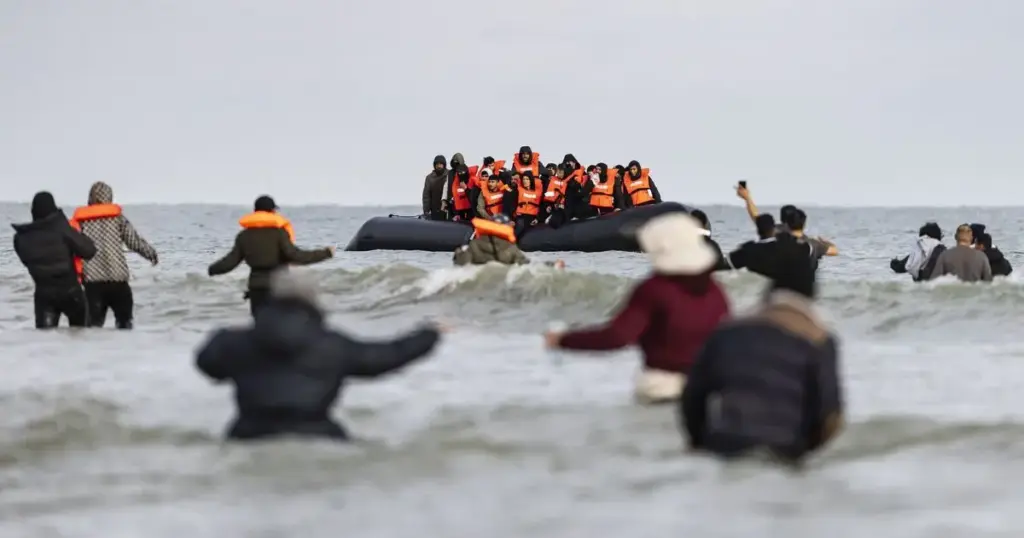
The morning of July 27 began like many others along the windswept, dune-lined coast of northern France. Dozens of migrants, desperate to reach the British mainland, gathered in the early hours to attempt a clandestine small-boat launch across the English Channel—one of the busiest and most hazardous shipping lanes in the world.
As a group attempted to board an inflatable vessel, a detachment of the French gendarmerie raced across the sand to intercept them. Eyewitness accounts and reports from humanitarian workers indicate that the officers deployed motorized beach buggies—tactical vehicles increasingly used to traverse the shifting sands and dunes.
During the chaotic intervention, one of the vehicles collided with a migrant mother, running over her leg. The woman, whose identity has been withheld for privacy and safety reasons, sustained visible injuries that required immediate attention. Rather than an isolated mishap, advocacy groups assert that this incident is symptomatic of a broader shift toward high-speed, high-risk vehicular maneuvers executed by officers under intense pressure to stop departures at all costs.
A Pattern of Escalation
Utopia 56, a prominent French NGO dedicated to supporting migrants and refugees, has documented a disturbing trajectory of law enforcement interactions over the summer months. According to the charity’s field coordinators, encounters between migrants and police have grown increasingly volatile since the implementation of fresh security protocols in the spring.
Field reports outline instances where heavily armored riot units have used tear gas canisters indiscriminately, discharging chemical irritants directly into sensitive dune ecosystems—sometimes during extreme heatwaves. Advocacy groups emphasize that these tactics fail to account for the presence of vulnerable populations, including young children, pregnant women, and the elderly, who frequently become collateral damage in aggressive enforcement sweeps.

Supporting Context & Metrics: The £662M Border Security Pact
Financing the Channel Crackdown
The intensification of French policing on the beaches is not happening in a vacuum. It is the direct result of a comprehensive three-year border security agreement valued at £662 million, struck between the UK and French governments.
Under the terms of the pact, enforcement efforts along the northern French coastline have received a massive financial and structural injection. Key components of the agreement include:
- Personnel Expansion: Ground enforcement and military personnel deployments in France are scheduled to scale up dramatically, rising from 907 officers to 1,392 by 2029.
- Specialized Riot Squads: The UK is directly funding a dedicated 50-person French riot squad specifically trained in advanced crowd-control tactics and beach deployment strategies to manage large groups attempting unauthorized departures.
- Technological and Tactical Upgrades: Increased investment in surveillance equipment, transport vehicles (including all-terrain buggies), and rapid-response infrastructure.
Quantifying the Interceptions
Proponents of the agreement point to immediate operational successes. Government data indicates that in the three months immediately following the signing of the deal, French officers successfully intercepted 185 "small boat crossing events."
These interventions involved:
- Halting active boat launches before they could enter open waters.
- Seizing critical smuggling equipment, including high-capacity outboard engines, fuel barrels, and lifejackets.
- Executing targeted arrests of suspected human-smuggling operatives.
However, migration analysts and humanitarian workers argue that focusing solely on interception metrics obscures the human cost. While the raw number of prevented departures may rise, the underlying economic and social demand for passage remains unchecked, pushing migrants to take even greater risks with criminal networks.
Official Statements and Divergent Perspectives
The Humanitarian Viewpoint: A Dangerous Status Quo
Humanitarian organizations argue that the current trajectory of border enforcement is counterproductive and fundamentally inhumane. Angele Vettorello, advocacy coordinator for Utopia 56, issued a scathing critique of the joint UK-French strategy:
"The French and UK governments claim to be saving lives through police operations. All we see, however, are entire teams in riot gear, dangerous driving, sometimes lethal weapons used without regard for the vulnerability of those present, and tear gas canisters fired indiscriminately, including in dune areas during a heat wave."
Vettorello and other critics maintain that physical crackdowns do nothing to break the underlying business models of transnational smuggling syndicates. Instead, they argue that tighter borders merely drive migrants into the hands of more ruthless traffickers who utilize riskier methods to bypass heightened security.

Furthermore, Utopia 56 highlights official statistics to underscore the deteriorating climate on the ground. Data compiled by the charity reveals that migrants and support workers have filed 2,720 complaints against French law enforcement officers so far this year. This represents a dramatic increase compared to the 1,954 complaints recorded over the exact same timeframe in the previous year, pointing to a systemic rise in friction and alleged abuse.
The Governmental Perspective: Disrupting Criminal Networks
Conversely, British and French authorities maintain that aggressive policing is an absolute necessity to combat organized crime and prevent tragic loss of life at sea. Officials argue that stopping boats before they leave the shore protects migrants from the lethal perils of the Channel, where overloaded, unseaworthy vessels frequently capsize or suffer engine failures.
Law enforcement agencies emphasize that their officers operate under high-stress conditions, often facing hostile environments and aggressive resistance from criminal facilitators who control the shoreline operations. From the perspective of policymakers in London and Paris, bolstering ground personnel and supplying advanced tactical equipment are essential steps toward dismantling the infrastructure that enables illegal immigration.
Future Outlook: The Path Forward
As the £662 million security pact continues to roll out toward its 2029 targets, the debate over the future of English Channel border management intensifies. With enforcement personnel numbers set to grow and specialized units receiving ongoing tactical training, the friction between humanitarian imperatives and state security objectives shows no sign of abating.
Human rights advocates argue that a purely punitive, enforcement-heavy approach is ultimately doomed to fail. They contend that sustainable resolution requires a fundamental paradigm shift. As Vettorello noted:
"Only a complete overhaul of the asylum system in Europe and the opening of safe passage routes for everyone will put an end to the business model of smuggling networks—which, incidentally, allows governments to shirk their responsibility for the situation at the border—while preventing people from risking their lives."
Until a broader diplomatic and structural consensus is reached between the United Kingdom, France, and the wider European Union, the beaches of northern France will likely remain a flashpoint of tension—caught in the crossfire between state-sponsored security crackdowns, desperate human journeys, and an escalating humanitarian crisis.