Executive Overview
They say pressure makes diamonds, but in the fast-paced, high-stakes universe of elite tennis, it constructs something far more specific: indestructible, humidity-proof, and meticulously engineered ponytails and braided buns. For nearly two decades, celebrity hairstylist Julien Farel has occupied a unique nexus where high fashion intersects with high-octane athletic performance. As the official hairstylist of the US Open for 18 consecutive years, the French-born stylist has shaped, secured, and preserved the tresses of tennis royalty—including Serena and Venus Williams, Naomi Osaka, Aryna Sabalenka, and Coco Gauff—under the unforgiving glare of Flushing Meadows’ summer sun.
While standard red-carpet styling prioritizes momentary photographic perfection, Farel’s work at the US Open demands "engineered movement." It is a grueling, time-sensitive discipline akin to a Formula 1 pit stop, where hair must withstand three to five sets of intense athletic exertion, scorching temperatures, and heavy humidity. Beyond athletic utility, today’s tennis champions operate as global brand powerhouses, making their on-court aesthetic a crucial component of multi-million-dollar sponsorships and personal branding. In this comprehensive review, we examine the science of athletic beauty, the high-pressure methodology behind Farel’s success, and the intricate, behind-the-scenes grooming routines of the world’s most recognizable athletes.
Detailed Chronology & The Tour Schedule
The life of a master hairstylist at the apex of his industry bears little resemblance to a standard 9-to-5. For Farel, late summer does not signal a winding down of the year; rather, it marks the beginning of an intensely compressed, high-velocity marathon of travel, luxury salon operations, and global sporting events.

During a recent window detailing his upcoming itinerary, Farel outlined a whirlwind travel schedule that highlights the sheer logistical undertaking of his career. "I am actually in the New York salon today. Then, I will go to the Southampton salon tomorrow night. And then next week, I will go to the Palm Beach salon. After that, I start the US Open, so that’s going to be the cherry on top. Then New York Fashion Week, and a wedding in Monte Carlo late September. So it’s going to be an active end of summer," he shares.
This punishing schedule underscores the relentless demand for Farel’s expertise across multiple high-net-worth markets. Yet, it is his enduring tenure at the US Open that remains the crown jewel of his seasonal calendar. Over 18 years, Farel has transitioned from an external beauty contractor to an institutional fixture of the tournament. His preparation begins long before the first serve is struck at Flushing Meadows, involving precise product allocation, scalp health regimens, and coordination with athletes’ personal fashion sponsors to ensure seamless alignment between athletic wear and hair architecture.
Supporting Context & Metrics: The Science of "Engineered Movement"
To understand the complexity of sports styling, one must contrast it with traditional editorial and red-carpet work. Farel draws a sharp distinction between the two disciplines.

"Red carpets require precision. A red carpet or a cover is basically a sculpture, so you have to do something that’s going to look amazing for a few minutes. A picture is a single frozen moment where hair has to shine, but it doesn’t have to stay intact the whole day," Farel explains.
Conversely, the tennis court is an adversarial environment for cosmetics and hair care. Athletes are subjected to aggressive physical strain, profuse sweating, and relentless outdoor elements. "On the courts, hair has to live for three, four, five hours. And the movement has to stay there, through sweat, heat, and humidity, especially when it’s a three- or five-set game," Farel notes.
This environment requires a two-pronged approach:

- Engineered Movement: Ensuring the physical infrastructure of the hairstyle can endure dynamic lateral movements, diving saves, and aggressive serves without unraveling.
- Aesthetic Integrity: Meeting the high visual standards of modern athletes who view themselves as holistic luxury brands.
The Pit-Stop Protocol and Scalp Health
Farel compares his service to a Formula 1 pit stop: intensely pressurized, highly calibrated, and entirely invisible once the athlete takes center stage. However, the preparation begins days before the match.
Farel employs a proprietary pre-treatment system. Before a client ever sits in his tournament chair, they are sent a bottle of his signature Restore hair treatment. Described as a non-foaming shampoo, the formula targets multiple pre-emptive needs: "It fights the humidity, but also hydrates the scalp; it smooths the cuticle, and it controls frizz before any tension goes into the hair." By laying this foundational groundwork, game-day styling is streamlined exclusively into molding, fastening, and securing.
Furthermore, technical execution must account for physiological safety. Farel stresses the importance of formulation parameters, noting that all styling gels, natural oils, and sun-protection formulas must be strictly scent-free. "You don’t want it to run into their eyes while playing," he warns, highlighting the micro-details that separate amateur styling from elite athletic grooming.

Official Profiles: Styling Tennis Icons
Within the strict visual constraints of the court—where practicality dictates that hair must be pulled back into slicked buns, braids, or ponytails—Farel finds vast room for nuance, reflecting the distinct personalities and cultural identities of his elite clientele.
Naomi Osaka: Graphic, Sculptural Accents
Years ago, tennis styling was purely utilitarian—a functional necessity to keep hair clear of the face. Naomi Osaka revolutionized this paradigm by transforming court ensembles into high-fashion statements, ranging from gilded tulle transformations at Roland Garros to kimono-inspired looks honoring her Japanese heritage at Wimbledon.
To complement these avant-garde outfits without creating visual clutter on the court, Farel keeps Osaka’s structural hair minimal yet striking. "She’s always going to have a look, and it’s all about outfit choice and combining it with hair—hiding a ribbon or something intricate," Farel says, noting her preference for graphic accents like beads woven into braided buns or red rosettes anchored to high ponytails.

Serena Williams: Intentional Fashion and Architectural Braids
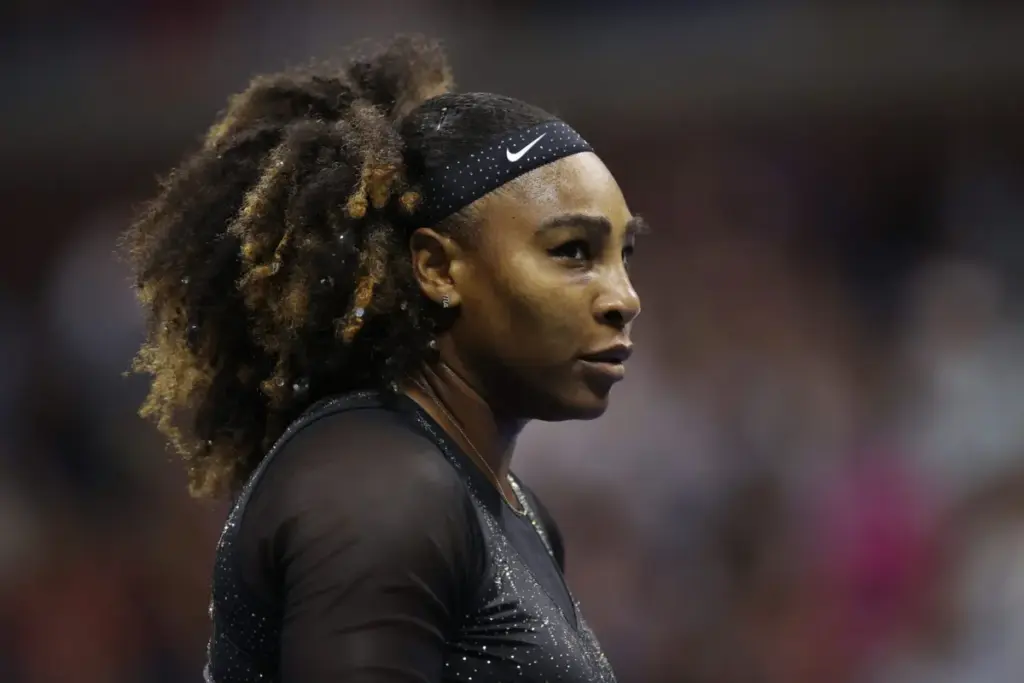
As one of the most dominant and culturally influential athletes in history, Serena Williams approached her career with unwavering intentionality. "Serena is a fashionista. Like sometimes, I would wonder, ‘Oh my God, how are you going to play tennis in that fancy stuff?’ But the reality is, that was who she was—intentional always. She’s not only playing for herself; she’s playing for the entire brand she represents," Farel observes.
Given Williams’ naturally curlier hair texture, classic protective styles—specifically braids, buns, ponytails, and half-up configurations—served as her primary court staples. To combat UV exposure and severe heat, Farel consistently integrates products infused with UVA protection and natural sealing oils to lock down styles against high humidity without compromising scalp health.
Venus Williams: Elegance in Motion
Describing Venus Williams as "smooth and very lean," Farel emphasizes the inherent grace she brings to the court. While younger players often experiment with dynamic trends, veteran champions like Venus prefer streamlined, highly reliable silhouettes where elegance and firmness are held in equal balance.

Aryna Sabalenka: The duality of Power and Softness
Aryna Sabalenka presents one of the most fascinating contrasts between athletic persona and off-court desire. "Aryna carries the power, anger, and aggression. I think she picked up a little bit of Serena’s spirit. Because she works so much with strength, her hair has to be secure; those braids have to be almost architectural. It has to feel as if it’s [as stiff as] a building, and it will stay," Farel explains.
However, once the match concludes, Sabalenka’s aesthetic preferences execute a complete 180-degree shift. "She will get out of the court and ask you to do the total opposite of her on-court style: something very soft, wavy, and with curls. Whereas on the court, she’s like a beast. She tells me, ‘I need to look like a killer,’" Farel reveals.
Coco Gauff: Effortless Energy
In contrast to the architectural rigidity required for power players, younger stars like Coco Gauff lean into a more relaxed aesthetic. "And then you get somebody like Coco Gauff, who is much more natural and has this effortless energy," Farel notes. "She likes her hair to feel exactly that as well; she’s not somebody who’s going to ask you for something impossible. She’s not going to the court to show off, but to be the best with her game. She’s much more low-key."

Future Outlook: The Intersection of Elite Beauty and Sports Culture
As professional sports continue to merge with the worlds of high fashion, luxury branding, and pop culture, the role of specialized beauty professionals like Julien Farel will only grow in significance. Athletes are no longer just competitors; they are lifestyle icons whose pre-match tunnel walks and on-court aesthetics are scrutinized by millions across global digital platforms.
Farel’s 18-year tenure at the US Open establishes a benchmark for how beauty brands can integrate seamlessly into the high-stress ecosystem of professional athletics. By treating hair as an engineered performance asset rather than an afterthought, Farel has elevated court-side grooming to an art form.
Looking forward, the demand for high-performance, sweat-resistant, and scalp-protective hair care products is poised for accelerated growth, driven largely by the visibility of athletes who refuse to sacrifice style for functionality. Whether it is through his flagship salons in New York, Southampton, and Palm Beach, or his specialized product lines—including his bestselling Vitamin Shampoo, Vitamin Conditioner, and the Farel Signature Paddle Brush—Julien Farel continues to define the standard where athletic endurance meets uncompromising luxury.