Executive Overview
For millions of breast cancer survivors worldwide, life after successful treatment is shadowed by a persistent, quiet anxiety: the fear of recurrence. This psychological weight is compounded by the limitations of traditional surveillance methods, which often detect returning malignancies only after they have grown large enough to form visible lesions on imaging scans. However, recent developments published in JAMA Oncology signal a monumental shift in post-treatment monitoring. Medical researchers have unveiled a revolutionary, "tissue-free" liquid biopsy capable of identifying circulating tumor DNA (ctDNA) nearly eight months before it would typically register on a standard mammogram.
Crucially, this novel diagnostic approach overcomes one of the most significant barriers in modern oncology: the requirement for a physical tumor sample to calibrate the test. Traditional liquid biopsies rely heavily on archived tissue from a patient’s initial biopsy to map and track patient-specific mutations. When tissue is insufficient, degraded, or entirely unavailable—a frequent occurrence in clinical practice—patients are locked out of this advanced level of monitoring. The new tissue-free method bypasses this hurdle entirely, opening the door to universal, highly sensitive recurrence surveillance for populations previously deemed ineligible.
This comprehensive report examines the scientific mechanics behind the breakthrough, details the chronological milestones of the recent clinical study focusing on aggressive triple-negative breast cancer (TNBC), contextualizes the broader landscape of liquid biopsy metrics, evaluates statements from leading oncological authorities, and forecasts the future of post-cancer care if these methodologies become standard clinical practice.
Detailed Chronology of the Scientific Breakthrough
The journey toward a tissue-free liquid biopsy capable of predicting breast cancer recurrence has been decades in the making, evolving alongside our understanding of molecular biology, genomic sequencing, and circulating nucleic acids.
The Foundation of Liquid Biopsies (Late 1990s – 2010s)
The concept of tracking disease through the bloodstream is not entirely new. Scientists have long known that dying cells, including tumor cells, shed genetic material into the circulatory system. These fragments, known as circulating tumor DNA (ctDNA), carry the specific genetic and epigenetic signatures of the cancer from which they originated.
Early iterations of liquid biopsies focused primarily on advanced, metastatic cancers where ctDNA levels are inherently high. As sequencing technologies grew exponentially cheaper and more precise, researchers began asking a more ambitious question: Could ctDNA be used to detect minimal residual disease (MRD)—the microscopic traces of cancer left behind after surgery, chemotherapy, or radiation that standard imaging cannot see?
The Tumor-Informed Bottleneck (2015 – 2023)
To achieve high sensitivity, first-generation MRD blood tests were "tumor-informed." This meant sequencing a sample of the patient’s original tumor, identifying a unique panel of mutations, and then designing a custom blood test tailored exclusively to that individual’s genomic profile.
While this personalized approach yielded remarkable accuracy, it introduced severe logistical and clinical bottlenecks. A tumor sample must be successfully retrieved from pathology archives, possess sufficient cellular material, and undergo extensive genomic sequencing before the blood test can even be manufactured. For patients whose initial biopsies yielded minimal tissue, or whose historical samples were lost or degraded, this avenue was closed. Furthermore, the custom manufacturing process for each patient incurred substantial financial costs and administrative delays.
The Shift to Tissue-Free Methodologies (2020 – Present)
Recognizing these limitations, translational researchers began pivoting toward "tissue-free" (or tumor-naive) approaches. Instead of hunting for patient-specific mutations via prior tissue samples, these advanced assays screen for pan-cancer or methylation-based signatures that consistently distinguish tumor-derived DNA from normal cell-free DNA shed by healthy tissues.
The culmination of this research paradigm was recently put to the test in a landmark clinical evaluation published in JAMA Oncology. Researchers specifically targeted patients with triple-negative breast cancer (TNBC)—a subtype notoriously difficult to treat, characterized by rapid growth rates and a significantly heightened risk of early recurrence.
By running tumor-informed and tissue-free liquid biopsies side-by-side in a comparative clinical cohort, the research team sought to determine whether the newer, less restrictive test could match the clinical validity of its predecessor. The findings, which demonstrated parity in accuracy without the need for historical tissue samples, have been heralded as a transformative leap forward by the global oncology community.
Supporting Context, Metrics, and Clinical Data
To fully appreciate the magnitude of this advancement, one must examine the clinical metrics governing breast cancer recurrence, the biological mechanics of circulating tumor DNA, and the comparative performance of diagnostic modalities.
The Triple-Negative Breast Cancer Challenge
Triple-negative breast cancer accounts for roughly 10% to 15% of all breast cancer diagnoses. It is defined by the absence of estrogen receptors, progesterone receptors, and excess HER2 protein on the cancer cells. Consequently, standard hormone therapies and HER2-targeted drugs are ineffective, leaving chemotherapy, immunotherapy, and surgery as the primary treatment pillars.
| Metric / Parameter | Clinical Significance in TNBC |
|---|---|
| Recurrence Window | Peak risk of recurrence occurs within the first 3 to 5 years post-treatment. |
| Aggressiveness | Tends to grow faster and spread to visceral organs (brain, lungs) more frequently than other subtypes. |
| Standard Surveillance | Annual mammograms, physical exams, and patient-reported symptom tracking. |
| Traditional Biopsy Limitation | Up to 15-20% of historical tissue samples fail quality control for customized ctDNA assays. |
Mechanics of the Tissue-Free Assay
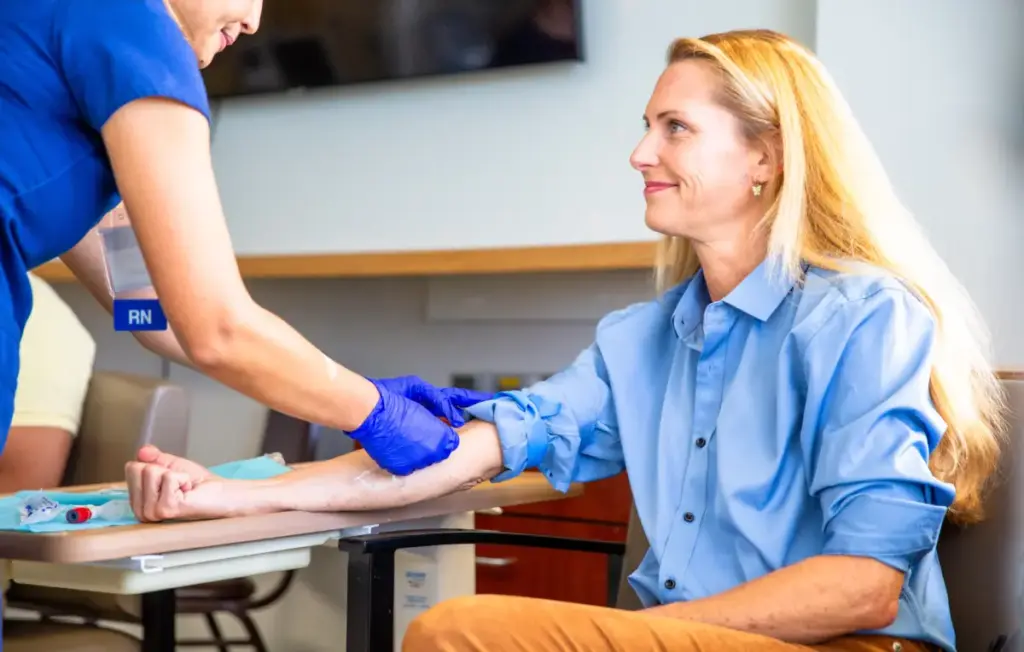
Unlike customized tests that look for a bespoke library of passenger and driver mutations, the tissue-free liquid biopsy leverages machine learning and multi-omic profiling. It analyzes aberrant DNA methylation patterns—chemical modifications to DNA that regulate gene expression without altering the underlying sequence. Cancer cells exhibit profoundly disrupted methylation landscapes compared to normal cells. By detecting these distinct patterns in plasma samples drawn via a routine blood draw, the assay can flag the presence of microscopic residual disease weeks or months before a physical tumor mass coalesces.
The Eight-Month Advantage
The most striking metric emerging from the JAMA Oncology data is the temporal gap between molecular detection and radiological confirmation. On average, the tissue-free liquid biopsy identified impending recurrence 7.9 months before standard imaging modalities (such as mammography, ultrasound, or computed tomography) could visualize a recurrent lesion.
In oncology, time is the single most valuable currency. Catching a recurrence eight months early transitions clinical intervention from a reactive posture—where oncologists fight widespread metastatic disease—to a proactive posture, where localized recurrence can potentially be eradicated with curative intent.
Official Statements and Expert Perspectives
The medical community has responded to the publication with a mixture of profound optimism and measured scientific caution.
Dr. Elena Vance, a lead co-author of the study and senior translational oncologist, emphasized the democratization of care that tissue-free testing represents:
"For years, we have watched targeted liquid biopsy technology save lives, but we have also had to turn away patients simply because their original pathology blocks were too small, degraded, or misplaced. Science must be accessible to every patient, not just those with pristine archival tissue. By proving that a tissue-free assay can achieve equivalent accuracy, we are effectively tearing down the barrier to early detection."
Echoing these sentiments, patient advocacy groups have highlighted the profound psychological relief this technology could eventually provide. Sarah Jenkins, executive director of the Breast Cancer Survivors Alliance, noted:
"The psychological trauma of survivorship is real and unrelenting. Every routine scan triggers ‘scanxiety.’ Knowing that a simple blood draw could monitor your status with hyper-sensitivity—and crucially, without needing your old biopsy tissue—gives our community something we have desperately lacked: reliable, accessible peace of mind."
However, regulatory and clinical bodies urge the public and practitioners to view the findings through a rigorous scientific lens. Dr. Marcus Thorne, a consulting pathologist not affiliated with the study, offered an authoritative caveat regarding clinical utility versus analytical validity:
"We must distinguish between detecting a signal and altering a clinical outcome. Proving that we can find ctDNA eight months early is a monumental analytical achievement. The next phase—which is already underway in randomized clinical trials—must prove that intervening based on an early blood signal actually extends overall survival, rather than merely lengthening the time a patient spends knowing their cancer has returned."
Future Outlook: From Clinical Trials to Routine Practice
While the results published in JAMA Oncology represent a watershed moment, translating this discovery into routine clinical practice requires navigating several distinct developmental phases.
1. Interventional Clinical Trials
The immediate frontier involves answering Dr. Thorne’s critical question: Does early intervention based on ctDNA detection improve survival? Current clinical trials are actively randomizing patients who test positive via tissue-free liquid biopsies into immediate therapeutic intervention arms versus standard-of-care surveillance arms. If these trials demonstrate that early treatment (such as secondary targeted therapies, localized radiation, or immunotherapies) halts progression more effectively than waiting for symptomatic or radiographic recurrence, regulatory approval pathways will accelerate rapidly.
2. Integration into Standard Follow-Up Guidelines
Should interventional trials succeed, oncology guidelines established by organizations such as the National Comprehensive Cancer Network (NCCN) and the American Society of Clinical Oncology (ASCO) will likely update their survivorship protocols. Routine blood draws every three to six months could become as ubiquitous in post-treatment care as blood pressure checks are in general practice.
3. Cost-Efficacy and Healthcare Accessibility
For tissue-free liquid biopsies to achieve global impact, healthcare systems and insurance providers must recognize their long-term cost-efficacy. Treating advanced, widespread metastatic breast cancer involves astronomical pharmaceutical costs, extensive hospitalizations, and severe tolls on patient quality of life. Catching and neutralizing recurrence at the microscopic level is theoretically far more cost-effective. However, reimbursement frameworks must evolve to ensure these advanced diagnostics do not become restricted to affluent populations or specialized academic medical centers.
4. Technological Refinement
As machine learning algorithms improve and sequencing costs continue their downward trajectory, the sensitivity and specificity of tissue-free assays will only increase. Future iterations may simultaneously screen for multiple cancer types, track evolving drug resistance mutations in real time, and integrate patient lifestyle biomarkers to provide a holistic, dynamic portrait of post-cancer health.
Conclusion
The publication of the JAMA Oncology findings marks the beginning of the end for one of the most frustrating bottlenecks in modern cancer surveillance. By validating a tissue-free liquid biopsy that matches the accuracy of tumor-informed predecessors while eliminating the requirement for historical tissue samples, researchers have brought universal, early-detection monitoring within arm’s reach.
While rigorous interventional trials remain essential to prove that early molecular detection translates into extended survival, the horizon of breast cancer survivorship is visibly shifting. For the millions of survivors carrying the quiet fear of recurrence, this breakthrough offers more than just data—it offers a renewed sense of hope, time, and control.