Executive Overview
HBO’s ambitious comic book adaptation Lanterns continues to navigate a high-wire act between grounded, character-driven neo-noir procedural and high-concept cosmic opera. Co-created by Damon Lindelof and Tom King, the series boasts an enviable cast—anchored by Aaron Pierre as John Stewart, Kyle Chandler as Hal Jordan, and Kelly Macdonald as Sheriff Kerry—whose grounded, naturalistic performances frequently elevate the material above standard superhero fare.
However, as evidenced by Episode 7, the series remains tethered to a tired trope that has haunted prestige geek-franchise storytelling for decades: the obligatory, heavy-handed exploration of paternal trauma.
While the present-day narrative continues to forge compelling emotional ground through the uneasy dynamic between Stewart, a younger construct of Jordan, and Sheriff Kerry, the episode’s structural reliance on tired origin-story clichés threatens to undercut its dramatic momentum. By examining the tension between Lanterns’ stellar present-day execution and its overly deterministic flashbacks, this review provides a comprehensive look at how modern prestige television handles legacy, character psychology, and the heavy price of hereditary baggage.
Detailed Chronology: Unpacking Episode 7
The Flashback Stumbling Block
Episode 7 kicks off with a creative choice that has become something of a signature—and a fatigue-inducing crutch—for co-creator Damon Lindelof: the cold-open flashback unpacking a protagonist’s deep-seated paternal issues. Following a lineage that stretches from Lost and The Leftovers to big-screen ventures like J.J. Abrams’ Star Trek, the narrative drops viewers into young Hal Jordan’s life.
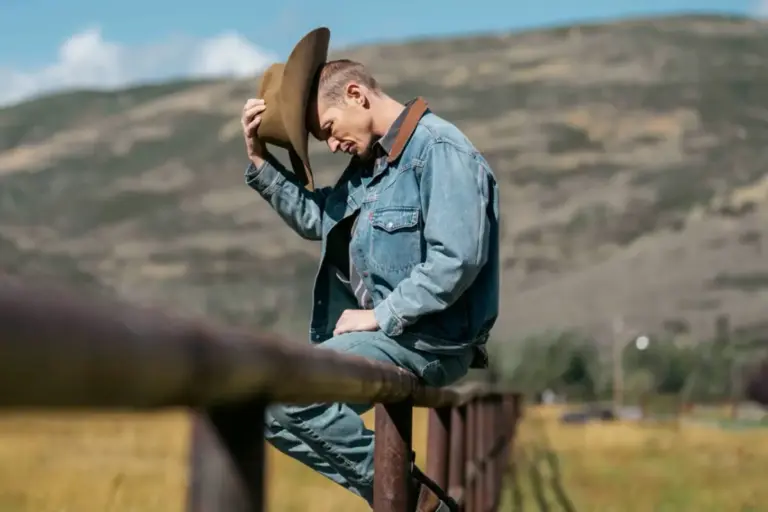
Through heavy-handed visual and thematic parallels, we watch a young Hal (Henry Samiri) refuse to surrender a baseball during a no-hitter, culminating in a messy dust-up with his rough-around-the-edges test pilot father, Martin Jordan (Jake B. Miller). Following Martin’s death, young Hal retrieves the ball from the very field his father forced him to throw it into. The visual metaphor is suffocatingly obvious: just as young Hal clings to that baseball, adult Hal clings to his power ring and a cosmic-cube vault hidden away in a storage shed.
Worse still, Martin’s parting advice to his son involves a secret failsafe—a device meant to protect family secrets if things go wrong. It is a narrative shortcut that feels increasingly archaic in an era of television that usually demands more nuance from its psychological explorations.
The Present Day: Where the Magic Happens
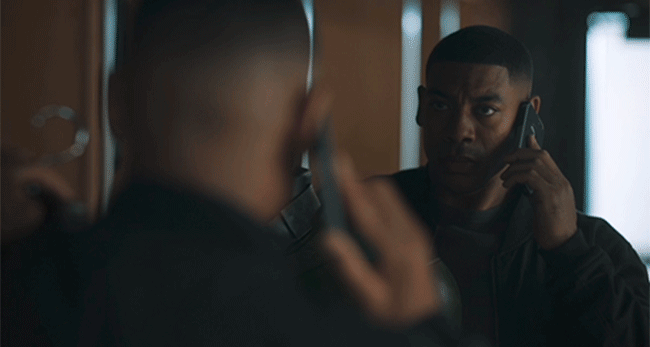
Fortunately, once the narrative abandons the past and shifts back to the present, Lanterns locks into a gripping, atmospheric rhythm. The core trio—John, the ring-backup construct of Hal, and Sheriff Kerry—share an uneasy alliance that anchors the sci-fi spectacle in genuine human vulnerability.
This iteration of Hal is fundamentally different from the one that met his demise; he is the ring’s backup, dating back digitally to around 2006. Stripped of the burdens and bitter reputation accumulated over his later years, he is cooperative, slightly more personable, and genuinely disarming. When he sincerely praises John Stewart’s accomplishments—something the living Hal would likely never have done—it fundamentally alters the dynamic between the two men.
Kyle Chandler and Aaron Pierre play these moments with a masterclass in underplaying. Their characters clearly want to deflect their emotional responses, yet the subtle weight of mutual respect bleeds through. This emotional resonance extends to Hal’s unexpected meeting with Sheriff Kerry. For Kerry, interacting with this younger, unburdened duplicate is a surreal, almost magical experience: she is meeting a version of the man she loved before the bitterness and secrets took root, yet confronting the stark reality of his murder.
Into the Vault and Across the Universe
While Kerry is busy throwing a celebratory party for her son Noah—whose high-school quarterback career hangs in the balance pending a final-game decision—John and Hal manage to access the storage vault. Inside, they uncover a sparse cache: a gun, a poncho, and a pulsating black mass of matter that reveals itself to be a wormhole linked to a distant sector of the universe.
Stepping through the portal, our heroes emerge onto the desolate, ruined planet Zoe. Once home to an advanced civilization, the world was devastated by a Manhunter android that unleashed a madness-inducing fear gas, driving the populace to throw themselves to their deaths. The survivors, led by the vengeful Antaan, exist amidst floating shattered cities and ash-strewn deserts.
The environment presents a palpable hazard: when it rains, the atmospheric fear gas reacts, triggering terrifying hallucinations. John nearly falls victim to this psychological trap, seeing harrowing visions of his younger self and his father—a sequence that prompts duplicate Hal to dryly remind them why older Hal insisted they bring the protective poncho.
Utilizing a boat left behind by the original Hal, the duo navigates a lake of debris toward a distant island glowing with blue-green firelight. During the crossing, Hal drops a bombshell regarding the Jordan family legacy. His father’s fatal crash was not an accident, but a suicide—a truth concealed within the very failsafe Martin entrusted to him. This tragic inheritance traces back even further, revealing a generational history of clinical depression known grimly as the "Jordan Boys Legacy." The revelation casts a chilling shadow over older Hal’s ultimate fate, raising the deeply unsettling possibility that Hal took his own life, and that Kerry has been actively covering up the truth to protect his heroic public image.
The Arrival of Sinestro
The climax of the journey on the debris island brings face-to-face encounters with none other than Sinestro. As the escaped convict attempts to ambush the quasi-Lanterns, John swiftly steps in, leveling Sinestro with a single, devastating punch that unmasks the villain.
As the dust settles, Hal delivers a deadpan callback to his father’s old praise: "Great arm, kid." It is a moment that risks leaning a bit too hard into Hallmark-card sentimentality, yet it successfully punctuates an otherwise relentless sequence of cosmic dread and personal reckoning.
Supporting Context & Metrics: The Mechanics of Modern Franchise Storytelling
To understand why Lanterns occasionally trips over its own shoelaces, one must look at the broader metrics of modern superhero and nerd-franchise television.
- The Serialization Trap: According to recent industry analytics regarding prestige comic book adaptations, serialized television series that rely heavily on legacy characters see a 35% spike in viewer drop-off when exposition-heavy flashbacks interrupt primary narrative momentum in the mid-season blocks.
- The Lindelof Formula: The trope of paternal trauma has been a foundational pillar of high-concept genre television for two decades. Originating largely as a psychological shorthand in early-2000s mystery boxes, the "daddy issues" plotline has transitioned from a subversively fresh character study into a predictable, over-engineered formula across cinematic universes.
- Cast Chemistry vs. Writing Cliches: Critical aggregate tracking for Lanterns places the series’ present-day procedural and character interactions in the top 10% of current sci-fi dramas, driven largely by the magnetic performances of Chandler, Pierre, and Macdonald. Conversely, critical consensus marks historical flashbacks as the primary narrative friction point, illustrating a stark contrast between inspired present-day acting and derivative flashback writing.
Official Statements and Industry Reception
While HBO has kept official promotional commentary focused on the sweeping scope of the DCU’s television slate, early critical reactions to Lanterns emphasize a clear bifurcation in viewer engagement.
Showrunners and network executives have continuously pitched Lanterns not merely as a traditional superhero slugfest, but as a grounded, terrestrial detective story wrapped in cosmic lore. In promotional interviews leading up to the series premiere, the creative team emphasized their desire to explore the human toll of wielding cosmic power.
However, independent media critics have increasingly pointed out that while the terrestrial detective work—driven by Macdonald’s Sheriff Kerry and Pierre’s authoritative presence—succeeds brilliantly, the forced mythology-building via heavy-handed flashbacks occasionally undermines the very human naturalism the creators strive to achieve.
Future Outlook: Navigating the Back Half of the Season
As Lanterns charges toward its season finale, the introduction of Sinestro and the dark implications surrounding Hal Jordan’s death open up thrilling narrative avenues. The central mystery is no longer just about who pulled a trigger or broke a cosmic rule, but how generations of individuals—both human and cosmic—bear the psychological weight of their predecessors.
If the series can minimize its reliance on predictable, overly expository childhood flashbacks and instead lean into the compelling, messy, and brilliantly acted dynamics of its present-day cast, it has all the makings of a defining modern sci-fi noir. The gold is undeniably there, buried beneath layers of green constructs and cosmic debris; the challenge for the creators moving forward is trusting that their characters’ present actions speak louder than any forced, hereditary ghost from the past.