Executive Overview
A profound paradigm shift is sweeping across digital beauty spaces, challenging decades of conventional wisdom regarding Black hair care. For over twenty years, the prevailing consensus within online natural hair communities—spanning TikTok, YouTube, and Reddit—dictated that textured hair required exclusively formulated, culturally tailored products. These routines heavily centered on heavy, plant-based butters, rich oils, and organic or "clean" botanical ingredients designed to maximize moisture and celebrate natural coils.
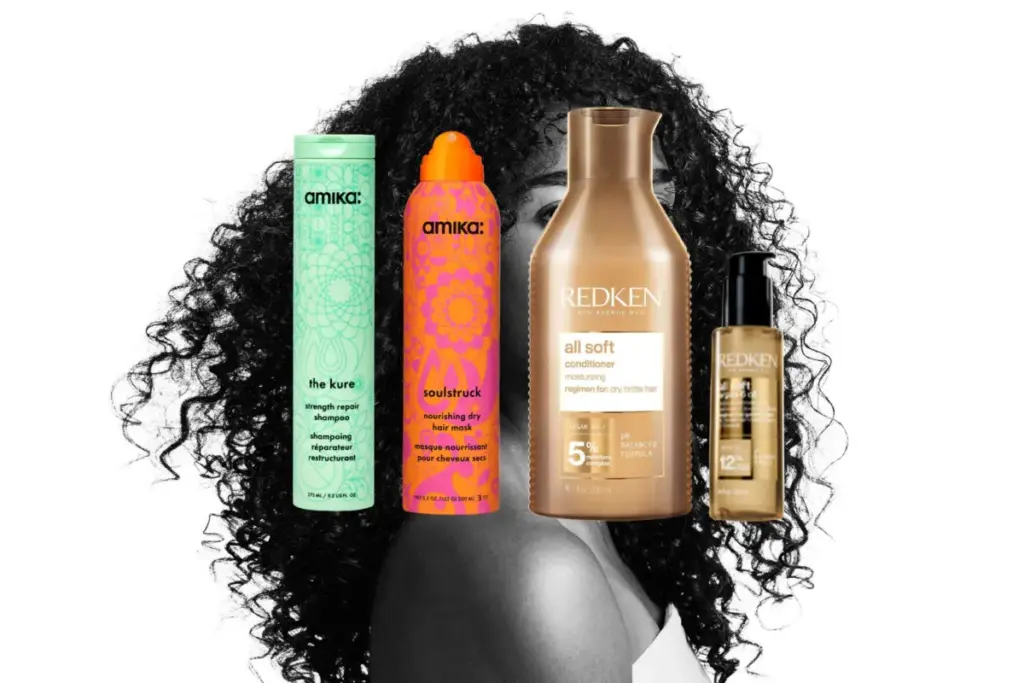
However, a cross-industry evolution is currently underway. Across social media platforms, Black creators, straight-naturals, and those with fine, low-density curls are increasingly championing high-end salon and mainstream brands traditionally associated with straight or European hair textures. Labels such as Redken, Amika, K18, Olaplex, and Matrix are experiencing unprecedented virality within textured-hair communities.
This transformation is driven by a convergence of advanced cosmetic science, a growing recognition of hair density over texture alone, and a broader departure from rigid, exclusionary marketing categories. As consumers increasingly prioritize targeted treatments like bond repair, lightweight moisture, and professional-grade performance, the traditional divide between "Black hair care" and "mainstream hair care" is beginning to dissolve. This shift sparks critical conversations about industry representation, corporate inclusivity, and the economic sustainability of Black-owned businesses.
Detailed Chronology: The Evolution of Textured Hair Care
To understand the current pivot toward salon-grade and mainstream brands, one must trace the historical trajectory of commercial Black hair care from the turn of the 20th century to the present day.
The 20th Century: Straightening and Assimilation
From its commercial inception, the Black hair care market developed as a direct response to a glaring lack of inclusive options on mainstream retail shelves. For much of the twentieth century, product formulations and marketing efforts were overwhelmingly concentrated on altering coily hair textures—rendering them straighter, smoother, and more manageable according to Eurocentric beauty standards. Iconic heritage brands relied heavily on chemical relaxers, heavy pomades, and petroleum-based ingredients to achieve these styling goals.
The Rise of the Natural Hair Movement (2010s)
By the early 2010s, a monumental cultural shift occurred. Propelled by a desire for health, self-acceptance, and bodily autonomy, the modern natural hair movement emerged. Consumers rapidly abandoned chemical straighteners, largely driven by mounting public awareness regarding the severe health risks associated with traditional lye-based relaxers. Studies linking chemical straighteners to scalp burns, endocrine-disruption, and a doubled rate of reproductive cancers and uterine fibroids—conditions that disproportionately impact Black women—accelerated this exodus.
During this period, Black-tailored brands pivoted strongly toward "clean" and botanical formulations. Out went synthetic additives, sulfates, and silicones; in came natural oils, shea butter, castor oil, and DIY kitchen remedies like apple cider vinegar rinses. Influencers and community leaders championed the idea that natural hair required completely natural ingredients to thrive.
The Contemporary Shift: Science, Density, and Salon Brands (2020s–Present)
As the clean beauty movement faced increased scrutiny and consumers grew more sophisticated regarding cosmetic chemistry, cracks appeared in the "natural-only" dogma. Concurrently, major beauty conglomerates began acquiring successful indie natural brands (such as Unilever’s acquisition of Shea Moisture and Procter & Gamble’s acquisition of the Walker Company) while heavily investing in research and development for curl-specific formulations.
By 2020 and beyond, pioneering scientific innovations—most notably bond-building technology from brands like Olaplex and K18—captivated the broader beauty market. Black consumers quickly realized that these scientifically advanced, salon-grade formulas offered profound structural repair for heat- and chemically-damaged textured strands. Today, a new generation of creators is advocating for a simple philosophy: treating hair based on its individual structural needs (such as density and porosity) rather than adhering to blanket rules dictated by ethnicity.
Supporting Context & Metrics: The Science and Sociology of Hair Care
The pivot toward salon brands is not merely a fleeting social media trend; it is backed by complex cosmetic chemistry and shifting consumer demographics.
The Chemistry of Curls, Coils, and Bond Repair
According to cosmetic chemist AJ Addae of Sula Labs and hairstylist Naeemah LaFond, textured hair possesses a fundamentally different physical structure than straight hair. The distinct bends and coils of curly and coily hair create uneven stress distribution along the hair fiber, rendering it inherently more susceptible to moisture loss and mechanical breakage.
When chemical treatments or repeated heat styling disrupt the disulfide bonds holding the hair together, resilience plummets. While traditional natural hair products excelled at surface-level moisturization using heavy butters, they frequently lacked the advanced molecular technology required to repair internal structural damage. Salon brands, backed by substantial research and development budgets, introduced bond-building polymers that penetrate the cortex of the hair fiber, offering unprecedented strength to fragile, high-tension strands.
+-------------------------------------------------------------------------+
|                  THE SHIFT IN HAIR CARE EVALUATION                      |
+--------------------------+----------------------------------------------+
| Era                      | Primary Focus                                |
+--------------------------+----------------------------------------------+
| 20th Century             | Straightening & Chemical Alteration          |
| Natural Hair Movement    | Botanicals, Butters, & Exclusion of Silicones|
| Contemporary Landscape   | Structural Science, Density, & Bond Repair   |
+--------------------------+----------------------------------------------+
The Return of Sulfates and Silicones
For years, the natural hair community maintained a strict aversion to sulfates and silicones, blaming the former for stripping moisture and the latter for causing suffocating buildup. However, cosmetic chemists like Dr. Julian Sass and Javon Ford point out a nuanced reality:
- Sulfates: When formulated correctly within modern surfactant systems, sulfates provide thorough, gentle cleansing that prevents product buildup and subsequent scalp-related breakage.
- Silicones: At optimized concentrations, silicones provide essential slip, reduce surface friction during detangling, and seal the cuticle without weighing down fine, low-density curls.
Consumers who have integrated these ingredients—frequently found in salon lines like Redken, Amika, and Matrix—report lighter, bouncier, and more manageable hair that requires less physical manipulation.
Official Statements and Industry Insights
Industry leaders, cosmetic scientists, and brand executives offer critical perspectives on this evolving landscape.
-
Naeemah LaFond, Global Brand Ambassador for Olaplex and Shark Beauty: Reflecting on her extensive tenure in product development and education, LaFond emphasizes that true inclusivity must be structural rather than superficial.
"At Olaplex, I’m being pulled into formulation conversations directly with scientists… It’s a model the rest of the industry should be paying attention to, and what both experiences taught me is that inclusion is a chain, not a single decision. It starts in the lab, but it has to survive contact with marketing, with casting, with the words on the packaging."
-
Nilofer Vahora, Chief Marketing Officer at Amika: Discussing the brand’s foundational approach to product development, Vahora notes:
"Rather than creating one-off initiatives, the focus has been on making sure textured hair is consistently represented. The goal has always been to build a brand where textured hair is part of the foundation, not an afterthought or a segment."
-
Dr. Cicely Shillingford, AVP of Product Development, Innovation, and Regulatory at Amika:
"As a curly natural and mixed race individual myself, I fundamentally understand the unique biology and structure of textured hair, as well as what the hair needs for protection, styling, and care."
-
AJ Addae, Cosmetic Chemist: Highlighting the economic challenges facing Black-owned enterprises amidst this mainstream shift, Addae notes:
"We live under a prejudiced system, and this unfair phenomenon largely impacts them in a unique way… Retailers, for example, can improve on supporting Black-owned hair-care brands and communicate their strengths to broad audiences. The global beauty industry does this really well, for example, with Korean beauty."
Future Outlook: Balancing Mainstream Innovation with Black-Owned Support
As the beauty industry moves toward 2026 and beyond, the artificial binary of "Black hair care" versus "non-Black hair care" is increasingly viewed as obsolete. Consumers benefit immensely from an open-minded approach that borrows the best elements of both worlds: utilizing heavy-duty, culturally rooted products for deep conditioning, styling, and moisture sealing, while leveraging high-tech salon brands for advanced bond repair, cleansing efficiency, and sleek styling longevity.
However, this cross-shopping behavior introduces a vital economic dilemma. Black consumers spend billions of dollars annually on hair care, yet Black-owned beauty businesses face severe systemic disadvantages, receiving a fraction of a percent of total venture capital funding in the United States.
The path forward requires a dual commitment from both consumers and major retail institutions:
- Holistic Exploration: Consumers are encouraged to evaluate products based on scientific formulation, hair density, and individual hair porosity rather than marketing demographics alone.
- Retail Redesign: Major beauty retailers must radically overhaul how hair care aisles are organized, ensuring that Black-owned brands receive equitable shelf placement, marketing support, and visibility comparable to global K-beauty or salon-exclusive categories.
- Preserving Cultural Capital: As heritage brands and emerging Black-owned companies continue to innovate—such as introducing targeted scalp and medical-grade solutions—protecting their market share remains essential to maintaining cultural authenticity within the global beauty economy.
Ultimately, the modern consumer has proven that hair care is not one-size-fits-all. By dismantling outdated industry silos, the beauty community is entering a sophisticated era where scientific innovation, cultural capital, and radical inclusivity finally intersect.