Executive Overview
In the hyper-accelerated digital landscape of contemporary music, popularity is a fluid currency. For every viral track that dominates TikTok feeds or algorithmic playlists, hundreds of micro-phenomena emerge, only to dissolve into the white noise of internet culture. Yet, certain artists manage to capture a rare, unquantifiable lightning-in-a-bottle energy—a magnetic force that transcends streaming numbers or follower counts.
Enter Malcolm Todd.
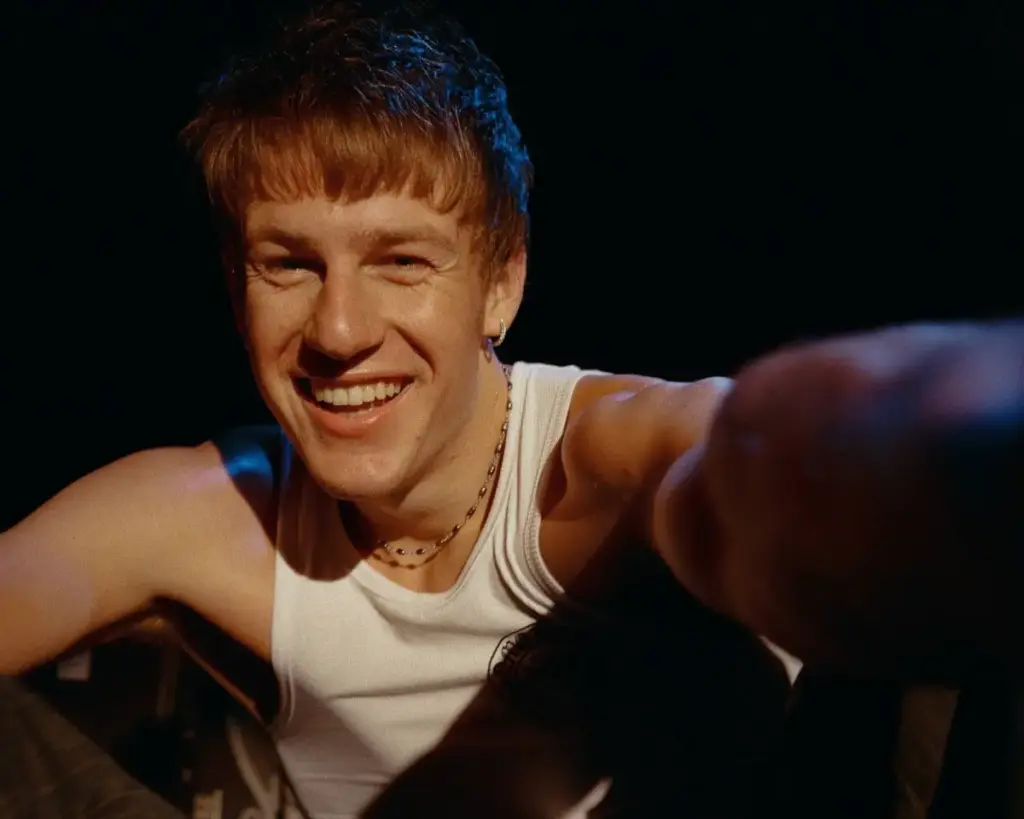
Four years ago, Todd was an ambitious outsider knocking on the doors of college radio station house shows, pleading for a modest five-minute set, only to be turned away. Today, the cultural landscape has shifted drastically. In 2026, a surprise appearance by Todd at a similar campus gathering would inevitably result in a chaotic, mob-like reception. His rapid ascent from DIY hopeful to a bona fide cultural touchstone is the defining narrative of his early career.
As the latest subject of our Coolest Person in the Room series, Todd sat down to dissect the realities of his sudden fame, the intricate mechanics of songwriting inspired by real-world friction, and the delicate balance of preserving artistic integrity in an industry that demands constant consumption. Far from the polished, media-trained automaton typical of modern pop-adjacent stardom, Todd presents a refreshing brand of raw candor. Whether discussing the nuanced psychological toll of 2020s masculinity, the cinematic inspirations behind his latest project Do That Again, or his close-knit creative ecosystem alongside sister Audrey Hobert, Todd is navigating his ascent with a rare, grounded perspective.
Detailed Chronology: From DIY Rejections to Global Stages
To understand Malcolm Todd’s current cultural footprint, one must trace the steep incline of his trajectory over the past four years. The timeline of his career is a textbook study in modern organic growth intersected with sudden hyper-visibility.
The Foundation Years (2022–2023)
In the nascent stages of his artistic output, Todd operated primarily as a producer and writer—identifying with those behind-the-scenes roles long before he embraced the spotlight as a frontman. Projects like Sweet Boy captured an artist who was deeply "green," finding his footing amidst the trial-and-error of early adulthood. These formative years were marked by grassroots networking, basement shows, and the quiet grind of building a sonic identity without the backing of a major label apparatus. It was an era where rejection was routine; being turned away by college radio bookers was simply part of the initiation rite.
The Inflection Point and Do That Again (2024–2025)
The turning point arrived as Todd began channeling the turbulence of early twenties life into his sophomore-era efforts. Immersing himself in the literary and physical geography of New York City—reading Lizzy Goodman’s seminal 2000s indie sleaze chronicle Meet Me in the Bathroom while walking the streets of the East Village—Todd adopted a minor-key rockstar ethos. This period of mild recklessness directly informed his latest body of work, Do That Again.
The album, celebrated for its sultry, groove-heavy production often categorized by fans as "baby-making music," served as a sonic bridge. It captured a young artist caught between the raw amateurism of his adolescence and the burgeoning self-awareness of an evolving professional. Notably, this era also saw his cross-pollination within the broader music ecosystem, highlighted by high-profile moments like being sampled on Don Toliver’s "E85," cementing his status as a peer-level collaborator among industry heavyweights.
The 2026 Breakthrough
By 2026, the shift became palpable. Todd notes that the recognition finally began to feel "substantial" this year. The days of anonymous coffee runs or unnoticed strolls through upscale markets like Erewhon have been replaced by a heightened awareness of public gaze. Yet, rather than retreating into celebrity isolation, Todd views these face-to-face interactions—where fans express genuine appreciation for his craft—as the most rewarding byproduct of a burgeoning global tour schedule and expanding discography.
Supporting Context & Metrics: The Anatomy of Modern Stardom
Navigating the transition from an underground bedroom producer to a globally touring artist requires psychological restructuring. Todd’s journey offers a fascinating case study in how contemporary artists process visibility, creative friction, and cultural expectations.
The Psychology of the "Come-Up"
Fame, as Todd eloquently points out, is entirely relative. "You’re famous to who you’re famous to," he reflects. While his face is increasingly recognizable to Gen Z tastemakers and digital natives, he remains comfortably anonymous to the broader public—a sweet spot that allows for mobility without the suffocating constraints of traditional A-list celebrity. However, the psychological adjustments are real. Todd identifies perspective and the ability to "block out noise" as the two most critical survival skills he has had to acquire.
"I didn’t come into it thinking I’d have to learn it, but then those challenges come up. It’s a true skill I had to learn in order to keep making music I enjoy."
Fabrication vs. Experience: The Incubation of Art
A recurring theme in Todd’s lyricism—exemplified by lines like "I probably shouldn’t do it, but I’ll do it for the song" from his track "Breathe"—is the symbiotic relationship between real-life risk and artistic output. Todd admits that while he doesn’t actively manufacture chaotic scenarios solely for content, he inherently leans away from cautious choices when a compelling narrative is on the line.
This philosophy extends to how he processes emotional trauma. Recounting a moment of intense heartbreak when he sought out his mentor and writing partner, Todd learned a vital lesson in pacing: raw grief is often too potent for immediate translation. "Sometimes you need to process things. Especially if it’s something that’s really getting to you. You need to live in it for a few days."
Cultural Observations: Navigating Gen-Z Masculinity
Beyond his own music, Todd possesses a sharp sociological lens regarding the cultural ecosystem of men his age. When broaching the topics of sports betting and "looksmaxxing"—the internet-driven obsession with male physical optimization—Todd offers a mix of empathy and critique. Comparing the emerging body dysmorphia among young men to the systemic pressures historically placed on women, he observes:
"We’re all humans and we’re all trying to fulfill ourselves. If looksmaxxing fulfills you and you don’t get into other people’s way, I can’t stop you. Obviously, it’s not healthy. We’re behind on the fucked up body dysmorphia women deal with. It’s insane, the standards people are deciding for beauty. I just pray for them and be the best I can be."
Official Statements & Direct Perspectives
In a series of candid exchanges, Malcolm Todd opened up about his creative processes, literary inspirations, and the unique dynamics of familial artistic success alongside his sister, Audrey Hobert.
-
On the Reality of Public Recognition:
"I could go out and get recognized and then move on with my day. Now, there’s more eyes. Like in Erewhon, I feel more watched. Everyone is still so nice. I like when people tell me how they feel, like that they like my music. Because you don’t always have the chance to do that face to face."
-
On His Creative Hierarchy:
"I always want to be a more confident singer. I’m a producer and writer before I’m a singer."
-
On Sample Culture and Creative Obsession:
"Sampling is so funny. It’s a slippery slope. You need to get things cleared… Music is an ever-feeding circle of artists inspiring artists. Sometimes, when I get too obsessed with a song, I’ll make it by accident. I’ll sing melodies of songs that already exist. I have to stop myself from hyperfixating."
-
On Collaborating and Growing Alongside Sister Audrey Hobert:
"Imagine getting to watch your favorite artist grow up. Everything she says, every fiber of her is in that music. It’s such a privilege to be inspired by her so closely. For our relationship, we’ve been able to lean on each other and support each other on tour. It’s been really good."
Future Outlook
As Malcolm Todd looks toward the horizon—marked by international touring dates, expanded sonic explorations, and the inevitable maturation from his early twenties into the next phase of his life—his trajectory points upward with undeniable momentum.
Reflecting on his body of work thus far, Todd views Do That Again as the ultimate bridge: a document capturing the friction of moving from age 21 to 22, characterized by unprecedented success paired with novel pressures. It sits comfortably between the unpolished charm of his early mixtape era and the sophisticated artist he is consciously building toward becoming.
When asked what advice he would offer to the 18-year-old version of himself who opted out of the traditional college path to pursue music full-time, Todd’s answer is characteristically resolute. He wouldn’t change a thing. He would simply tell his younger self to trust his instincts, acknowledge that he was going to do great things, and keep moving forward.
For an artist whose entire brand is built on contagious energy, unvarnished authenticity, and an effortless cool that cannot be manufactured by an algorithm, Malcolm Todd isn’t just riding the wave—he is authoring the blueprint for modern musicianship.