Executive Overview
Translating a beloved, long-running manga and anime into a live-action medium is one of the entertainment industry’s most perilous tightrope walks. When Netflix announced its live-action adaptation of Eiichiro Oda’s One Piece, skeptics and purists alike held their breath. Yet, against historical precedent, Season 1 proved to be a critical and commercial triumph, largely due to its commitment to character accuracy, earnest performances, and high-production-value world-building. As the production sets its sights on the turbulent events of Season 2—slated for release following teasers that dropped in the summer of 2025—the spotlight has inevitably turned to the series’ marquee newcomers.
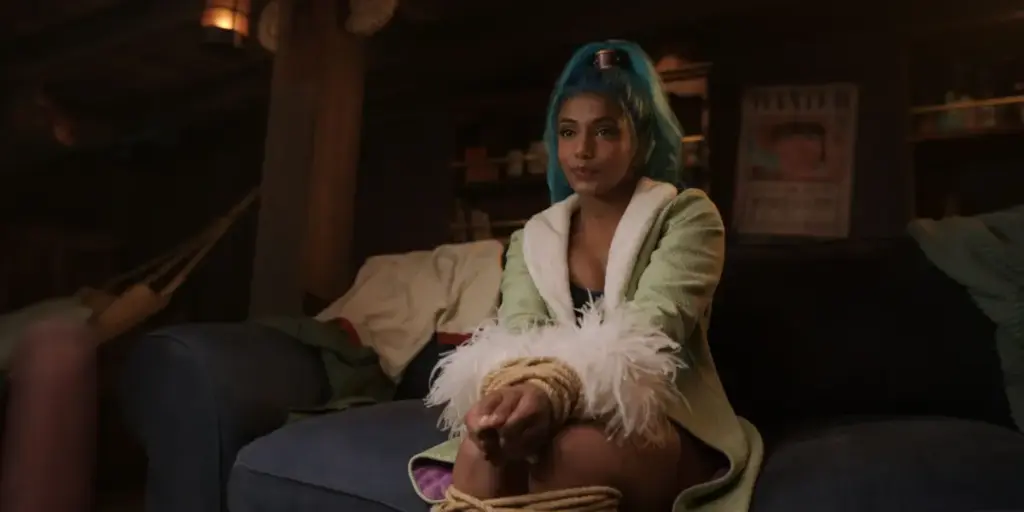
Chief among them is Charithra Chandran, stepping into the pivotal dual role of Princess Nefertari Vivi and her undercover alias, Miss Wednesday. For months, the fandom buzzed with one specific, highly anxious question: How would the production handle Vivi’s iconic, hyper-vibrant blue hair?
In a revealing Teen Vogue cover story alongside co-star Iñaki Godoy (who anchors the series as the indomitable Monkey D. Luffy), Chandran pulled back the curtain on the grueling, meticulous, and deeply creative process of forging Vivi’s signature look. Far from a simple costume-department afterthought, the blue hair—affectionately dubbed "Vicky" or "Victoria" on good days, and "Sticky-Icky-Tricky Vicky" when acting unruly—is a masterclass in modern cinematic transformation. Spanning continents, technical trials, and intimate trailer rituals, the creation of Vicky highlights the complex intersection where 2D source material meets the tactile realities of human anatomy, proving that bringing a cartoon icon to life is a collaborative triumph.
Detailed Chronology: From London Measurements to Cape Town Sets
The journey of bringing Princess Vivi’s hair from the pages of Oda’s manga to the sun-drenched sets of Cape Town, South Africa, reads like an international espionage operation mixed with high-fashion tailoring.
Phase 1: The Blueprint in London
Long before Chandran stepped onto a soundstage or felt the ocean breeze of the Grand Line, the foundational work began thousands of miles away in London, where the actor resides between projects. In a controlled, quiet environment far removed from the sensory overload of a major Netflix production, Chandran underwent the intimate process of having her head wrapped and measured.
Because the wig needed to look completely organic—as though the striking blue strands were genuinely growing from her scalp—precision was paramount. Yet, because the physical creation of the piece was outsourced to specialized external artisans, Chandran was left in the dark regarding its visual progress. She admitted to experiencing severe bouts of pre-production anxiety. Having never dyed her real hair in her life, the prospect of wearing a shock of cerulean blue on-screen was entirely uncharted territory.
"I was like, ‘Oh my God, I’ve never dyed my hair and I’m going to have blue hair! What is this going to look like?’" Chandran recalled from her makeup trailer, where her team meticulously plucked individual hairs from Vicky’s lace hairline. Her immediate instinct upon finishing the measurements was to ask for reference photos, only to be told that the external builders kept their work under wraps until delivery.
Phase 2: First Contact in South Africa
The anxiety evaporated the moment Chandran arrived in Cape Town and met her dedicated hair and makeup team face-to-face. Seeing the sheer volume of intellectual labor, technical consideration, and artistry poured into the project provided instant reassurance.

The initial fitting marked the turning point from apprehension to ownership. What could have felt like an alien helmet instead became a second skin. Chandran noted the psychological whiplash of the transition: within days, the surreal visual of neon-blue hair ceased to be a costume piece and simply became herself.
Phase 3: The Daily Transformation
On set, Vicky became a character in her own right, complete with daily maintenance schedules. Installing the wig is no casual affair; it requires a coordinated village of stylists working in tandem. Chandran documented the intricate process via a time-lapse video shared on TikTok, giving fans a glimpse into the grueling reality of high-end television transformations.
Depending on the specific narrative arc being filmed, the team alternated between two distinct variations of the wig:
- The Miss Wednesday Iteration: Designed for her introduction as a Baroque Works officer, this version features a "snatched top pony" paired with "extra extensions." It is notably heavier and more rigid, taking a full hour and a half to install, style, and secure.
- The Standard Vivi Iteration: Used for the majority of her screen time, this version features a softer ponytail and delicate curtain bangs designed to frame Chandran’s face naturally. Through sheer repetition and refined engineering, the hair team managed to streamline this installation down to a science, clocking in at a brisk one-hour daily window.
Supporting Context & Metrics: Translating 2D Anime to 3D Humanity
The core challenge of adapting One Piece lies in its visual medium. Eiichiro Oda’s character designs rely on the expressive exaggeration of manga and anime, where neon hair colors, gravity-defying proportions, and impossible geometries read naturally on the page. However, translate those exact aesthetics to a live-action human actor under hyper-detailed 4K digital cameras, and the result can easily slip into the uncanny valley or look like a cheap Halloween costume.
The Science of Undertones
Chandran was quick to emphasize this delicate translation barrier during her interviews. "This is one of those [examples] where things in the anime or the manga might not necessarily directly translate [because] we are human beings with undertones," she explained.
To achieve a look that felt believable and grounded in a gritty, high-stakes pirate world, the lead hairstylist rejected a flat, monochromatic blue dye job. Instead, the team invested heavily in color theory:
- Darker Roots: By integrating deliberate shadow roots, the team simulated natural hair growth, anchoring the vibrant blue to human physiology.
- Lighting Optimization: The color was specifically calibrated to react dynamically with different environmental backdrops. Chandran highlighted the "Little Garden" arc—set against dense, prehistoric tropical greenery—as the definitive showcase for the hair, noting that the vibrant contrast against the jungle foliage is where Vicky truly shines.
The Extended Universe of Wigs
For Chandran, entering the world of high-end wigs was not entirely foreign. As Edwina Sharma in Season 2 of Netflix’s period juggernaut Bridgerton, she became well-acquainted with the intensive styling demands of serialized prestige television.
That immersion has left a lasting mark on her personal grooming philosophy. Having witnessed firsthand how effectively modern wig craftsmanship can mimic—and often surpass—natural hair without the chemical damage of bleaching and dyeing, Chandran has become a vocal advocate of "the wig life." In her private life, if fans spot her sporting a sharp bob with bangs, it is likely part of her personal collection. "I feel so mysterious wearing her," she joked, proving that the transformative power of hair extends far beyond the soundstage.

Official Statements & Industry Perspectives
The casting of Charithra Chandran as Vivi was heralded by Netflix executives and showrunners as a critical casting coup for Season 2. Bringing emotional gravity, aristocratic poise, and physical agility to the role required an actor who could command the screen alongside seasoned veterans.
While Netflix has kept tight-lipped regarding specific plot details of Season 2’s sprawling narrative—which encompasses everything from Loguetown to Drum Island and Alabasta—the creative team has openly praised the cast’s dedication to physical characterization. The meticulous approach to Vivi’s hair reflects a broader production philosophy: honor the source material not by blindly copying it, but by reimagining it through a lens of tactile realism.
Chandran’s candid reflections on the creative process underscore the intimate, often uncredited labor that goes into modern blockbuster adaptations. By demystifying the creation of "Vicky," the actor has built a bridge of transparency and trust with a notoriously protective fan base, turning a potential point of internet contention into an early fan favorite before a single episode of Season 2 even drops.
Future Outlook
As post-production ramps up for Season 2 and Netflix already looks ahead toward the confirmed horizons of One Piece Season 3, the partnership between Charithra Chandran and her cerulean alter-ego is locked in for the long haul.
The road ahead for the Straw Hat Pirates grows increasingly complex, shifting from the lighthearted discovery phase of East Blue into the sprawling, politically charged, and emotionally devastating conflicts of the Alabasta Saga. In this environment, Princess Nefertari Vivi is not merely a companion of convenience, but a political leader fighting for the soul of her kingdom.
The physical transformation required to bring her to life—anchored by custom lace, dark roots, thoughtful undertones, and a heavy dose of trailer humor—serves as a microcosm of the live-action series’ overarching ambition. With "Vicky" safely secured, Chandran is more than ready to set sail, proving that with enough artistry, dedication, and a healthy sense of humor about "Sticky-Icky-Tricky Vicky," the impossible gap between 2D drawings and live-action cinematic reality can indeed be bridged.