Executive Overview
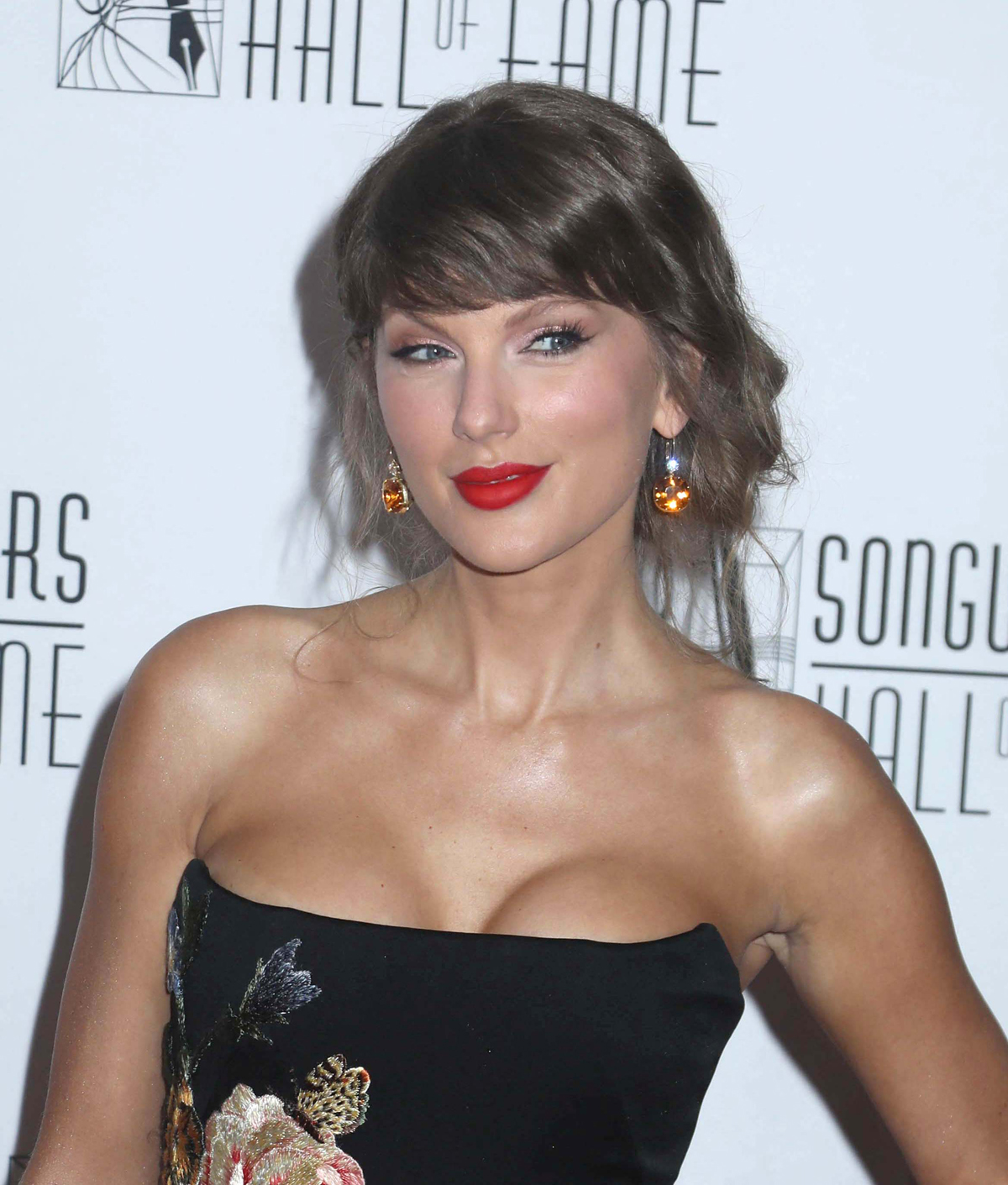
In an extraordinary convergence of everyday heroism and high-profile philanthropy, international music icon Taylor Swift contributed $50,000 to a GoFundMe campaign supporting Ashley Taunton, a Connecticut mother severely injured after pushing a stranger out of the path of an oncoming vehicle during a highway emergency. The incident, which occurred along Interstate 95 in Rhode Island during severe summer rainfall, transformed a routine commute into a life-threatening crisis, leaving Taunton facing an arduous, multi-stage medical recovery.
The substantial donation not only fulfilled a major portion of the family’s immediate financial targets for medical expenses but also highlighted an increasingly prominent model of celebrity philanthropy: direct, unannounced digital contributions to grassroots mutual aid and emergency funds. Taunton, who works within sight of Swift’s coastal Rhode Island residence, discovered the gift moments before beginning a critical physical therapy session.
This analytical report examines the detailed timeline of the Interstate 95 incident, evaluates the mechanics and metrics of Swift’s targeted philanthropic history, captures the official reactions of those involved, and projects the long-term outlook for Taunton’s rehabilitation and the broader implications of direct-to-consumer charitable interventions.
Detailed Chronology: The Incident on I-95 and Its Aftermath
+-----------------------------------------------------------------------------------+
| CHRONOLOGY OF EVENTS                                                              |
+-----------------------------------------------------------------------------------+
| • July 18: Severe rainfall on I-95 in Hopkinton, RI; crash occurs.                |
| • July 18: Ashley Taunton stops to assist; secondary vehicle hydroplanes.         |
| • July 18: Taunton pushes crash victim to safety, taking direct impact.           |
| • July 18–19: Emergency medical transport; two major surgeries within 18 hours.   |
| • Post-Incident: Family launches GoFundMe to offset mounting medical debt.        |
| • Late August: Swift makes unannounced $50,000 donation prior to PT session.     |
+-----------------------------------------------------------------------------------+
The Initial Collision and Heroic Intervention
On the afternoon of Saturday, July 18, a severe rainstorm swept across southern New England, drastically reducing visibility and creating hazardous driving conditions along Interstate 95 near Hopkinton, Rhode Island. As traffic slowed amid the downpour, a motorist lost control of their vehicle, resulting in a single-car accident on the shoulder of the highway.
Driving along the same stretch of highway, Ashley Taunton—a mother and hotel worker from Connecticut—observed the crashed vehicle and pulled over onto the shoulder to render assistance. According to eyewitness statements and accounts provided by her husband, Joe Taunton, Ashley immediately stepped out into the storm to check on the distressed driver.
The Secondary Impact
While Taunton was assessing the motorist, a secondary vehicle traveling along the slick roadway hydroplaned, losing traction completely and hurtling at high speed toward the crash site. Recognizing the imminent collision with only a fraction of a second to react, Taunton executed a decisive, selfless act: she physically shoved the other individual out of the oncoming trajectory.
While her action successfully cleared the bystander from danger, Taunton was unable to step clear herself. She sustained the direct brunt of the secondary impact, suffering extensive musculoskeletal injuries and trauma.
Emergency Response and Surgical Pipeline
First responders dispatched to the Hopkinton stretch of I-95 stabilized Taunton at the scene before transporting her to a regional trauma center. The severity of her injuries necessitated immediate surgical intervention. Within the first 18 hours of her admission, medical teams performed two major reconstructive surgeries to address structural damage. Doctors placed her on an intensive, long-term care plan requiring subsequent surgeries and months of specialized physical therapy.
The Crowdfunding Launch and Pop Star Intervention
Faced with rapidly compounding medical liabilities, extended loss of household income, and the prospect of a prolonged recovery pipeline, family members launched a GoFundMe campaign titled "Support Ashley Taunton’s Brave Recovery." The campaign detailed her sacrifice on I-95, characterizing her actions as an extension of her fundamental nature—a tendency described by her husband as simply "Ashley doing Ashley things."
The story gradually circulated across regional media outlets and social networks, eventually drawing the attention of Taylor Swift’s team. Weeks into the campaign, as Taunton prepared for a grueling physical rehabilitation routine, a verified $50,000 transfer appeared on the campaign ledger from the artist, immediately pushing the fundraiser past critical thresholds and providing complete financial relief for her initial clinical timeline.
Supporting Context & Metrics: Crowdfunding Dynamics and Philanthropic Context
The Mechanics of Emergency Crowdfunding
Medical emergencies remain one of the leading drivers of personal financial distress in the United States, with high-deductible insurance plans often failing to cover the complex, multi-specialty care required after severe traumatic injuries. Platforms like GoFundMe have increasingly functioned as an informal secondary safety net. However, statistical analyses of crowdfunding platforms show that only a small percentage of medical campaigns reach their stated goals without significant regional media coverage or high-profile amplification.
| Parameter | Campaign Baseline | Post-Intervention Status |
|---|---|---|
| Primary Driver | Severe traumatic injuries from I-95 accident | High-profile digital amplification |
| Surgeries Completed | 2 major procedures (first 18 hours) | Ongoing reconstructive pipeline |
| Major Benefactor | Local community / regional network | Taylor Swift ($50,000 single transfer) |
| Financial Impact | Covered immediate out-of-pocket medical debt | Stabilized long-term physical therapy fund |
Analysis of Taylor Swift’s Direct Philanthropic Model
Swift’s $50,000 contribution to Taunton is not an isolated event, but rather part of a documented, highly strategic pattern of direct-to-individual giving that bypasses traditional institutional channels. Over the past decade, Swift has frequently utilized public micro-funding platforms to distribute financial assistance directly to fans, healthcare workers, disaster victims, and community heroes.
                  ┌────────────────────────────────────────┐
                  │   Direct-to-Individual Philanthropy    │
                  └──────────────────┬─────────────────────┘
                                     │
         ┌───────────────────────────┴───────────────────────────┐
         ▼                                                       ▼
┌─────────────────────────┐                             ┌─────────────────────────┐
│ Institutional Grants    │                             │ Grassroots Micro-Grants │
│ • Food Bank Networks    │                             │ • GoFundMe Direct Gifts │
│ • Disaster Relief Funds │                             │ • Individual Fan Support│
│ • Music Education       │                             │ • Local Hero Assistance │
└─────────────────────────┘                             └─────────────────────────┘
Unlike classic institutional philanthropy—where corporate entities award large grants to non-profit organizations with significant administrative overhead—Swift’s model frequently leverages direct digital micro-grants:
- Agility and Speed: Funds are disbursed directly to individuals experiencing sudden life disruptions, bypassing lengthy grant application cycles.
- High Visibility Effect: A single high-value donation from a global figure creates a secondary news cycle, attracting thousands of additional smaller donations from the public.
- Hyper-Local Resonance: Swift frequently targets her giving to communities tied to her personal life or tour stops, such as local food banks during The Eras Tour or community members in Rhode Island, Tennessee, and Pennsylvania.
The Local Geographic Connection
The narrative carries a poignant geographic dimension. Ashley Taunton is employed at a hotel situated on Misquamicut Beach in Westerly, Rhode Island. This location offers a direct view of High Watch (formerly known as the Harkness House), the iconic hilltop estate in Watch Hill acquired by Swift in 2013.
Taunton noted that Swift’s catalog was a staple of the ambient music streamed daily at her workplace. The proximity of Swift’s home to Taunton’s daily life underscored the surreal nature of receiving a life-altering personal gift from a neighbor who doubles as one of the world’s most recognizable cultural figures.
Official Statements and Reactions
The notification of the $50,000 contribution arrived during a critical moment in Taunton’s treatment, eliciting profound reactions from the family, medical staff, and community members.
Speaking to People magazine, Ashley Taunton reflected on the spiritual and emotional weight of the overwhelming public support and the unexpected donation:
"I am in awe of how God works and how so many can be the hands and feet of Christ to bring triumph from tragedy. It has been an overwhelming blessing and we are so grateful."
Taunton recounted the exact moment she learned of the gift, describing the scene inside the clinical facility as she was preparing for a grueling rehabilitation session:
"My stomach flipped and I got tears in my eyes but [I] also was in disbelief. My physical therapist was shocked, and my husband had to walk outside and gather himself."
Reflecting on the surreal overlap between her working life along the Rhode Island coastline and Swift’s presence in the area, Taunton added:
"We work at a hotel on Misquamicut Beach… We can see [Swift’s] house from our work, and her music is always streaming on our device. So this was mind-blowing!"
Excerpts from the official GoFundMe campaign page maintained by family members contextualized the heroic instinct that led to Taunton’s injuries:
"On Saturday, July 18th, during a severe rainstorm on I-95, Ashley did what she always does: she put others before herself. Seeing someone in urgent need after a car accident, she pulled over to help. As Joe so perfectly puts it, it was just ‘Ashley doing Ashley things.’
While she was assisting, another vehicle hydroplaned and came hurtling directly toward them. In a split-second act of pure bravery, Ashley pushed the other person out of harm’s way, taking the brunt of the impact herself. Because of her selfless courage, Ashley is now facing a very long and difficult road to recovery."
Future Outlook: Physical Recovery and Public Safety Implications
Long-Term Medical and Rehabilitation Roadmap
While the financial strain of Taunton’s initial hospitalization and surgical interventions has been mitigated by Swift’s contribution and public support, her clinical road ahead remains lengthy. Reconstructive procedures following high-impact auto-pedestrian collisions require multi-phase care protocols:
- Phase 1 (Completed): Acute trauma care, emergency surgical stabilization, and wound management within the initial 48-hour window.
- Phase 2 (Ongoing): Secondary structural orthopedic adjustments, soft-tissue restoration, and acute pain management.
- Phase 3 (Upcoming): Intensive physical therapy focused on weight-bearing rehabilitation, joint mobility restoration, and functional independence over a 12- to 18-month horizon.
The $50,000 capital infusion ensures that Taunton can access specialized, out-of-network physical rehabilitation programs without threatening her family’s long-term financial stability.
The Risks Facing Highway Good Samaritans
Taunton’s ordeal brings renewed attention to the severe hazards faced by civilian Good Samaritans on high-speed interstate corridors during adverse weather conditions. Transportation safety statistics consistently highlight "secondary crashes"—incidents where passing vehicles strike previously crashed cars or bystanders—as a primary cause of fatalities on major highways.
+-----------------------------------------------------------------------------------+
| HIGHWAY SAFETY ADVISORY: IMPAIRED-VISIBILITY & STORM CONDITIONS                   |
+-----------------------------------------------------------------------------------+
| 1. High Hydroplaning Risk: Standing water significantly reduces tire traction.    |
| 2. Secondary Collision Hazard: Pulling onto highway shoulders during heavy rain  |
|    exposes pedestrians to out-of-control, sliding vehicles.                       |
| 3. Emergency Protocol: Transport authorities advise staying inside a seatbelted   |
|    vehicle on the shoulder while awaiting professional first responders.          |
+-----------------------------------------------------------------------------------+
State traffic safety agencies reiterate that while the instinct to render immediate assistance is heroic, civilians must exercise extreme caution on active interstates during severe weather, where hydroplaning vehicles frequently drift onto shoulders.
The Legacy of the Intervention
For the Taunton family, the combination of Ashley’s instinctive bravery and Swift’s sudden generosity turned a potential disaster into a story of recovery and community support. As Taunton continues her physical therapy along the Rhode Island shore, the intervention serves as a powerful case study in how targeted, high-profile generosity can instantly stabilize the life of a local hero in the wake of an unexpected tragedy.