Executive Overview
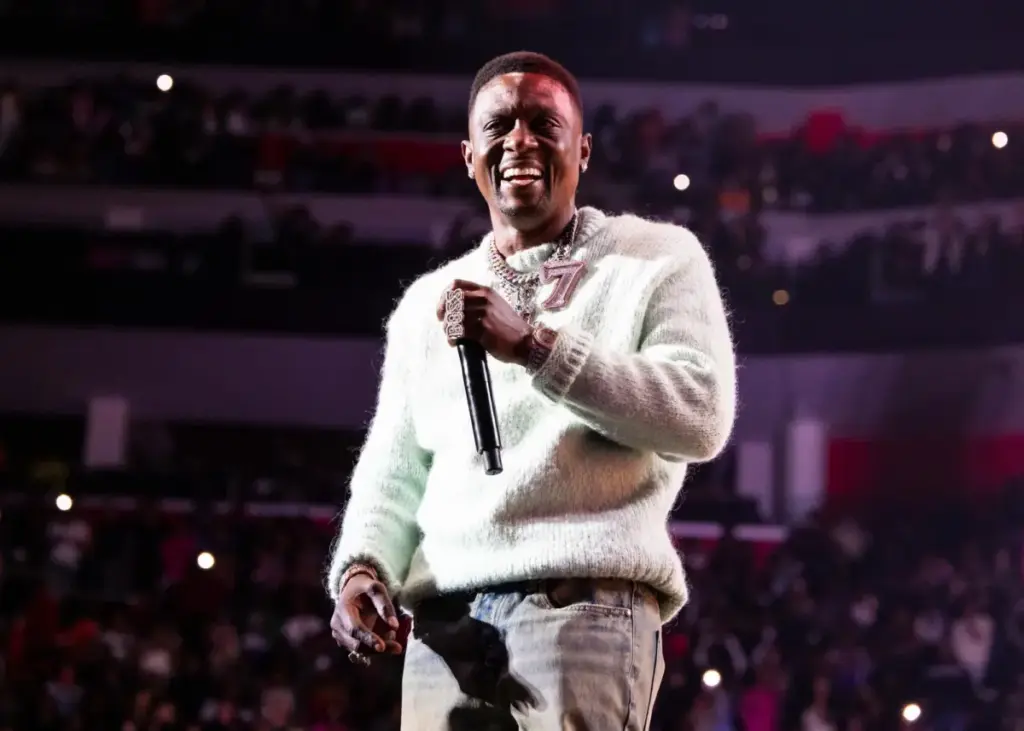
In the high-stakes intersection of celebrity influence, Washington, D.C. lobbying, and federal criminal justice, few stories highlight the murky underbelly of executive clemency quite like the ordeal faced by Louisiana rapper Boosie Badazz. Born Torrence Ivy Hatch, the veteran hip-hop artist recently became the focal point of a national conversation following a high-profile feature on CBS’s 60 Minutes. In the segment, Hatch detailed how he was allegedly defrauded out of $600,000 by political operatives promising to secure a presidential pardon from the Trump administration.
However, dissatisfaction quickly followed the broadcast. Hatch took to social media platform X (formerly Twitter) to voice sharp criticisms regarding the editing of his interview with legendary journalist Lesley Stahl, claiming that essential parts of his narrative were omitted. Hatch’s frustration underscores a larger, more complex saga: a web of civil litigation, disputed federal charges, controversial political intermediaries, and the desperate pursuit of justice within a legal system that the rapper argues has repeatedly targeted him unfairly.
This investigative report examines the multifaceted controversy surrounding Boosie Badazz’s alleged pardon scam, exploring the chronology of events, the figures involved, the disputed legal charges, and the broader implications for the multi-million-dollar clemency consulting industry that frequently operates on the fringes of Washington politics.
Detailed Chronology: From White House Hopes to Federal Indictment
To understand how a multi-platinum recording artist parted with hundreds of thousands of dollars in pursuit of a executive pardon, one must examine the timeline of events that preceded the alleged fraud.
The Initial Outreach and the "Pardon Czar"
According to statements released by Hatch and detailed in court filings, the rapper’s quest for a presidential pardon began well before the alleged scam materialized. Seeking relief from persistent legal troubles and what he viewed as disproportionate sentencing practices within the judicial system, Hatch engaged with political figures in Washington, D.C.
In his post-broadcast statements, Hatch noted that he previously sat down with administration officials, including individuals colloquially referred to in political circles as "pardon czars," to articulate why he believed his case warranted executive clemency. During these discussions, Hatch pointed to prominent criminal justice reform advocates, such as Alice Marie Johnson—whose life sentence was commuted by President Donald Trump in 2018 after advocacy from reality television star Kim Kardashian—as a potential blueprint for his own relief.
Hatch’s legal team initially believed that his case shared structural similarities with other high-profile commutations and pardons granted during the final months of the Trump administration. However, fluctuating legal developments complicated these efforts.
The Intervention of Jacob Wohl and Jack Burkman
As Hatch pursued legal avenues for clemency, he crossed paths with political operatives Jacob Wohl and Jack Burkman, figures infamous for orchestrating conservative political stunts, disinformation campaigns, and various fraudulent schemes.
According to allegations outlined in civil lawsuits filed by the rapper and his legal representatives, Wohl and Burkman positioned themselves as insiders capable of leveraging direct access to the Oval Office. They allegedly convinced Hatch that a financial investment of $600,000 was a standard, mandatory fee to guarantee the processing and approval of a presidential pardon. Furthermore, assurances were reportedly made that if the executive order was not successfully executed, a significant portion of the capital—specifically $300,000—would be returned.
"This is what I was led to believe. If you come with this money, you will get a pardon," Hatch explained during his 60 Minutes interview with Lesley Stahl. "I just thought, ‘This is the way it’s done.’ I’m paying these guys, and you know, they’re gonna make it happen."
The Reality of the Scam and Subsequent Lawsuit
As the final days of the Trump administration ticked away, no pardon materialized. Realizing that he had been deceived, Hatch demanded the return of his funds. According to the rapper, the response from Wohl and Burkman was marked by arrogance and outright dismissal.
Faced with a refusal to return the capital, Hatch and his legal team took aggressive legal action, filing a civil lawsuit against the operatives to recover at least $300,000 in restitution. The civil proceedings brought national attention to a lucrative, unregulated gray market: political fixers and lobbyists capitalizing on desperate individuals navigating the federal clemency process.
Supporting Context & Metrics: The Mechanics of Clemency and Legal Battles
The Boosie Badazz case cannot be viewed in isolation; it sits at the intersection of systemic flaws in federal sentencing, the predatory nature of unauthorized political lobbying, and ongoing scrutiny regarding how executive pardons are requested and granted.
The Federal Gun and Drug Charges
Behind Hatch’s desperate pursuit of a pardon lies a severe history of legal entanglements. During his statements on X, Hatch vehemently contested the legitimacy of the federal charges that brought him back into the crosshairs of federal prosecutors.
"A month later they picked my case back up n gave me the same charges n added a charge of me being [an addict] around a firearm," Hatch wrote. He vigorously defended his history, noting: "How am I [an addict] when I have never been to rehab. I was sentenced to 10 years in state prison for 3rd offense marijuana n never offered rehab."

Federal firearms charges involving individuals with prior felony convictions or alleged substance dependencies carry mandatory minimum sentences under federal guidelines. For Hatch, who has survived decades in the public eye balancing a controversial music career with persistent encounters with law enforcement, the threat of federal prison time created an environment of vulnerability ripe for exploitation by bad actors like Wohl and Burkman.
The Lucrative and Unregulated Pardon Industry
The market for federal pardons and commutations experienced a dramatic surge during the final years of the Trump administration. Because the U.S. Constitution grants the president sweeping, unreviewable authority to grant pardons and commute sentences (Article II, Section 2), the traditional Office of the Pardon Attorney within the Department of Justice was frequently bypassed in favor of informal, direct appeals to the White House.
This lack of institutional gatekeeping created an opening for opportunists, unregistered lobbyists, and self-proclaimed fixers. While legitimate attorneys charge hourly or flat fees for preparing formal clemency petitions, unauthorized operators often demand exorbitant contingency or "access" fees, falsely implying that executive clemency can be purchased.
Legal experts note that while lobbying the executive branch is legal, conditioning fees on the success of a pardon or misrepresenting one’s influence over the president crosses the line into wire fraud, grand larceny, and extortion—crimes for which figures like Wohl and Burkman have extensive histories of legal scrutiny.
Official Statements: The 60 Minutes Controversy and Hatch’s Grievances
The media firestorm intensified following the broadcast of the 60 Minutes segment, which condensed months of complex legal maneuvering and extensive investigative reporting into a brief television slot.
Boosie Badazz’s Social Media Outcry
Unhappy with how his hour-long conversation with Lesley Stahl was edited down, Hatch took to X to ensure his full perspective was recorded in the public domain. His statement read, in part:
"I did a hour interview with 60 Minutes about what happened with my lawsuit but only a few things got put out. I talked about how before this situation happened that I sat down with the pardon czar at the White House discussing why I felt I needed a pardon. I told them I felt Ms. Alice would help me… My story wasn’t told fully but hopefully this interview will prove my point clearly in civil court that I need to be compensated x 10."
Hatch emphasized that his primary motivation in seeking the pardon was not merely to evade legal consequences, but to seek administrative review of a case he believes was fundamentally mishandled by the justice system. He maintained that he wanted the president to review his trial record alongside advocates like Alice Marie Johnson to evaluate whether systemic biases played a role in his prosecution.
Media Analysis and Public Reception
The 60 Minutes segment successfully brought mainstream visibility to the predatory practices targeting high-net-worth individuals facing legal peril. By featuring Boosie Badazz, the program highlighted the desperate measures defendants will take when they lose faith in the traditional judicial appeals process.
However, media critics and legal observers noted that the shortened segment left unanswered questions regarding the broader accountability of political fixers in Washington. While Hatch’s civil lawsuit seeks financial retribution, the broader question of whether federal regulators will crack down on unauthorized clemency brokers remains unaddressed.
Future Outlook: Legal Ramifications and Industry Reform
As this high-profile legal saga continues to unfold, several critical questions remain regarding its ultimate impact on Boosie Badazz, the defendants in his civil lawsuit, and the broader landscape of federal criminal justice reform.
1. The Outcome of the Civil Litigation
Hatch’s primary immediate goal is financial restitution. By pursuing a civil suit demanding the return of his funds—and potentially triple or punitive damages ("compensated x 10," as he stated)—his legal team aims to establish legal precedent holding predatory lobbyists personally and financially liable for defrauding clients under the guise of securing executive favors. A victory in civil court could pave the way for similar lawsuits from other victims allegedly scammed by the same network of political operatives.
2. Heightened Scrutiny on Executive Clemency Lobbying
The exposure generated by 60 Minutes and subsequent reporting has placed renewed pressure on federal lawmakers and regulatory bodies to examine how individuals interact with the executive branch regarding clemency. Calls for tighter disclosure requirements, stricter enforcement of the Lobbying Disclosure Act (LDA), and enhanced penalties for individuals who falsely claim direct influence over presidential decision-making have gained traction among legal reform advocates.
3. Boosie Badazz’s Ongoing Legal and Musical Career
For Boosie Badazz, the controversy serves as yet another chapter in a turbulent career defined by resilience, legal battles, and unfiltered public commentary. While he continues to release music, tour, and engage with his massive fan base across digital platforms, his focus remains squarely on resolving his ongoing legal challenges.
Whether the civil courts will ultimately validate his claims and secure the financial compensation he demands remains to be seen. However, by taking his story to one of television’s most prestigious investigative news programs and forcefully utilizing social media to control his narrative, Boosie Badazz has ensured that his encounter with the shadows of Washington politics will not quietly fade away.