Executive Overview
In today’s hyper-saturated and fiercely competitive fragrance market, launching a new stock-keeping unit (SKU) requires far more than digital ads and an organic social media push. It demands an immersive, multi-channel physical presence that commands attention in the real world. Enter functional fragrance brand Dedcool, which made a definitive statement on Monday, September 14, by launching its newest scent, "Mocha Magic," through an aggressive, high-stakes Out-Of-Home (OOH) marketing blitz in New York City, expertly timed to coincide with New York Fashion Week (NYFW).
At the center of this masterclass in experiential marketing is a $1 million pop-up activation on Mott Street, complemented by strategic cafe partnerships, widespread subway takeovers, wheatpaste poster campaigns across the five boroughs, and a dynamic schedule of retail events with beauty retail giant Sephora.
Led by founder and CEO Carina Chaz—who famously launched the brand out of her college dorm room in 2016—Dedcool has evolved over the past decade into a $30 million direct-to-consumer (DTC) and wholesale powerhouse. The brand, known for its accessible $90 price points and sustainable functional formulas spanning fine fragrance, body care, and home goods, is using the Mocha Magic rollout to redefine how fragrance is experienced, sampled, and commercialized.
This deep-dive report examines the mechanics of Dedcool’s high-impact New York City campaign, breaking down its cross-coast strategy, financial investment, retail logistics, and the broader retail trends transforming Lower Manhattan into the epicenter of the global perfume economy.
Detailed Chronology: From Los Angeles Smoothies to Lower Manhattan Pop-Ups
The journey of Mocha Magic is a study in geographic pacing and cultural alignment, bridging West Coast wellness lifestyle trends with East Coast fashion week velocity.
Phase One: West Coast Cultivation (August)
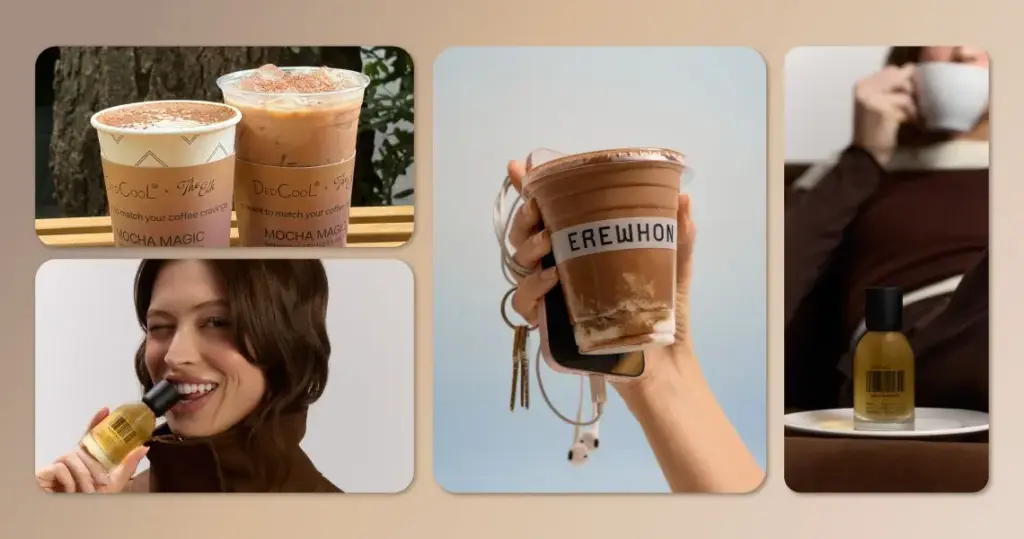
Dedcool laid the groundwork for the Mocha Magic launch in August on the opposite coast, partnering with L.A.’s ultra-trendy, celebrity-favorite grocer and cafe, Erewhon. The collaboration yielded the $11 "Mocha Magic Smoothie"—marking Dedcool’s second beverage partnership with the chain following previous viral hits.
By embedding the fragrance’s flavor profile and aesthetic into a physical beverage, Dedcool tapped into Los Angeles’s culture of functional wellness and experiential consumerism. According to Chaz, the strategy was designed to plant the seeds of brand awareness before executing a high-density rollout on the East Coast.
Phase Two: East Coast Awakening & Cafe Partnerships (September 8)
As the calendar turned to September and the anticipation for NYFW reached a fever pitch, Dedcool shifted its focus to Manhattan. Beginning September 8, the brand launched a multi-week, limited-edition partnership with The Elk, a cult-favorite neighborhood cafe with locations in Nolita and the West Village.
The centerpiece of this activation was the $8.75 "Mocha Magic Latte," served in custom-branded cups featuring bespoke drink sleeves and bundled with complimentary fragrance samples. For Dedcool, this was not just a clever marketing gimmick; it was a tactical mechanism to bypass visual fatigue and get the juice directly onto consumers’ skin.
Phase Three: The Transit and Street-Level Takeover (Mid-September)
Simultaneously, Dedcool blanketed New York City’s public infrastructure. The brand invested heavily in targeted subway advertising, securing placements across 2,000 transit cars to capture captive commuter audiences. This digital-free touchpoint was reinforced by widespread wheatpastings strategically applied to exterior walls across key neighborhoods, creating an inescapable urban footprint.
Phase Four: The Mott Street Flagship Experience (September 18–20)
The crown jewel of the launch campaign officially opened on September 18: a three-day, custom-built "Dedcool Café" pop-up located at 262 Mott Street, situated between Houston and Prince streets.
Operating as a hybrid retail and hospitality space, the pop-up sold the new Mocha Magic scent alongside Dedcool’s entire portfolio of perfumes, body washes, lotions, detergents, incense, and soaps, all while serving complimentary coffee and curated snacks. While Dedcool had experimented with minor experiential footprints in the past, this marked the brand’s first fully shoppable public retail pop-up of this scale, complete with exclusive merchandise and gift items unavailable anywhere else.
Phase Five: Sephora Amplification and Mobile Sampling (September 19 Onward)
Running parallel to the Mott Street activation, Dedcool initiated a four-day retail event tour in partnership with Sephora beginning September 19. To drive foot traffic directly into retail doors, the brand deployed branded sampling trucks outside high-traffic Sephora locations in New York City and select regional markets, intercepting shoppers as they entered the stores to experience the scent firsthand.
Supporting Context & Metrics: The Economics of a $1 Million Activation
To fully understand the ambition behind Dedcool’s campaign, one must examine the hard numbers and the strategic considerations guiding inventory and financial allocation.
The Financial Footprint
The budget for the Mott Street pop-up alone—encompassing real estate acquisition, architectural design, spatial buildout, and specialized staffing—reached a cool $1 million. To support this immense consumer demand, Dedcool’s logistics team stocked approximately $500,000 in total retail merchandise on-site.
Inventory Philosophy: Pop-Up Liquidity vs. Retail Stability
In the direct-to-consumer digital economy, "selling out" is frequently marketed as the ultimate badge of honor for emerging brands. However, Chaz maintains a nuanced, highly disciplined perspective on inventory management that differentiates temporary retail activations from permanent omnichannel distribution.
“There is this concept of ‘selling out,’ which has been equated to success, but there’s nothing worse than having a moment where the consumer can’t experience or try the product,” Chaz explained.
For the physical pop-up, the goal was absolute inventory liquidation: Chaz stated the team aimed to completely sell through the $500,000 inventory allocation, leaving zero stock to return to third-party logistics (3PL) warehouses.
Conversely, maintaining stock integrity in traditional retail channels requires a starkly different approach. Dedcool maintained strict separation between its pop-up goals and its wholesale commitments to Sephora and DTC channels. The brand ensured its retail partners remained continuously stocked, prioritizing long-term consumer demand over fleeting artificial scarcity online.
The Power of the Queue
In the age of algorithm-driven discovery, physical proof of popularity remains the holy grail of experiential marketing. By intentionally curating spatial constraints and hype-driven messaging, Dedcool successfully cultivated physical lines down Mott Street.
“All are welcome [at the pop-up], and we definitely would love a queue,” Chaz noted. “There’s always hype around queues, and speaking for myself, a brand founder always loves to see people lining up to experience their products.”
Lower Manhattan: The New Epicenter of Global Perfumery
Dedcool’s choice of Mott Street for its million-dollar pop-up is emblematic of a broader geographic shift within the luxury beauty sector. Over the past twenty-four months, Lower Manhattan—specifically the winding, historic corridors of Nolita, SoHo, and Mott Street—has transformed into the ultimate global hotspot for independent and heritage perfume houses alike.
The Monobrand Retail Boom
This enclave has rapidly evolved from a haven for direct-to-consumer fashion startups into a dense cluster of standalone, monobrand fragrance flagships. Notable recent arrivals include Estée Lauder Companies-owned Jo Malone, Frédéric Malle, and Tom Ford, alongside luxury houses such as Oman-based Amouage, South Korean breakout star Nonfiction, and Kering-backed fragrance player Matiere Premiere.
Furthermore, Mott Street itself has established a reputation as the premier destination for high-impact beauty and cosmetics pop-ups, hosting marquee activations by global players like MCoBeauty. By anchoring its flagship activation in this ecosystem, Dedcool positioned itself shoulder-to-shoulder with the world’s most prestigious legacy and niche fragrance makers, signaling its maturation into an industry heavyweight.
Official Statements and Leadership Insights
The success of Dedcool’s multi-pronged offensive lies in its founder’s refusal to rely on traditional playbook rules. Carina Chaz, who transitioned from mixing functional fragrances in her college dorm room to managing a multi-million-dollar enterprise, emphasizes that modern brand building requires aggressive, joyful disruption.
“You can definitely call it a blitz,” Chaz told industry publication Glossy, describing the convergence of New York Fashion Week and the brand’s expansive OOH footprint. “There’s a lot happening right now in New York with all things Fashion Week, [so this campaign will be] executed in a really fun and unique way that kind of plays on our Mocha Magic fragrance launch, but also our full brand expression.”
Chaz’s focus on tactile, real-world engagement stems from a core belief that fragrance cannot be successfully sold in a vacuum. Whether through an $11 wellness smoothie at Erewhon, an $8.75 latte with custom sleeves at The Elk, or a $1 million experiential cafe on Mott Street, the operational thesis remains constant: sensory trial drives conversion.
“Getting our product onto skin is super important,” Chaz emphasized, underscoring why digital-first brands must invest heavily in physical infrastructure to capture consumer loyalty in an increasingly crowded marketplace.
Future Outlook: What the Mocha Magic Launch Signals for Independent Beauty
As Dedcool closes the book on its massive New York Fashion Week activation, the broader beauty industry is taking notes. The campaign serves as a case study for how independent beauty brands can leverage localized culture, high-end hospitality partnerships, and aggressive out-of-home advertising to break through the digital noise.
Several key takeaways define the future outlook for the brand and the broader fragrance market:
- The Rise of "Retailtainment": Consumers no longer wish to simply purchase a bottle of perfume off a static shelf. They demand immersive, highly Instagrammable spaces that merge lifestyle categories—such as coffee culture and fashion—into a cohesive brand world.
- The Hybrid Omnichannel Play: While DTC digital acquisition costs continue to rise, successful brands are finding that physical activations like pop-ups and mobile sampling trucks act as efficient customer acquisition engines that lift sales across both wholesale retail partners like Sephora and digital e-commerce channels.
- Hyper-Localized Cultural Relevance: By intentionally tailoring localized touchpoints—such as Erewhon in Los Angeles and The Elk in New York—brands can manufacture organic cultural resonance that feels authentic to urban communities rather than corporate and detached.
For Dedcool, the Mocha Magic launch is much more than the introduction of a new SKU; it is a declaration of independence. By executing a flawless, high-velocity omnichannel blitz, the brand has proven that a decade after its humble dorm-room inception, it is fully equipped to command the attention of the global fragrance capital on its own terms.