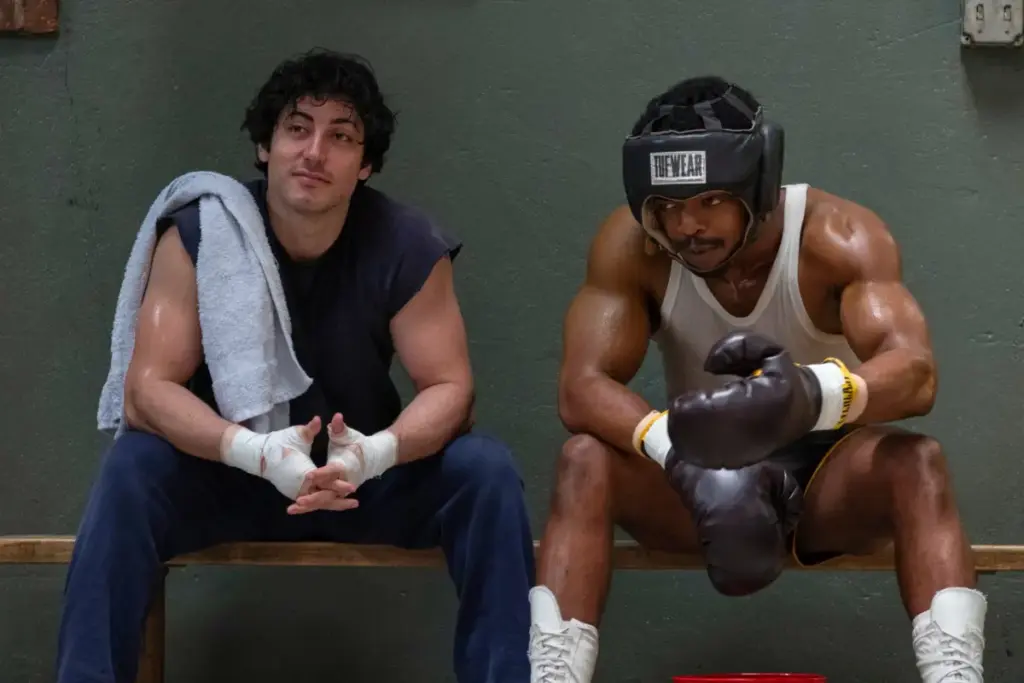
The Toronto International Film Festival (TIFF) has long served as an influential launchpad for cinematic heavyweights, but few anticipated the thunderous, standing-ovation-fueled reception that greeted Peter Farrelly’s biographical drama, I Play Rocky. Chronicling the arduous, near-impossible journey of a struggling, unknown actor-turned-writer named Sylvester Stallone as he fought to bring his underdog boxing script to the silver screen, the film has emerged as an early critical darling and a major awards-season contender.
At the center of the film’s runaway praise is Anthony Ippolito, whose uncanny physical transformation, vocal replication, and emotional gravitas as a young Sylvester Stallone have left audiences and critics spellbound. Directed by two-time Academy Award winner Peter Farrelly—best known for Green Book and There’s Something About Mary—I Play Rocky transforms Hollywood folklore into a visceral cinematic experience.
Yet, the film’s trajectory mirrors its subject matter. Just as Stallone famously rejected a lucrative six-figure payday to ensure he could star as Rocky Balboa himself, the production of I Play Rocky represents a celebration of tenacity against the odds. With strong early reviews, an enthusiastic public reaction, and confirmation that the legendary Sylvester Stallone himself has given the project his blessing, I Play Rocky is shaping up to be one of the most culturally significant and widely discussed releases of the year.
Detailed Chronology: From Philadelphia Streets to the Toronto International Film Festival
To understand the cultural weight of I Play Rocky, one must examine the incredible true story that inspired it—a narrative that feels as engineered as a Hollywood script, yet remains entirely factual.

In the mid-1970s, Sylvester Stallone was a desperate, broke actor in New York City with sparse credits, selling his jewelry just to afford food, and sleeping in the Port Authority bus station. Inspired by the legendary 1975 heavyweight championship bout between a reigning Muhammad Ali and an obscure club fighter named Chuck Wepner, Stallone hastily penned a screenplay in just three and a half days.
The script told the story of Rocky Balboa, a small-time debt collector and club boxer from Philadelphia who receives a once-in-a-lifetime shot at the world heavyweight title. Producers Irwin Winkler and Robert Chartoff loved the script and offered Stallone an escalating series of massive financial buyouts—culminating in a life-changing six-figure sum—on the absolute condition that they cast an established box-office draw like James Caan or Ryan O’Neal in the lead role.
Stallone, who was living in extreme poverty and had a pregnant wife at home, repeatedly turned down the money. He reasoned that if the film failed while starring someone else, he would forever regret selling out; if it failed with him, at least he went down on his own terms. Winkler and Chartoff eventually relented, granting him the role under severely constrained financial terms. They recruited director John G. Avildsen and secured a shoestring budget of just $1 million.
The resulting production was fraught with logistical nightmares, tight schedules, and constant financial peril. Yet, upon its release in 1976, Rocky shattered box-office expectations to become the highest-grossing film of the year. It went on to secure ten Academy Award nominations and claimed three Oscars, including Best Picture and Best Director, transforming Stallone into an overnight global superstar.

Fifty years later, I Play Rocky captures this meteoric rise. Chronicling the grueling behind-the-scenes battles, the casting of Stephen James as Carl Weathers, and the sheer force of will required to birth an American icon, the biographical drama premiered at TIFF to rapturous applause. Eyewitness reports from the festival floor detailed an entire theater rising to its feet before the credits had even finished rolling, establishing the film as the most emotionally resonant crowd-pleaser of the festival.
Supporting Context & Metrics: Critical Reception and Audience Response
The immediate aftermath of the TIFF premiere established I Play Rocky as a critical phenomenon, though one accompanied by the familiar ideological divides that often greet crowd-pleasing biopics.
As of publication, the film holds a solid 76% approval rating on Rotten Tomatoes across initial trade and festival reviews. Prominent film critics and social media tastemakers alike have lined up to shower praise on Farrelly’s direction and Ippolito’s breakout performance.
- The Enthusiastic Chorus: Film critic Brandon Davis hailed the movie as "a really beautiful reminder of the magic and inspiration in filmmaking, swinging a great emotional punch," while labeling Ippolito "a knockout." Similarly, Pete Hammond of Deadline described it as "a winner in every way," praising its ability to carry the exact same "emotional wallop as the original Rocky." Johnny Oleksinski of The New York Post noted the film’s brisk pacing, writing that it "gets more enjoyable as it goes on — right till the end. There’s no sag."
- The Dissenting Voices: As is often the case with heavily sentimental biopics, not all reviews were glowing. Robert Daniels of Screen International dismissed the film as "uninventive" and "a walking piece of pastiche." Meanwhile, Nick Schager of The Daily Beast went further, labeling it "an insult" to the original classic and criticizing it as a "corny pantomime" that pales in comparison to its legendary source material.
- The Audience Divide: Despite select critical reservations, the groundswell of grassroots support from regular moviegoers and influencers has been overwhelming. Review aggregators and social media platforms are flooded with declarations that Ippolito is a surefire Academy Award contender, with many noting that the film’s primary strength lies in its profound nostalgic appeal and unashamed optimism.
Official Statements and Industry Insights
Behind the scenes, the creation of I Play Rocky was a delicate undertaking, particularly given that Sylvester Stallone maintained no official creative involvement in the project. Biographical films about living legends often carry the risk of legal friction or public disapproval. However, director Peter Farrelly put those concerns to rest during a post-screening Q&A session at TIFF.

Addressing the audience after the premiere, Farrelly confirmed that the titular legend has already seen the finished product and given it his seal of approval. When asked if Stallone had evaluated the biopic, Farrelly simply told the crowd: "Yeah, Sly liked it."
For Anthony Ippolito, landing the role of a lifetime was an experience that mirrored the themes of the movie itself. Much like Stallone in 1976, Ippolito was a relatively unknown actor prior to this project—though he gained minor recognition for playing a young Al Pacino in the 2022 television miniseries The Offer. Reflecting on the surreal nature of his casting during the TIFF panels, Ippolito expressed deep gratitude toward the filmmakers:
"I’m grateful they were willing to take a chance on me. The movie shows it’s not easy to be an actor sometimes, and this is absolutely surreal."
Senior Film Reporter Tori Brazier, analyzing the film’s reception, noted that the apparent clichés and direct re-enactments showcased in the initial marketing campaign ultimately proved to be strengths rather than weaknesses.

"The film’s initial reception out of TIFF proves, as ever, that often those things won’t matter if audiences are truly entertained," Brazier observed. "No one can deny the behind-the-scenes struggle Stallone faced to make Rocky is a fascinating one, mirroring a lot of the story onscreen, and it’s unsurprising that Hollywood couldn’t resist retelling this real-life Cinderella story."
Future Outlook: Cultural Legacy and Box Office Projections
As I Play Rocky prepares to make its way from the festival circuit to commercial theaters, its trajectory suggests a resilient box-office run fueled by word-of-mouth enthusiasm and multi-generational affection for the Rocky franchise.
The Rocky universe has proven to be remarkably durable over the past half-century. Following the original 1976 masterpiece, the franchise expanded into a vast cinematic landscape encompassing eight sequels and spin-off films. Most recently, the Creed franchise—anchored by Michael B. Jordan—has successfully carried the torch into a modern era, with 2023’s Creed III marking the first installment in the entire cinematic lineage that did not feature Sylvester Stallone reprising his iconic role as Rocky Balboa.
By stepping backward in time to examine the genesis of the franchise, I Play Rocky bridges the gap between the gritty, independent cinema of the 1970s and the modern Hollywood blockbuster ecosystem. It serves as a meta-narrative about artistic desperation, creative integrity, and the gamble of betting on oneself against corporate risk aversion.

With audiences increasingly fatigued by endless corporate reboots and formulaic superhero universes, a grounded, heartfelt story about the sweat, tears, and raw determination required to make a classic movie offers a refreshing counter-programming option.
I Play Rocky is scheduled to open in United Kingdom cinemas on November 6, followed by its domestic release in United States cinemas on November 20. As ticket pre-sales begin to climb and Oscar buzz intensifies around Anthony Ippolito’s transformative performance, all eyes will be on whether this cinematic underdog can repeat the box-office miracles of its historical muse.