Executive Overview
The intersection of haute couture and artificial intelligence has long been characterized by cautious experimentation, often limited to algorithmic inventory management, automated logistics, or surface-level design inspiration. However, a profound shift is currently underway, led by visionary designers who are leveraging generative tools to dismantle the historical barriers separating creators from consumers. At the vanguard of this movement is Willy Chavarria, the acclaimed American menswear designer whose eponymous label has become synonymous with cultural resonance, raw emotion, and elevated streetwear.
Chavarria is currently exploring a technological leap that could fundamentally redefine digital retail: the integration of an AI-generated clone of his own voice into his brand’s online shopping experience. This innovation envisions a virtual landscape where customers are not merely browsing static product grids, but are guided through collections by a synthetic voice that sounds, speaks, and thinks precisely like the designer himself. While still in its conceptual infancy—with Chavarria noting the inherent strangeness of the concept and the deep thought required before full deployment—this initiative points toward a future where digital flagships offer unprecedented levels of personal storytelling.
This exploration into artificial intelligence is not occurring in a vacuum. It arrives at a critical juncture for the luxury and contemporary fashion sectors, where traditional markers of brand desirability—such as tangible craftsmanship, heritage, and physical prestige—are being rapidly eclipsed by emotional connection, creativity, and cultural relevance. According to recent data from McKinsey, emotional engagement has ascended to become the primary driver of luxury brand desirability in key global markets like the United States and China. As creative directors increasingly function as cultural icons whose personal movements dictate massive financial swings in consumer interest, brands are searching for scalable ways to translate that personal gravity into digital touchpoints.
Chavarria’s recent pilot project with commerce platform Swap—utilizing an AI-powered storefront for his Adidas World Cup collection launch—demonstrates that these technological integrations are more than speculative novelties; they are powerful commercial engines. Generating a twofold revenue increase compared to previous launches, alongside extraordinary engagement with virtual try-on (VTO) tools and rich conversational data analytics, the experiment has provided a blueprint for the future of digital commerce. By bridging the gap between high-concept artistic vision and consumer utility, Chavarria is proving that artificial intelligence can preserve, rather than dilute, the romance and intimacy of fashion.
Detailed Chronology: The Evolution of the Adidas Partnership and AI Integration
The genesis of Willy Chavarria’s current technological trajectory can be traced through a deliberate, stepwise collaboration with commerce platform Swap, culminating in a high-stakes digital launch that challenged conventional e-commerce paradigms.
The Setup: June 2025 Adidas World Cup Collection Launch
For the June release of his highly anticipated Adidas World Cup collection, Chavarria and his team chose to bypass standard e-commerce protocols. Instead of simply dropping the products onto a traditional, static web grid, the brand collaborated with Swap to build an entirely separate, AI-powered storefront dedicated solely to the collection.
Shoppers were funneled into this bespoke digital environment primarily through Willy Chavarria’s owned media channels—including direct-to-consumer email campaigns and social media platforms—while a subtle AI discovery widget integrated into the brand’s main website directed curious visitors toward the experiential storefront.
The Immersive User Experience
Upon entering the Swap-powered portal, users encountered a dynamic, interactive environment that starkly contrasted with typical online shopping experiences. The platform featured:
- Conversational Product Assistants: Shoppers could type or speak natural-language questions regarding the collection, receiving immediate, context-aware answers.
- Virtual Try-On (VTO) Capabilities: Users were invited to visualize garments on their own digital representations, testing fit and styling in real time.
- Curated World-Building: Because the storefront existed independently of the main site, the creative team was able to curate a self-contained aesthetic universe that mirrored the gritty, emotive storytelling of Chavarria’s physical runway shows.
The Immediate Aftermath and Data Harvesting
The six-day launch window yielded a wealth of quantitative data that fundamentally shifted how the design house understands its customer base. Rather than concluding the launch cycle with mere sales receipts, the brand captured 802 distinct conversational signals from shoppers interacting with the AI interface.
This chronology of events—from initial concept to isolated digital storefront, interactive engagement, and post-launch data analysis—has emboldened Chavarria to look beyond basic transactional e-commerce. It has laid the groundwork for his next frontier: the implementation of voice cloning and deeper emotional touchpoints that mimic the physical presence of the designer himself.
Supporting Context & Metrics: Decoding the Numbers Behind the AI Experiment
The commercial viability of artificial intelligence in high-end fashion is frequently met with skepticism by industry traditionalists who argue that algorithms strip away the tactile, romantic essence of luxury goods. However, the hard metrics generated by the Willy Chavarria x Swap collaboration offer a compelling counter-narrative, revealing that algorithmic integration can drastically enhance both revenue and consumer satisfaction when executed with creative integrity.
Revenue and Conversion Milestones
The performance indicators from the initial six-day launch window exceeded internal expectations, validating the hypothesis that consumers crave more immersive, guided digital experiences:
- Revenue Growth: The Swap-powered launch achieved a staggering 2x increase in revenue compared to the brand’s previous collection launch, maintaining comparable conversion rates and average order values.
- Order Volume and Basket Size: Over the first six days, the platform generated more than 1,000 orders, boasting a healthy $249 average order value (AOV).
- Traffic Attribution: Direct, owned, and email traffic proved to be the lifeblood of the campaign, driving an impressive 81% of total revenue, proving that loyal brand followers were eager to step into the bespoke digital environment.
- Virtual Try-On (VTO) Impact: While only 376 shoppers utilized the virtual try-on feature, those who engaged were exponentially more likely to complete a purchase. Approximately 20% of VTO sessions resulted in a transaction, a monumental leap compared to the standard site-wide purchase conversion rate of 0.8%. VTO users ultimately accounted for roughly 7% of total launch orders.
Unlocking Consumer Intent Through Conversational Data
Beyond raw financial metrics, the most transformative outcome of the project lay in qualitative data capture. Traditional e-commerce analytics provide lagging indicators—showing what sold, what was returned, or where a user abandoned a cart, but offering little insight into the why.
The AI storefront’s conversational interface inverted this dynamic by recording active consumer queries. An analysis of the 802 conversational signals tracked during the launch revealed key insights into digital shopping friction:
- Fit and Sizing Anxiety: An overwhelming 44.8% of all inquiries related directly to sizing and fit. Shoppers actively sought guidance on whether pieces ran large or small, how garments draped compared to the campaign models, and which size would best accommodate their specific body types.
- Material and Tactile Inquiries: Customers repeatedly questioned the physical weight, stiffness, and hand-feel of fabrics—attributes that are notoriously difficult to convey through two-dimensional product imagery.
According to Juan Pellerano-Rendón, Chief Marketing Officer of Swap, this technology directly addresses the persistent uncertainty of online apparel retail. In a traditional e-commerce environment, shoppers are left guessing how a garment will interact with their specific skin tone or physical proportions. Tools like virtual try-on and conversational assistants provide an immediate, low-friction read that builds consumer confidence and diminishes return rates.
Official Statements & Industry Perspectives
The convergence of artificial intelligence, designer branding, and consumer psychology has sparked intense debate across the luxury and contemporary fashion landscapes. Industry leaders and academic analysts are closely monitoring how creators utilize technology to bridge the physical-digital divide.
Willy Chavarria on Digital Intimacy and Authenticity
Willy Chavarria approaches the integration of AI with a blend of visionary excitement and cautious self-awareness. He remains deeply protective of the emotional integrity that defines his brand. Discussing the potential of incorporating an AI-generated version of his own voice into the shopping experience, Chavarria acknowledges the surreal nature of the concept:
"At some point, you may even hear my voice talking. It would sound just like me and speak just like me… It’s very weird. That’s why we haven’t done it yet because I still need to put a lot more thought into it."
For Chavarria, the ultimate objective of fashion design transcends mere utility; it is an act of profound storytelling. He points to legendary industry figures like Ralph Lauren—who has pioneered AI styling assistants like "Ask Ralph"—as proof of how personalized digital retail can become. Imagining a future where a shopper visits a digital flagship and hears Lauren himself explain the provenance of a cashmere sweater, Chavarria remarks: "That’s so fun."
He emphasizes that artificial intelligence must serve as an amplifier of human emotion rather than a cold corporate substitute:
"Our goal [as fashion designers] is to be as transparent, romantic, personal and emotional as we can be in the storytelling behind the brand… AI allows you to communicate more personally without being there with your customer."
The Broader Luxury Landscape: Emotional Capital vs. Heritage
Chavarria’s philosophical stance aligns directly with macroeconomic shifts identified by global consulting firms. Recent research published by McKinsey & Company highlights a fundamental evolution in consumer behavior within the luxury sector. Emotional connection has surpassed traditional markers of desirability—such as physical craftsmanship, material rarity, and centuries-old heritage—to become the single greatest driver of luxury brand desirability in key global hubs like the United States and China. Furthermore, in the U.S. market specifically, consumer allegiance is increasingly dictated by raw creativity and cultural relevance.
This shift explains why the movements of creative directors carry such immediate financial weight. When industry heavyweight Jonathan Anderson’s departure from Loewe was announced in early 2025, digital searches for the brand spiked by 38% on fashion search platform Lyst almost instantaneously. Under Anderson’s creative stewardship, Loewe experienced meteoric commercial growth, scaling from an estimated $269 million in annual sales in 2014 to roughly $1.75 billion to $2.34 billion by 2024.
As creative directors solidify their status as the primary conduits of brand equity, technologies that make a designer’s unique point of view, tone, and voice accessible directly at the point of sale represent a massive commercial opportunity.
Future Outlook: The Next Frontier of AI in Fashion Retail
As the fashion industry looks toward upcoming global fashion weeks and retail cycles, the experiments conducted by brands like Willy Chavarria are serving as the pilot programs for a wholesale transformation of digital commerce.
Expanding the "Separate World" Strategy
One of the most significant takeaways from Chavarria’s collaboration with Swap is the efficacy of the isolated, campaign-specific digital storefront. By detaching a collection from the rigid architecture of a brand’s main website, creative teams can construct immersive, narrative-driven digital environments tailored to specific drops, collaborations, or cultural moments. Chavarria has confirmed that he expects to utilize this modular, world-building format for future collaborations, noting how effectively it allows a brand to curate a distinct atmosphere.
The Runway-to-Retail Digital Continuum
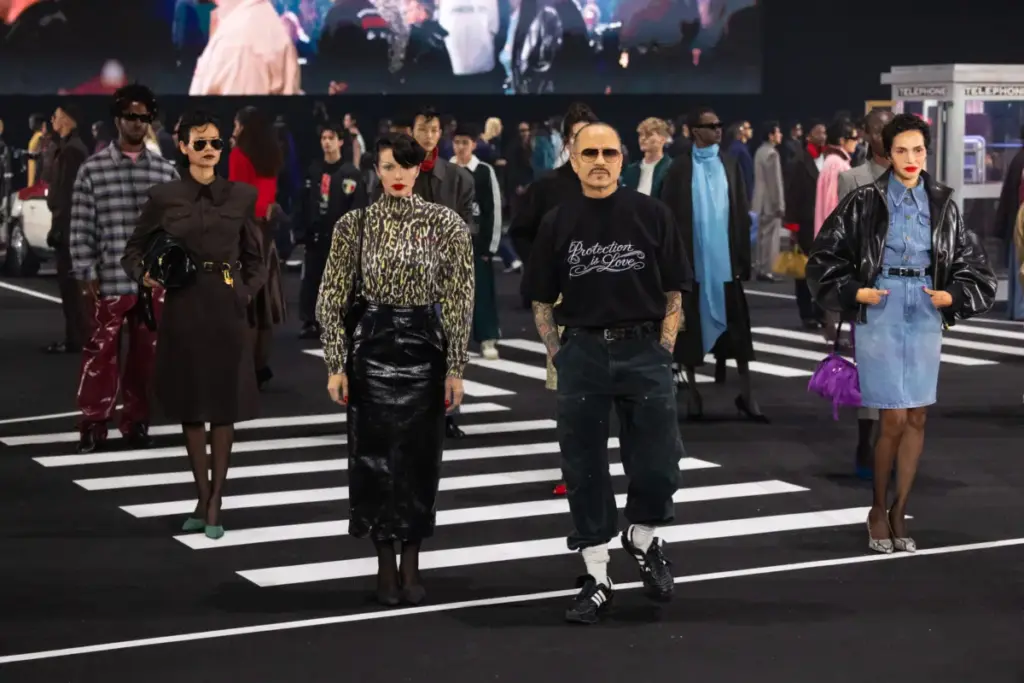
While physical runway shows—with their deliberate manipulation of lighting, sound, spatial temperature, and environmental energy—will remain irreplaceable tools for designers, artificial intelligence is expanding the lifespan and reach of those ephemeral moments. Chavarria has already begun hinting at future integrations of AI surrounding his runway presentations, suggesting that the digital audience may soon experience the visceral energy of a show translated through synthetic storytelling and interactive avatars.
The Horizon of Synthetic Voice and Hyper-Personalization
The realization of a fully voiced, AI-generated Willy Chavarria guiding customers through digital rails is no longer a distant sci-fi fantasy; it is an operational roadmap. As voice-cloning technology matures and ethical frameworks are established to protect creative likenesses, designers will increasingly be able to scale their personal presence across thousands of simultaneous customer interactions.
Ultimately, this technological evolution reframes the digital storefront. Rather than serving as an impersonal digital warehouse designed for fast checkout, the online boutique is evolving into an intimate, conversational salon where the designer is always present—ready to explain a garment’s fit, share the inspiration behind a fabric, and whisper the romantic narrative of the collection directly into the customer’s ear.