
Executive Overview
The fraught legal proceedings surrounding the Lindsay Clancy murder trial in Massachusetts have transcended the bounds of a local courtroom, transforming into a national lightning rod for debates on mental health, judicial integrity, and political discourse. Following six grueling days of jury deliberation that ended in an 11–1 deadlock and a subsequent mistrial, public attention abruptly shifted from the courtroom to the jury room itself. Investigative reporting subsequently revealed that the sole holdout juror—who resisted a verdict of not guilty by reason of lack of criminal responsibility—had a history of domestic violence allegations and an active restraining order against him.
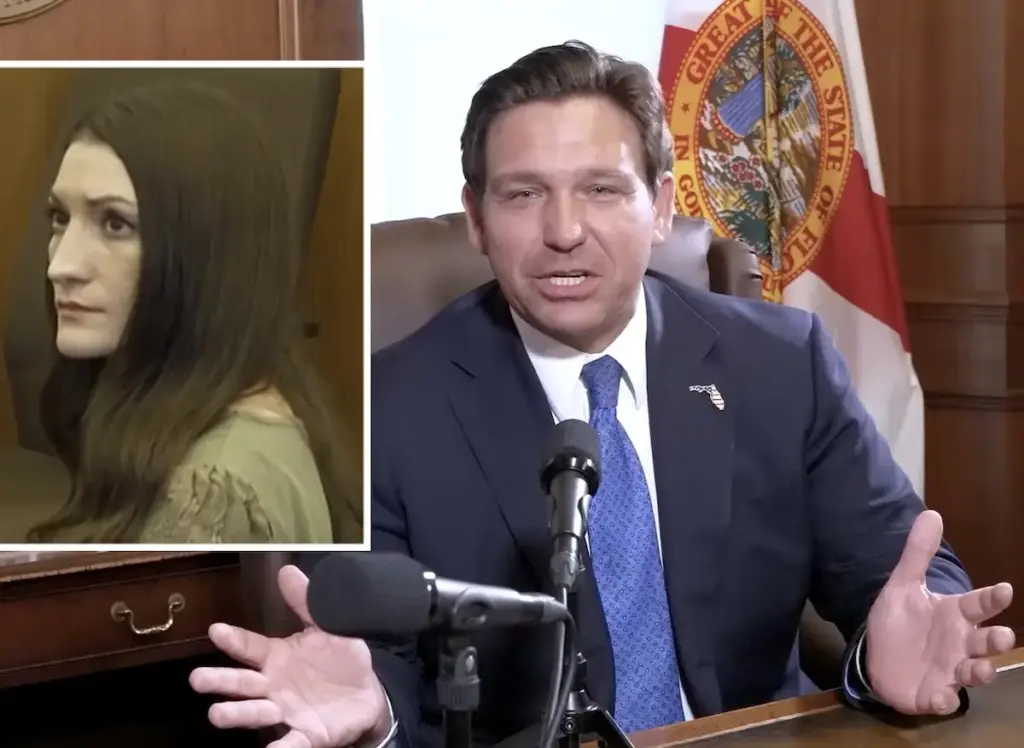
The controversy deepened when Florida Governor Ron DeSantis publicly entered the fray. Criticizing legacy media coverage of the holdout juror, DeSantis accused news outlets of conducting a targeted smear campaign against a citizen exercising his duty. In an unprecedented political gesture, DeSantis offered the lone juror political refuge in Florida should he face harassment.
This unexpected intervention highlights growing friction between state-level executive authority, public press scrutiny, and the sanctity of jury deliberations. Furthermore, the revelation of the juror’s legal history has raised systemic questions regarding the efficacy of jury screening mechanisms in Massachusetts, even as prosecutors weigh whether to subject the Clancy family and the public to a second emotionally devastating trial.
Detailed Chronology
[January 2023] ---------------------------------------------------- [Late 2023 – Early 2025]
Tragedy in Duxbury:                                                Pre-Trial Motions & Psychological Assessments:
Lindsay Clancy allegedly strangles her three young children.       Defense builds case around postpartum psychosis;
Defense asserts severe postpartum psychosis & medication toxicity.  prosecution asserts premeditation.
                                                                            │
                                                                            ▼
[Recent Trial Proceedings] ---------------------------------------- [Mistrial Declared]
Jury deliberates for 6+ days; reports 11–1 deadlock three times.    Judge William Sullivan declares mistrial after jury
11 favor "not guilty by reason of lack of criminal responsibility." confirms irreversible impasse.
                                                                            │
                                                                            ▼
[Post-Mistrial Investigative Disclosures] ------------------------ [Political Escalation]
NBC10 Boston uncovers holdout juror's history of domestic violence  Florida Gov. Ron DeSantis publicly blasts media coverage,
allegations and a active 2025 restraining order.                   offering the holdout juror "asylum" in Florida.
The Duxbury Tragedy and Pre-Trial Proceedings
In January 2023, emergency responders arrived at the Clancy household in Duxbury, Massachusetts, discovering a scene of unthinkable domestic tragedy. Lindsay Clancy, a 32-year-old labor and delivery nurse, was accused of strangling her three children—five-year-old Cora, three-year-old Dawson, and eight-month-old Callan—before attempting to take her own life by jumping from a second-story window.
The defense maintained that Clancy was suffering from severe postpartum psychosis, compounded by a complex regimen of prescribed psychiatric medications that severely impaired her mental state. Prosecutors, conversely, argued that the actions were planned, pointing to internet searches and daily routines prior to the incident as evidence of legal sanity and criminal intent.
The Trial and the 11–1 Impasse
The trial, presided over by Superior Court Judge William Sullivan, involved extensive expert testimony regarding perinatal mental health, forensic psychiatry, and toxicological analysis. Upon receiving the case, the jury engaged in intensive deliberations lasting more than six days.
During this period, the foreperson sent three separate notes to Judge Sullivan indicating that the panel was deadlocked. Eleven jurors supported a verdict of not guilty by reason of lack of criminal responsibility (the legal equivalent of an insanity defense in Massachusetts), while a single holdout insisted on a conviction for murder. On Friday, concluding that further deliberation would not yield a unanimous consensus, Judge Sullivan officially declared a mistrial.
Investigative Revelations and Executive Reaction
Shortly after the mistrial was declared, NBC10 Boston published an investigative report detailing the background of the lone holdout juror. The outlet revealed that in 2021, the juror was charged with domestic assault following an incident in which his teenage nephew reported witnessing an assault on the juror’s then-wife; that charge was ultimately dismissed. Furthermore, the same nephew successfully obtained a civil restraining order against the juror in early 2025, alleging an altercation involving physical battery.
The media coverage sparked immediate backlash from conservative political figures, most prominently Florida Governor Ron DeSantis. Taking to social media and public address, DeSantis framed the reporting as an unlawful attempt to intimidate a juror who stood against a high-profile acquittal, offering the individual official refuge in Florida.
Supporting Context & Metrics
Judicial Vetting and Jury Integrity Metrics
The disclosure of the holdout juror’s legal background has drawn intense scrutiny toward the jury selection (voir dire) process in Plymouth County, Massachusetts. Under Massachusetts General Laws, prospective jurors are required to complete detailed questionnaires requiring explicit disclosure of:
- Prior arrests and criminal charges (regardless of disposition);
- Active or historical court orders, including domestic violence restraining orders (209A orders);
- Personal involvement with law enforcement or the court system as a defendant or named party.
| Metric / Parameter | Standard Requirement (MA Courts) | Disclosed Holdout Profile | Legal Implication |
|---|---|---|---|
| Criminal History Screening | Mandatory self-disclosure of all prior arrests | 2021 Arrest (Domestic Assault – Dismissed) | Potential omission during voir dire or court background oversight |
| Active Restraining Orders | Disclosure of ongoing civil/criminal court orders | Active 2025 Restraining Order (Physical Battery Allegation) | Direct conflict with jury fitness criteria |
| Deliberation Duration | Average criminal trial: 1–3 days | Exceeded 6 days (11–1 split verified 3 times) | Demonstrates systemic impasse driven by single juror |
Legal scholars note that if a prospective juror fails to accurately disclose a history of arrests or active protective orders, it can constitute juror misconduct or expose structural flaws in court-administered background checks. Defense attorneys frequently argue that undisclosed domestic violence histories can bias a juror in cases involving violence against family members, potentially contaminating the trial’s neutrality.
The Legal Framework of Criminal Responsibility
Under Massachusetts law (specifically following the landmark precedent set in Commonwealth v. McHoul), a person is not criminally responsible for criminal conduct if at the time of such conduct, as a result of mental disease or defect, they lacked substantial capacity either to appreciate the criminality of their conduct or to conform their conduct to the requirements of law.
[Defendant Accused of Violent Crime]
                 │
                 ▼
[Pleads Lack of Criminal Responsibility (McHoul Standard)]
                 │
  ┌──────────────┴──────────────┐
  ▼                             ▼
[Mental Disease / Defect?]   [Substantial Capacity Assessment]
  │                             │
  ├─ Postpartum Psychosis       ├─ Ability to appreciate criminality?
  └─ Involuntary Intoxication   └─ Ability to conform conduct to law?
A finding of "Not Guilty by Reason of Insanity" does not result in a defendant’s immediate release. Instead, it triggers automatic commitment to a secure state mental health facility—such as Solomon Carter Fuller Mental Health Center or Bridgewater State Hospital—for initial evaluation, followed by potential indefinite civil commitment subject to annual judicial review.
Official Statements
Executive Branch Intervention
Governor Ron DeSantis issued a harsh critique of news organizations covering the holdout juror’s history, casting the journalism as political harassment rather than public interest reporting:
"A man objected to allowing a woman to kill her three young kids and get away with it, so NBC is trying to smear that juror, whose identity should be protected. Another low for legacy media. If the juror is being harassed, Florida will provide asylum — I’m sure he’d be welcomed and appreciated."
— Gov. Ron DeSantis, State of Florida
Media and Public Defense Response
In response to criticisms regarding juror privacy, editorial leaders and legal analysts defended the decision to examine the holdout juror’s court records. News organizations emphasized that while juror identities are generally shielded during proceedings, public court records regarding criminal charges and restraining orders are matters of public record—particularly when they bear directly on whether court screening mechanisms functioned properly during jury selection.
Legal representatives for Lindsay Clancy have refrained from publicly attacking the holdout juror directly, focusing instead on the evidentiary record. However, sources close to the defense highlighted that the 11–1 consensus among a randomly selected cross-section of citizens underscored the weight of the psychiatric evidence presented during the trial.
Future Outlook
The declaration of a mistrial leaves the prosecution at a critical strategic crossroads. The Plymouth County District Attorney’s Office faces significant legal, financial, and societal considerations as it determines whether to pursue a second trial.
[Mistrial Declared]
         │
         ▼
[Scheduled Status Hearing]
         │
  ┌──────┴────────────────────────────────┐
  ▼                                       ▼
[Option A: Motion to Retry]             [Option B: Disposition / Plea Agreement]
  │                                       │
  ├─ Re-evaluating Jury Selection         ├─ Civil Commitment Agreement
  ├─ Witness / Victim Family Toll         └─ Reduced Charges Negotiation
  └─ Risk of Second Deadlocked Jury
Strategic Options for the Prosecution
- Electing a Retrial: Prosecutors may elect to empanel a new jury. Given that 11 of the 12 original jurors favored acquittal by reason of lack of criminal responsibility, prosecutors must weigh the likelihood of securing a unanimous conviction against the emotional toll on surviving family members and the substantial cost to the commonwealth.
- Negotiated Resolution or Civil Commitment: Prosecutors and defense counsel may explore an agreement that routes Clancy directly into long-term psychiatric commitment without subject medicine and the family to a second length trial, effectively achieving the statutory outcome of a non-guilty by reason of insanity verdict.
- Investigating Juror Vetting Failure: The trial court may conduct an internal review of the jury selection procedures utilized in this case to ascertain how an individual with an active restraining order and prior arrest record bypassed disqualification protocols.
A formal status hearing has been scheduled for later this month, during which the court and counsel will address procedural motions and the prosecution is expected to announce its intention regarding a retrial. Regardless of the decision, the intersection of mental health law, jury accountability, and political rhetoric in the Clancy case will likely serve as a reference point for legal analysts and policymakers for years to come.