Executive Overview
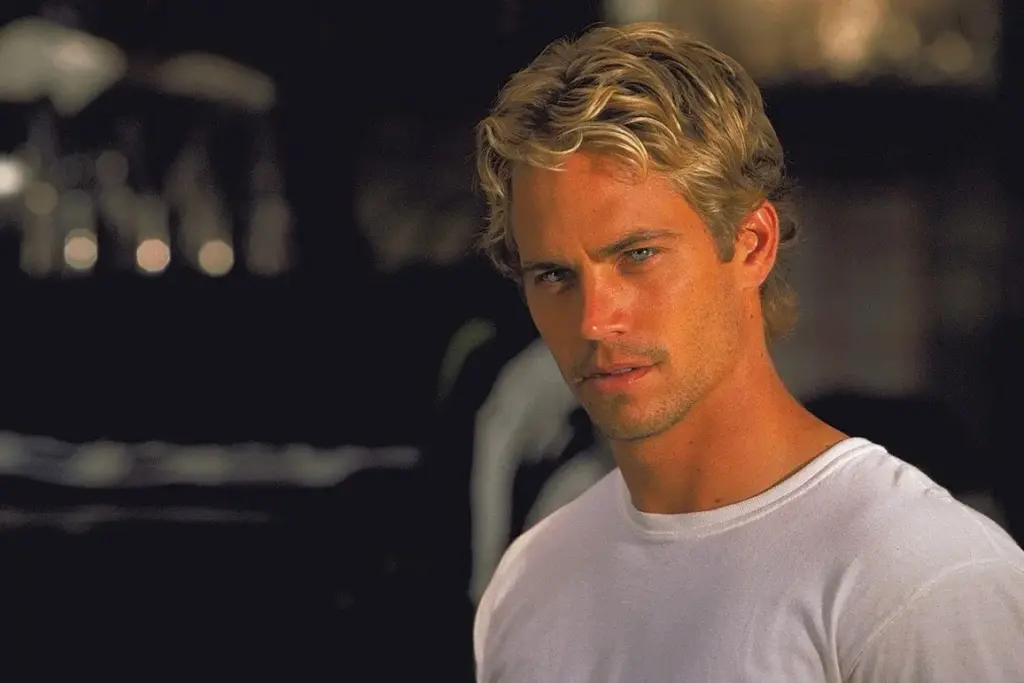
As the multi-billion-dollar Fast & Furious franchise races toward its ultimate conclusion with the tentatively titled Fast Forever, scheduled for a theatrical release in the spring of 2028, a profound emotional and technical hurdle looms over production. At the center of this controversy is the beloved character Brian O’Conner, originally brought to life by the late Paul Walker, who tragically died in a car crash in November 2013 during the production of Furious 7.
The question of whether O’Conner can—or should—make a posthumous return for the franchise’s final installment has sparked intense debate among fans, studio executives, and the Walker family alike. Recently, Cody Walker, Paul’s brother who famously stepped in alongside sibling Caleb as a physical body double to help complete Furious 7, addressed the swirling rumors regarding an AI-driven or archival-footage-based resurrection. Cody’s stance has shifted significantly over the past decade: while he acknowledges that modern artificial intelligence and mountains of unused footage make a digital return technically possible, he has firmly washed his hands of participating in the process. Instead, Cody maintains that any decision regarding Paul’s digital likeness belongs solely to Paul’s daughter, Meadow Walker.
This perspective introduces a fascinating tension into the production, particularly given franchise anchor Vin Diesel’s public mandates for the finale. Diesel has claimed that his agreement to helm the grand finale hinged upon a triad of conditions: returning the series to its Los Angeles roots, leaning heavily back into underground street-racing culture, and reuniting Dominic Toretto with Brian O’Conner. As Hollywood grapples with the ethical boundaries of generative AI, digital double technology, and posthumous acting rights, the Fast & Furious finale stands as a high-stakes litmus test for how franchises handle the digital eternity of their departed stars.
Detailed Chronology: From Tragedy to the Final Chapter
To understand the weight of the decisions currently facing the Fast & Furious creative team, one must look back at the unprecedented logistical and emotional crisis that struck Universal Pictures in late 2013.
November 2013: The Unthinkable Loss
On November 30, 2013, Paul Walker died alongside his friend and financial advisor Roger Rodas in a single-vehicle accident in Valencia, California. At the time, production on Furious 7—the seventh installment in the high-octane action franchise—was only halfway finished. Universal Pictures was forced to halt production indefinitely, plunging the studio, the cast, and millions of fans worldwide into grief. Director James Wan, writer Chris Morgan, and the studio executives faced an impossible choice: scrap the multi-million-dollar production entirely, completely rewrite the script to kill off Brian O’Conner off-screen, or find a groundbreaking way to finish the film while honoring the actor’s legacy.
April 2015: The Furious 7 Farewell
Ultimately, the team chose a hybrid approach. Paul’s brothers, Cody and Caleb Walker, stepped forward as body doubles, while Peter Jackson’s visual effects house, Weta Digital, constructed digital facial replacements using a combination of outtakes from previous films, CGI, and lighting tricks. The resulting send-off for Brian O’Conner was universally praised as both tasteful and emotionally resonant. Rather than killing off the character in a fiery, violent car crash—a fate bitterly ironic given Walker’s real-life passing—the film depicted Brian driving away into the sunset, choosing to retire from the high-risk life of international espionage to focus on raising his family with Mia Toretto. It was a poignant, bittersweet farewell that satisfied both narrative demands and emotional closure.
2018–2025: Shifting Sentiments on a Return
In the years immediately following Furious 7, the Walker brothers were open to the idea of a minor, highly regulated cameo. During promotional tours in 2018, Caleb Walker expressed hope that they might find a way to bring Paul back for a small, heroic moment to "save the day." Cody echoed these sentiments, noting that a return would require immense forethought and rigorous standards of tastefulness.
However, as the franchise expanded through F9 and Fast X—where Brian’s presence was continuously felt through clever framing and off-screen mentions—the landscape of entertainment technology shifted dramatically. Generative artificial intelligence, deepfake technology, and neural rendering progressed from experimental novelties into sophisticated, accessible tools. By the time Vin Diesel spoke to Vanity Fair in 2025, outlining his strict conditions for Fast Forever, the conversation around digital resurrections had moved past physical stand-ins and into the realm of algorithmic synthesis.
Supporting Context & Metrics: The Evolution of Digital Doubles and AI in Cinema
The debate surrounding the potential resurrection of Brian O’Conner is not occurring in a vacuum; it sits at the bleeding edge of a broader, highly contentious industry-wide conversation regarding the use of Artificial Intelligence and digital likenesses in Hollywood.
The Technological Landscape in 2014 vs. Today
When Weta Digital recreated Paul Walker for Furious 7 in 2014, the process was painstakingly manual. It required:
- Over 30 distinct visual effects shots utilizing Paul’s brothers as physical reference points.
- Extensive mapping of archival audio and visual footage from The Fast and the Furious (2001) through Fast & Furious 6 (2013).
- Millions of dollars and thousands of man-hours to achieve photorealistic results for just a handful of concluding scenes.
Today, generative AI tools can analyze hours of archival footage in mere seconds, synthesizing facial expressions, vocal inflections, and lighting interactions with astonishing fidelity. Cody Walker himself acknowledged this technological leap in his interview with Entertainment Weekly:
"AI was not a thing back in 2014, so they could do that… There’s years of footage that was never used from these other ‘Fast’ films. They’re the best in the business, they can figure that out."
Legal, Ethical, and Financial Implications
The integration of deceased actors via AI opens a Pandora’s box of ethical dilemmas that Hollywood unions, entertainment lawyers, and artist estates are currently racing to regulate:
- Posthumous Rights: Unlike living actors who can negotiate likeness agreements, deceased actors rely entirely on their estates to govern how their digital images are utilized.
- Audience Reception: While some fans view digital resurrections as a touching tribute, others condemn the practice as a form of digital necromancy that commodifies grief and strips away the authentic human element of acting.
- Precedent: The Fast & Furious franchise has grossed over $7 billion globally, making it one of the most financially lucrative intellectual properties in cinematic history. How Universal Pictures handles the digital legacy of Paul Walker will set a massive legal and ethical precedent for how major studios manage legacy characters whose actors have passed away.
Official Statements and Perspectives
The friction regarding Fast Forever does not stem from a lack of technical capability, but rather from divergent visions held by the key stakeholders: Cody Walker, Vin Diesel, and the Walker estate.
Cody Walker’s Definitive Step Back
Cody’s recent remarks signal a definitive boundary. While he does not stand in the way of the studio utilizing advanced technology or unused footage, he has made it clear that he and his brother Caleb will not be repeating their physical roles from Furious 7.
"My stance is, it’s what Meadow wants to see done; it’s her father," Cody stated. "I would not be interested in doing that again. I love the way his character exited the franchise. They didn’t kill him off, they didn’t do something cheesy like that. It’s beautiful, [Brian] is off raising his kids. But if they want to do that, if Meadow would like to see that, they don’t need me or Caleb."
By shifting the ultimate moral authority to Meadow Walker—Paul’s daughter—Cody successfully insulates himself from the creative decisions of the studio while respecting the immediate familial lineage.
Vin Diesel’s Creative Mandates
On the other side of the equation sits Vin Diesel, whose protective stewardship of the Fast & Furious mythology is well-documented. Speaking to Vanity Fair, Diesel revealed the hard-nosed negotiations that preceded his sign-off on the finale:
"The studio said to me, ‘Vin, can we please have the finale of Fast & Furious [in] April 2027?’ I said, ‘Under three conditions.’ The first is to bring the franchise back to L.A. The second thing was to return to the car culture, to the street racing. The third thing was reuniting Dom and Brian O’Conner. That is what you’re going to get in the finale."
Diesel’s absolute declaration that audiences will witness a reunion between Dom Toretto and Brian O’Conner places immense pressure on the visual effects teams and the scriptwriters. It promises an emotional payoff that may require crossing ethical and technical boundaries to fulfill.
Navigating the "Mountain" on Vin Diesel’s Shoulders
Despite the creative demands, Cody Walker expressed deep empathy for the monumental burden carried by Diesel as he steers the franchise toward its final horizon. Describing his conversations with the actor, Cody noted:
"I have no idea what to expect there… I talked to Vin, and when it comes to this whole process, he gets very ethereal; it’s a lot of weight. The guy is incredible, he’s extremely gifted, he takes this very seriously and there’s a mountain on Vin’s shoulders. He wants this to be the best one and as good as it can be because it’s the final [one]."
Future Outlook: What to Expect from Fast Forever
As Fast Forever marches toward its targeted theatrical release date of March 17, 2028, the production remains a masterclass in high-stakes filmmaking.
The central question remains: Will Brian O’Conner physically, digitally, or implicitly return?
Several pathways lie open to the creative team:
- The Full AI Integration: Utilizing generative AI and deepfake technology, combined with unused archival footage, to manifest a fully rendered digital double of Paul Walker interacting directly with Vin Diesel in Los Angeles. This satisfies Diesel’s third condition explicitly, though it risks alienating purists and raising intense ethical debates.
- The Implied Reunion: A narrative workaround where Brian O’Conner’s presence is heavily felt through clever editing, phone calls, shadows, or over-the-shoulder shots utilizing stand-ins, ensuring that Dom’s "reunion" with his brother is felt emotionally without fully synthesizing Paul’s likeness.
- Respecting the Peaceful Exit: Abandoning plans for a direct visual reunion in light of Meadow Walker’s preferences, instead focusing the narrative closure on the surviving members of the Fast family while honoring Brian’s legacy off-screen.
Whatever path Universal Pictures, Vin Diesel, and the Walker family ultimately choose, the shadow of Paul Walker will unquestionably define the emotional core of Fast Forever. For a franchise built on the foundational mantra of "family," the final chapter will test not only the limits of cinematic technology, but the bounds of respect, memory, and grief in the modern Hollywood machine.