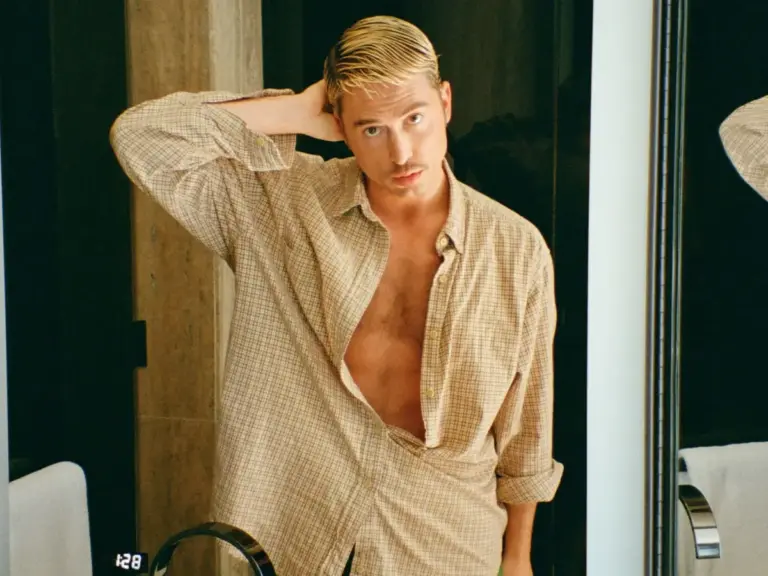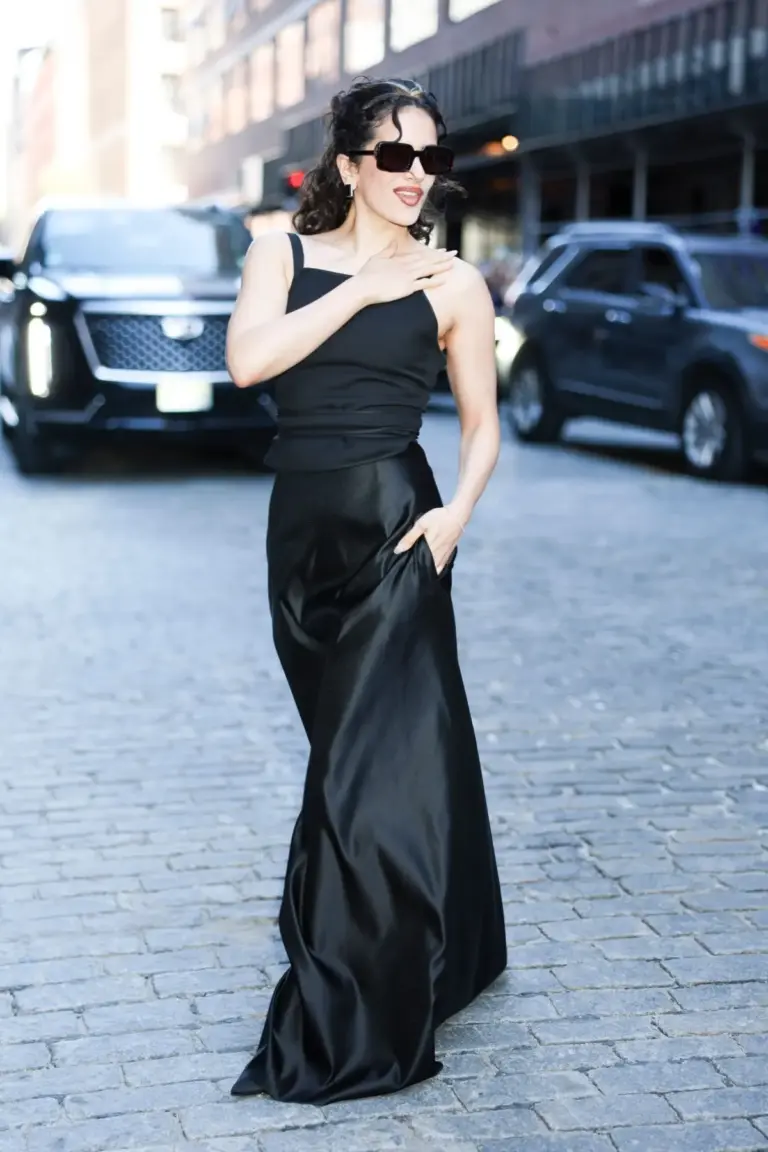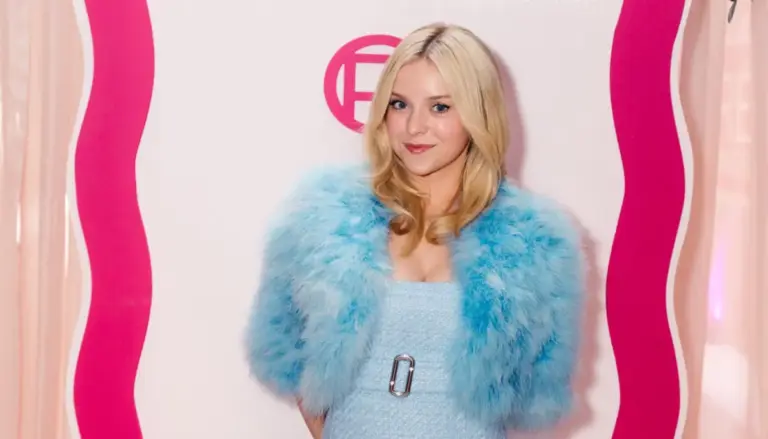
In an era defined by hyper-connectivity, relentless digital notifications, and the ceaseless velocity of contemporary life, contemporary culture is experiencing a profound counter-movement: the conscious deceleration of pace. Nowhere is this tension more palpable than in the high-stakes, overstimulated ecosystem of New York Fashion Week (NYFW). Amidst the frantic cadence of runway shows, flashing paparazzi bulbs, and frantic backstage productions, PAPER magazine has partnered with the LEGO Group for an imaginative new editorial campaign titled "Your Favorite Model’s Favorite Model."
By bridging the worlds of high fashion and tactile play, this collaborative venture explores an unexpected intersection: the parallels between the curated self-expression of personal style and the deliberate, brick-by-brick creation of complex LEGO sets designed specifically for adults (ages 18+). Featuring iconic supermodel Joan Smalls alongside rising industry talents Soap California and Danielle Mareka, the campaign challenges the boundaries of modern leisure. It posits that true luxury in the twenty-first century is not merely access, but the unhurried sovereignty of time—the liberty to disconnect from glowing screens and immerse oneself in tactile, analogue creation.
This deep-dive feature examines the genesis of the PAPER x LEGO collaboration, dissects the sensory parallels between a high-fashion photo set and structural building, and investigates the broader cultural psychology driving adults back to brick-based play as a legitimate form of stress mitigation and artistic expression.
Detailed Chronology: From Concept to Campaign Realization
The genesis of "Your Favorite Model’s Favorite Model" began as a conceptual exercise in contrasting environments. The editorial team sought to juxtapose the sensory overload of fashion month with the meditative, solitary concentration required to assemble intricate, adult-targeted LEGO architectural and botanical sets.
Phase One: Conceptualization and Cross-Industry Synthesis
Months prior to the campaign’s public rollout, creative strategists from PAPER and brand representatives from the LEGO Group began plotting an editorial narrative that would dismantle preconceived notions of who LEGO bricks are for. Moving past the traditional demographic of children and adolescents, the team focused on the booming "AFOL" (Adult Fan of LEGO) market. They recognized that contemporary adults—particularly those working within fast-paced creative industries like fashion—crave tangible, screen-free hobbies that offer immediate creative agency without professional stakes.
The thematic anchor of the campaign became Fashion Week itself. Fashion is fundamentally about construction: tailoring garments, layering textures, mixing color palettes, and building a silhouette piece by piece. The editorial team realized that this architectural approach to dressing mirrors the foundational mechanics of a LEGO build. Thus, the concept was born: position high-fashion models not just as passive clothes-horses, but as active creators whose off-duty imaginations are fueled by tactile play.
Phase Two: Casting and Set Production
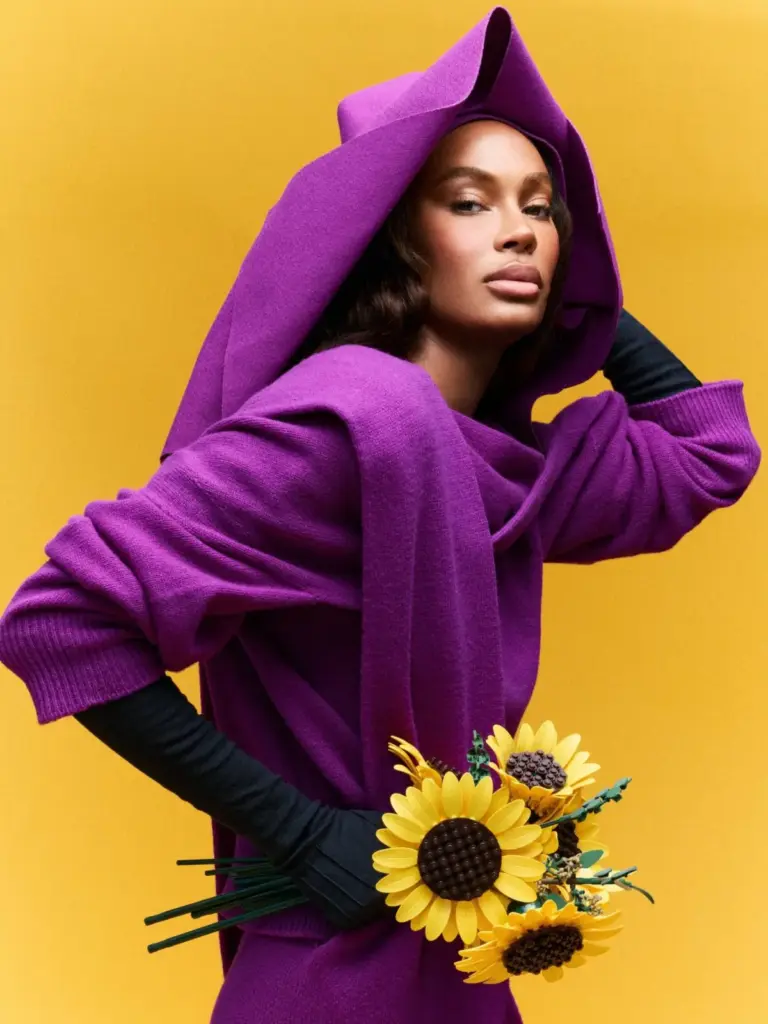
Securing supermodel Joan Smalls alongside emerging talents Soap California and Danielle Mareka established the high-low aesthetic core of the project. Smalls, a veteran of global runways, brought an authoritative elegance to the shoot, styled in avant-garde statement pieces from high-end houses including Tom Ford (via Cloak Wardrobe), Oscar de la Renta, Aknvas, Matières Fécales, Christian Louboutin, Georg Jensen, Laquan Smith, and Saint Laurent.
On set, the chaotic, high-stress atmosphere characteristic of a major fashion production was intentionally mirrored—and playfully subverted. Production assistants buzzed around with headsets, frantic whispers filled the corners, and lighting directors calibrated complex arrays. Yet, amidst the controlled frenzy, the models were captured completely absorbed in building LEGO sets. In a delightful blurring of reality and artifice, the talent became so engrossed in their construction projects that they occasionally went "AWOL" on set, ignoring frantic calls from production staff as they meticulously snapped bricks into place.
Phase Three: Editorial Execution and Personal Reflection
The campaign culminated in a series of striking visual spreads and behind-the-scenes narratives written from the perspective of the creators. Writers and producers on the project documented their own simultaneous immersion into LEGO building—specifically selecting complex adult sets like the 958-piece Paris – City of Love architecture kit. The tactile experience of sorting bricks, deciphering instruction manuals, and watching a miniature cityscape materialize under one’s fingertips served as a physical manifestation of the mental decompression required after a grueling fashion season.
Supporting Context & Metrics: The Rise of Adult Play and Creative Escapism
To fully understand the cultural resonance of the PAPER and LEGO collaboration, one must analyze the broader socioeconomic shifts driving modern consumer behavior. The phenomena of "adult play" and "escapist analog hobbies" are not fleeting social media trends; they represent a multi-billion-dollar market shift accelerated by digital fatigue.
The Psychology of Tactile Decompression
Psychologists and consumer researchers have noted a significant uptick in adults turning to tactile, goal-oriented hobbies—such as puzzle-solving, baking, gardening, and building toy models—as a defense mechanism against technostress. Unlike professional labor or digital consumption (scrolling social media, streaming video), which often leaves individuals feeling drained and fragmented, physical building engages the hands and spatial reasoning centers of the brain in a closed-loop system.
- Flow State Induction: Assembling a complex LEGO set requires sustained, low-stakes focus that frequently induces a "flow state"—a psychological condition where an individual is fully immersed in a feeling of energized focus, full involvement, and enjoyment in the process.
- Tangible Reward Loops: In a digital workspace where output is often abstract (spreadsheets, emails, digital designs), a physical LEGO build offers a concrete, permanent monument to time well spent. Upon placing the final brick, the creator experiences an immediate surge of self-efficacy and pride.
The Evolution of the LEGO Adult Portfolio
For decades, the toy industry categorized construction toys strictly by age brackets, capping interest at adolescence. However, over the past ten years, the LEGO Group deliberately carved out an expansive portfolio explicitly marked "18+." Spanning hyper-detailed botanical collections, iconic architectural landmarks, classic cinematic vehicles, and intricate art pieces, these sets are explicitly marketed toward contemporary adults seeking design-forward home decor objects that double as mindful pastimes.
The partnership with PAPER capitalizes directly on this evolution. By placing these sophisticated sets side-by-side with haute couture fashion, the campaign elevates the plastic brick from a child’s plaything to a chic, culturally relevant lifestyle accessory for the modern tastemaker.
Official Statements & Creative Leadership Insights
The success of "Your Favorite Model’s Favorite Model" rests on the collaborative vision of an extensive creative and production team. Below is a comprehensive record of the key leadership figures and creative forces who brought this editorial campaign to life:
-
Executive Leadership:
- Chief Creative Officer: Brian Calle
- President: Jason Ve
- Executive Creative Director: Jordan Bradfield
- VP Brand Partnerships: Jamie Granoff
- Digital Director: César Alvarez
- Fashion Director: Angelina Cantú
- Executive Producer: Aya Sloan
- Senior Creative Strategist: Aires Amor
- Senior Creative Strategist: Jordyn Albritton
- Jr. Producer: Melina Brown
-
Production and Visual Art:
- Photography: Jonas Huckstorf
- Director of Photography: Jeremy Herron
- Story & Narrative: Taylor Lomax
-
Talent Styling and Execution (Joan Smalls):
- Styling: Abisoye Odugbesan
- Makeup Artist: Ngozi Esther Edeme
- Hair Artist: Aminata Kamara
- Nail Artist: Dawn Sterling
- Set Designer: Allegra Peyton
- Stylist Assistant: Alana Newton
- Lighting Director: Mia Dawson
- 2nd Assistant: Conor Egan
- Digital Technician: Terry Broadbent
- Background Talent: Bernice Mulenga
-
Talent Styling and Execution (Soap California & Danielle Mareka):
- Styling: Arut Arustamyan
- Hair Artist: Dylan Silver
- Nail Artist: Danny Tavarez
- Set Designer: Allegra Peyton
- Assistant Set Designer: Kaleb Clifford
- Stylist Assistant: Max Reid
- Hairstylist Assistant: Ryn Major
- Production Support: Emnet Simunyola
- 1st Assistant: Alex Kalb
- 2nd Assistant: Thomas Chimeny
- Digital Technician: Kylie Coutts
- Sound Mixer: Mazal Kaykova
- Background Talent: Teak Hodge
Reflecting on the campaign’s core ethos, the collaborative creative team emphasized that fashion and play share a common denominator: the profound joy of self-expression. As noted in the editorial commentary, while much of Fashion Week—and modern life at large—remains entirely outside of individual control, the personal curation of style, leisure, and creative outlets remains a powerful domain of autonomy.
Future Outlook: The Intersection of Luxury and Mindful Leisure
As brands increasingly look for unconventional ways to cut through the noise of digital saturation, cross-industry collaborations like PAPER x LEGO offer a blueprint for the future of lifestyle marketing. The initiative demonstrates that modern consumers—particularly trendsetting urbanites and creative professionals—are fatigued by single-lane branding. They expect cultural arbiters to converse fluently across disparate domains, linking high fashion with domestic leisure, and high-octane spectacle with mindful introspection.
Looking ahead, we can anticipate a continued blurring of lines between childhood nostalgia and adult luxury. As wellness increasingly pivots away from passive consumption toward active, tactile mental health practices, hobbies that require physical assembly and patience will maintain their cultural currency.
Whether displayed as a conversation piece on an apartment bookshelf in Paris or serving as a grounding ritual backstage at Lincoln Center, the humble LEGO brick has successfully cemented its status as an unexpected staple of modern adult chic. In a world hurtling forward at full speed, taking the time to sit down, ignore the phone, and build something entirely for oneself is perhaps the ultimate luxury statement of the decade.