
Executive Overview
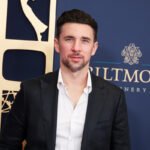
Amid the whirlwind of the Toronto International Film Festival (TIFF), where the usual frenzy of global press tours and frantic studio visits transforms downtown hotels into labyrinthine hubs of industry activity, Sebastian Stan cuts a remarkably grounded figure. Seated in a bustling restaurant, casually digging into a chicken salad between high-profile junket sessions, the actor reflects on a career trajectory that has defied conventional Hollywood physics.
Stan is currently riding the momentum of a historic career zenith. Following a critically lauded 2024 that earned him an Academy Award nomination for his transformative turn as a young Donald Trump in The Apprentice—and a Golden Globe win for Best Actor in a Motion Picture – Musical or Comedy for his work in Aaron Schimberg’s psychological exploration A Different Man—Stan is no longer just a franchise staple. He is a shape-shifting character actor operating at the absolute peak of his powers.
Yet, as he explains to Variety, his sights are currently set on deeply personal storytelling and high-prestige auteur collaborations. From chasing a childhood dream to return to his roots in Fjord—the first English-language feature by acclaimed Romanian director Cristian Mungiu—to crossing the traditional studio aisle from Marvel to DC for Matt Reeves’ subterranean Gotham epic, Stan is actively dismantling the very notion of career safety. In an era marked by hyper-exposure and audience fatigue, Stan has cultivated a professional ethos anchored in creative reinvention, emotional resonance, and an absolute allergy to repeating himself.
Detailed Chronology: The Evolution of a Chameleon
Returning to the Source: The Genesis of Fjord
For Stan, the road to Fjord began decades ago. Emigrating from Romania as a young boy, Stan carried with him the complex, often contradictory psychic weight of the immigrant experience: the acute self-awareness of being different, the early lessons in blending in, and a lingering sense of geographic and cultural displacement.
"When I read the script, I remembered coming to the U.S. and the shame I felt," Stan reflects. "My mom always told me… you don’t want to make allies, you don’t want to make enemies, you want to be nice to everybody."
As he entered his late teens and began to process his identity, Stan made a quiet promise to himself: one day, he would return to Romania to make a film in his native tongue. That ambition finally materialized through a long-cultivated relationship with Palme d’Or-winning Romanian auteur Cristian Mungiu. Having tracked Mungiu’s morally ambiguous, intensely observational filmmaking style for years, Stan waited for the right project to bridge the gap.
That project became Fjord, a film inspired by a real-life family whose children were seized by the state. In the film, Stan stars as Mihai, a fundamentalist father grappling with the unimaginable loss of his children. Shot in Mungiu’s signature register—characterized by long, unbroken takes and a deliberate, provocative refusal of the cinematic close-up—Fjord serves as a stark departure from the polished aesthetics of Hollywood blockbusters.
To prepare for the role, Stan looked beyond the immediate headlines of the real-world case, drawing instead on his own complex relationship with his father, memories of his maternal grandfather, and the stoic, emotionally guarded archetypes of Eastern European masculinity. He even attended religious sermons across Romania to understand the unflinching, fatalistic trust in divine intervention that defined his character’s worldview—a psychological framework entirely alien to his own instincts as a parent.
Crossing the Aisle: From Marvel to DC’s Prestige Sandbox
While Stan cemented his global recognition as Bucky Barnes (the Winter Soldier) across the sprawling landscape of the Marvel Cinematic Universe, his post-MCU career choices have deliberately blurred institutional boundaries. In a rare industry maneuver, Stan has successfully established a foot in both comic book empires.
The transition to DC happened organically through a convergence of critical acclaim and direct outreach. Following the release of The Apprentice, visionary filmmaker Matt Reeves—who had closely followed Stan’s recent dramatic work—cold-called the actor to discuss a mysterious new project. Simultaneously, Stan reached out directly to DC Studios co-CEO James Gunn to signal his availability and eagerness for new challenges.
While the actor visibly retreats from direct questioning regarding persistent rumors linking him to the iconic role of Harvey Dent, his enthusiasm for the project’s overarching creative ambition is palpable. Comparing the meticulous craft of Reeves’ production to cinematic royalty, Stan notes, "I go to set sometimes and I look around and I’m like, I think we’re making fucking The Godfather Part Two." With Reeves spending upwards of three years meticulously shaping the narrative, Stan views the upcoming feature not as a standard superhero outing, but as a grounded, profoundly human crime saga engineered to reward patient audiences.
Supporting Context & Metrics: Navigating Overexposure and Public Discourse
The Burden of Visibility in the Modern Era
In an industry where social media saturation and relentless promotional cycles threaten to strip actors of their mystique, Stan approaches his public persona with calculated caution. He is acutely aware of the paradox facing modern performers: the more accessible an actor becomes online, the harder it is for audiences to suspend disbelief and accept them within a narrative.
"We’re not doctors, we’re not on the front lines," Stan notes, contextualizing the cultural value of his profession. "This is the only way we get to communicate."

This philosophy drives his eclectic project choices. Having tackled the heightened, larger-than-life personas of Donald Trump in The Apprentice and an unstable actor in A Different Man, Stan actively sought out the absolute antithesis of theatrical bombasticism for Fjord. Eschewing cinematic tropes that demand explosive emotional breakdowns from characters facing systemic trauma, Stan leaned into the frustrating, halting realism of everyday human inadequacy. "In real life," he observes, "people don’t always have the tools for that."
Cultural Backlash and the Polarization of Art
The release of Fjord has not arrived without controversy. In an intensely polarized sociopolitical climate, the film’s exploration of religious fundamentalism, state overreach, and familial separation has drawn knee-jerk reactions across digital platforms, with some social media commentators prematurely branding it a "MAGA movie."
Stan dismisses these criticisms as symptomatic of a broader cultural sickness. "A lot of those reactions come from people who haven’t seen the movie," he states flatly. "When did it become normalized to think that one side has all the answers and is completely faultless?"
By refusing to point moral fingers or offer easy narrative resolutions, Fjord attempts to resuscitate a vanishing cinematic tradition: art as a neutral campfire around which a divided society can sit, disagree, and attempt to hear one another out. At its core, Stan stresses, the film’s tragedy is not political—it is deeply human, driven by the harrowing realization that flawed adults often make children pay the ultimate price for their ideological blindness.
Official Statements & Direct Insights
The following selections are drawn from Stan’s extensive discussion during his TIFF press rounds, edited for clarity and thematic continuity:
On the Immigrant Experience and Cultural Identity:
"When I read the script [for Fjord], I remembered coming to the U.S. and the shame I felt — the self-awareness of just being different. My mom always told me… you don’t want to make allies, you don’t want to make enemies, you want to be nice to everybody. As I got older and got more confident about embracing my differences around 16, 17, I told myself I had to go back and find a movie to do in Romania one day, to reconnect."On Paternal Legacies and Fatherhood:
"You start to realize how much of our parents and the voices in our heads are things we took on growing up, not necessarily authentically us. How do I manage that, so I don’t pass on something I’m myself still trying to work through?"On Defying Franchise Typecasting:
"One, I’m chasing the opportunity to offer something different. I’ve become allergic to repeating myself. Actors are so overexposed at this point… If [a role] is paired with a topic that’s relevant, it becomes even more undeniable. As you get older, you want to do something that can stand the test of time, that’s a conversation starter about the relevant issues we’re dealing with."On Entering the DC Universe Under Matt Reeves:
"I go to set sometimes and I look around and I’m like, I think we’re making fucking ‘The Godfather Part Two.’ I feel that highly about it. Matt has spent three years working on it. There’s a lot of speculation about these roles, about what this movie is, but I think it’s going to be a good payoff — it’s really grounded and real, and that’s what I loved about it."
Future Outlook
As Sebastian Stan steps away from the promotional fires of the Toronto International Film Festival, his professional horizon has never appeared more expansive or unpredictable. Having successfully crossed the Rubicon from commercial superhero tentpoles to rigorous, international auteur cinema, Stan has positioned himself as an indispensable bridge between major studio economics and uncompromising artistic vision.
Looking ahead, the dual impact of Fjord and his heavily anticipated, shrouded-in-secrecy involvement in Matt Reeves’ DC expanding universe will test the limits of his cross-demographic appeal. Far from resting on the laurels of his recent Academy Award recognition and Golden Globe victories, Stan remains driven by an existential fear of creative stagnation.
Whether he is navigating the austere, unbroken takes of European social dramas or anchoring multi-million-dollar psychological crime epics in Gotham, Stan’s future in the industry will clearly be defined by a refusal to stay in one lane. For an actor who spent years wondering if his entry into the Marvel Cinematic Universe would permanently lock him out of the broader cinematic canon, the current chapter represents a total vindication: proof that versatility, when paired with uncompromising ambition, remains Hollywood’s most valuable currency.