Executive Overview
In the relentless pursuit of lustrous, resilient hair, the global beauty industry often finds itself chasing the next technological breakthrough—formulating complex chemical compounds, engineering high-powered heat-styling tools, or manufacturing targeted serums. Yet, as is frequently the case within the realm of modern aesthetics, the most enduring solutions are rooted in ancient, time-honored traditions. Japanese beauty culture, celebrated for its meticulous attention to detail and preventive philosophy, has long regarded hair health as a holistic endeavor rather than a superficial surface treatment.
While Western beauty routines have traditionally prioritized the strands themselves—often focusing on conditioning ends, masking damage, and infrequent brushing—Japanese hair care centers on an entirely different foundation: the scalp. According to industry data, scalp care has officially emerged as the fastest-growing category in the global beauty market, driven by consumer demand for advanced active ingredients like AHAs, BHAs, and cellular exosomes. However, long before these scientific buzzwords dominated product labels, Japanese hair artisans perfected a multi-step, meditative ritual that treats the scalp not merely as skin, but as the literal soil from which healthy hair grows.
This comprehensive investigative report explores the core tenets of the Japanese hair-washing routine, moving beyond fleeting social media trends to examine the anatomical, dermatological, and cultural underpinnings of "super brushing," pre-shampoo oiling, and gentle drying techniques. By consulting international hair specialists and dermatological experts, we dissect how adopting these methodical practices can fundamentally transform your hair’s structural integrity, foster optimal growth, and redefine your approach to self-care.
Detailed Chronology: The Evolution of Scalp Care and the Japanese Method
To understand why Japanese hair-washing techniques are currently revolutionizing Western beauty regimens, it is necessary to trace the lineage of how we treat our scalps. For decades, Western hair care was dominated by detergent-heavy cleansers designed to strip excess oil, followed by silicon-laden conditioners meant to impart temporary slip and shine. Little attention was paid to the microbiome of the scalp, follicle stimulation, or mechanical stress caused by improper washing and drying habits.
Conversely, Japanese hair care has historically operated on a preventative, holistic continuum. The timeline of this methodology reveals a profound respect for the anatomy of the head:
- Ancient Roots and Geisha Traditions: Centuries ago, Japanese women—most notably traditional Geishas—understood that maintaining long, shimmering hair required daily maintenance rather than emergency repair. They utilized natural emollients, specifically cold-pressed camellia oil (tsubaki oil), applying it to their hair and gently working it through using specialized wooden combs. This daily practice distributed natural sebum, protected the hair shaft from environmental stressors, and nourished the scalp.
- The Modern Salon Revolution: In contemporary Japanese hair salons, the wash basin experience is elevated to an art form. It is rarely a rushed, thirty-second rinse. Instead, it is a prolonged, highly structured sequence involving specialized silicone massage tools, botanical oils, and double-cleansing techniques designed to detoxify the follicle without disrupting the skin barrier.
- The Cross-Cultural Migration: As international stylists trained in Tokyo brought these methodologies back to Europe and the Americas, a paradigm shift occurred. Stylists like Maria Roberts, founder of Madart x Studio 25, observed firsthand how Japanese salons prioritized structural scalp health. Upon opening her own salon and spa in Quijorna, Madrid, Roberts integrated these meticulous techniques into her Western clientele, noting an immediate improvement in hair density, client relaxation, and overall follicle cleanliness.
- The Contemporary Scalp Care Boom: Today, this cross-pollination of techniques has culminated in an unprecedented boom in Western scalp care products. Consumers are no longer satisfied with generic shampoos; they demand targeted treatments that address follicular congestion, micro-circulation, and oxidative stress—principles borrowed directly from the East.
Supporting Context & Metrics: The Science of the Scalp
To validate the efficacy of the Japanese hair-washing routine, one must examine the biological relationship between the scalp and the hair fiber. As board-certified dermatologist Dr. Morgan Rabach of LM Medical previously noted to Vogue, "The scalp to the hair is the soil for flowers. The healthier the scalp, the better the chance your hair has of being healthy."
The Anatomy of Follicular Health
The scalp contains a dense concentration of sebaceous glands, nerve endings, and blood vessels. When dead skin cells, sebum, and styling product residues accumulate around the hair follicle, they create a micro-environment prone to inflammation, microbial overgrowth, and miniaturization of the hair shaft. This condition, often overlooked, can prematurely push hair into the telogen (shedding) phase.
By implementing the core pillars of the Japanese hair-washing routine, individuals can scientifically target these vulnerabilities:
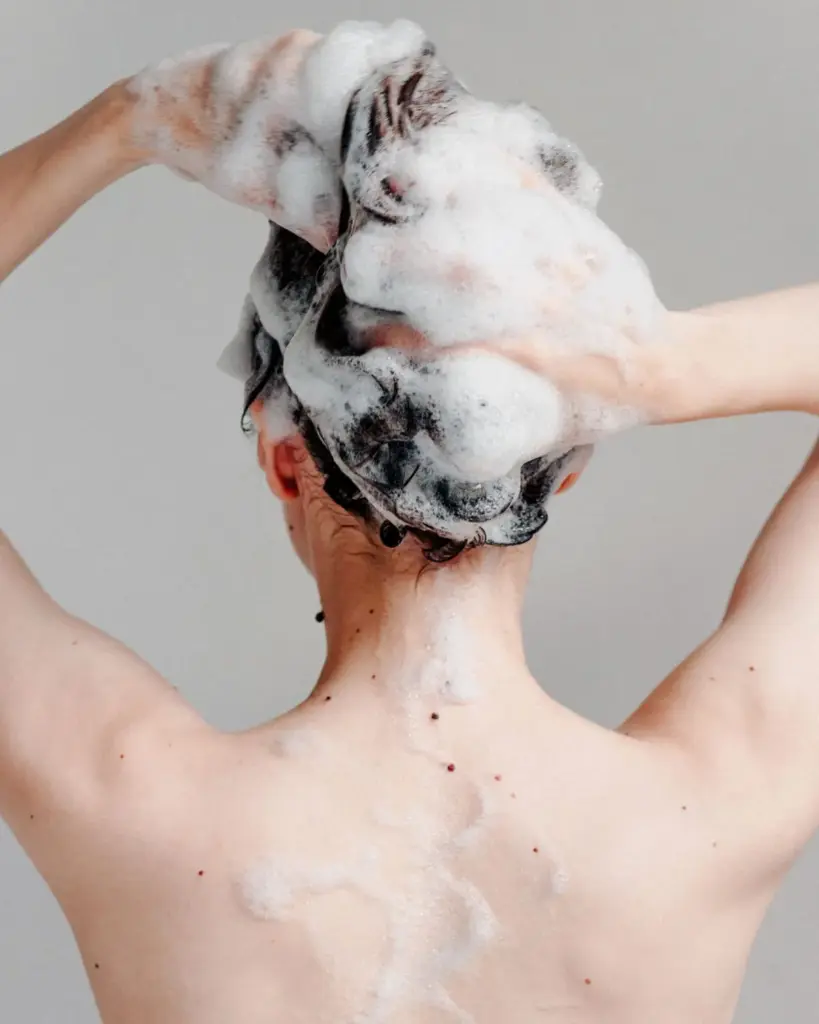
- Super Brushing and Micro-Circulation: In Western beauty routines, brushing is often restricted to a quick, once-a-day pass to untangle dry hair. In contrast, Japanese routines incorporate rigorous, targeted brushing and massaging before and during the wash cycle. Stylist Maria Roberts notes that many Japanese hairstylists utilize two silicone massaging brushes simultaneously—one in each hand—to cover both sides of the head systematically.
- The Technique: Massaging should always begin at the base of the neck and move upward, culminating at the crown of the head.
- The Anatomy: The crown features a high concentration of nerve endings. Activating this area not only relieves muscular tension and systemic anxiety (acting as a somatic stress-relief mechanism) but also stimulates dermal blood flow. Increased blood circulation delivers vital oxygen and micronutrients directly to the dermal papilla, thereby encouraging robust, accelerated hair growth.
- Pre-Shampoo Oiling and Lipid Balance: The practice of applying botanical oils prior to cleansing may seem counterintuitive to those accustomed to stripping the hair. However, pre-shampoo oiling serves a biochemical purpose: it helps to rebalance the scalp’s natural lipid mantle. Oils bind to excess, oxidized sebum and impurities trapped within the pores, allowing them to be gently lifted away during the cleansing phase without stripping the skin’s protective barrier. Furthermore, oils penetrate the hair cuticle, reducing hygral fatigue—the swelling and drying of the hair shaft caused by repeated water absorption during washing.
- Gentle Mechanical Drying: Heat damage and mechanical friction are primary culprits behind split ends and cuticle degradation. The Japanese method emphasizes minimizing the mechanical stress placed on wet, fragile hair. By utilizing ultra-absorbent microfiber towels or soft cotton fabrics to gently squeeze out excess water—rather than vigorously rubbing or twisting the strands—the hair’s cuticle remains flat, reflective, and sealed against frizz.
Market Metrics and Consumer Shifts
According to research data compiled by industry analysts such as Gravel AI, scalp care has officially claimed its title as the fastest-growing category in the beauty sector. Consumers are shifting their expenditures away from color-depositing masks and temporary smoothing balms, investing instead in professional-grade scalp massagers, exfoliating acids (such as AHAs and BHAs), and recovery oils. This macro-trend reflects a broader philosophical shift in wellness: true beauty is achieved from the root up.
Official Statements and Expert Insights
To gain a deeper understanding of how to seamlessly integrate these traditional practices into a contemporary lifestyle, we turn to the professionals who bridge ancient wisdom with modern dermatological science.
Maria Roberts on the Art of the Double-Brush Technique
Reflecting on her immersive training period in Japan, stylist Maria Roberts emphasizes that the psychological and physical benefits of scalp manipulation are inextricably linked.
"The best way to do a scalp massage is to start at the back of the head, going upwards and always focusing on the crown of the head, where there are more nerve endings," Roberts explains.
When discussing the execution of the wash routine, she highlights the potency of dual-implement techniques: "By applying the technique with two brushes, and adding in shampoo, the effect is potent. According to Roberts, it not only stimulates growth, but also relieves tension on the scalp—try massaging your own scalp when you’re nervous or anxious, it works too—and the hair is much cleaner."
Dr. Morgan Rabach on Dermatological Synergy
Reinforcing the clinical perspective, Dr. Morgan Rabach underscores the necessity of treating the scalp with the same meticulous skincare regimen typically reserved for the face.
"The scalp to the hair is the soil for flowers," Dr. Rabach reiterates. "The healthier the scalp, the better the chance your hair has of being healthy."
Dermatological consensus increasingly supports the integration of chemical exfoliation and targeted hydration for the scalp, validating the centuries-old Japanese intuition that clean, nourished skin is the absolute prerequisite for vitality.
Future Outlook: The Next Generation of Hair Care
As the beauty landscape continues to evolve through 2026 and beyond, the intersection of Eastern ritual and Western technological innovation will undoubtedly shape the future of trichology and hair maintenance. We can anticipate several key developments:
- Advanced At-Home Scalp Diagnostics: Consumers will increasingly utilize micro-cameras and AI-driven apps to analyze their scalp microbiomes, tailoring their Japanese-inspired washing and oiling routines to precise levels of hydration, sebum production, and follicular density.
- The Rise of Hybrid Scalp-Skincare Formulations: Shampoos and pre-washes will continue to borrow active ingredients from skincare, moving past basic sulfates to incorporate fermented rice waters, botanical exosomes, and microbiome-balancing prebiotics inspired by traditional Asian beauty secrets.
- Mindful Beauty as a Standard: Beyond the physical results, the meditative, ritualistic nature of the Japanese hair-washing routine offers a much-needed antidote to modern digital burnout. As self-care routines become more intentional, the scalp massage will be embraced not just as a hygienic step, but as a non-negotiable somatic wellness practice.
Ultimately, adopting the Japanese hair-washing way requires a shift in perspective. It invites us to slow down, to respect the delicate ecosystem of our scalps, and to understand that achieving long, luxurious, and healthy hair is not about aggressive intervention, but gentle, consistent cultivation from the root.