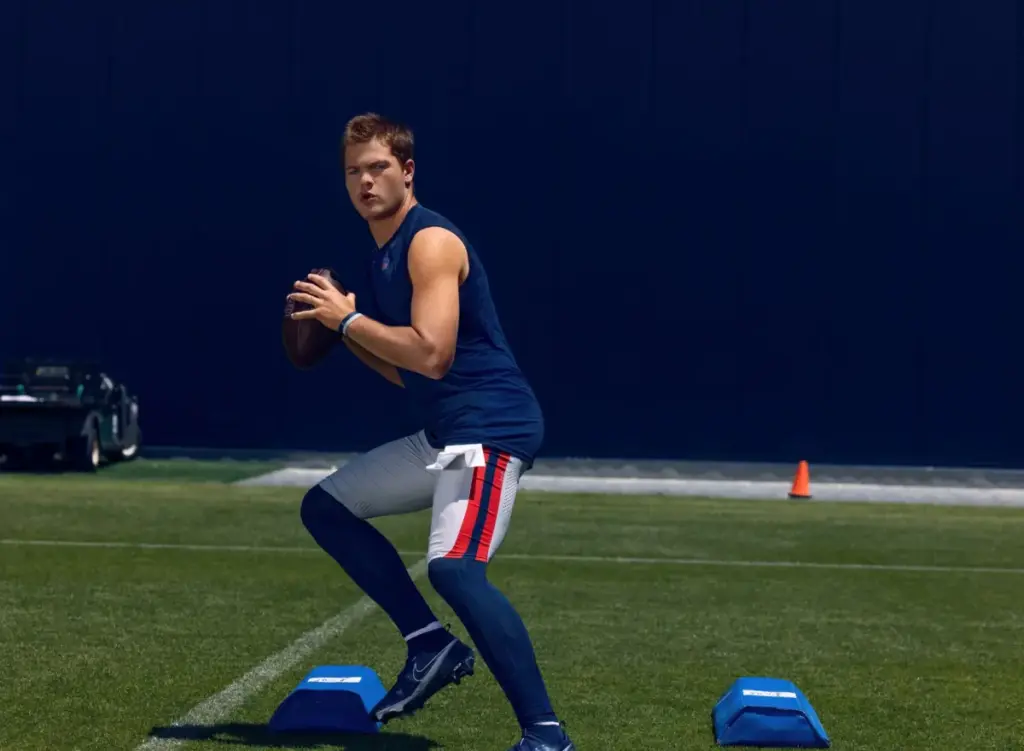
The modern NFL quarterback is no longer judged solely by his arm talent, completion percentage, or fourth-quarter heroics. In an era dominated by hyper-scrutinized off-season body transformations, social media muscle-mythology, and viral workout clips, physical architecture has become an obsession for fans and analysts alike. Enter New England Patriots star Drake Maye. Fresh off a stellar, albeit heartbreaking, sophomore campaign that culminated in an appearance at Super Bowl LX, Maye finds himself at the epicenter of this cultural fixation.
Internet sleuths have spent months dissecting offseason photographs, engaging in fervent debate over whether the 24-year-old signal-caller has packed on 10, 15, or even 25 pounds of pure muscle. Headlines blare about him being "buff," "jacked," and "swole." Yet, sitting relaxed on his porch in Foxborough, Massachusetts, Maye offers a self-assessment that sounds entirely foreign in today’s muscle-inflation culture: "Slim-fit enough."
While the digital landscape loves to imagine franchise quarterbacks sleeping next to bench presses and guzzling a dozen protein shakes daily, Maye’s reality is far more nuanced. His transformation is not about vanity or chasing the aesthetic of a bodybuilder; it is a calculated, strategic evolution designed to secure a multi-decade career in the most physical team sport on earth. Blending a Gen Z approach to accountability—relying on a tight-knit network of family and friends—with a rigorous focus on thoracic spine mobility and functional durability, Maye is carving out the new blueprint for longevity in the National Football League.
Detailed Chronology: From Backyard Battles in Charlotte to the Gates of Foxborough
To understand Drake Maye’s competitive fire, one must look far beyond the practice fields near Gillette Stadium and back to the manicured lawns and recreation centers of Charlotte, North Carolina. Raised alongside three older brothers—Luke, Cole, and Beau—Drake was perpetually the youngest, the smallest, and the last pick in backyard flag football and high-intensity, two-on-two basketball showdowns.
Mark Maye, Drake’s father and a former star quarterback for the University of North Carolina from 1984 to 1987, taught his sons how to throw a football with the tight, effortless spiral that scouts dream of. Yet, the backyard environment was less about gentle coaching and more about survival.
"He definitely was roughed up growing up," recalls eldest brother Luke. "He always had to play up to the standard we had. He was always the last pick, the smallest out there. But I’ll tell you what, he would not back down from guarding any of the taller guys. I don’t remember Drake ever quitting."
That relentless environment forged Maye’s unique version of a killer instinct—one characterized not by stoic silence, but by a signature cackle. Whether playing pickleball, Mario Kart, or backyard Wiffle ball, Maye’s competitive drive is punctuated by laughter designed to demoralize his opponents. No one, not even his father, was immune. After throwing his 21st career touchdown during his breakout 2022 season at UNC—surpassing Mark on the Tar Heels’ all-time passing list—Drake immediately roasted his father, doubling over in laughter.
This lifelong conditioning translated seamlessly to the collegiate level and eventually to the NFL. Drafted by the Patriots, Maye faced the daunting reality of following the most celebrated late-round draft pick in sports history: Tom Brady. Rather than chasing ghosts or making desperate calls for personal mentorship to a living legend, Maye chose to respect the standard Brady set. "The greatest to ever play the position," Maye reflects. "He set the standard… so it’s my job to try to learn and pick up things that he did and try to match it."
Maye’s trajectory has tracked eerily close to Brady’s legendary early years. Like Brady, Maye reached the Super Bowl in his second professional season. Across his first two years as a starter, he amassed 46 touchdowns—matching Brady’s exact early pace—and racked up 6,670 passing yards, narrowly outpacing the seven-time Super Bowl champion’s early-career output.
Supporting Context & Metrics: The Science of "Slim-Fit" Durability
Despite the internet’s obsession with his physique, Maye is quick to correct the myth-making. He didn’t transform into a monolithic bodybuilder over the summer; instead, he added a modest 10 functional pounds, moving his playing weight to a lean 235 pounds before trimming down toward 230 as the season progresses.
The primary catalyst behind Maye’s offseason regimen was simple: armor-plating a body that absorbed 47 sacks during his sophomore campaign—the fourth-most in the NFL. To survive a potential 15-to-20-year career, Maye needed to adapt his physical frame without sacrificing his true athletic superpower: supreme rotational mobility.
The Anatomy of a Cannon Arm: T-Spine and Hip Mobility
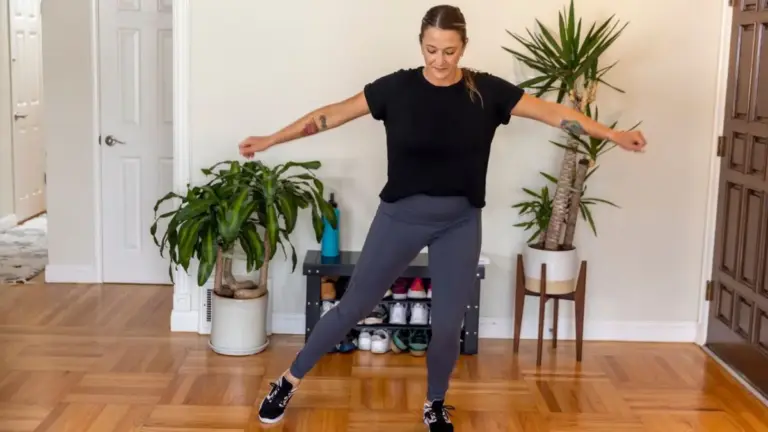
Throwing a football 50 yards downfield with pinpoint accuracy while absorbing an incoming linebacker requires more than raw arm strength. It demands elite thoracic spine (T-spine) mobility and hip fluidity. David Morris, renowned quarterback coach and founder of QB Country, emphasizes Maye’s commitment to these specialized metrics.
"The two things where Drake has really grown in the last couple years are hip mobility and T-spine mobility," Morris notes. "And he’s really committed to that."
To preserve and enhance this mobility, Maye altered his time in the weight room. While teammates gravitated toward heavy barbell bench presses, Maye prioritized dumbbell presses to allow his shoulder blades to move freely. He loaded up on medicine-ball complexes, landmine overhead presses, and mid-back rows to fortify his kinetic chain—from glutes and hips to his spine and shoulders—ensuring seamless power transfer.
The Evolution of a Dual-Threat Weapon
Maye’s physical maturation has also rewritten scouting reports regarding his rushing abilities. Emerging from UNC with over 1,200 rushing yards, Maye initially wondered whether his elusiveness would translate against the athletic freaks of the NFL.
He quickly proved his doubts unfounded. Rushing for 450 yards last season (fourth-most among NFL quarterbacks), Maye established that his calling card isn’t raw, straight-line speed, but rather a deceptive, hyper-efficient change of direction. He credits this elusiveness directly to those grueling, multi-sport backyard battles against his older brothers. Having played baseball, basketball, and football concurrently until his sophomore year of high school, Maye remains a vocal advocate for multi-sport youth athletic development, warning against the modern trend of early sports specialization.
Nutrition and Lifestyle Optimization
The transformation of Drake Maye extended far beyond the turf and the weight room; it required a complete overhaul of his off-field habits. Up until recently, Maye lived a classic college lifestyle—fueling late-night Rocket League and Madden marathons with burgers, fries, and milkshakes.
Peer pressure from Patriots veterans like Hunter Henry and Morgan Moses, alongside regular check-ins from his brother Luke, eventually forced a reckoning. Warned that a college diet would catch up with his physical recovery, Maye cleaned up his nutritional habits. He cut his beloved milkshake intake down to twice a week, swapped out French fries for cleaner sides, and embraced protein-maxxing.
His wife, Ann Michael, whom he has known since middle school, mirrored these changes by cutting out weekday sweets and inspiring him to dial in his sleep schedule. Rejecting the midnight gaming habits of his college days, Maye now locks in his entertainment schedule early and aims for a strict 10:00 PM bedtime, prioritizing the mental health and physical recovery required to sustain elite performance.
Official Statements & Expert Analysis
Football analysts and former players have taken notice of Maye’s unique athletic profile, noting that his mechanical efficiency sets him apart from many of his youthful contemporaries.
ESPN NFL analyst and former Detroit Lions quarterback Dan Orlovsky highlights Maye’s rare blend of size and fluidity:
"For a guy that is so big and athletic, he throws a very catchable pass. He’s a guy that you can tell works really hard at trying to be mechanically sound… There’s some really unique athleticism there. He’s not tight."
Reflecting on his leadership style and the unique pressures of anchoring an NFL franchise in his early twenties, Maye maintains a grounded perspective. Addressing the heavy psychological toll of losing Super Bowl LX to the Seattle Seahawks, Maye openly accepted accountability while leaning on his family for emotional processing. Yet, he recognizes that maintaining success in the NFL is far harder than achieving it for a single season.
"It’s easy to do it in one year," Maye states plainly. "The harder part is to do it in this league for consecutive years… I’m trying to turn more into the longevity type of quarterback. Being able to understand the opportunity that I have of playing quarterback, one of the fortunate positions in this league that can play for 15 or 20 years and it not be crazy for someone to do it at a high level. I’m in year three, and trying to set it up."
Maye has also made notable personal sacrifices to protect his physical conditioning, most notably maintaining a strict policy regarding alcohol consumption. Rejecting the standard collegiate and professional drinking culture, Maye admits he drinks alcohol less than five times a year—usually limited to a piña colada at the beach.
"The taste of beer, it really wasn’t for me," Maye explains. "I think just kind of the state you put your body in, not even the mental focus, but also the physical focus of what you lose and what you have to recover from your body the next day… At the end of the day, it becomes one of those things where it gets in the way, and that’s how I felt."
Future Outlook: Embracing the Role of the Underdog
As the NFL prepares for a new campaign, the overarching narrative surrounding the league has largely overlooked the New England Patriots. While offseason headlines have been dominated by blockbuster trades, high-profile coaching revamps across rival franchises, and celebrity-studded pop-culture spectacles, the Patriots have quietly built a formidable roster, adding All-Pro receiver A.J. Brown to complement Maye’s offensive arsenal.
Rather than clamoring for media attention, Maye leans comfortably into the role of the underdog, comparing his young team’s position to that of the familiar family dynamic in Charlotte where he was always fighting to prove he belonged.
"There’s no way I could be into anything more underrated," Maye smiles, a familiar twinkle in his eye that hints at his trademark cackle. "I’ve got to prove to people around the league and prove to ourselves what we’ve built, and what we’re building."
Armed with a modernized "slim-fit" physique, an obsessive commitment to thoracic and hip mobility, a meticulously optimized lifestyle, and the competitive fire forged by his brothers, Drake Maye is no longer just the promising next-generation quarterback. He is methodically engineering a career built to withstand the ultimate test of time, positioning himself—and the Patriots—for a fierce return to the championship mountaintop.