Executive Overview
Grammy Award-winning singer-songwriter Ray LaMontagne is currently on the mend following a frightening medical episode that saw the veteran artist collapse mid-performance at Nashville’s historic Ryman Auditorium. The incident occurred on Saturday, September 5, during a sold-out performance celebrating the 20th anniversary of his seminal debut album, Trouble.
According to representatives for the artist and eyewitness accounts, LaMontagne was overcome by severe, heat-related dehydration. The sudden physical toll caused the 53-year-old troubadour to topple backward while performing his 2004 song "Jolene." Quick-acting members of his touring crew rushed to the stage within seconds, and emergency medical services (EMS) were promptly deployed.
While the incident naturally sent shockwaves through a packed house of devoted fans, initial panic has since given way to relief. Representatives confirmed that LaMontagne is stable, receiving exemplary medical care, and deeply appreciative of the outpouring of public concern. However, the event has spotlighted a broader, hazardous environmental threat: Nashville’s ongoing battle with an unprecedented, century-defying early-autumn heatwave that has driven temperatures past the century mark and forced public safety officials to issue severe weather warnings across the region.
Detailed Chronology: A Night of Celebration Turned Critical
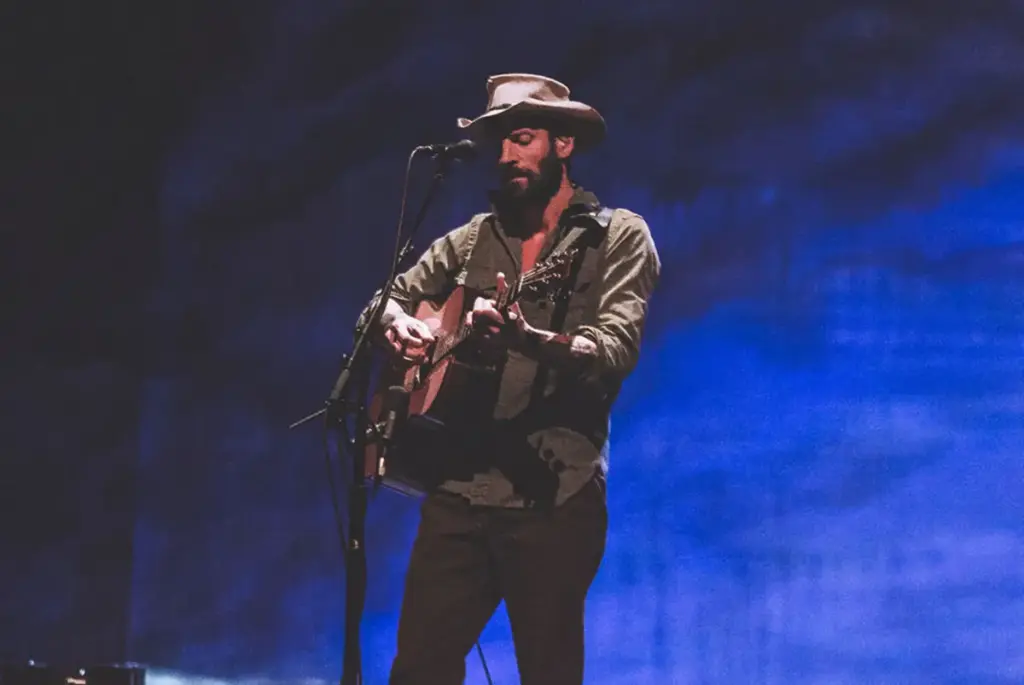
The evening of Saturday, September 5, was supposed to be a triumphant continuation of a milestone tour. LaMontagne, accompanied by special guests The Weather Station, was traversing the United States to honor the enduring legacy of Trouble, the record that launched his illustrious career two decades ago.
The venue itself—the legendary Ryman Auditorium, widely celebrated as the "Mother Church of Country Music"—penciled the evening in as a marquee event of the fall concert season. The atmosphere inside the iconic, pew-lined hall was electric, filled with purists and longtime aficionados eager to experience LaMontagne’s earthy, timeless vocal delivery in an intimate setting.
Midway through the set, as LaMontagne performed his haunting 2004 composition "Jolene" (distinct from Dolly Parton’s country classic of the same title), the physical strain of the evening became acutely apparent. Fan-filmed footage circulating widely across social media platforms captures the exact moment the artist’s posture falters. Visibly exhausted and overwhelmed by the sweltering conditions exacerbated by the packed auditorium and relentless external heat, LaMontagne slowly toppled backward on stage.
The music abruptly ceased as touring crew members sprinted across the wooden boards to assist the fallen musician. House lights were quickly raised as stage personnel worked to stabilize him and clear the immediate area. Local emergency medical services were called to the scene, and LaMontagne was safely transferred to the care of professional medical responders. The concert was brought to an immediate and necessary halt, prioritizing the health and safety of the headlining act over the remainder of the performance schedule.
Supporting Context & Metrics: A Century-Old Heatwave Grips Tennessee
While the immediate focus remains on LaMontagne’s personal health, the collapse cannot be viewed in isolation. Nashville was in the grip of a punishing, historically significant meteorological event at the time of the concert.
According to local meteorological data, the city was experiencing its hottest start to September in a century. On the afternoon and evening of Saturday, September 5, outdoor thermometers pushed past the 100-degree Fahrenheit mark. The extreme temperatures, paired with high relative humidity levels, prompted the National Weather Service (NWS) to issue a stringent "Heat Alert" for Davidson County and the surrounding Middle Tennessee region.
Historic venues like the Ryman Auditorium, while rich in architectural heritage and cultural significance, present unique climate-control challenges during extreme weather anomalies. Built in the late 19th century, structures of this vintage often struggle to maintain stable internal temperatures when outside conditions reach historic extremes—particularly when packed to maximum capacity with thousands of fervent concertgoers generating cumulative body heat.
The environmental convergence of a historic heatwave, aging venue infrastructure, and the grueling physical demands of a cross-country tour created a dangerous threshold. Dehydration can creep up swiftly, compromising cognitive function, blood pressure, and motor control before an individual realizes the extent of their physical depletion. For performers under high-intensity stage lighting, the risk factor multiplies exponentially.

Official Statements and Immediate Aftermath
In the hours following the incident, fans took to social media platforms such as Instagram, X (formerly Twitter), and TikTok to share their concern, posting prayers and well-wishes alongside their accounts of the abrupt ending to the show.
By Sunday, September 6, official channels moved to reassure the public. A statement released on behalf of the artist read:
"Ray is in good hands with the local emergency medical services. He is doing well now and is profoundly grateful for everyone’s understanding, patience, and well-wishes during this time."
Music industry peers, independent venues, and devoted fans alike flooded digital spaces with supportive messages. Management teams and public relations representatives have remained in close contact with medical staff to monitor LaMontagne’s recovery trajectory. As of Monday, September 7, trade publications including Billboard and Consequence of Sound confirmed that the artist’s vital signs were stable and that he was resting comfortably under professional supervision.
Future Outlook: Tour Schedule and the Legacy of Trouble
The medical scare has inevitably forced a temporary pause in LaMontagne’s rigorous touring schedule. Prior to the incident, the 20th-anniversary Trouble tour was operating on a tight timeline. The itinerary listed a performance for Tuesday night, September 8, at The Oncenter Crouse Hinds Theatre in Syracuse, New York.
As of press time, management has not yet issued a definitive update regarding whether the Syracuse date or subsequent stops on the tour will be postponed or canceled. Promoters and venue operators are expected to release official rescheduling information or refund details as soon as medical professionals clear LaMontagne to travel and perform again. Industry analysts note that while fans will undoubtedly be disappointed by potential postponements, the overarching sentiment from ticket holders is an insistence that the artist take all the time necessary to achieve a full and unhurried recovery.
Looking Back at a Storied Career
The urgency surrounding LaMontagne’s health underscores just how deeply woven his music is into the fabric of modern American folk and roots rock. When Trouble was initially released through RCA Records in 2004, it introduced an enigmatic, gravel-voiced songwriter whose sound felt simultaneously ancient and entirely fresh. Marrying elements of classic Americana, folk-rock, and deep southern soul, LaMontagne bypassed industry trends to carve out a singular niche.
Reflecting on the album’s enduring impact during a 2025 interview on Billboard’s Behind the Setlist podcast, LaMontagne noted:
"This record is important to me for that reason. It’s the record that pointed me in this direction, and I know that’s just what I was supposed to do."
Over the past two decades, that initial spark blossomed into an extraordinary body of work. LaMontagne has released nine studio albums, culminating in his 2024 independent release, Long Way Home, issued via his own Liula Records. Along the way, he captured a Grammy Award in 2011 for Best Contemporary Folk Album for God Willin’ & the Creek Don’t Rise.
While he has largely eschewed pop-radio formulas, his catalog boasts significant commercial milestones. His timeless 2008 soulful anthem "You Are The Best Thing" peaked at No. 90 on the Billboard Hot 100, while his albums have consistently found critical and commercial success on the Billboard 200. He has secured nine charting albums, highlighted by three consecutive top-10 peaks at No. 3: Gossip In The Grain (2008), God Willin’ & The Creek Don’t Rise (2010), and Supernova (2014).
Conclusion
Ray LaMontagne’s sudden collapse at the Ryman Auditorium serves as a sobering reminder of the physical toll that touring takes on artists, particularly when compounded by extreme, climate-driven environmental pressures. As Nashville continues to swelter under historic September heat, the music community unites in wishing the Grammy-winning songwriter a swift and complete recovery. Whether the anniversary tour resumes this week or later in the year, the enduring power of Trouble and LaMontagne’s storied catalog ensures that his voice will remain a vital cornerstone of American roots music for years to come.