Executive Overview
A catastrophic technical failure within the National Air Traffic Services (NATS) infrastructure triggered unprecedented chaos across the United Kingdom’s aviation sector, leaving tens of thousands of passengers stranded, hundreds of flights grounded, and major airports locked in gridlock. The incident, which originated from a critical system issue at the provider’s Shanwick air traffic control facility, caused sweeping disruption throughout Tuesday, grounding flights and forcing strict arrival restrictions across major hubs including Heathrow, Gatwick, Stansted, Luton, and Manchester.
By late evening, flight tracking data from Flightradar24 confirmed that more than 1,000 flights had been cancelled nationwide, with knock-on delays projected to bleed well into Wednesday. Major airlines—most notably easyJet, British Airways, and Ryanair—were forced to scrap hundreds of scheduled services, divert long-haul flights, and manage displaced aircraft and flight crews scattered across disparate airports.
While NATS confirmed that the technical fault was successfully resolved by 7:30 PM BST, aviation authorities warned that the recovery phase would be protracted. Transport Secretary Heidi Alexander has since demanded formal assurances that vital aviation infrastructure will be comprehensively reviewed to prevent a repeat of the systemic failures that paralyzed the UK skies.

Detailed Chronology of the Crisis
The unfolding disaster began around midday on Tuesday, with early signs of distress emerging as departures and arrivals at major London hubs were abruptly paused or heavily restricted.
- Midday (Tuesday): Heathrow Airport initiated initial departure pauses as a safeguard following the sudden manifestation of the NATS technical glitch. Simultaneously, major hubs like Gatwick, Stansted, and Luton experienced localized air traffic congestion.
- 1:30 PM BST: A Wizz Air flight bound for Tel Aviv from Gatwick boarded its passengers on schedule, only to sit stranded on the runway for three hours before officials formally announced the cancellation of the service, leaving passengers staring at alternatives days away.
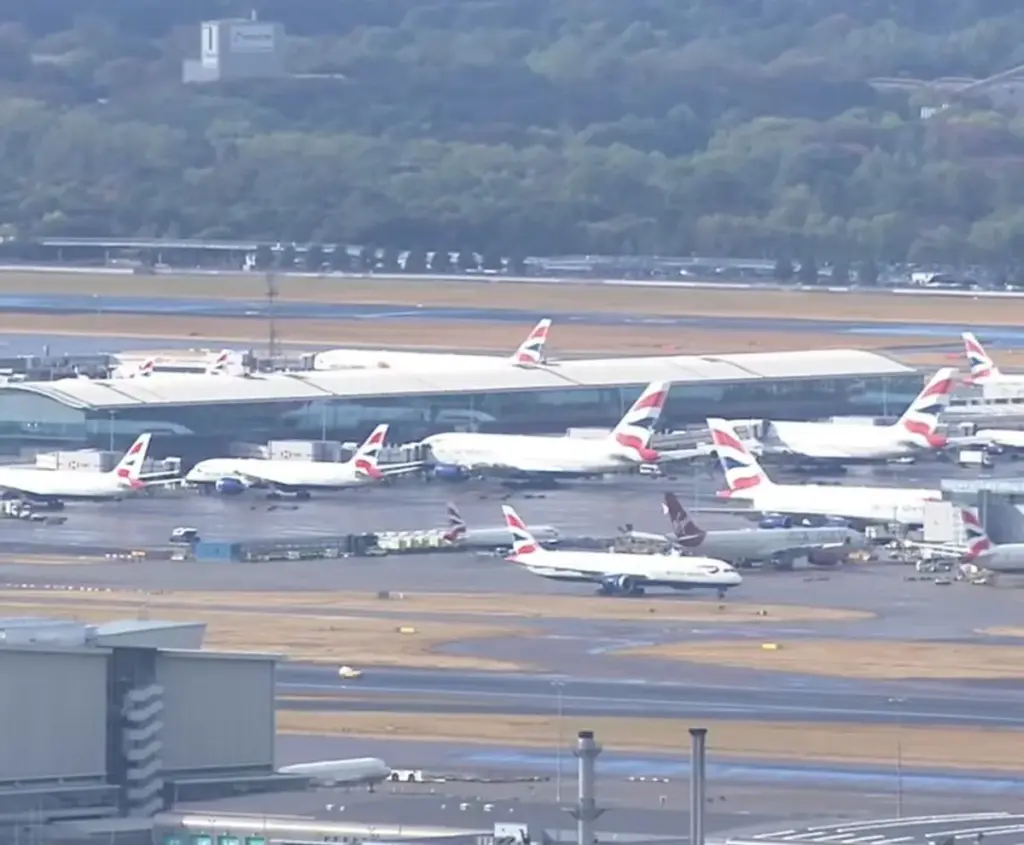
- 3:00 PM – 5:00 PM BST: As traffic failed to depart, inbound flights continued to stack up. Heathrow quickly ran out of physical gate and tarmac space for incoming aircraft, forcing authorities to suspend incoming traffic entirely for the remainder of the day to protect passenger and crew safety. Concurrently, passengers on tarmac-bound aircraft reported enduring up to five hours trapped inside cabins without adequate provisions.
- 5:20 PM BST: Complicating an already volatile situation, a civilian Aer Lingus flight operating over the Irish Sea reported a large drone flying dangerously close to Dublin Bay, adding further operational anxiety to regional air traffic management.
- 7:30 PM BST: NATS formally announced that the technical system issue had been fully resolved and that normal operations were resuming, though it conceded that recovery efforts were taking significantly longer than initially anticipated.
- Late Evening: Major international hubs, including Heathrow and Manchester, confirmed that arrival restrictions and localized bottlenecks would remain in force through the night, with flight schedules deeply fractured heading into Wednesday.
Passenger Impacts, Frustrations, and On-the-Ground Chaos
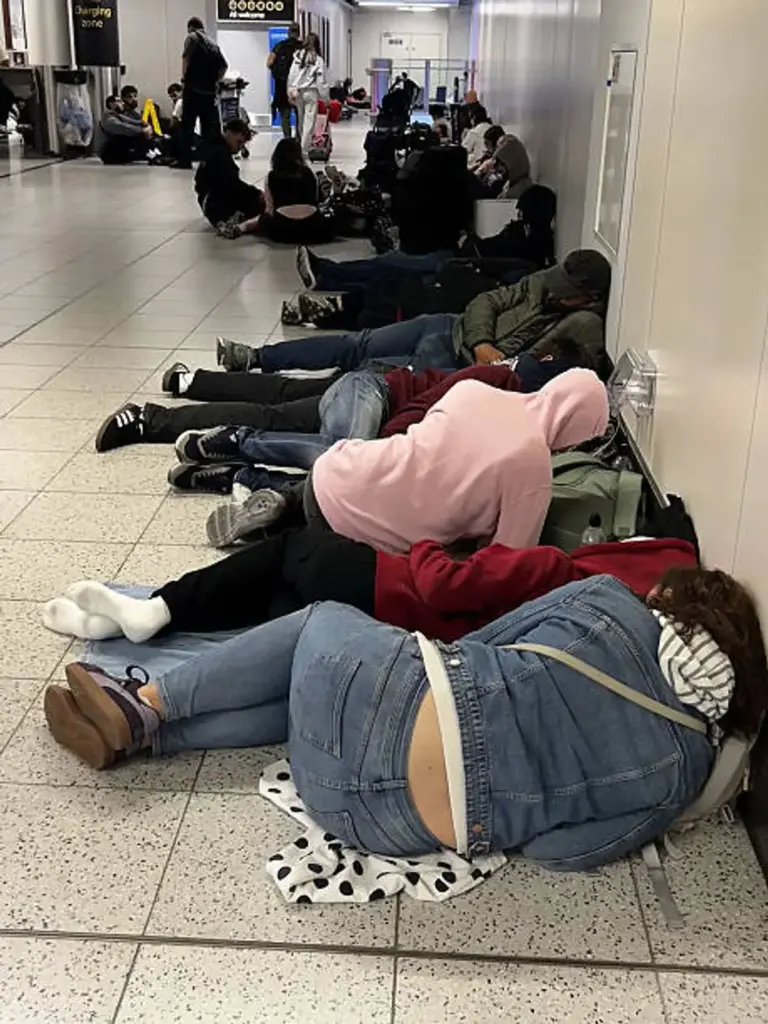
The human toll of the IT collapse was starkly visible across British terminals, where scenes transformed from routine travel days into crowded environments marked by frustration, confusion, and a perceived lack of clear communication from airlines.
At Heathrow Airport’s Terminal 5, passengers described conditions as "absolute carnage." Evan Dalton, a stranded traveller, captured footage of massive crowds trapped in departure areas, describing "hordes of angry people in a mob" after his British Airways flight was grounded following a grueling five-hour wait on the tarmac. Another passenger compared navigating the overwhelming terminal corridors to "trying to get out of Alcatraz."
At Gatwick Airport, Josie Donoghue, a healthcare worker attempting to travel to Ireland with Ryanair, detailed her harrowing three-hour wait on the runway before deciding to disembark at 6:00 PM. She praised frontline staff for their help in assisting passengers off the plane, but heavily criticized the overall logistical handling, calling the environment "an absolute nightmare."

Vulnerable passengers were disproportionately affected. Amanda Dick-Cleland, a 63-year-old traveler bound for Ibiza, recounted how her 82-year-old companion was forced to sit stranded at a baggage carousel for hours waiting for her checked luggage to be returned after their flight was cancelled and alternative arrangements were pushed out to Saturday.
Families with young children similarly bore the brunt of the meltdown. One mother took to social media to express her disgust at being stranded for five hours with an anxious eight-year-old child, while waiting an additional four hours simply to retrieve checked luggage after an easyJet cancellation. Newlyweds heading to Crete from Exeter Airport found themselves among a group of 200 stranded travelers with no immediate answers from representatives regarding their grounded TUI flight.
Official Statements and Industry Reactions
As the scale of the disruption became clear, political figures and aviation executives issued sharp rebukes and defensive statements regarding the reliability of the UK’s airspace management.
Martin Rolfe, CEO of NATS, faced mounting pressure but stated that he "always" accepts "full responsibility" for operational setbacks. In a public statement, NATS apologized unreservedly, noting: "Recovery from today’s system issue has taken longer than we had hoped. Our system issue is now resolved, we are operating normally and working as hard as possible to clear the backlog of flights."

The response did little to placate industry partners. Ryanair Chief Operating Officer Neal McMahon unleashed a blistering critique, calling directly for Martin Rolfe’s resignation. McMahon remarked:
"How many more failures do passengers have to suffer before overpaid failure NATS CEO, Martin Rolfe, accepts responsibility for his repeated mismanagement and resigns? Over three years after NATS’ catastrophic 2023 system meltdown, it’s clear that nothing has changed, with UK passengers once again suffering avoidable ATC delays of up to 8 hours today due a critical NATS ATC system failing."
British Airways—which was forced to cancel or divert more than 100 flights—issued an official operational update noting that while the technical fault had been cleared, the deep severity of the disruption had displaced numerous crews and aircraft out of position. The airline stressed that the incident was entirely outside its direct control and urged affected passengers not to travel to airports unless holding confirmed rebookings.
Government intervention was swift. Transport Secretary Heidi Alexander took to social media to confirm her administrative position:

"Pleased @NATS have fixed the issue, and huge thanks to those working to get people moving. It will take time to fully resume flights, so continue to check with airlines. I am seeking assurances that lessons will be learned and systems that support aviation are up to the job."
Supporting Context, Metrics, and Passenger Rights
Key Metrics and Operational Scale
- Total Cancellations: Flightradar24 data confirmed that cancellations surpassed 1,000 flights globally as of late Tuesday.
- Airline Breakdown: The heaviest impact fell on easyJet (218 cancellations), British Airways (132 cancellations), Ryanair (41 cancellations), KLM (37 cancellations), and Eurowings (22 cancellations).
- Airports Impacted: NATS provides air traffic control services to 15 UK airports, with primary disruption concentrated at Heathrow, Gatwick, Stansted, Luton, Manchester, Edinburgh, and East Midlands.
- Notable Diversions: Indicating the severe lack of available alternative airspace, British Airways flight BA169 from Heathrow to Shanghai was forced to turn around mid-route and divert to Cardiff Airport rather than a closer London hub due to complete airspace saturation.
Passenger Rights and Protections
In the wake of the cancellations, the Civil Aviation Authority (CAA) stepped in to remind travelers of their legal entitlements under consumer protection frameworks:
- Duty of Care: Airlines hold an absolute legal duty of care to passengers experiencing significant delays or cancellations.
- Provisions: Impacted travelers are entitled to free food and drink, access to communication channels (such as phone calls or data reimbursement), and suitable hotel accommodation if forced to stay overnight.
- Rebooking & Refunds: Passengers whose flights are cancelled have the legal right to a full refund or alternative travel arrangements to their final destination at the earliest opportunity.
Future Outlook
The immediate horizon for UK aviation points to a prolonged recovery period throughout Wednesday and potentially into the end of the week. While NATS has successfully restored its technical systems to standard operational parameters, the cascading effects of displaced aircraft, exhausted flight crews, and packed terminal waiting areas mean that normality will not return instantly.
Airlines have universally urged passengers scheduled for Wednesday, September 9, to check their flight statuses directly via official mobile applications or airline websites before attempting to travel to any airport terminal. With political scrutiny mounting and consumer confidence shaken following consecutive major air traffic disruptions over recent years, NATS and the Department for Transport will face intense pressure to prove that modern digital aviation infrastructure can withstand future operational stress tests.