Executive Overview
The modern fashion cycle operates at a breathless pace, driven by a cultural appetite for visual contrast, architectural silhouettes, and unexpected hybrids. As the industry bridges the gap between summer freedom and winter layering, a surprising new accessory has emerged as the definitive proxy for transitional dressing: the toeless sock.
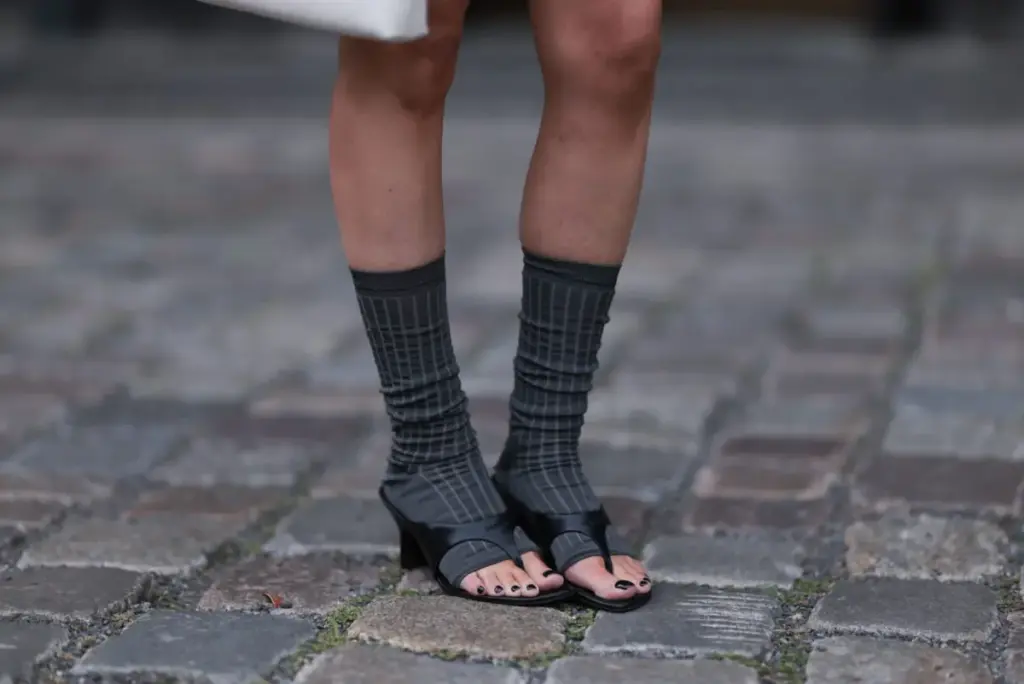
Bridging the functional divide between the heavy leg warmers favored during deep winter and the bare-skin freedom of summer sandals, toeless socks (alongside their close cousins, cut-out socks and stirrup gaiters) have firmly established themselves as a wardrobe staple. This trend is not merely a fleeting TikTok micro-aesthetic; it is backed by high-fashion runways, major celebrity endorsements, and a fundamental shift in how consumers approach footwear accessorizing.

From BLACKPINK’s Jennie collaborating with Adidas Originals to incorporate balletic silhouettes into everyday streetwear, to luxury powerhouses like Miu Miu and Lemaire integrating open-toe hosiery into their ready-to-wear collections, the toeless sock is rewriting the rules of modern styling. This comprehensive report explores the origins, runway trajectory, styling methodologies, and future outlook of the toeless sock trend, providing an authoritative guide to fashion’s most innovative accessory.
Detailed Chronology
To understand how a cut-out piece of hosiery became the center of global style conversations, one must trace the trajectory of footwear and accessory innovation over recent seasons. The contemporary obsession with toeless socks is the culmination of a multi-year movement toward avant-garde footwear shapes.

The Groundwork: Unconventional Footwear
Long before toeless socks hit the mainstream, fashion had begun rebelling against minimalist uniformity. The industry gravitated toward polarizing, high-impact footwear that forced a re-evaluation of the foot-to-ankle relationship.
- The Tabis Era: Maison Margiela’s iconic split-toe Tabi boots paved the way for anatomical footwear and socks designed to accommodate unusual shapes.
- Five-Finger Shoes: Once relegated to niche athletic communities, Vibram FiveFingers made a surprising crossover into high fashion, proving that consumers were willing to embrace radical visual silhouettes for their feet.
- The Ballet Core Phenomenon: The return of ballet-inspired aesthetics—wrap-around cardigans, lace-up sneakers, and satin flats—laid the groundwork for soft, dancer-adjacent accessories.
Runway Infiltration (Spring/Summer 2025 – Fall/Winter Collections)
The transition of toeless socks from underground dancewear to high-fashion runways occurred in rapid succession.

- Miu Miu’s Vision: Miu Miu integrated half-socks and toeless hosiery directly into its Spring/Summer ready-to-wear collections. Styled deliberately with mules, strappy sandals, and high heels, these pieces accompanied tailored shorts and pleated skirts, signaling that hosiery was no longer strictly about warmth or modesty; it was an active canvas for styling.
- London Fashion Week: During the fall presentation cycles, designers such as Karoline Vitto—showcasing under the British Fashion Council’s NewGen initiative—sent models down the runway wearing sheer, toeless styles paired with minimalist thong sandals. This juxtaposition of delicate summer footwear with sheer hosiery challenged conventional seasonal dressing boundaries.
- The Jennie x Adidas Synergy: The watershed moment for consumer adoption arrived when BLACKPINK member Jennie launched her collaboration with Adidas Originals. Heavily influenced by balletic motifs, the collection featured cut-out socks designed explicitly for individuals looking to make a statement with their accessories. Available in foundational black and white, these socks immediately flooded social media feeds, securing their status as a must-have transitional item.
Supporting Context & Metrics
The rise of the toeless sock is underpinned by larger shifts in consumer psychology, e-commerce behavior, and the economics of transitional wardrobes.
The Transitional Wardrobe Gap
For decades, consumers faced an awkward styling window between late August and early October—the transitional period where temperatures fluctuate wildly, yet social calendars demand fresh wardrobe updates.

- Pedicure Longevity: Consumers invest heavily in intricate nail art and vibrant pedicure colors throughout the summer months. As temperatures drop, standard closed-toe shoes force these pedicures into hiding. Toeless socks solve this dilemma by providing ankle and mid-foot coverage while keeping the toes exposed to showcase seasonal nail colors.
- Footwear Fatigue: After months of continuous flip-flop and sandal wear, feet often require a break from direct friction and exposure, yet heavy winter boots remain premature. Toeless socks introduce a soft, cushioned barrier between the foot and sandal straps, offering both physical comfort and visual novelty.
Market Landscape and Brand Adoption
The commercial viability of the trend spans across distinct market tiers, proving its broad demographic appeal:
- Luxury Tier: Brands like Lemaire (offering ribbed gaiter socks with cut-out details) and Miu Miu (commanding premium price points for silk knee-high variations) position the accessory as an elite status symbol.
- Contemporary & Streetwear Tier: Labels such as Miista, High Heel Jungle, and Adidas Originals have introduced accessible cotton-blend rib stirrup socks and cut-out styles, generally retailing between $20 and $160. This price diversification ensures that the trend is accessible to both luxury collectors and trend-conscious Gen-Z consumers.
- Athletic Crossover Caution: Industry experts note a distinct technical difference between fashion-forward toeless socks and athletic versions. While Pilates and yoga brands (such as ToeSys) produce grip socks with individual toe cut-outs for utility, fashion consumers specifically seek out traditional sock and hosiery silhouettes that have been deliberately re-engineered with structural cut-outs, stirrups, or open-toe designs.
Official Statements & Industry Perspectives
Industry insiders, designers, and brand representatives have been vocal about the strategic intent behind the toeless sock trend.

Design Intent and Brand Positioning
In official campaign materials for the Adiluna Season 2 collection, Adidas explicitly noted that Jennie’s cut-out socks were "designed for those who want their accessories to make a statement." This phrasing underscores a broader industry pivot: accessories are no longer supporting players meant to blend into an outfit; they are increasingly treated as focal points of visual disruption.
Stylists and street-style commentators have similarly highlighted the functional versatility of the trend. During international fashion weeks, attendees faced the perennial challenge of wearing summer runway pieces in brisk autumn weather. By pairing delicate sandals with sheer or ribbed toeless socks, stylists successfully winterized open-toe shoes without sacrificing the integrity of their warm-weather silhouettes.

Consumer Reception and Social Proof
Data from social media analytics platforms indicates a sharp spike in engagement surrounding search terms like "open-toe socks," "stirrup leg warmers," and "cut-out hosiery." Influencers and style icons—ranging from Iris Law to global K-pop royalty—have utilized the trend to add texture, layering, and unexpected color blocking to otherwise minimalist outfits.
Future Outlook
As the fashion calendar progresses, the toeless sock trend is poised to mature from a polarizing novelty into a permanent fixture of transitional dressing.

Predicted Evolution
- Fabric Innovation: Future iterations will likely move beyond standard cotton ribs and sheer nylons into technical performance blends, waterproof membranes for inclement weather, and thermal knits that offer the aesthetic of a toeless sock with the actual warmth required for deep winter.
- Footwear Integration: Footwear designers are beginning to construct shoes specifically engineered to be worn with cut-out hosiery. Expect to see hybrid sandals featuring built-in anchor points for straps, as well as loafers and Mary Janes designed with wider toe boxes to accommodate layered hosiery.
- The DIY Movement: As high-end iterations command luxury prices, a thriving DIY subculture is emerging. Consumers are increasingly upcycling thrifted or worn-out hosiery, cutting away the toe caps to experiment with the trend risk-free. This grassroots participation ensures prolonged grassroots momentum.
Conclusion
Toeless socks represent more than a quirky footwear footnote. They embody the contemporary desire for playful styling, functional versatility, and structural experimentation. By successfully bridging the gap between summer exposure and winter layering, this hybrid accessory has proven that the most exciting style developments often happen at the margins—quite literally at the tips of our toes. Whether styled with chunky Adidas Superstars, delicate Miu Miu mules, or classic Mary Janes, the toeless sock is here to stay, challenging us to look at our wardrobes from a fresh perspective.