For years, the global beauty landscape has moved in rigid, synchronized lockstep. From the omnipresent "glazed donut" obsession to an endless rotation of edible, hyper-specific neutral aesthetics—think coconut jelly, vanilla latte, milk bath, and espresso manicures—consumers have been relentlessly fed a diet of mass-produced minimalism. While these chic, universally flattering neutrals certainly have their place in the modern wardrobe, they have also birthed a new kind of cultural fatigue. In an era dominated by algorithmic echo chambers and AI-generated visual homogeneity, individuality risks being polished away in favor of safe, clickable perfection.
Enter omakase nails: a bespoke, highly individualized approach to manicure artistry that treats fingertips not as uniform canvases for monochromatic polish, but as a miniature gallery of curated, narrative-driven design. Borrowed from the revered Japanese dining tradition where patrons relinquish control to the culinary master with the phrase "omakase" (literally translating to "I’ll leave it up to you" or "chef’s choice"), this avant-garde movement centers on creativity, personal expression, and artistic freedom.
Rather than selecting a cookie-cutter design from a digital catalog or repeating a viral TikTok trend, clients collaborate with specialized nail artists to transform personal memories, moods, fashion pieces, and abstract concepts into wearable masterpieces. Spearheaded by visionaries such as Brooklyn-based Moe Kim and Milan-based Oksana Zavora (@chummy.nails), the omakase nail phenomenon represents a profound cultural pushback against mass-trend monotony. This deep-dive investigation explores the mechanics, philosophy, and booming popularity of the custom manicure revolution, examining how high-end nail artistry is transforming everyday grooming into a legitimate form of contemporary high art.
Detailed Chronology: From Culinary Tradition to Fingertip Canvases
To understand how the omakase concept migrated from high-end sushi bars to the avant-garde nail salons of Brooklyn and Milan, one must trace the evolution of nail art over the past decade.
The Rise of the Accent Nail (Early 2010s): For years, custom expression in manicures was limited to the "accent nail"—typically a ring finger painted in a contrasting glitter or a single simple rhinestone design. While revolutionary at the time, it remained bound by strict symmetry and formulaic design rules.
The Gel and Acrylic Boom (Mid-to-Late 2010s): Advances in UV-cured gel technologies, 3D builder gels, and sculptural charms unlocked unprecedented technical capabilities for nail technicians. However, salon menus largely remained transactional, encouraging clients to pick predetermined sets from lookbooks rather than co-creating original work.
The Hyper-Viral Neutral Era (2020–2024): Fueled by short-form video platforms like TikTok and Instagram, minimalist trends took over the global consciousness. Manicures became homogenized. Every season brought a new iteration of a sheer, milky wash of color given a cutesy, edible descriptor. While economically lucrative for salons, this era created profound trend fatigue among beauty editors and dedicated art enthusiasts.
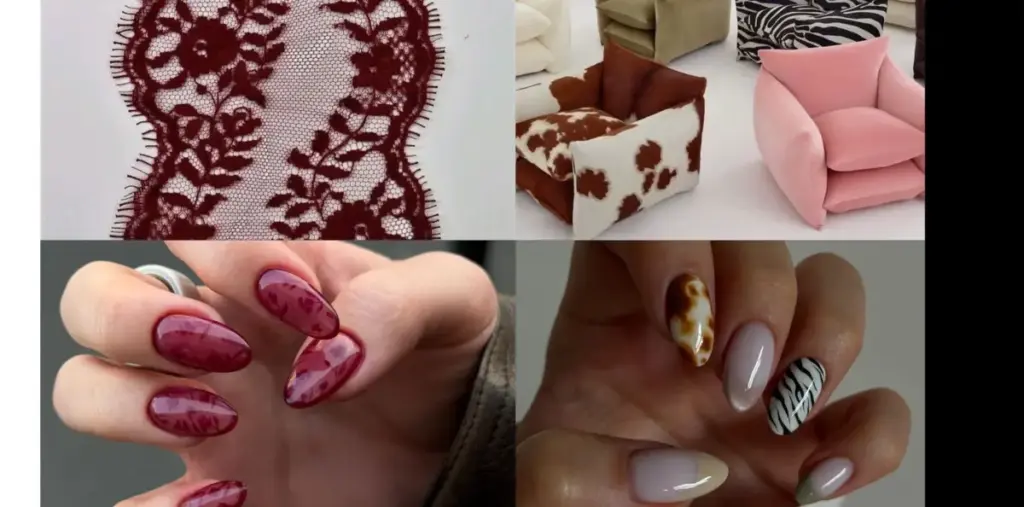
The Omakase Breakthrough (Present Day): As consumers began craving authentic self-expression over algorithmic conformity, independent nail artists began quietly offering "chef’s choice" appointments. Drawing inspiration from high-concept Japanese dining, artists like Moe Kim and Oksana Zavora formalized the omakase structure, inviting clients to bring raw, unstructured inspiration—ranging from vintage textiles to movie scenes—and trusting the technician to curate a cohesive, multi-dimensional set of ten distinct canvases.
Supporting Context & Metrics: The Anatomy of a Custom Manicure
Unlike standard salon visits that operate on rigid, assembly-line timeframes, the omakase experience requires a fundamental paradigm shift in how appointments are scheduled, priced, and executed.
Time and Technical Complexity
A traditional gel manicure or simple nail art fill typically demands anywhere from 45 to 60 minutes. In stark contrast, an omakase appointment is an immersive, highly collaborative artistic session. According to industry insiders, complete omakase sessions—encompassing everything from structural gel removal, meticulous nail prep (clipping, filing, buffing), to multi-layered, multi-technique artistry across all ten fingers—frequently span one and a half to two and a half hours.
Simple to Moderate Sets: ~1 hour 45 minutes (featuring gradients, subtle textural contrasts, and minimal hand-painted accents).
High-Complexity Architectural Sets: 2.5 hours or longer (incorporating 3D sculptural gels, encapsulated botanicals, metallic foils, fine-line illustrations, and custom gemstone placements).
The "Puzzle" Philosophy of Design
A common misconception is that omakase nails are chaotic collages of random, unrelated images plastered onto fingers. Master practitioners argue the exact opposite.
"I perceive nails as little canvases that should work together in the end, almost like a puzzle," explains Milan-based nail artist Oksana Zavora. "I like adding unexpected accents, colors, or shapes, but ultimately everything feels like it belongs to the same story."
This balance of miscellany and unity relies heavily on sophisticated color theory, deliberate contrast, and structural rhythm. An omakase set might feature a translucent jelly base on one finger, a hyper-detailed miniature oil painting of a swan on another, structural chrome on a third, and delicate metallic wire framing on a fourth. Yet, when viewed as a collective whole, the manicure reads as a singular, harmonious work of wearable art.
Official Statements & Industry Perspectives
The movement is heavily supported by the industry’s leading independent artisans, who view their work as a vital counterweight to mass-market commercialization.
Moe Kim (Brooklyn-based Nail Artist):
"My goal is to make nail art an experience that allows you to enjoy a little piece of art as part of your everyday life. Inspired by each client’s personal style, mood, and reference images, I blend their vision with my own artistic style to create something truly personal. I find inspiration in fashion and travel, to nature and everyday life. I love taking the things I see and experience firsthand and translating those feelings into my designs."
Oksana Zavora (@chummy.nails):
"Some clients prepare moodboards, some just describe the colors they’re drawn to at that moment, and others simply come in and say, ‘Do whatever you want.’ I personally love something in between—I like having a starting point but then having enough freedom to interpret it and express it in my own way. I pull ideas from fashion, textiles, interiors, beauty, nature, vintage pieces, movie scenes, color combinations, really everything."
"To understand the entire omakase experience, I visited MoéNail in Brooklyn to create my very own custom manicure. I brought a heap of nature photos and animal prints that I found on Pinterest and worked with Kim to create a hand good enough to frame in a museum… Next time you’re having trend fatigue and want to deviate from whichever minimalist polish is going viral that week, take a look around you. Your next manicure might just be the shoes you’re wearing, the shirt you recently bought, or the flowers in your garden."
Future Outlook: Where is Custom Nail Art Headed?
As the beauty industry looks toward the horizon, the momentum behind customized, experiential grooming shows no signs of slowing down. Several key developments are shaping the future of high-end nail artistry:
The Death of the Monoculture: As consumers grow increasingly weary of algorithmic saturation (where millions of people globally wear the exact same shade of neutral polish), demand for hyper-personalized, artisan-driven services will command a premium.
Cross-Disciplinary Collaborations: We are likely to see fashion designers, interior decorators, and contemporary fine artists collaborating directly with top-tier nail technicians to launch synchronized collections where runway accessories and omakase manicures are designed as a unified package.
Technological Enhancement vs. Human Touch: While automated nail-printing machines and AI-driven design generators attempt to capture market share through speed and efficiency, the omakase movement thrives precisely because of its human imperfections, emotional resonance, and intimate artist-client collaboration. You cannot algorithmically replicate the personal narrative of translating a client’s childhood memory into a ten-piece miniature art installation.
Ultimately, the omakase nail trend is more than a fleeting salon gimmick—it is a reclamation of personal agency in personal care. By transforming our fingertips into dynamic, ever-changing galleries, we liberate ourselves from the tyranny of the viral trend cycle, proving that the most compelling beauty statement you can make is your own story.