Executive Overview
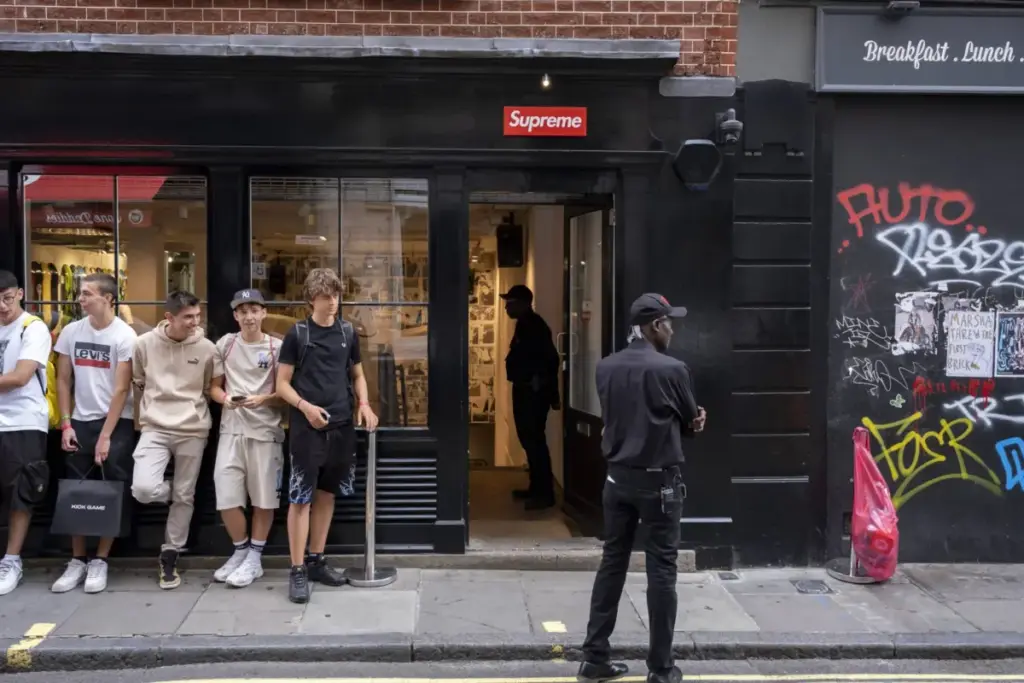
In the opening moments of her Solar Power ballad “California,” Lorde sings a bittersweet farewell: “Bye to the kids in line for the new Supreme.” It is a vignette that instantly evokes the specific, sun-bleached cultural geography of the Golden State, bidding adieu to the familiar rituals of clout-climbing, street-corner campouts, and the relentless pursuit of cultural currency.
Yet, as brick-and-mortar storefronts give way to digital dominance, those lines have not disappeared—they have simply mutated. What was once the exclusive domain of male-dominated skatewear and sneakerhead drops has expanded into a broader, highly curated retail phenomenon: the ephemeral, in-person pop-up shop orchestrated by online-native “it-girl” brands.
From New York’s SoHo to Los Angeles’s Melrose Avenue, digitally native vertical brands (DNVBs) are subverting traditional retail models by opening temporary brick-and-mortar installations. Labels such as Spanish lifestyle brand Gimaguas, elevated basics purveyor Tankair, and indie favorite CouCou Intimates are trading permanent overhead for high-impact, short-term residency. Operating more like capitalist art galleries or museums of modern desire than traditional shops, these pop-ups draw staggering crowds of Gen Z consumers willing to endure hours of pavement-pounding queues for the privilege of purchasing a garment they have already obsessed over online.
This report investigates the macroeconomic and socio-cultural mechanics driving the #WaitingInLineSummer phenomenon. By analyzing the intersection of parasocial marketing, artificial scarcity, and hyper-integrated digital lifestyles, we examine how ephemeral retail has become the ultimate conversion funnel for modern independent fashion.
Detailed Chronology: The Evolution of the Pop-Up Ecosystem
To understand the current landscape of temporary retail, one must trace the lineage of artificial scarcity. For decades, streetwear monoliths like Supreme engineered the blueprint: limit supply, cultivate subcultural cachet, and let secondary markets do the heavy lifting of brand valuation. The physical line became a physical manifestation of community and hierarchy—a place where cultural capital could be visibly traded and displayed.
The Spring/Summer Wave
In recent months, this blueprint has been aggressively co-opted and refined by the feminine-leaning independent fashion market.
- March: Gimaguas establishes its Southern California presence, drawing lines down the block with its distinct, sun-drenched, funky-chic aesthetic.
- April: The brand pivots to New York, replicating its West Coast success and generating an immediate digital ripple effect across Instagram and TikTok.
- May: Tankair lands on Melrose Avenue in West Hollywood for a tightly secured, one-week residency. Simultaneously, the cross-pollination of internet subcultures reaches a fever pitch with Supreme’s collaboration with witch-house duo SALEM—a drop that pits high-fashion enthusiasts against internet-native subculture devotees in a high-stakes digital and physical race to checkout.
- May – June: CouCou Intimates launches its extended New York pop-up, anchoring its delicate cotton basics in a physical space and inviting a rolling wave of tastemakers, influencers, and loyal digital consumers to interact with the brand offline.
Across all these activations, a standard operating procedure has emerged. Days before the public doors open, brands host exclusive “Friends and Family” previews. These tightly managed initial windows allow digital creators, Instagram models, and C-list celebrities to browse at their leisure. By the time the general public—the proverbial plebeians—is permitted to queue up, the digital ecosystem has already been flooded with imagery of patrician influencers skipping the line, setting an aspirational benchmark that turns mere shopping into an exercise in parasocial proximity.
Supporting Context & Metrics: The Anatomy of the Ephemeral Retail Funnel
The success of the modern pop-up relies on a sophisticated matrix of psychological triggers, digital integration, and experiential design.
The Museum of Capitalist Indulgence
Entering a contemporary indie pop-up is structurally distinct from walking into a traditional retail boutique. Stores are designed less for high-volume inventory turnover and more as spatial mood boards. Numbered garments hang along minimalist racks; carefully curated colorways and fabrics invite tactile engagement.
Shoppers navigating the inevitably grueling lines are handed cards to log their desired sizes and colorways before enduring a second queue for a fitting room. The environment mimics a gallery installation:
- Exclusivity through Architecture: Temporary leases allow brands to invest heavily in experiential interiors—such as Tankair’s signature purple-carpeted fitting rooms—creating high-yield backdrops for consumer-generated content.
- Tour-Merch Economics: Much like a touring rock band, these pop-ups frequently stock limited-edition tees featuring event-specific location and date prints. These items function as badges of honor, signaling not just aesthetic taste, but physical presence in a specific geographic and temporal coordinate.
- The Parasocial Loop: Brands leverage the presence of high-profile adherents. When public figures like Sabrina Carpenter, Hailey Bieber, Addison Rae, or Kaia Gerber are photographed wearing or shopping these collections, the trickle-down effect on digital consumers is immediate. The consumer is not merely buying a garment; they are buying an entry ticket into an imagined social circle.
The Psychology of Gen Z Consumption
Raised in an era where social media functions as an omnipresent pseudo-mall, Gen Z shoppers navigate a consumer landscape uniquely shaped by algorithmic curation. The friction of online shopping—where items can be deliberated over for weeks—is violently compressed by the pop-up model, which exploits a deep-seated FOMO (fear of missing out).
This environment fosters a "monkey-see-monkey-press" purchasing reflex. When independent brands maintain higher price points and lower production runs compared to fast-fashion conglomerates, their inherent scarcity elevates their desirability. The consumer’s instinct to purchase at first sight is supercharged by the physical presence of peers doing the exact same thing. To post a photo in a newly acquired Gimaguas dress or a Tankair tube top from the fitting room is to participate in a collective, decentralized marketing campaign that benefits both the individual’s social currency and the brand’s bottom line.
Official Statements and Industry Insights
While corporate public relations statements often sanitize the retail experience, industry insiders and cultural commentators are increasingly candid about the mechanics of modern indie fashion marketing.
Fashion writer and Nymphet Alumni podcast co-host Biz Sherbert encapsulated the ethos of the movement in a dispatch for her Substack, American Style, writing: "Time to put on some tank air and handle it." The sentiment underscores how specific apparel items have transcended mere utility to become functional armor for modern urban living—particularly within the hyper-accelerated micro-cultures of Los Angeles and New York.
Observers note that the migration from digital-first to temporary physical retail is a calculated response to digital fatigue. Consumers saturated by targeted ads and endless scrolling crave tangible touchpoints. By transforming a retail transaction into an ephemeral event, brands manufacture urgency that traditional e-commerce simply cannot replicate.
Furthermore, independent designers utilize these pop-ups as low-risk market-research laboratories. Before committing to permanent brick-and-mortar leases—a strategy successfully executed by pioneers like Paloma Wool on both coasts—brands test foot traffic, regional demographics, and inventory demand in high-density urban centers without long-term financial liabilities.
Future Outlook: Where the Line Leads
As the retail landscape continues to evolve, the pop-up model is shifting from an experimental marketing stunt to an essential pillar of direct-to-consumer (DTC) growth strategies.
Several key trajectories define the future of ephemeral retail:
- Permanent Integration vs. Continued Ephemerality: While brands like Paloma Wool have transitioned from pop-up circuits to permanent flagships, the inherent power of the pop-up lies in its temporality. Expect emerging brands to maintain a rolling calendar of global pop-ups rather than sinking capital into stagnant real estate, preserving the scarcity mindset that drives consumer frenzy.
- The Gamification of the Queue: As wait times lengthen, brands will increasingly gamify the line experience. From curated mobile playlists and brand-sponsored refreshments to interactive digital queueing apps that allow shoppers to explore surrounding areas without losing their spot, the physical line will evolve into an immersive brand activation zone.
- Hyper-Localized Drops: Future pop-ups will likely shrink in duration and scale—moving from multi-week residencies to 48-hour "flash" installations. This will heighten the stakes for local consumers, turning urban retail corridors into pop-up hunting grounds.
- The Sustainability Paradox: Independent labels leaning into artisanal aesthetics and small-batch production must eventually reconcile the carbon footprint and consumer churn of high-turnover temporary retail with sustainability claims. Brands that successfully bridge this gap—using recycled installation materials and localized manufacturing—will capture the next wave of conscientious consumers.
Ultimately, the kids in line for the drop are not going anywhere. Whether waiting for a Supreme box logo, a Gimaguas knit, or a Tankair basic, the consumer has made it clear: in a digital world of infinite choices, the most valuable commodity a brand can offer is the chance to stand together in the physical sun, waiting for something special.