Executive Overview
For an entire generation of 1990s children across the United Kingdom, the quintessential after-school routine involved shedding the weight of heavy schoolbags, settling down on the living room rug, and tuning into the BBC. At the center of this ritual was The Queen’s Nose, a magical, endearing children’s television series that captured the imaginations of millions. Based on the beloved children’s novel by celebrated author Dick King-Smith, the show ran from 1995 until 2003, firmly anchoring itself in the cultural zeitgeist of British youth television.
More than three decades after the series first illuminated television screens, the nostalgic pull of The Queen’s Nose remains surprisingly potent. Viewers of that era still recount the premise with fond reverence: a magical 50-pence coin gifted by an eccentric relative, capable of granting wishes simply by rubbing the nose of Queen Elizabeth II. Yet, while the show’s cultural footprint persists, the lives of the child actors who brought its whimsical world to life have taken remarkably grounded, admirable paths far away from the glitz, glamour, and relentless scrutiny of the entertainment industry.
This feature explores the fascinating trajectory of Heather-Jay Jones, who portrayed the sharp-tongued older sister Melody Parker, alongside her on-screen sibling Victoria Shalet, who played the protagonist Harmony. Trading television sets for classrooms and therapy rooms, these former child stars have transitioned into profoundly impactful day jobs. By examining their journeys, the enduring legacy of the BBC classic, and the modern wave of digital nostalgia keeping the series alive, we uncover how real-world maturity often eclipses the fleeting allure of early television fame.
Detailed Chronology: From Dick King-Smith’s Pages to BBC Stardom
To understand the cultural weight of The Queen’s Nose, one must retrace its origins. Dick King-Smith, a literary giant renowned for crafting timeless animal and children’s stories—most notably The Babe-Gallant Pig (adapted into the blockbuster film Babe)—published The Queen’s Nose in 1983. The novel introduced readers to Harmony Parker, a twelve-year-old animal lover whose mundane existence is upended by her globe-trotting, eccentric Uncle Ginger.
In 1995, the BBC recognized the cinematic potential of King-Smith’s narrative and adapted it into a live-action television series. The adaptation struck gold with its casting, introducing Victoria Shalet as the imaginative Harmony and Heather-Jay Jones as her sensible, often exasperated older sister, Melody.
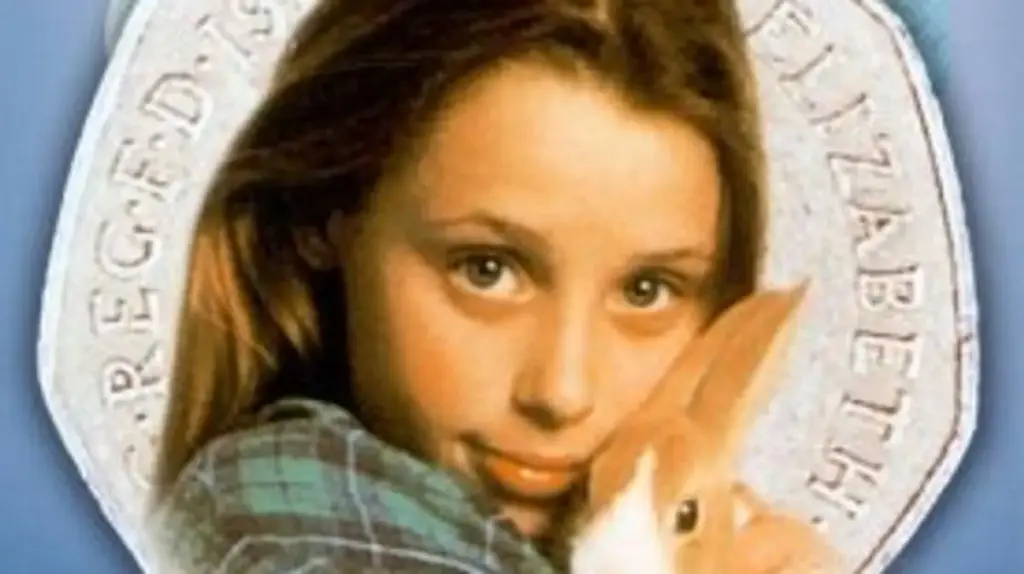
The premise was brilliantly simple yet infinitely appealing to young audiences: a magical 50p piece. Whenever the likeness of Queen Elizabeth II’s nose on the coin was rubbed, the holder was granted wishes. For children navigating the rigid structures of school and family life, the concept was an ultimate power fantasy. The sibling dynamic between Harmony and Melody provided the narrative anchor, balancing fantastical wish-fulfillment with grounded, relatable family squabbles.
Heather-Jay Jones was not a one-hit wonder of the 90s screen; at the height of her young career, she cultivated an impressive resume. Beyond her iconic role as Melody, Jones demonstrated her acting range by securing parts in the celebrated comedy series The House That Jack Built and the gritty, high-stakes popular emergency drama London’s Burning. She was a recognizable face of British television drama and comedy during a golden era of domestic broadcasting.
Similarly, the broader cast and crew enjoyed a rich production run that spanned eight series, concluding in 2003. Over its eight-year tenure, the show evolved, introducing new characters and magical items while retaining the core themes of empathy, morality, and the unforeseen consequences of magical interference. However, as the final episodes aired in the early 2000s, the young actors faced a crossroads that every child star must eventually confront: whether to pursue a lifelong career in the volatile entertainment industry or step away to build a sustainable, ordinary life.
Supporting Context & Metrics: The Anatomy of a Cult Classic
The legacy of The Queen’s Nose is best measured not just by its original broadcast ratings, but by its enduring digital footprint and the psychological impact it left on its audience. In an era before streaming services, on-demand platforms, and social media algorithms, appointment-to-view television commanded a unified national audience.
The Digital Revival and Fan Communities
Decades after the cameras stopped rolling, The Queen’s Nose maintains a dedicated following across online forums, most notably on Reddit. Recent threads dedicated to the series have drawn thousands of nostalgic engagements, shedding light on the show’s deep-seated cultural resonance:

- The 50p Effect: Countless former viewers admit to a lifelong, Pavlovian reverence for 50-pence coins. As one viral Reddit user confessed, "The amount of respect I have for 50p coins—even until this day—just because of this show is ridiculous."
- The Nostalgia Economy: The show’s atmospheric theme music is frequently cited as an "all-time great" television opening, serving as an instant psychological "nostalgia injection" for millennials and older Gen Z adults.
- The "Lost Media" Dilemma: Despite its massive popularity, The Queen’s Nose occupies a bittersweet status in television history. Due to complex licensing and archiving issues, the series is largely considered "lost media," with no comprehensive, official commercial release or streaming availability for the entire run. Fans must rely on fragmented, user-uploaded episodes scattered across platforms like YouTube to revisit their childhood memories.
- The Ritual Lives On: Informal social media polls regularly reveal that a surprising number of adults still instinctively rub the nose of a 50p coin when handling cash, proving that the whimsical mythology crafted by King-Smith and the BBC continues to linger in the subconscious of British society.
Navigating the Transition Out of Showbusiness
The statistics surrounding child stardom are historically sobering. Studies in developmental psychology and entertainment history frequently highlight the high rates of burnout, identity crises, and mental health struggles faced by actors who enter the spotlight before their cognitive development is complete.
By choosing to walk away from television, both Heather-Jay Jones and Victoria Shalet bucked the industry trend of chasing fading fame. Instead, they redirected their communication skills, empathy, and resilience into vocational paths that offer tangible, daily benefits to their communities.
Official Statements and Reflections
While neither Jones nor Shalet have sought heavy media attention in recent years, their career pivots speak volumes about their values. The transition from the artificial validation of television ratings to the deeply human stakes of education and mental health care marks a profound evolution.
In interviews and public retrospectives over the years, former cast members have occasionally reflected on the surreal nature of growing up on British television sets. The rigorous schedules required balancing schoolwork with grueling filming commitments, often isolating young actors from traditional peer socialization.
Victoria Shalet’s trajectory provides a striking parallel to Jones’s career shift. Having captivated audiences as Harmony, Shalet ultimately stepped away from acting to pursue a rigorous academic and professional path. Today, she operates as a certified psychotherapist, specializing in high-stakes, deeply sensitive areas including abuse counseling, grief recovery, and child-related psychological issues. The emotional intelligence required to portray a complex, imaginative child on screen translated seamlessly into a professional life dedicated to holding space for vulnerable individuals.
Similarly, Heather-Jay Jones’s shift to primary school education places her on the front lines of childhood development. Rather than performing for children through a television screen, she now actively shapes their foundational years in the classroom, fostering literacy, curiosity, and emotional growth.
Future Outlook: Preserving a British Television Treasure
As television continues to pivot toward algorithmic streaming content and high-budget fantasy franchises, the unassuming charm of mid-budget, live-action British children’s drama feels increasingly like a relic of a bygone era. Shows like The Queen’s Nose relied heavily on character development, moral storytelling, and practical imagination rather than CGI spectacle.
The future of The Queen’s Nose likely lies in grassroots preservation. Because official institutional archives have left the series largely inaccessible through mainstream commercial channels, the show survives through the collective memory of its audience. Digital archivists, fan-run wiki pages, and YouTube preservationists act as unofficial custodians of British television history, ensuring that future generations can at least sample the magic that defined post-school viewing in the late 20th century.
For Heather-Jay Jones and Victoria Shalet, the outlook is one of quiet fulfillment. While millions of adults across the UK will forever remember them as the Parker sisters—wishing for flying ponies, invisible capes, or solved family arguments via a magical coin—their true legacy is no longer tied to celluloid or broadcast tapes. By trading the transient applause of the entertainment industry for the enduring, foundational work of teaching and healing, these former child stars have proven that the greatest magic is not found on a 50-pence piece, but in the positive, lasting impact one can make in the real world.