Executive Overview
Two decades after a young, unassuming Mia Thermopolis discovered she was heir to the throne of Genovia within the hallowed, wood-paneled halls of Manhattan’s Plaza Hotel, author Meg Cabot is once again inviting readers back into her literary kingdom. Sitting down for afternoon tea at the very Palm Court that inspired her most famous creation, Cabot reflects on a career that has shaped multiple generations of readers, yielded over 80 published novels, and fundamentally altered the landscape of contemporary young adult (YA) and middle-grade fiction.
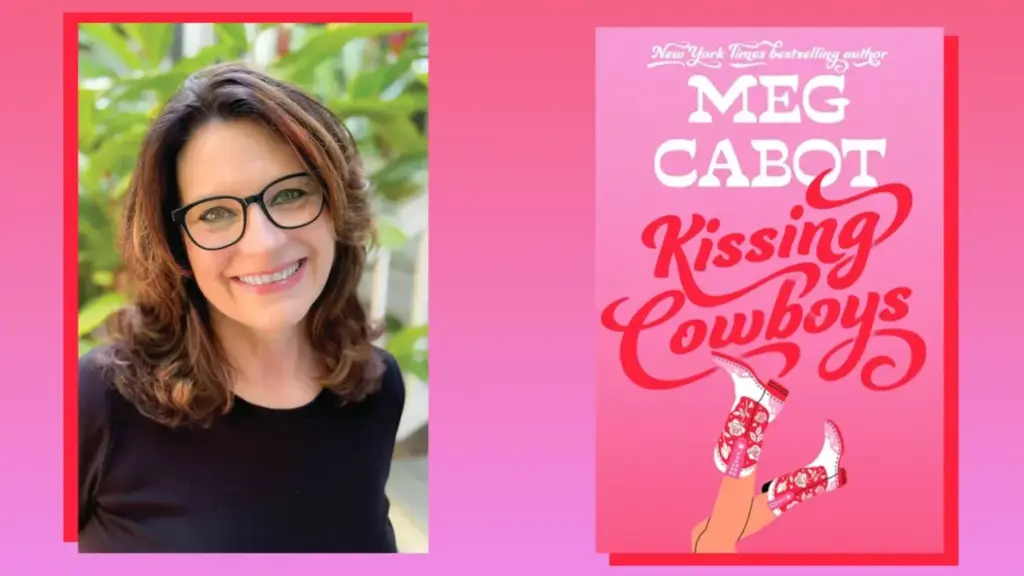
The year 2026 marks a monumental renaissance for the celebrated author. Cabot is simultaneously releasing an eclectic slate of projects: a brand-new graphic novel adaptation of The Princess Diaries illustrated by Bethany Crandall; The Magic We Made, a witchy contemporary romance; Kissing Cowboys, her first YA novel in a decade; a re-edited release of her classic When Lightning Strikes; and Detective Baby, an original children’s graphic novel. This literary flood occurs against a backdrop of mounting cultural anticipation for the forthcoming Princess Diaries 3 film, for which Cabot confirms she has already reviewed scripts.
Yet, beyond the publishing milestones and Hollywood developments, Cabot’s return to YA fiction after a ten-year hiatus signals a deeper cultural reckoning. As the original generation of sixth-grade readers now pushes strollers down book tour aisles, Cabot’s enduring appeal highlights the profound, lasting impact of coming-of-age literature. This comprehensive profile examines Cabot’s storied career, her creative processes, the evolution of her readership, and her triumphant return to the genre she helped define.
Detailed Chronology: From Star Wars Fanfiction to the Plaza Hotel
Meg Cabot’s journey to becoming a literary powerhouse is rooted in an early, insatiable imagination that found expression long before she ever approached a traditional publisher.
The Indiana Years and Early Imaginings
Growing up in Indiana during the 1970s, a young Cabot was thoroughly convinced she possessed supernatural abilities. "I was convinced, like all young imaginative girls, that I had ESP and witch powers," Cabot recalls with a laugh. This belief was playfully, if mischievously, encouraged by her family, who fed her elaborate tales of ancestral witches who had allegedly been burned at the stake—a family myth that later proved entirely fictional, though it fueled her childhood daydreams.
Lacking traditional outlets, Cabot turned to writing as an early form of wish-fulfillment, penning Star Wars fanfiction that she is profoundly grateful remains off the internet. These formative stories typically placed her directly into the galactic narrative: Princess Leia would arrive at Cabot’s school pleading for help defeating the Dark Lord, whereupon Cabot would casually bid farewell to her childhood frenemies and jet off to save the Rebellion. When she proudly presented these manuscripts to her mother with the instruction to mail them directly to George Lucas, her mother provided a foundational lesson in reality: "That is not how it works."
Moving to New York and Pranking Hilary Knight
Upon moving to New York City in her early twenties, Cabot wasted no time inserting herself into the city’s rich literary lore. Her very first act in the metropolis was looking up Hilary Knight—the legendary writer and illustrator of the iconic Eloise at the Plaza series—in the physical telephone book.
"I couldn’t believe that he was listed," Cabot recounts over Earl Grey tea at the Palm Court. "All I said was, ‘Hi, you’re my favorite artist.’ He sounded very refined on the phone." That New York energy—audacious, romantic, and deeply literary—would soon bleed into her professional breakthrough.

The Birth of a Royal Phenomenon
Published around 2000 under her real name, The Princess Diaries catapulted Cabot into international stardom. The novel chronicled the diary entries of Mia Thermopolis, an ordinary, frizzy-haired, flat-chested San Francisco teenager who discovers her estranged father is the Prince of Genovia, requiring her to take royal lessons from her formidable grandmere at the Plaza Hotel.
While the 2001 film adaptation starring Anne Hathaway, Julie Andrews, and Heather Matarazzo made notable narrative adjustments—moving Mia permanently from San Francisco to New York and shifting her family dynamics—the books established a blueprint for diary-style, first-person contemporary fiction that would define the early 2000s YA boom.
Supporting Context & Metrics: Cabot’s 2026 Publishing Empire
To understand the scale of Meg Cabot’s literary footprint is to look at staggering volume matched by enduring commercial viability. Over a career spanning more than twenty-five years, Cabot has penned over 80 books, translating into dozens of languages and selling millions of copies worldwide.
The 2026 Release Slate
Cabot’s current literary output defies the traditional slowdown expected of veteran authors. Her 2026 publishing calendar is remarkably dense:
- The Princess Diaries: The Graphic Novel: Illustrated by comic artist Bethany Crandall, this summer release brings Mia Thermopolis’s universe back into the visual medium, bridging the gap for a new generation of visual-first readers.
- The Magic We Made: The second installment in her Witches of West Harbor adult/contemporary romance series, drawing thematic inspiration from Taylor Swift’s song "Long Live."
- Kissing Cowboys: Cabot’s triumphant return to YA after a ten-year hiatus—a diary-style romance set on a Montana dude ranch that explores a classic city-girl-meets-country-boy love triangle.
- When Lightning Strikes: A newly re-edited re-release of her classic YA supernatural thriller.
- Detective Baby: An original children’s graphic novel about an infant crime-solver, proving Cabot’s range extends across multiple demographics.
The Demographics of Nostalgia
Perhaps the most striking metric of Cabot’s career is generational turnover. The pre-teens and teenagers who devoured The Princess Diaries in the early 2000s are now adults in their thirties and forties.
"It’s weird because I have not aged to myself, but all these women are coming [to my book tour] and they’re using baby strollers and stuff," Cabot says. When fans approach her to say, "You were my favorite author when I was in sixth grade," Cabot’s internal reaction is swift: "How old am I?"
Yet, she views this demographic evolution with immense pride. "They’re all young women who have now got careers and families, and it’s just so great. I’m not saying it’s because they read The Princess Diaries, but… they’re readers. I think readers end up in pretty good places most of the time."
Official Statements & Insights: Inside the Mind of the Author
During her exclusive interview at the Plaza Hotel, Cabot offered candid insights into her creative process, the challenges of modern teen vernacular, and her unconventional methods for defeating writer’s block.

The Magic of Tea and Witchcraft
While researching witchcraft for her Witches of West Harbor series, Cabot discovered fascinating historical folklore surrounding everyday items. Choosing Earl Grey tea during her interview, she explained that the blend—flavored with bergamot oil—is traditionally believed to attract fortune and prosperity.
Reflecting on her childhood desire for magic, Cabot arrived at a mature philosophy regarding creative labor. "The magic is within us, but it’s just doing our jobs very well. We’re trying to make the world better, right?" she explains. "So that might explain why, suddenly, I was like, ‘I’m going to write a YA’ after 10 years of not doing that."
Decoding Modern Youth Culture
Returning to the YA category with Kissing Cowboys presented an unexpected hurdle: linguistic anthropology. Writing a contemporary diary-style novel meant re-engaging with how modern teenagers actually speak.
"I’ve been out of it for so long, I don’t know what anyone is talking about," Cabot admits with a self-deprecating laugh. Capturing authentic youthful cadence required deliberate observation, ensuring that her characters resonated with a generation raised on TikTok and algorithmic media rather than dial-up internet and print magazines.
The Nuclear Motivation Hack: Writing for Spite
Few professional authors operate with as ruthless a productivity system as Cabot. To hit her strict daily quota of five pages, Cabot relies on an accountability pact with fellow author Rachel Vail.
The terms are brutally straightforward: Write five pages by 5:00 PM, or donate $5 to Donald Trump.
"It’s the most motivating thing I’ve ever used," Cabot confesses, noting that previous attempts to incentivize productivity with positive rewards—like buying herself a treat—failed entirely. "I really seem to be motivated by just hatred, which is terrible." On the day of her Teen Vogue interview, the authors agreed that sitting down for a major journalistic profile counted toward their daily word count.
Future Outlook: What Lies Ahead for Meg Cabot and Genovia
As Cabot looks toward the horizon, her creative engine shows zero signs of deceleration. She is currently putting the finishing touches on the sequel to Kissing Cowboys and laying the groundwork for an entirely new series centered around a female amateur sleuth in New York City.

Furthermore, the shadow of Hollywood looms large. With confirmation that The Princess Diaries 3 is actively moving forward and that scripts are actively circulating, the cultural appetite for Genovia is reaching a fever pitch. Whether this renewed cinematic interest will introduce Mia Thermopolis to a streaming generation remains to be seen, but the literary foundation is stronger than ever.
Cabot continues to observe how reader psychology shifts across decades. She remains endlessly amused by how modern audiences interact with fictional villains. While characters like Paul Slater from her Mediator series were written unequivocally as antagonists, modern readers frequently email Cabot arguing that Slater "is not that bad" and was merely misunderstood—a literary phenomenon she greets with affectionate exasperation: "I’m like, ‘Oh my God, he is that bad. He’s not misunderstood. He’s just a jerk.’"
Yet, beneath the humor and the rigorous five-page quotas lies a foundational belief in the transformative power of storytelling. Whether writing about royal heirs, Montana cowboys, or crime-solving babies, Cabot’s primary objective remains unchanged: sparking that specific, unadulterated joy in a reader’s mind.
Recalling a recent book event where a young child beamed with uncontainable happiness upon learning his favorite side characters would return in the next Detective Baby book, Cabot summarizes the core of her life’s work: "That’s such a great feeling, that you made something that is making this little kid excited about a book. And it’s about a baby who solves crimes, okay?"
For Meg Cabot, the magic isn’t just in the spells of West Harbor or the crowns of Genovia—it is in the enduring connection between a writer, a blank page, and a reader ready to believe.