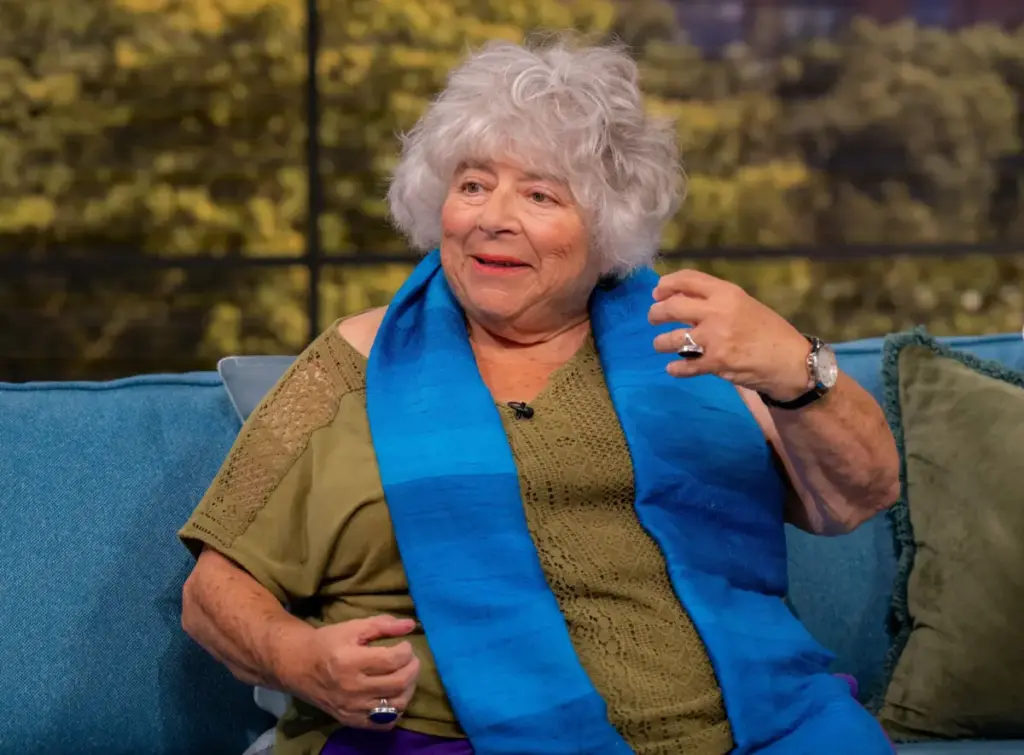
In the fast-paced world of live television, unpredictability is often championed as a hallmark of authentic entertainment. However, boundaries can be tested beyond comfort, resulting in high-profile public relations crises. This was starkly demonstrated during a recent live broadcast of ITV’s flagship daytime program, This Morning.
Veteran British actress Miriam Margolyes—known as much for her unfiltered, eccentric candor as for her celebrated acting career—found herself at the center of a severe backlash after directing racially insensitive remarks toward presenter Andi Peters.
Appearing on the daytime talk show to promote her latest literary work, Miriam’s Full English: A Grand Tour of All Our Best Bits, the 85-year-old actor steered the conversation away from her book and toward a clumsy, intrusive interrogation of Peters’ racial background and heritage. The exchange culminated in Margolyes using the historical, colourist American slang term "high yella" to describe Peters.
The incident instantly transformed a routine promotional spot into a major television controversy. Within hours, the controversial portion of the segment was quietly scrubbed from ITV’s catch-up streaming service, ITVX. Meanwhile, digital platforms erupted with widespread condemnation from viewers, sparking a national conversation regarding implicit bias, historical colourism in media, and the accountability of veteran public figures on live broadcasting networks.
Detailed Chronology of the Live Broadcast Incident
The Lead-Up to the Controversy
The segment began with the standard trappings of daytime television promotion. Margolyes, sitting alongside co-hosts Andi Peters and Christine Lampard, was ostensibly there to discuss her travels across England and her observations of British life. Known for her penchant for breaking television decorum, the octogenarian actor immediately established a playful yet boundary-pushing tone.
As the interview neared its concluding minutes, Margolyes abruptly shifted the dynamic of the conversation, turning the tables on the hosts.

"You’re more interesting than I am," Margolyes remarked, gazing across the studio couch. "And if I had half the chance, I would interview you."
When Lampard enthusiastically replied, "I would love you to," Margolyes immediately leaned into an impromptu, playful mimicry of Lampard’s Northern Irish accent. While harmless on the surface, this vocal impersonation served as a prelude to a line of questioning that would rapidly cross professional and social boundaries.
The Interrogation of Identity
Turning her focus squarely toward Andi Peters, Margolyes pressed deeper into personal terrain, asking, "What accent would be normal for you?"
Peters, maintaining his professional composure, calmly replied, "Well, this is my normal accent."
Rather than dropping the line of questioning, Margolyes escalated the intrusion. "What are you?" she demanded bluntly.
Visibly taken aback by the bluntness of the query, Peters responded with self-deprecating humor and poise: "What am I? I’m me."

Dropping the regional mimicry, Margolyes abandoned subtlety altogether. "Well, you’re a mix, aren’t you?" she pressed. "So you’ve got a Black daddy and a white mummy."
Slightly lost for words and visibly uncomfortable, Peters corrected the guest on live television, gently explaining that both of his parents are Black. Undeterred by the correction, Margolyes pressed forward, attempting to complete a thought that would soon ignite a digital firestorm: "I think you’re what I would call high…"
The "High Yella" Remark and Attempted Defusal
Recognizing the escalating tension in the studio, Peters attempted to defuse the situation through quick-witted humor, jokingly asking if his makeup artist had utilized a "lighter shade than normal" for the broadcast.
Margolyes, however, talked over the joke, doubling down on her train of thought.
"I think you’re high yella," she declared.
Confused by the archaic and regional terminology, Peters directly asked, "What’s high yella?"

"That’s what they call it in America," Margolyes chuckled, seemingly oblivious to the gravity of her vocabulary. "When someone isn’t deeply Black."
Attempting once more to rescue the segment from complete disaster, Peters leaned into the absurdity with a dry observation: "He didn’t know there were shades."
"There are shades," Margolyes insisted, doubling down on the categorization. "And this is what we…"
Before she could finish her sociological commentary, Peters signaled that the production team behind the cameras was intervening, noting that his producers were "getting nervous now."
"Don’t be nervous," Margolyes dismissed airily. "We welcome everybody, and that’s what I want to write about in my book."
Supporting Context & Metrics: The Digital Aftermath and Viewer Backlash
The Immediate Editing and Digital Erasure
The speed at which broadcasters react to live television controversies has accelerated significantly in the era of on-demand streaming. Within hours of the broadcast concluding, ITV executives recognized the liability of the segment. Viewers tuning into the catch-up version of the episode on ITVX quickly noticed that the entire exchange regarding Peters’ heritage and the "high yella" remark had been entirely edited out of the digital archive.

However, the intervention came too late to prevent the spread of user-generated clips. Within minutes of the live transmission, fragments of the interview were captured by viewers, uploaded to platforms such as X (formerly Twitter), TikTok, and Instagram, and amplified across mainstream digital news outlets.
Public Outrage and Social Media Metrics
By the afternoon following the broadcast, hashtags associated with Miriam Margolyes, Andi Peters, and This Morning were trending nationally. Sentiment analysis of the digital discourse revealed an overwhelmingly negative reaction directed toward Margolyes’ conduct, alongside an outpouring of sympathy and admiration for Peters’ restraint.
Key online responses highlighted deep dissatisfaction:
- @nosnevetsnej (via X): "It was embarrassing, and I felt really sorry for [Andi Peters]."
- @OldeWorzel (via X): "Utter cringe fest. ‘What are you???’ How dreadfully rude of Miriam Margolyes. Questioning Andi Peters’ skin colour too. Damn cheek."
- @CharlieFarnsba9 (via X): "Miriam Margolyes being her usual rude, nasty and racist self on @thismorning on ITV, even the Gallery started panicking and said something in Andy Peters earpiece. What a vile and disgusting woman she is; why do they ever give her airtime?"
- @AdeshaF (via X): "Disappointing from Miriam (I usually really enjoy her interviews). That was really uncomfortable to watch/listen to; Andi did well but looked understandably shaken by it… sad to see a national treasure I’ve grown up with still subjected to this kind of racist [rubbish] in 2026."
Deconstructing the Terminology: What is "High Yella"?
Much of the public outcry centered on the nature of the term used by Margolyes. Cultural commentators and viewers pointed out that "high yella" (or high yellow) is an offensive historical American slang term rooted in the era of segregation and slavery.
The term was historically used within the African Diaspora to describe individuals of mixed-race heritage with very light skin complexions. Sociologists and historians note that the phrase is deeply tied to colourism—a form of prejudice or discrimination where people are treated differently based on the social meanings attached to skin colour. Within marginalized communities, colourism historically established a toxic internal hierarchy, granting lighter-skinned individuals proximity to privilege while marginalizing those with darker skin.
Deploying this terminology on live British television in 2026—particularly toward a Black British television presenter—was widely condemned not only as archaic and culturally insensitive, but as a perpetuation of colourist tropes.

Official Statements and Institutional Response
As of the publishing of this report, formal statements from the principal parties involved remain measured. Representatives for Metro and other major journalistic outlets reached out to Miriam Margolyes, Andi Peters, and ITV corporate communications for official comment regarding the incident, the decision to edit the broadcasted segment, and the broader implications of the live exchange.
- ITV: While the network opted to quietly excise the controversial footage from its ITVX streaming library—a tacit acknowledgment of the segment’s breach of broadcast standards—no formal disciplinary statement or apology has yet been issued by the channel regarding its choice of guest or live editorial oversight.
- Andi Peters: The seasoned presenter has maintained professional silence on the matter, choosing not to amplify the controversy via his personal social media channels, having already navigated the uncomfortable live moment with characteristic poise in the studio.
- Miriam Margolyes: Representatives for the actress have yet to issue a clarification or apology concerning the context of her remarks or her use of historical American terminology on British morning television.
Future Outlook: Accountability and the Limits of "National Treasure" Status
The controversy surrounding Miriam Margolyes’ appearance on This Morning has opened a broader cultural debate regarding the cult of personality in British broadcasting. For decades, Margolyes has cultivated a reputation as an unvarnished, charmingly eccentric "national treasure." Her propensity for uttering the unsayable has historically been embraced by talk show hosts and producers as high-risk, high-reward television designed to generate viral moments and boost ratings.
However, this latest incident signals a shifting cultural tolerance for casual microaggressions, racial categorization, and boundary-testing behavior under the guise of comedic eccentricity. Viewers and cultural critics are increasingly drawing a firm line between harmlessly eccentric behavior and outdated, racially insensitive commentary that reinforces harmful hierarchies.
Moving forward, morning television producers and live broadcasting networks face heightened scrutiny regarding their live-interview protocols. The incident serves as a cautionary tale about the perils of platforming unfiltered commentary without adequate editorial safety nets. Whether this public backlash will permanently alter how television bookers approach controversial guests remains to be seen, but the digital erasure of the segment ensures that the uncomfortable legacy of this morning broadcast will linger long in the memory of British television audiences.