Executive Overview
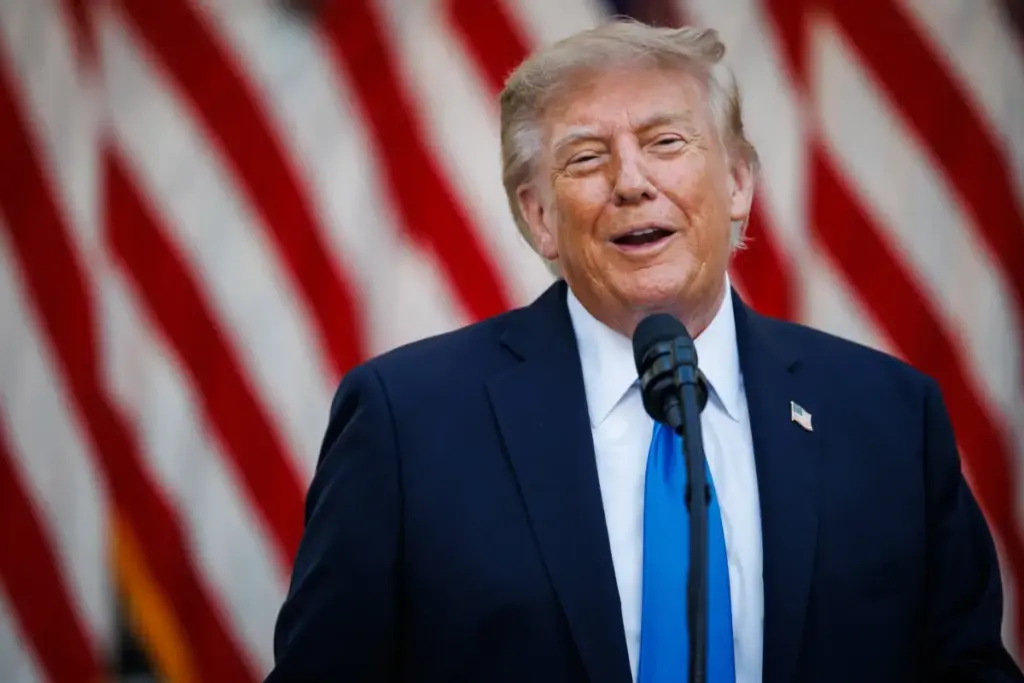
The geopolitical landscape between Washington and London has faced renewed strain following a series of contentious remarks by US President Donald Trump during a wide-ranging interview with GB News. In the broadcast, Trump claimed single-handedly to have spared the United Kingdom from a potential nuclear attack through aggressive military action against Iran. Simultaneously, he fiercely criticized British leadership for failing to support US and Israeli military initiatives in the Middle East, going as far as hinting at a potential review of American backing for the UK regarding the Falkland Islands.
The escalating tensions arrive against the backdrop of a severe military stand-off involving the United States, Israel, and Tehran, centered heavily on the vital maritime artery of the Strait of Hormuz. The ongoing conflict has sent shockwaves through international financial and energy markets, precipitating a sharp rise in domestic fuel prices across Britain. Beyond foreign policy disputes, President Trump used the platform to castigate UK immigration policies and deliver a blistering critique of London Mayor Sadiq Khan, claiming that the British capital has deteriorated into a lawless environment.
These remarks have drawn immediate, sharp rebukes from allies of the London Mayor, who dismissed Trump’s assertions as baseless and politically motivated obsessions. Meanwhile, White House officials have sought to project calm, offering contrasting characterizations of the military engagement in the Middle East even as strategic alliances show signs of acute strain.
Detailed Chronology: The Escalation of US-Iran Tensions and the UK Stance
The current diplomatic friction is rooted in a fast-moving military campaign initiated by the United States and Israel designed to dismantle Tehran’s nuclear weapons infrastructure. For months, tensions had been simmering over naval transit rights and regional security proxies, culminating in pre-emptive strikes aimed at neutralizing suspected nuclear development sites within Iran.

Prior to the commencement of the US-Israeli offensive, the Strait of Hormuz—a crucial chokepoint through which a significant percentage of global oil and liquefied natural gas passes—remained operational for commercial shipping. However, the subsequent military escalation and operational disruptions in the Gulf channel instantly choked supply lines, driving global energy costs skyward and directly impacting British consumers through spiking petrol prices at the pump.
Despite the heavy reliance of the British economy on Middle Eastern energy routes, former Prime Minister Sir Keir Starmer maintained a policy of strategic detachment, repeatedly refusing to entangle the UK military directly in the unfolding conflict. This reluctance to commit British forces to the theater drew intense ire from Washington.
During his GB News appearance, President Trump explicitly linked the UK’s energy dependency to its refusal to aid American forces. "Don’t forget, you get a big percentage of your oil from the Strait of Hormuz, and you weren’t there to help me," Trump stated, underscoring a growing transactional approach to traditional transatlantic defense partnerships.
Supporting Context & Metrics: Geopolitical Fallout and Domestic Repercussions
The friction between Washington and London extends far beyond immediate naval security, touching upon long-standing defense commitments and domestic security paradigms. Analysts note that Trump’s veiled threat regarding American support for the UK’s sovereignty over the Falkland Islands marks a significant departure from standard diplomatic decorum, injecting profound uncertainty into the bedrock of the "Special Relationship."

Simultaneously, the economic ramifications of the Strait of Hormuz disruption continue to reverberate across the British Isles. Energy futures have fluctuated wildly, and transport logistics firms face compressed margins due to inflated fuel expenses. While the US administration insists that its military objectives are defensive and preemptive, European capitals have watched with mounting anxiety as diplomatic communication channels narrow.
In parallel with his foreign policy critique, President Trump pivoted to domestic UK issues, warning that Britain faces civil "disaster" if it fails to drastically tighten its borders. Asserting that unchecked immigration poses an existential threat to national identity, Trump remarked: "If you don’t stop people pouring into your country from all over the world, you’re not going to have a country left."
This rhetoric mirrors long-running populist talking points that have deeply polarized domestic British politics, drawing sharp divisions between nationalist factions and establishment politicians who champion multiculturalism and open-market globalization.
Official Statements and Counter-Perspectives
The war of words reached a fever pitch when President Trump turned his attention to municipal governance in London, launching a personal and professional assault on Mayor Sadiq Khan.

"I mean, if you go through London, London’s a much different place. You have a terrible mayor. He’s a nasty guy, nasty person. He’s a very bad mayor," Trump told GB News. He further alleged that crime rates had soared beyond recognition and claimed that metropolitan police forces in major European capitals, including Paris and London, routinely avoid designated "no-go" zones out of fear for their lives.
These assertions were met with immediate and categorical denial from allies of the Mayor of London. A senior source close to Sadiq Khan dismissed the President’s remarks with characteristic bluntness:
"Sadiq is still living rent-free in Trump’s head. The guy is obsessed with him. Crime rates are down all across London, with violent crime lower than in every major US city. London is a diverse, multi-cultural and thriving global city—the best city in the world. Trump just can’t comprehend our success."
Meanwhile, back in Washington, the White House attempted to soften the perception of escalating hostilities. During a routine White House news briefing, Vice President JD Vance disputed the characterization of the ongoing confrontation with Iran as an "active war."

"There is no active shooting. I recognise there have been places where this has flared up," Vance told reporters, attempting to downplay the frequency and intensity of the recent American strikes that have dominated international headlines over preceding days.
Future Outlook: The Fragile State of the Transatlantic Alliance
As the dust settles from President Trump’s explosive interview, foreign policy experts are left scrambling to assess the long-term viability of traditional Western alliances. The divergence in strategic vision between an increasingly unilateralist Washington and a cautious, multilateral-leaning London highlights a widening chasm in transatlantic governance.
In the near term, the British government faces the delicate task of managing volatile energy markets, stabilizing inflation driven by maritime trade disruptions in the Gulf, and maintaining diplomatic equilibrium with an unpredictable White House. Failure to deftly navigate these competing pressures risks isolating the UK on the global stage, just as economic headwinds and regional instability threaten European security.
Whether the current war of words will translate into tangible geopolitical shifts—such as a recalibration of military intelligence sharing, trade negotiations, or territorial defense guarantees—remains to be seen. What is clear, however, is that the foundational assumptions guiding the modern Special Relationship are undergoing their most rigorous and turbulent stress test in decades.