Executive Overview
Gone are the days of the heavy-handed, notoriously orange-hued bronzers that dominated makeup bags of the past. Today, the category has undergone a profound transformation, moving away from mask-like theatricality toward nuanced undertones, easily blendable textures, and finishes explicitly engineered to mimic a natural, sun-kissed complexion.
Modern formulations do far more than simply deposit a luminous sheen; they integrate sophisticated skin-care ingredients into lightweight bases that can be worn effortlessly on bare skin or layered seamlessly over other color cosmetics. From viral summer beauty drops to luxury artisanal compacts, bronzer has graduated from a niche contouring step to an essential building block in minimalist and maximalist routines alike.
This comprehensive report examines the cultural and commercial shifts behind the modern bronzer renaissance, details the industry’s top-performing formulas across various product categories, outlines expert application methodologies, and analyzes the structural differences between bronzing and traditional contouring.
Detailed Chronology: The Journey from Orange Powder to Skincare-Infused Balm
The Era of Heavy-Handed Contouring
For decades, the mainstream cosmetics market treated bronzer as a blunt instrument. Formulas were predominantly packed with heavy red-orange pigments, talc bases, and dense shimmers designed to simulate a tan overnight. Applied via the ubiquitous "3-shape" technique—sweeping the product from the temples across the cheekbones and down to the jawline—these legacy powders frequently resulted in muddy textures, orange undertones, and a stark lack of dimension. Consumers with cool or deep skin tones were largely underserved, often forced to choose between products that looked chalky or unnaturally ruddy.
The Rise of Cream and Liquid Innovations
As the beauty industry shifted toward "skin-first" philosophies in the late 2010s and early 2020s, powder formulas took a backseat to emollient textures. Brands began exploring liquid tints and cream sticks that melted into the epidermis rather than sitting on top of it. This technological pivot allowed for a more convincing simulation of actual sun exposure—one that captured the dewy, flushed warmth of a day spent outdoors rather than the flat appearance of stage makeup.
The Skincare-Infused Modern Standard
By 2026, the evolution reached its zenith. Viral product drops proved that consumers no longer viewed makeup and skincare as distinct categories. Modern bronzers routinely feature active ingredients—such as hydrating peptides, nourishing plant oils, and antioxidant-rich botanical extracts—transforming a cosmetic step into a daily skin-nourishing ritual. Whether navigating the depths of winter or accentuating a summer tan, today’s buyer demands high-performance cosmetics that respect skin health, blend seamlessly, and offer hyper-realistic undertones.
Supporting Context & Metrics: The Anatomy of a Modern Bronzer
A high-performing contemporary bronzer achieves its efficacy through a delicate balance of science, artistry, and formulation chemistry. To understand why certain products dominate editorial roundups, beauty editors and cosmetic chemists evaluate formulas across four critical vectors:
- Undertone Accuracy: Modern shades are engineered to reflect real human undertones—avoiding the trap of excessive warmth by introducing subtle neutral, olive, or peach balances.
- Texture and Versatility: Formulas must accommodate bare skin, liquid foundations, and powder sets without pilling, separating, or clinging to dry patches.
- Multidimensional Placement: Beyond adding warmth, strategic placement can lift the cheekbones, define the jawline, and establish structural depth across the collarbones and shoulders.
- Skincare Integration: The inclusion of barrier-supporting elements ensures that prolonged wear does not compromise skin integrity.
Curated Editorial Selection: The Market’s Finest Formulas
Industry roundups highlight a diverse array of products tailored to distinct stylistic preferences and application methods:
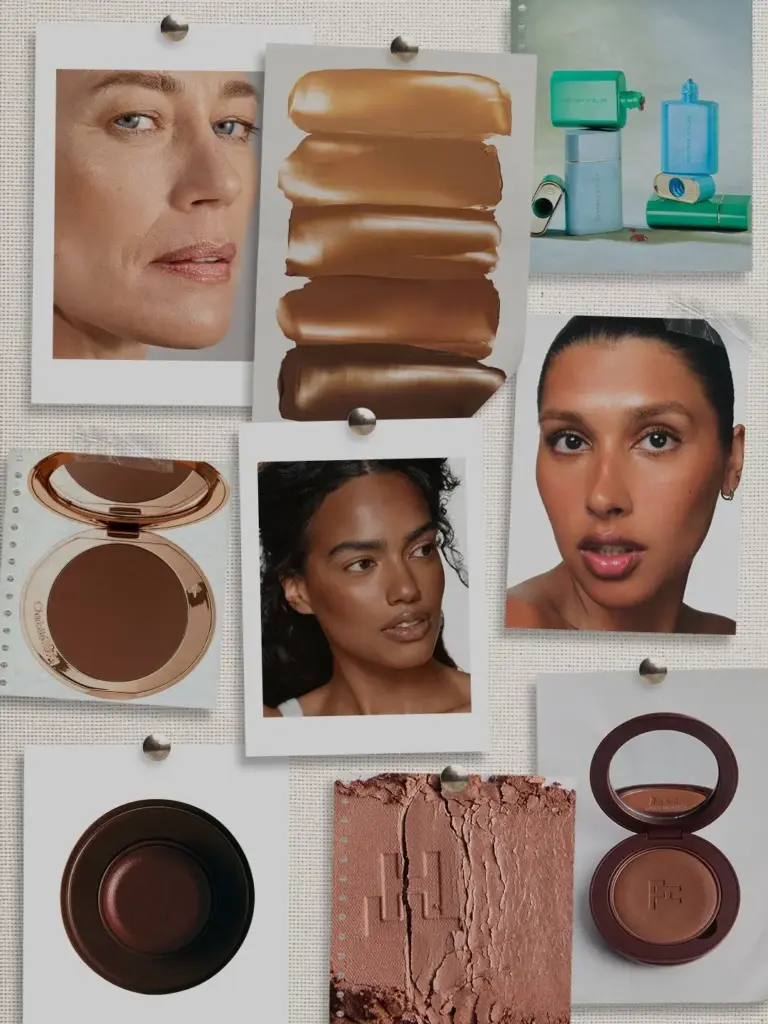
- Best Stick — Rhode Pocket Bronze: Cementing its status as a minimalist staple, this peptide-infused stick offers a foolproof format ideal for touch-ups on the go, bridging the gap between full glam and bare-faced ease.
- Best Sheer — Merit Bronze Balm Sheer Sculpting Bronzer: Celebrated for its ultra-lightweight, watercolor-like payoff, this balm provides a subtle, translucent wash of warmth that is virtually impossible to over-apply.
- Best Bronzing Drops — Westman Atelier Sun Tone Bronzing Drops: A luxurious hybrid solution that infuses skincare benefits with a customizable, sun-drenched tint, perfect for mixing into serums or foundations.
- Best Neutral Undertones — Saie SuperSuede Radiant Baked Bronzer: Utilizing a baked powder technology, this formula delivers a velvety, second-skin finish with balanced neutral undertones that avoid unwanted warmth.
- Best Powder Bronzer — Charlotte Tilbury Bronzing Powder: A finely milled luxury classic that imparts a smooth, sun-baked golden sheen, smoothing skin texture while adding classic warmth.
- Best Shade-Inclusive — LYS Beauty No Limits Cream Bronzer Stick: A powerhouse formula offering rich, buttery blendability across an expansive range of deep and inclusive undertones.
- Best Cream — Fara Homidi Essential Bronzer Compact: An artisanal, high-end compact designed for precision application and a sophisticated, skin-enhancing finish.
Official Insights & Expert Methodology
Mastering bronzer requires unlearning legacy techniques and adopting modern application science. Leading industry professionals emphasize that proper shade selection and tool placement dictate the final result.
Choosing the Right Shade and Undertone
According to industry experts, the golden rule is to select a product one to two shades darker than your natural skin tone. However, understanding your underlying skin spectrum is paramount:
- Warm Undertones: Can comfortably wear golden, honey-toned bronzers.
- Cool Undertones: Benefit from peach-infused or muted rose-brown hues that harmonize without clashing.
- Neutral Undertones: Require careful balancing; soft pink-brown or balanced neutral shades prevent the complexion from looking muddy.
Skin type also dictates formula choice: oily complexions lean naturally toward mattifying baked powders, while normal and dry skin types thrive with emollient creams and luminous liquids.
Debunking the "3-Shape" Application Method
For decades, makeup lovers applied bronzer in a sweeping "3" formation along the perimeter of the face. Global senior makeup artists have actively debunked this practice.
"You end up with hamster cheeks!" notes MAC Global Senior Artist Dominic Skinner.
"Instead, get your brush and buff in from the top of the ear to the corner of the mouth for your first line. Then, at the same angle, apply from the corner of the eye to the temple. It creates this idea of cheekbones, whereas the ‘3’ shape blocks out the whole cheek with one color. Placement is everything."
Skinner also advocates for a transitional "bridge" product—such as a pink-brown blush—applied between the contour and the high points of the face to ensure a seamless gradient.
Contour vs. Bronzer: Understanding the Difference
A common point of confusion for beauty enthusiasts involves distinguishing between contour and bronzer. Professional makeup artist Alexx Mayo clarifies the distinction:
- Bronzers are designed to add warmth, mimicking the natural high points where the sun hits the face to create a healthy, vacation-ready glow.
- Contours feature cooler, shadow-like undertones explicitly formulated to carve out the natural hollows and architectural structure of the face.
Future Outlook
As the beauty landscape continues to iterate toward hyper-personalization and skin-health integration, the future of bronzer points toward even smarter formulations. We anticipate a greater proliferation of customizable pigment drops, microbiome-friendly ingredients, and inclusive shade expansions that cater seamlessly to every global skin tone.
The era of heavy, orange-tinted masks is firmly behind us. In its place stands a sophisticated era of sun-kissed enhancement—where modern chemistry meets effortless artistry, ensuring that a radiant, healthy glow is accessible to everyone, regardless of the season.