The rapid, largely unregulated integration of artificial intelligence into the global entertainment ecosystem has ignited an ideological and economic war within Hollywood. As production studios scramble to leverage generative tools for cost reduction and efficiency, a profound ethical crisis has emerged regarding consent, copyright, intellectual property, and the very definition of human artistry.
At the epicenter of this debate is the contentious practice of post-mortem digital resurrection—the capability to artificially recreate the likeness, voice, and performance of deceased actors. While some factions within the industry view this technological leap as a continuation of an actor’s legacy, a growing coalition of prominent filmmakers and A-list actors view it as an existential threat to dignity, labor rights, and creative autonomy.
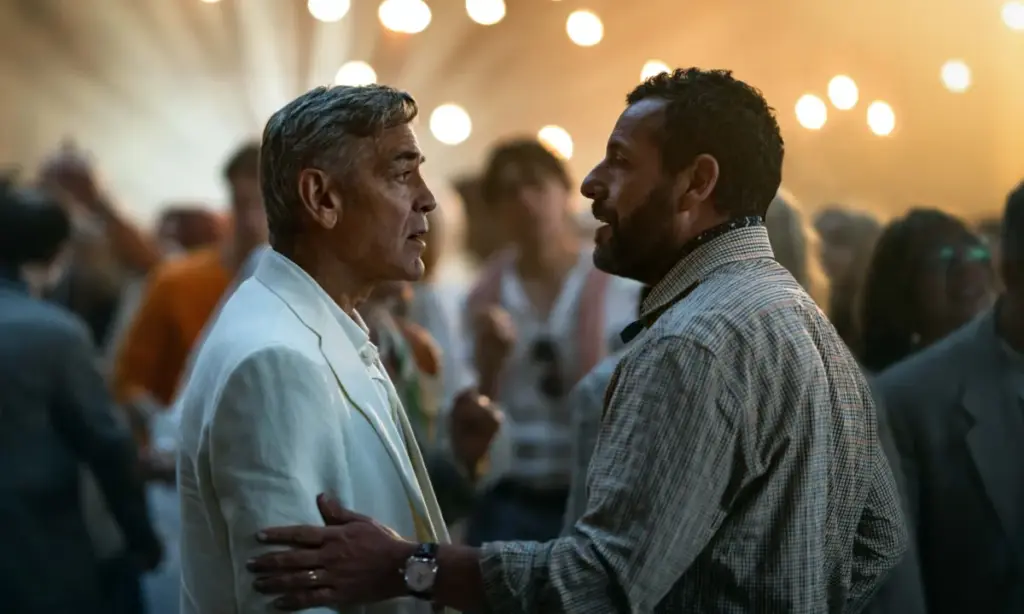
Taking center stage at the prestigious Venice Film Festival, where he accepted the coveted Golden Lion for Lifetime Achievement, 65-year-old actor, director, and producer George Clooney delivered a sharp, highly publicized critique of the industry’s trajectory. Addressing an international press corps, Clooney encapsulated the absurd and invasive potential of unchecked digital technology with characteristic dry wit, stating his primary posthumous fear:
“Well, I would like to avoid being in a tampon commercial 20 years after I’m dead. I would like to avoid that.”
Beyond the dark humor of his remarks, Clooney’s intervention highlights deep-seated industry anxieties. From the systematic displacement of below-the-line talent—particularly visual effects professionals—to the aggressive exploitation of deceased icons without familial consent, Hollywood stands at a historic crossroads. This report provides an in-depth investigation into Clooney’s warnings, the broader industry labor crisis, parallel cases of digital exploitation, and the geopolitical backdrop of modern American culture shaping the future of global cinema.
Detailed Chronology: The Evolution of AI in Cinema
To understand the weight of Clooney’s warnings at the Venice Film Festival, one must examine the rapid acceleration of generative AI within cinematic production over the past half-decade.
1. The Experimental Phase (2020–2023)
Initially, machine learning models and deepfake technology operated primarily as novelty items or expensive post-production aids. Studios utilized early iterations of face-replacement software primarily for de-aging actors—as seen in Martin Scorsese’s The Irishman—or for minimal emergency reshoots. However, as computational power grew exponentially, developers began training models on vast, largely uncompensated datasets of copyrighted film performances, actor voices, and facial expressions.
2. The Labor Strikes and Legislative Stalemate (2023)
The existential dread surrounding AI culminated during the historic SAG-AFTRA and WGA strikes of 2023. For the first time, actors and writers united in demanding explicit contractual protections against the unauthorized generation of digital replicas ("digital doubles"). While the resulting labor agreements established baseline consent frameworks, enforcement mechanisms remain notoriously difficult to police, leaving many performers vulnerable to long-term exploitation once their primary contracts expire or after they pass away.
3. The Post-Mortem Resurrections (2024–2026)
By 2026, the technology crossed from speculative fear into daily reality. The industry witnessed starkly contrasting approaches to digital permanence:
The Val Kilmer Precedent: The late actor Val Kilmer was digitally "brought back to life" via advanced AI voice and visual modeling for a major new film role, a process approved and coordinated with the blessing of his estate to complete artistic visions left unfinished during his lifetime.
The Robin Williams Defensive Action: Conversely, the family of the legendary comedian Robin Williams was forced to abruptly return to social media after a decade-long absence specifically to combat the rampant, unauthorized AI generation of his voice and likeness across digital platforms.
4. The Venice Film Festival Watershed (September 2026)
Against this backdrop of rapid technological disruption, George Clooney arrived at the Venice Film Festival. Honored for his decades-long contributions to cinema—ranging from independent political thrillers to major commercial blockbusters like Ocean’s Eleven—Clooney used his platform not merely to reflect on past achievements, but to sound a loud, urgent alarm regarding the immediate future of the medium.
Supporting Context & Metrics: The Human and Economic Toll
While celebrities cracking jokes about unauthorized commercial endorsements command headlines, the structural reality of generative AI in Hollywood poses a devastating economic threat to thousands of behind-the-scenes workers.
1. The Decimation of Below-the-Line Labor
Clooney explicitly pointed out that the current "revolution" in entertainment technology is fundamentally mismanaged, warning that it will disproportionately punish the industry’s labor force long before it impacts top-tier actors.
"If you’re a visual effects supervisor, you’re going to have trouble coming up because that’s going to be a lot of jobs taken away," Clooney warned the press in Venice. "Probably about 30 percent of the jobs. I don’t know what the real number is, but there’s going to be a big number of jobs that are going to be taken away, and we’re kind of on our back foot on it. We’re not taking the lead on it."
Industry analysts note that Clooney’s conservative estimate of a 30 percent workforce reduction aligns closely with independent labor studies tracking generative tools in pre-visualization, background casting, script analysis, and CGI rendering. While production companies champion these technologies as efficiency multipliers, union leaders argue they are deflationary tools designed to strip mid-level artisans of equitable compensation.
2. The Commodification of Identity
The debate over post-mortem rights forces legal scholars and estate executors into uncharted territory. Traditional copyright law, right-of-publicity statutes, and estate laws vary wildly across international jurisdictions.
Unlike physical property, a human persona—encompassing cadence, micro-expressions, gait, and vocal timbre—can now be infinitely synthesized, manipulated, and deployed across infinite commercial campaigns without human fatigue or financial negotiation. This commercialization of human essence transforms artists into perpetual intellectual property assets, entirely divorced from moral rights or artistic intent.
Official Statements & Industry Perspectives
The discourse surrounding AI in filmmaking has fractured the entertainment community into distinct ideological camps, highlighted by official statements from estates, unions, and leading Hollywood figures.
The Williams Family Manifesto
The stark contrast between memorializing an artist and exploiting them was sharply underscored by the family of Robin Williams. Upon their return to public social media channels, they released a pointed statement addressing the crisis:
"Making that space [online] into one where people can find authentic clips and photos of him is one of the best ways we’ve now found to fight back against rampant AI abuse of his voice and likeness on here."
This defensive posture illustrates how families of beloved cultural icons are forced to actively police the digital ether, spending considerable emotional and financial capital to suppress unauthorized, often grotesque deepfake parodies and unauthorized commercial endorsements.
A-List Complicity and Hesitation
Other heavyweights in the industry—such as Sandra Bullock and Reese Witherspoon—have faced intense public grilling regarding their long-term digital rights management. While major talent agencies now routinely negotiate restrictive clauses regarding digital replication into standard master services agreements, studio legal teams continuously push for broad, perpetual waivers that grant corporations the right to utilize an actor’s likeness in perpetuity across all known and yet-to-be-invented media formats.
Future Outlook: Navigating the Post-Human Cinema
As Hollywood moves further into the late 2020s, the intersection of art, technology, and governance presents massive challenges that extend far beyond the silver screen. In addition to addressing the technological disruption of his industry, George Clooney was pressed during his Venice press conference on broader geopolitical anxieties, specifically the state of modern American democracy under the second Trump administration.
Reflecting a characteristic blend of pragmatism and cautious hope regarding national politics, Clooney remarked:
"Look, I’m always very optimistic about things, and we’re at a moment in time that’s unfortunate — I think that’s an understatement. I do believe that we’re going to get through all of this," adding his explicit hope that the upcoming 2028 U.S. presidential election will mark a decisive "restoration into some normalcy."
The Path Forward for Cinematic Integrity
Just as American political systems face crises of institutional trust and verification, the cinematic arts face an identical epistemic crisis. When audiences can no longer distinguish between a genuine human performance born of lived emotional experience and a synthetic assembly of algorithms, the core empathetic contract between artist and spectator is broken.
To prevent Clooney’s satirical nightmare—the posthumous tampon commercial—from becoming a grim corporate reality, industry regulators, labor unions, and international lawmakers must enact enforceable guardrails. These measures must include:
Absolute Post-Mortem Moratoria: Strict legal prohibitions against the commercial exploitation of a deceased person’s likeness without explicit, uncompromised consent granted via a legally binding estate directive prior to death.
Mandatory Labor Protections: Strict quotas and retraining funds financed by studios reaping the cost-saving benefits of generative AI, ensuring that below-the-line workers—from visual effects artists to background actors—are shielded from sudden economic displacement.
Transparent Watermarking: Universal digital provenance standards that mandate clear labeling of any AI-generated or synthetically enhanced performance in cinematic media.
Until such frameworks are codified into international law, Hollywood’s icons will continue to walk the red carpet under the heavy shadow of an algorithmic future, hoping their legacies remain monuments to human creativity rather than data points for automated advertising.