Executive Overview
As artificial intelligence rapidly transforms the digital advertising landscape, Google and YouTube have firmly placed machine learning at the epicenter of their commercial pitch to brand partners. Throughout 2026, automated workflows, generative video optimizations, and programmatic enhancements have defined major industry showcases, such as YouTube’s NewFronts event, alongside sophisticated upgrades to the BrandConnect creator-partnership hub.
Yet, in a paradoxical twist that highlights the evolving nature of digital media, Google has issued an explicit caution to advertisers: do not let the pursuit of algorithmic efficiency strip away your humanity.
This pivotal guidance stems from a recent, data-driven insights post published in the Google Ads Help Center. By synthesizing performance metrics from Demand Gen campaigns—comprehensive ad initiatives that span multiple Google properties, including the YouTube ecosystem—the tech giant’s analytics teams in Mountain View uncovered a vital truth. While artificial intelligence can optimize targeting, streamline distribution, and accelerate asset creation, the actual creative connective tissue that drives consumer conversion remains resolutely human.
According to Google’s findings, incorporating a human voice into an advertisement’s creative framework increases conversion rates by a notable 12%. Furthermore, image assets featuring actual human faces consistently outperform synthetic or sterile alternatives. This report marks a critical inflection point in digital marketing. It demonstrates that while brands are actively encouraged to adopt next-generation AI tools, striking a delicate balance between automated efficiency and genuine human connection is now the defining metric of advertising success on YouTube.
Detailed Chronology: The AI Integration and the Pivot Toward Humanity
To understand Google’s recent guidance, one must examine the rapid trajectory of artificial intelligence across the YouTube platform leading up to 2026. The integration of AI into YouTube’s infrastructure did not happen overnight; it has been a methodical, multi-phased evolution.
Phase 1: The AI-First Pitch (Early 2026)
Earlier in the year, YouTube’s annual NewFronts presentation signaled a watershed moment for digital media buyers. Google executives showcased an array of AI-driven production and distribution capabilities designed to lower the barrier to entry for video advertising. Brands were introduced to generative environments capable of scaling localized content effortlessly, while the BrandConnect platform received deep AI augmentations designed to pair brands with creators more efficiently than ever before.
Concurrently, the explosive growth of conversational search and AI chatbot ecosystems led to creator content being pulled directly into LLM responses. This spawned an entirely new digital marketing sub-industry: Answer Engine Optimization (AEO) agencies, designed to help brands capture algorithmic mindshare.
Phase 2: The Saturation of Automation
By mid-2026, many advertisers had leaned heavily into end-to-end automation. Empowered by generative AI, marketing teams began deploying fully synthetic video assets, automated voiceovers, and algorithmically generated imagery across programmatic channels. While these campaigns achieved high efficiency scores in terms of impressions and cost-per-click metrics, marketers began noticing a subtle plateau in actual consumer engagement and purchase intent. Ads were reaching the right screens, but they were increasingly failing to resonate on an emotional level.
Phase 3: The Course Correction (Late 2026)
Recognizing this friction, Google’s Demand Gen campaign analytics team stepped in. By analyzing vast sets of performance data across YouTube and other Google-owned properties, the company identified a distinct consumer preference for authenticity. This culminated in the release of the Google Ads Help Center guidance, which serves as a formal industry advisory: efficiency must not come at the expense of emotional resonance. Rather than signaling a retreat from AI, the guidance outlines a hybrid model where advanced machine learning handles the heavy lifting of logistics and targeting, while human-centric creative elements drive the final conversion.
Supporting Context & Metrics: What the Data Reveals
Google’s recent Demand Gen analysis provides hard empirical evidence supporting the value of human-centric creative elements in digital video advertising. The report breaks down specific visual and auditory components that directly impact consumer behavior, offering clear benchmarks for modern advertisers.
1. The Power of the Human Voice (+12% Conversion Lift)
The most striking metric cited in Google’s guidance concerns audio architecture. When a human voice is actively integrated into a piece of video creative, the campaign’s conversion rate increases by an average of 12%.
In an era where synthetic, text-to-speech generators can produce flawless voiceovers in milliseconds, this statistic underscores the irreplaceable psychological impact of natural vocal inflection, tone, and timbre. Consumers inherently respond to the nuances of human speech, which signals authenticity and builds immediate trust—a hurdle that purely synthetic audio has yet to consistently clear.
2. Immediate Visual Hook: The First Five Seconds
Google’s data also highlights the critical importance of the opening moments of a YouTube ad. Advertisers who incorporate clear text overlays and immediate visual representations of their products within the first five seconds of a video see marginal yet meaningful upticks in their conversion rates.
However, Google emphasizes that these early-frame elements must be deployed contextually. Flashy graphics and artificial floating product models lose their efficacy if they exist in a sterile vacuum devoid of real-world context.
3. The Dominance of the Human Face
Beyond audio, visual composition plays an outsized role in consumer retention. Google’s analysis explicitly notes:
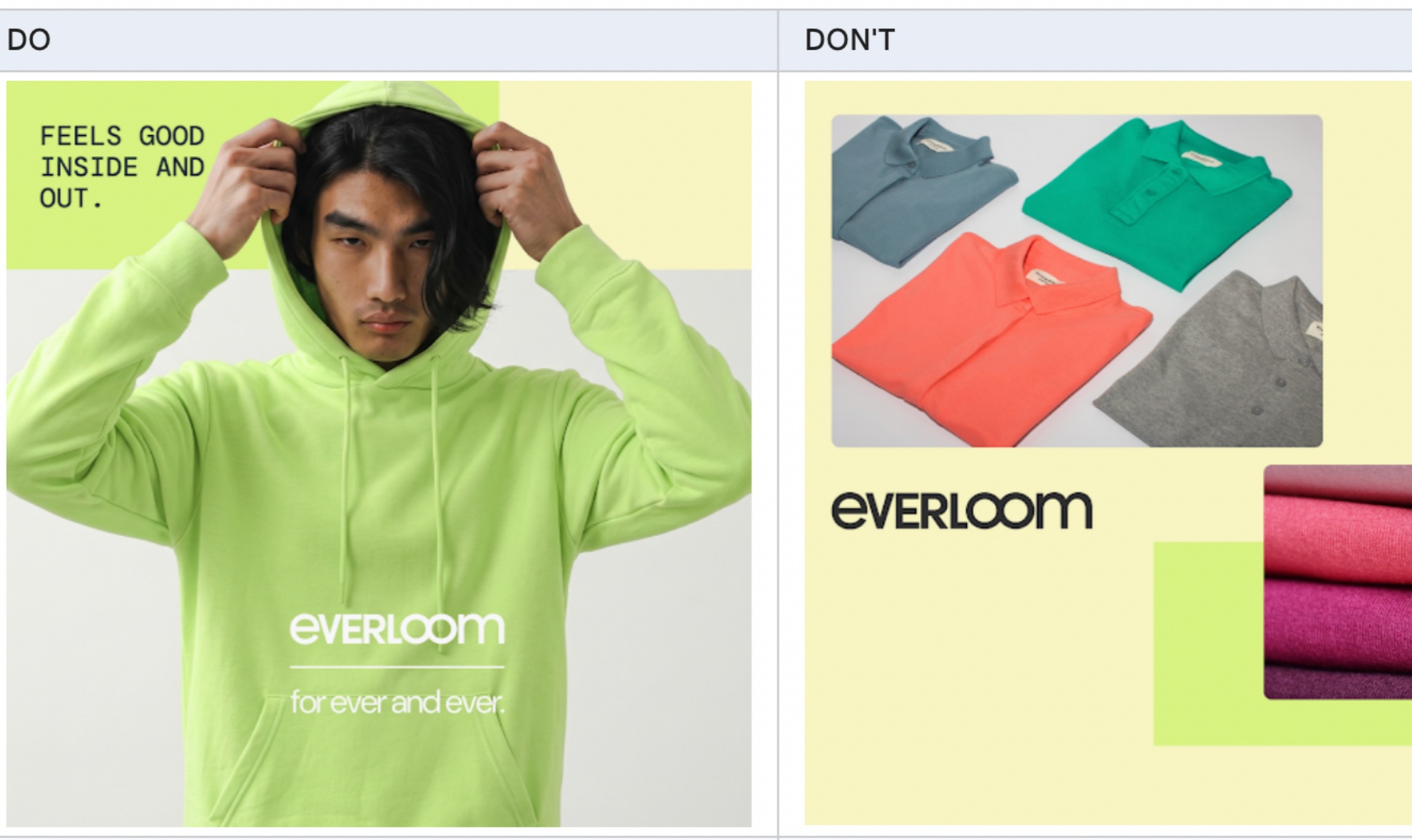
"Images with a visible human presence consistently outperform other assets. YouTube runs on human connection, so feature faces or people actively engaging with your product wherever it fits your campaign."
When viewers see a human face expressing genuine emotion or interacting organically with a product, cognitive friction is reduced. The viewer can instantly visualize themselves experiencing the product, transforming a passive ad viewing into an active empathetic connection.
4. Avoiding Deceptive Design and Artificial Clutter
As part of its clean-creative initiative, Google’s post explicitly warns advertisers against utilizing false affordances—specifically, assets that look clickable or interactive within a video stream when they are not. Artificial UI elements designed to trick users into engaging often result in high initial click-through rates followed by immediate bounce rates and negative brand sentiment. The report urges brands to maintain absolute transparency in their creative execution, ensuring that every interactive prompt serves a genuine user purpose.
Official Statements and Industry Perspective
The guidance issued by Google reflects a mature understanding of platform health. While the company continues to champion cutting-edge technologies, its leadership recognizes that an oversaturation of artificial, low-effort advertising threatens the integrity of the YouTube ecosystem as a whole.
Industry analysts point out that Google’s nuance is deliberate. The company’s literature specifically advises brands to incorporate "human voices" rather than strictly demanding "human speakers." This distinction is vital in the context of modern production technologies.
With YouTube’s automated language auto-dubbing tools—which have rapidly expanded in sophistication to assist educational creators and global brands alike—advertisers no longer need to choose between localized scaling and human authenticity. Advanced synthetic voice cloning and AI dubbing can preserve the emotional cadence and vocal identity of a real person while translating and distributing content across dozens of international markets simultaneously.
Speaking on the evolving ecosystem, digital marketing strategists emphasize that generative AI should be viewed as an amplifier of human creativity rather than its replacement.
"AI gives brands the velocity to test thousands of variations, optimize distribution, and scale across global platforms in record time," notes one prominent digital media strategist. "However, if the core message lacks a human pulse, you are simply accelerating indifference. Google’s latest data proves that performance marketing and emotional branding are not mutually exclusive; in fact, they rely on one another."
Future Outlook: The Hybrid Future of YouTube Advertising
As we look further into the late 2020s, the relationship between artificial intelligence and human creativity in advertising will continue to mature. The days of treating AI as a novelty or a complete substitute for creative direction are rapidly drawing to a close.
Several key trends are poised to shape the future of YouTube advertising in light of Google’s strategic pivot:
1. The Rise of "Synthetic-Human" Hybrids
Advertisers will increasingly leverage generative AI for operational heavy lifting—such as dynamic resizing, automated background generation, localization, and A/B testing variations—while keeping human talent front and center for core narrative delivery. Expect to see widespread adoption of advanced AI voice models trained on authentic human voice actors, allowing brands to maintain emotional resonance while scaling globally.
2. Heightened Consumer Demand for Authenticity
As deepfakes and fully synthetic content flood digital feeds, consumer fatigue regarding artificial media is expected to rise. In response, platforms like YouTube will likely reward content that verifies human authorship, organic creator partnerships, and transparent disclosures. Brands that prioritize genuine human faces and unscripted, authentic interactions will command higher consumer trust and engagement premiums.
3. Evolving Platform Algorithms
Google’s advertising algorithms will undoubtedly continue to evolve, integrating these latest creative insights directly into automated campaign builders. Future iterations of Demand Gen campaigns may feature built-in creative scoring systems that proactively evaluate ad assets for human presence, vocal warmth, and cognitive clarity, guiding advertisers toward high-performing creative habits before budget is deployed.
Conclusion
Google’s recent advisory serves as a timely reminder to the digital marketing community. While artificial intelligence remains the powerful engine driving the modern YouTube advertising ecosystem, human connection remains the steering wheel. By balancing algorithmic efficiency with the undeniable power of human voices and faces, brands can navigate the AI revolution without losing the soul of their storytelling.