Executive Overview
Grammy Award-winning hip-hop artist Franklin Holladay, widely known by his stage name Lefty Gunplay, finds himself once again entangled in the American legal system. Over the weekend of August 29, 2026, the California-born rapper was arrested and booked into the Greene County Jail in Springfield, Missouri. Local news outlets initially reported that Holladay was being held on fourth-degree assault charges following an incident that occurred shortly after his performance at the city’s Regency Live venue. However, the exact trajectory of these charges remains shrouded in administrative ambiguity, as subsequent online court records reflected no active charges against the performer.
This latest development adds to an increasingly complex pattern of law enforcement encounters for the 30-year-old artist. The arrest in Springfield represents just the latest chapter in a tumultuous period that has seen Holladay transition from underground acclaim to mainstream Grammy recognition, punctuated by a series of high-profile, legally murky incidents across multiple states. From an unexplained arrest outside the Rolling Loud festival to a felony narcotics case in El Paso, Texas, Holladay’s personal life has frequently competed with his professional milestones for media attention.
At the same time, Holladay’s career has reached unprecedented heights. Earlier in 2026, he secured a prestigious Grammy Award for Best Rap Song for his featured contribution to Kendrick Lamar’s track “TV Off.” Firmly aligned with the West Coast camp, Holladay has emerged as a vocal proponent of Lamar, offering candid insights into the broader cultural and legal battles dominating the modern hip-hop landscape, including Drake’s contentious litigation involving Universal Music Group.
As legal analysts, fans, and media outlets attempt to parse the conflicting records surrounding his weekend detention in Missouri, Holladay and his legal representation have remained silent. This comprehensive investigative report examines the timeline of the Greene County incident, reviews Holladay’s prior run-ins with law enforcement, explores his rising prominence in the hip-hop community, and analyzes what this ongoing legal turbulence means for the future of his burgeoning career.
Detailed Chronology: The Missouri Weekend and Arrest Dynamics
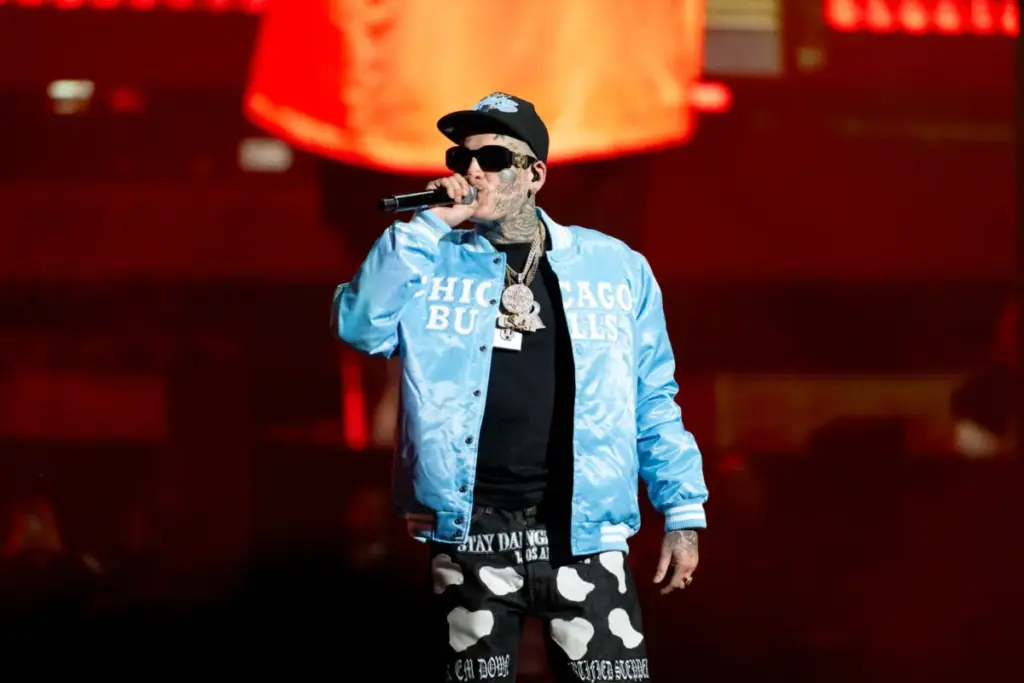
The sequence of events leading up to Franklin Holladay’s incarceration in Greene County, Missouri, began as a standard tour stop for the rising artist. Holladay had traveled to Springfield, Missouri, as part of his ongoing "Did This for Me Tour," a promotional run designed to capitalize on his recent Grammy success. On Friday night, August 28, 2026, Holladay delivered a high-energy performance at Regency Live, a prominent local venue known for hosting major touring hip-hop and alternative acts.
However, the celebratory atmosphere of the tour quickly soured over the weekend. According to initial reports published by regional news affiliate KY3, law enforcement officers took Holladay into custody, leading to his formal booking at the Greene County Jail on Saturday, August 29, 2026. Local jail intake logs initially indicated that the 30-year-old rapper was being detained in connection with fourth-degree assault charges—a misdemeanor offense under Missouri law typically involving purposeful physical contact that another person would find offensive or provocative, or reckless infliction of physical injury.
Yet, the evidentiary and procedural paper trail surrounding the arrest quickly grew murky. In an unusual twist frequently observed in celebrity legal matters, subsequent checks of online Greene County court databases revealed a glaring discrepancy: official court dockets showed no formal charges lodged against Holladay. This legal vacuum has sparked intense speculation among legal observers and fans alike.
Possibilities for the sudden disappearance or absence of formal charges range from a failure of the local prosecutor’s office to file formal information within the statutory window, to a release pending further investigation, or potentially a case of mistaken identity or miscommunication within the booking facility’s initial intake reporting. As of press time, neither the Greene County Sheriff’s Department nor representatives for Holladay have provided clarifying statements detailing the precise probable cause affidavit that led to the initial apprehension outside the context of the concert venue.
Supporting Context & Metrics: A History of Legal Entanglements
While the Missouri incident remains legally opaque, it is far from an isolated event in Lefty Gunplay’s recent life. A retrospective examination of Holladay’s public record reveals a pattern of arrests and detentions over the past twenty-four years that have frequently been characterized by missing details, sudden drops, or compounding legal hurdles across state lines.
The Rolling Loud Festival Detention (2025)
Prior to his triumphant Grammy win, Holladay found himself detained by law enforcement outside the perimeter of the massive Rolling Loud hip-hop festival in 2025. According to investigative reports compiled by Complex, arrest records from that incident indicated that the Baldwin Park native was booked on an unspecified felony charge. True to the pattern of his later Missouri encounter, details regarding the exact nature of the allegations, the arresting agency’s probable cause, and the ultimate disposition of the case were never fully transparent to the public, leaving a significant gap in the public record of his legal history.
The El Paso, Texas Narcotics Case
A starkly different and heavily documented legal challenge occurred approximately one month prior to the Rolling Loud incident, when Holladay was arrested during a routine traffic stop in El Paso, Texas.
According to police reports, officers pulled over a vehicle in which Holladay was a passenger. The initial pretext for the traffic stop was reportedly a standard seatbelt violation. However, what began as a routine minor infraction escalated dramatically when law enforcement officials conducted a search of the automobile. Authorities claimed to have discovered approximately 65 grams of methamphetamine concealed within the vehicle.
The discovery led to immediate felony charges for the occupants. Holladay was formally booked on two distinct counts:
- Possession of a Controlled Substance (referencing the alleged narcotics recovered from the vehicle).
- Bringing a Prohibited Item into a Correctional Facility (a severe charge typically triggered if contraband is discovered during the intake or booking search procedures inside a jail or holding facility).
The gravity of these charges threatened to derail the rapper’s career momentum. However, Holladay secured his release from custody shortly after posting a combined bond totaling $35,000. The case underscored the precarious environments often navigated by touring artists operating on the fringes of street culture and mainstream success.
Official Statements and Industry Perspectives: The Kendrick Lamar Alignment
Amidst the recurring legal headlines, Franklin Holladay’s artistic stock has risen dramatically, anchored by his strategic and creative alignment with Compton superstar Kendrick Lamar. Holladay achieved a career milestone by winning the 2026 Grammy Award for Best Rap Song, an honor he earned through his featured performance on Lamar’s critically acclaimed track “TV Off.”
This association has naturally placed Holladay squarely in the cultural conversation surrounding the seismic feud between Kendrick Lamar and Drake. Rather than remaining neutral, Holladay has been outspoken in his support for Lamar, offering candid commentary on the business and interpersonal dynamics of the rap industry.
Weighing In on the UMG Lawsuit
In previous media appearances, including an in-depth interview on the Bootleg Kev podcast, Holladay addressed the legal maneuvering surrounding the feud—specifically referencing the lawsuit filed by Drake and his legal team against Universal Music Group (UMG) over Kendrick Lamar’s devastating chart-topping diss track, “Not Like Us.”
Expressing clear bewilderment at the legal escalation, Holladay did not mince words regarding Drake’s strategy. “I wouldn’t do that,” Holladay told the podcast host, questioning the underlying motivations of the Canadian superstar. Pushing back against the litigious turn in rap rivalries, he remarked:
"Why you gonna hate? It’s all love. Why you gonna hate on the next man getting a bag ’cause he was better?"
Contrasting Industry Approaches
Expanding on his relationships within the upper echelons of the music industry, Holladay offered a revealing comparison between how Drake and Kendrick Lamar approach collaboration with underground or rising talent.
The Baldwin Park lyricist revealed that prior to the legal fallout, Drake had shown superficial interest in his music, acknowledging his catalog online. However, Holladay criticized the lack of genuine engagement from OVO’s head honcho, noting:
“[Drake] liked a couple things, he liked my songs. [Drake] never reached out the way Kendrick did. When he reached out, he was real. He made me feel comfortable. I felt comfortable with him.”
This authentic connection culminated not only in the creative partnership on “TV Off” but also in the validation of a Grammy Award, cementing Holladay’s loyalty to the West Coast movement even as his personal life faced turbulence in Midwestern and Southern jurisdictions.
Future Outlook: Navigating Uncertainty On and Off the Stage
As Franklin Holladay’s "Did This for Me Tour" pushes forward, the convergence of high-level artistic success and recurring legal friction presents a critical juncture for the rapper. The immediate concern centers on the procedural outcome of his weekend arrest in Springfield, Missouri. While online dockets currently show no active charges, the fluid nature of municipal and county legal systems means that prosecutors in Greene County retain the window to review police reports and potentially refile or adjust charges as the investigation develops.
For an artist who has just recently tasted elite industry validation through his Grammy win, maintaining operational stability is paramount. The music industry has historically demonstrated a complex relationship with artists facing legal scrutiny; while underground credibility can sometimes be burnished by real-world friction, corporate partnerships, international touring visas, and major label associations are frequently jeopardized by unresolved criminal matters, particularly those involving controlled substances or physical altercations.
Furthermore, Holladay’s vocal stance in high-profile industry disputes, such as the ongoing fallout from the Kendrick Lamar-Drake rivalry, ensures that media spotlights will continue to track his every move. Whether the rapper chooses to address his recent legal troubles directly through his music, public statements, or through his legal counsel remains to be seen.
What is certain is that Lefty Gunplay stands at a crossroads. To sustain the momentum of his Grammy-winning era, Holladay will need to successfully navigate the legal complexities trailing him from Missouri to Texas, ensuring that his off-stage controversies do not overshadow the raw talent that earned him a permanent place in modern West Coast hip-hop history.