Executive Overview
The landscape of digital media consumption for children has long been dominated by two competing extremes: heavily sanitized, toddler-centric walled gardens on one side, and the wild, algorithm-driven expanses of mainstream user-generated content (UGC) platforms like YouTube and TikTok on the other. For years, parents of preteens—specifically those in the critical 8-to-12 age bracket—have navigated a precarious middle ground. These youngsters have largely outgrown traditional preschool programming and early-childhood learning apps, yet they remain ill-equipped to safely manage the algorithmic rabbit holes, privacy risks, predatory ad targeting, and doomscrolling incentives inherent to mainstream video sharing sites.
Enter Hank Green. A veteran digital creator, educator, entrepreneur, and co-founder of the educational nonprofit Complexly alongside his brother John Green, Hank Green has spent more than a decade producing content designed to make science, history, and literature accessible to millions. Now, Green is taking his educational mission a step further with the launch of ClockwiseTV, a curated, subscription-based streaming application built specifically for children aged 8 to 12.
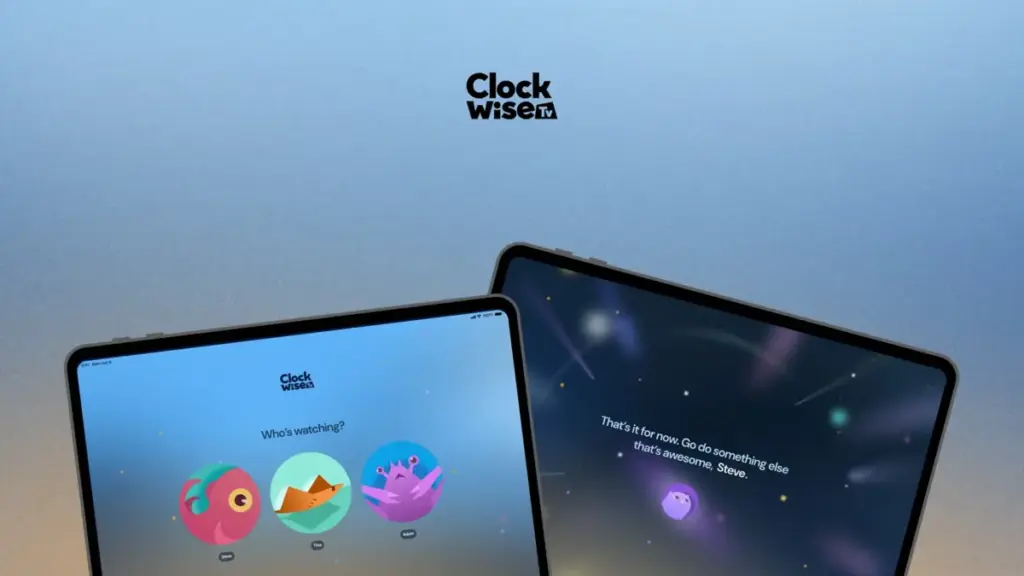
Developed in partnership with CEO Leslie Morgan, ClockwiseTV aims to "put families back in control" by completely reimagining how digital video is delivered to preteens. Eschewing the traditional ad-supported, engagement-maximizing playbook of Silicon Valley, ClockwiseTV introduces a radical alternative: zero advertisements, zero algorithmic recommendation feeds, zero autoplay features, and zero data tracking. Instead, the platform relies on a paid subscription model, strict parental session-length controls, human-curated STEAM (Science, Technology, Engineering, Arts, and Mathematics) content, and a hard stop feature that automatically closes the application when allotted screen time expires.
Currently available in an early-access phase via Apple and Android tablets for a "Founding Families" promotional price of $39.99 per year, ClockwiseTV launches with a catalog featuring established educational creators, including Complexly, MinutePhysics, Odd Animal Specimens, and Evan and Katelyn. By combining the engaging, creator-led video formats that preteens naturally gravitate toward with rigorous safety guardrails and friction-reducing parental tools, ClockwiseTV attempts to solve one of modern parenting’s most persistent headaches: how to facilitate enriching digital screen time without the accompanying behavioral friction, algorithmic manipulation, and safety anxieties.
Detailed Chronology
To fully understand the genesis of ClockwiseTV, it is necessary to examine the trajectory of educational digital media over the past fifteen years and trace the path that led Hank Green and his executive team to build a dedicated preteen platform.
Phase 1: The Rise of Digital Educational Media (2007–2020)
When Hank and John Green launched their Vlogbrothers channel on YouTube in 2007, the ecosystem of online video was vastly different. Over the ensuing years, the brothers expanded their footprint by founding educational powerhouses such as CrashCourse and SciShow under the umbrella of Complexly. These channels proved that millions of young people were eager to consume fast-paced, highly produced, entertaining educational content.
However, as YouTube and other digital platforms matured, their business models became increasingly reliant on engagement metrics. Algorithms were optimized to maximize "watch time" through autoplay features, personalized recommendations, and infinite scrolling loops. While adults could theoretically manage these psychological hooks, children—whose prefrontal cortices are still developing—found themselves uniquely vulnerable to compulsive viewing patterns.
Phase 2: Identifying the Preteen Gap (2020–2023)
By the early 2020s, industry analysts and parents alike began recognizing a distinct market failure: the "middle child" demographic of kids aged 8 to 12. Traditional platforms like YouTube Kids were frequently perceived by older children as juvenile, driving them toward the mainstream YouTube platform or TikTok. On those open networks, however, preteens faced exposure to inappropriate content, comments sections rife with cyberbullying, and aggressive behavioral tracking designed to harvest user data for targeted advertising.
Parents found themselves forced into a constant balancing act: either hover over their children’s shoulders to monitor every click or surrender to the black box of algorithmic recommendations. Recognizing this vacuum, Green and media executive Leslie Morgan began conceptualizing an environment that would respect the intellectual maturity of 8-to-12-year-olds while stripping away the toxic monetization mechanisms of Big Tech.
Phase 3: The Architectural Blueprint and Development (2023–2024)
Development on ClockwiseTV focused on solving core UX (user experience) issues that plague modern apps. Rather than building a platform where creators had to modify their workflows entirely, ClockwiseTV adopted a hands-on approach: the platform takes existing video catalogs from trusted educational creators, re-edits them specifically to suit the pacing and safety requirements of the 8–12 demographic, and uploads them to its proprietary ecosystem.
Concurrently, the engineering team designed the application’s structural limitations. They integrated hard session-length controls managed by parents, eliminated all tracking cookies and ad-tech infrastructure, and discarded the infinite feed entirely.
Phase 4: Early Access Launch and "Founding Families" (Late 2024–Present)
ClockwiseTV officially entered its early-access phase, inviting an initial cohort of users designated as "Founding Families" to onboard at an introductory annual rate of $39.99. The platform launched with an initial roster of top-tier educational creators—including Complexly, MinutePhysics, Odd Animal Specimens, and Evan and Katelyn—with promises of an expanding content library as more creators and institutions partner with the service.
Supporting Context & Metrics
The launch of ClockwiseTV arrives at a critical juncture in the public discourse surrounding children’s technology use, mental health, and data privacy.
The Regulatory and Psychological Landscape
In recent years, lawmakers, pediatricians, and psychologists have intensified scrutiny over the design choices employed by major social media and video platforms. Features like infinite scrolling, intermittent variable rewards (such as likes and notifications), and aggressive autoplay functions have been widely criticized by mental health advocates for contributing to compulsive usage and sleep disruption among minors.
Furthermore, data privacy concerns have led to stricter enforcement and legislative proposals aimed at protecting children online, such as the Children’s Online Privacy Protection Act (COPPA) in the United States and similar digital safety frameworks globally. Mainstream platforms have frequently struggled to comply adequately with these standards without undermining their core ad-driven business models, which rely on behavioral profiling.
Financial and Operational Mechanics
ClockwiseTV’s financial architecture represents a direct rejection of the prevailing Silicon Valley paradigm. Instead of generating revenue by selling user attention to advertisers, the platform operates on a direct-to-consumer subscription model.
- No Ad-Driven Monetization: By eliminating advertising entirely, ClockwiseTV removes the economic incentive to keep children hooked to screens indefinitely.
- Data Minimization: The platform explicitly states that it does not track user data or build behavioral profiles, aligning with the highest standards of digital privacy.
- Content Friction Reduction: The absence of recommendation algorithms means that children are not nudged toward increasingly extreme or sensationalized content—a well-documented phenomenon known as the "algorithmic rabbit hole."
- Built-in Hard Stops: Unlike traditional streaming apps that ask, "Are you still watching?" while conveniently defaulting to playing the next video, ClockwiseTV enforces a hard shutoff when the parent-designated session expires. According to early feedback from creators and parents alike, this eliminates the nagging negotiations that typically accompany screen-time transitions.
Official Statements
The motivations and vision behind ClockwiseTV were elaborated upon by its key leadership and founding figures in official press releases and public statements.
Hank Green, co-founder of Complexly and creator of ClockwiseTV, articulated the personal and professional impetus for the app:
"I have a nine-year-old son and I am a YouTuber, so I do find myself being OK with him watching YouTube. I think watching videos is absolutely fine for kids, but I want my kid to do it in a way that feels good for both of us and doesn’t create a bunch of extra conflict. And I have to say, when the time is up and the app just turns off and my son puts it away and get on with our day, it feels like a magic trick."
Leslie Morgan, CEO of ClockwiseTV, highlighted the specific oversight gap the platform is engineered to close:
"As a mom of a nine-year-old, I’ve noticed that this demo is largely underserved. Kids ages 8-12 have outgrown traditional kids’ apps but are not ready for the unpredictability of mainstream online video platforms. I wanted somewhere my kid could still watch things she loves, without me having to watch over her shoulder the whole time."
Official corporate communications from ClockwiseTV further emphasized the structural integrity of the service:
"Unlike free video platforms that use aggressive algorithms to keep your kid glued to the screen for ad revenue, we don’t sell ads and we don’t track your data. Your membership directly funds built-in screen time tools, a guaranteed safe space, and real human review to make sure every video your kid sees is educational, high-quality, and perfectly age-appropriate."
Future Outlook
As ClockwiseTV navigates its early-access phase, its trajectory will serve as an important litmus test for the viability of subscription-based, highly curated micro-platforms in a digital ecosystem dominated by multi-billion-dollar conglomerates.
Scaling the Creator Ecosystem
A key area of interest for industry observers will be how ClockwiseTV scales its creator partnerships. While the platform currently handles the heavy lifting of re-editing existing catalogs for creators like MinutePhysics and Evan and Katelyn, the long-term sustainability of the model will depend on fair compensation structures. Although initial announcements have focused on the platform’s protective benefits for consumers, the economic value proposition for creators participating in closed, subscription-only app ecosystems will be vital for attracting top-tier educational talent.
Broadening Platform Availability
Currently restricted to Apple and Android tablets, future expansion will likely dictate how quickly ClockwiseTV can capture market share. Extending availability to connected television (CTV) devices, web browsers, and dedicated gaming consoles could significantly broaden its household penetration, though it would also require adapting the physical "tablet-in-hand" transition experience that makes the app’s hard-stop feature so effective.
Changing the Industry Standard
Ultimately, ClockwiseTV’s greatest impact may not be measured solely in subscriber counts, but in its ability to prove that alternative monetization and design models are viable in children’s digital media. If Hank Green and Leslie Morgan can demonstrate that parents are willing to pay directly for friction-free, ad-free, human-curated educational entertainment, it could pressure larger platforms to re-evaluate their own approaches to minor safety and algorithmic engagement.
For now, families navigating the turbulent waters of preteen media consumption have a new, thoughtfully engineered port in the storm—one designed by creators who understand both the magic of online video and the very real need to know when to turn it off.