Executive Overview
In the rapidly shifting landscape of modern retail, lifestyle brands often find themselves fighting to capture consumer attention beyond their core categories. For Anthropologie—the bohemian-chic flagship brand of parent company URBN—that battle is not only being won, but it is being led from the ground up. Over the past several years, sneakers have quietly evolved from a peripheral accessory into one of the most potent growth engines for the multi-billion-dollar brand.
According to recent disclosures made to industry publication Glossy by Jessica Irick Peek, General Merchandise Manager (GMM) of Footwear and Accessories, the number of consumers turning to Anthropologie specifically for sneakers has surged by nearly 30% over the last year alone. This acceleration is no accident. It is the result of a deliberate, multi-year pivot that has fundamentally redefined Anthropologie’s merchandising strategy, transitioning the brand from a boutique apparel destination into a comprehensive lifestyle destination where footwear plays a starring role.
To capitalize on this momentum, Anthropologie is executing its boldest footwear play to date: partnering with the world’s largest athletic brand, Nike. This high-profile collaboration represents the single biggest footwear brand addition in Anthropologie’s history and signals the brand’s growing clout in the competitive footwear market. Alongside an expansive digital marketing campaign to support the Nike rollout—and subsequent pushes into heritage and seasonal categories, such as an upcoming September campaign featuring Tecovas boots—Anthropologie is cementing its status as a serious contender in contemporary footwear retail.
The numbers bear out the wisdom of this strategy. Across the brand, the total number of footwear-buying customers has jumped by 15% year-over-year. Data reveals that one in every five shoppers who purchases apparel at Anthropologie also buys a pair of shoes. Furthermore, one in ten new customers purchases footwear within their first year of shopping with the brand, proving that shoes are serving as a vital acquisition funnel for new shoppers looking to curate a complete, head-to-toe look in one seamless shopping experience.
“An important takeaway from this is that the shoe customer is our most valuable customer,” Irick Peek noted. “If they are purchasing shoes, they are in our most valuable cohort, and that customer has become a big priority for us.”
As Anthropologie’s annual revenue sails past the $2 billion mark, its aggressive expansion into footwear—fueled by an ingenious mix of exclusive brand collaborations, proprietary label growth, and holistic lifestyle merchandising—offers a masterclass in how established retailers can unlock explosive vertical growth by listening closely to consumer behavior.
Detailed Chronology: The Evolution of Anthropologie’s Footwear Strategy
To understand how Anthropologie became a destination for coveted sneakers and statement footwear, one must examine the dramatic structural evolution of the brand’s retail strategy over the past half-decade.
From Niche Offering to Nationwide Footwear Presence
Five years ago, when Jessica Irick Peek joined the company, footwear was treated largely as an afterthought or a secondary category. Shoes were not a staple of the standard store layout; in fact, footwear was physically stocked in a mere eight Anthropologie brick-and-mortar locations across the United States. For the vast majority of shoppers, Anthropologie was synonymous with intricately patterned dresses, artisanal home decor, and vintage-inspired tops. Shoes were simply unavailable to touch, try on, or purchase in-store.
Recognizing an untapped market demand for head-to-toe outfitting, leadership embarked on a quiet yet aggressive physical rollout. Over the course of five years, Anthropologie scaled its footwear distribution network from just 8 stores to an impressive 200 out of its roughly 250 total U.S. locations. This footprint expansion democratized footwear access for the brand’s core demographic, transforming browser-based intent into immediate brick-and-mortar conversions.
The U.S. Strategy and the Power of Exclusivity
As the physical footprint grew, so too did the sophistication of the product assortment. Anthropologie’s buying team realized that to compete with traditional footwear retailers and department stores, they needed to offer something distinct—something that could not be found on every other high street or digital marketplace.
This realization birthed a unique localized merchandising strategy. Today, a staggering 40% of Anthropologie’s sneaker inventory is exclusive to the United States market, featuring bespoke designs created specifically for the brand through tight partnerships with industry heavyweights. Major athletic and casual footwear players—including Puma, New Balance, Brooks, and now Nike—have all developed exclusive colorways, materials, or silhouettes tailored exclusively to the Anthropologie consumer aesthetic.
By blending athletic functionality with the brand’s signature romantic, artisanal flair, Anthropologie managed to carve out a distinct whitespace in the sneaker market. Consumers were no longer choosing between athletic performance and aesthetic appeal; they could find hybridized styles that complemented a lace midi dress just as easily as they paired with wide-leg denim.
The Landmark Nike Collaboration
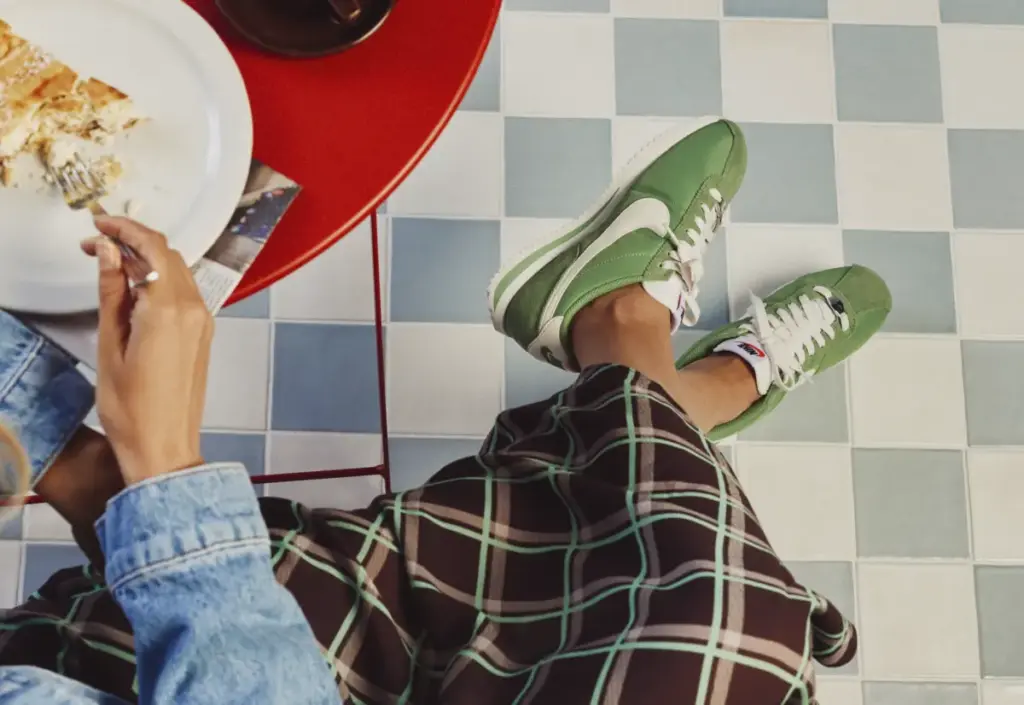
The culmination of this multi-year footwear evolution arrived this week with the official rollout of Nike on Anthropologie’s digital shelves and select store locations. As the largest footwear brand carried by Anthropologie to date, the Nike partnership marks a watershed moment in the brand’s retail history.
The launch is structured as a deliberate, rolling event designed to maximize consumer engagement. The first wave—featuring an initial selection out of nine curated styles—debuted on a Monday, with subsequent styles slated to roll out progressively through September 21. To ensure the launch resonates with its sophisticated audience, Anthropologie has planned an extensive digital marketing campaign that integrates Nike footwear directly into the brand’s broader lifestyle and apparel narratives.
Supporting Context & Metrics: The Macro and Micro Economic Drivers
Anthropologie’s footwear surge is not happening in a vacuum. It is supported by powerful macroeconomic tailwinds within the broader fashion and retail sectors, alongside robust internal metrics from parent company URBN.
Macro Trends: The Unstoppable Rise of Sneakers
Data released by market research firm Circana highlights a fascinating divergence in the American consumer’s footwear spending habits. While overall U.S. footwear sales crawled upward by a modest 1% in the first half of 2026, the sneaker and performance shoe sector exploded, posting a robust 6% growth rate.
This consumer preference for comfort, versatility, and active lifestyle products has proven remarkably resilient. Even as formalwear and office-appropriate dress shoes experience cyclical fluctuations, sneakers remain the undisputed workhorse of the modern wardrobe. By leaning heavily into this category, Anthropologie positioned itself directly in the path of the highest-velocity retail current.
Internal Metrics and the Power of Owned Brands
While high-profile external partnerships like Nike and Puma generate headlines, Anthropologie’s proprietary, owned brands form the bedrock of its commercial success. URBN notoriously keeps financial cards close to its chest, declining to break out revenue by individual segment; however, company disclosures indicate that owned brands account for approximately 70% of Anthropologie’s total revenue.
Within this ecosystem, owned-brand footwear has emerged as a standout performer. Customers purchasing shoes from Anthropologie’s proprietary labels increased by 23% over the last year. Particular strength has been observed in Maeve—Anthropologie’s recently spun-off brand—which recorded a staggering 32% increase in shoe sales alone. This proves that Anthropologie’s design incubator is successfully translating its clothing design DNA into footwear categories with high consumer resonance.
The Financial Health of URBN and Anthropologie
Anthropologie remains a crown jewel within URBN’s broader retail portfolio, which also includes Urban Outfitters and Free People. Backed by record-breaking financial quarters—including a blockbuster fourth-quarter performance for fiscal 2026—Anthropologie’s annual revenue has officially surpassed the $2 billion threshold.
This financial muscle provides the capital required to fund major multi-channel campaigns, secure high-demand inventory allotments from global giants like Nike, and continually refine the digital and physical customer experience.
Official Statements: Merchandising Philosophy and the "Full Look" Strategy
At the heart of Anthropologie’s footwear strategy is a clear philosophical shift regarding how clothes and accessories interact in the consumer’s mind. Rather than treating shoes as an afterthought picked up at a separate specialty store, Anthropologie views footwear as the essential punctuation mark of an outfit.
Tying Footwear Back to Apparel
“We tend to have the most success with footwear when we’re tying it back to apparel,” Jessica Irick Peek explained during her interview with Glossy. This philosophy dictates everything from how merchandise is styled on e-commerce product pages to how visual displays are constructed within the brand’s 200 physical stores.
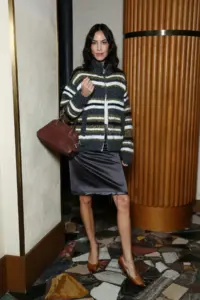
When a consumer browses Anthropologie’s website or flips through a digital lookbook, they rarely see a pair of sneakers presented in isolation on a white studio background. Instead, sneakers are styled artfully alongside midi skirts, tailored trousers, knit sweaters, and bohemian dresses. This holistic outfitting strategy removes the friction from the shopping experience, allowing the consumer to visualize an entire cohesive outfit and purchase all the components simultaneously.
This visual strategy has generated profound behavioral loyalty. Internal data shows that over the past year, one in five Anthropologie customers who bought apparel also purchased a pair of shoes. Furthermore, one in ten new customers made a footwear purchase within their very first year of shopping with the brand. These metrics validate leadership’s thesis: footwear is acting as a powerful customer acquisition magnet, drawing in fresh demographics who value the convenience of curated, complete styling.
Prioritizing the High-Value Cohort
Because the footwear customer exhibits higher cross-category engagement and spends more per transaction, they have been elevated to the top of Anthropologie’s strategic priority list.
“An important takeaway from this is that the shoe customer is our most valuable customer,” Irick Peek emphasized. “If they are purchasing shoes, they are in our most valuable cohort, and that customer has become a big priority for us.”
This realization has fundamentally shifted how marketing budgets and inventory allocations are distributed. By catering directly to this high-intent, high-value cohort with exclusive collaborations and expertly styled collections, Anthropologie is maximizing customer lifetime value (LTV).
Future Outlook: What’s Next for Anthropologie Footwear
As Anthropologie looks toward the remainder of 2026 and beyond, the momentum in its footwear division shows no signs of slowing down. The playbook that turned a niche, 8-store accessory category into a multi-million-dollar growth engine is now being scaled for even greater impact.
Upcoming Campaigns and Seasonal Transitions
Following the multi-week Nike rollout extending through September 21, Anthropologie is wasting no time pivoting to seasonal shifts. Irick Peek confirmed that the brand has already mapped out a major promotional campaign for September that will heavily feature Tecovas boots. This strategic transition from athletic sneakers to heritage western footwear demonstrates the agility of Anthropologie’s merchandising calendar, ensuring the brand captures consumer spend across shifting seasonal weather patterns and stylistic moods.
Deepening Brand Exclusives and Proprietary Label Expansion
Looking ahead, consumers can expect to see further expansion of exclusive product drops. Given the massive success of U.S.-specific sneaker allocations with brands like New Balance, Puma, and Brooks, Anthropologie will likely pursue deeper, more expansive co-branded capsules. Simultaneously, the continued growth of owned labels like Maeve suggests that proprietary footwear collections will receive increased design attention, capital investment, and shelf space.
The Omni-Channel Horizon
Ultimately, Anthropologie’s footwear success story offers a blueprint for modern specialty retail. By recognizing that today’s consumers demand both the comfort of athletic footwear and the emotional resonance of lifestyle fashion, Anthropologie bridged a critical market gap. With a robust digital infrastructure, a modernized store footprint spanning 200 locations, and an unwavering commitment to holistic outfitting, Anthropologie has proven that when you help customers walk out with the full look, they keep coming back for every step of the journey.