In the sprawling, high-stakes television empire constructed by creator Taylor Sheridan, few actors have become as quietly indispensable as James Jordan. A fixture of the Sheridan-verse across multiple gritty, uncompromising dramas, Jordan has brought to life a diverse array of characters, each marked by a distinct edge of danger and authenticity. Yet, it is his portrayal of the idiosyncratic CIA operative known simply as "Two Cups" on Paramount+’s military thriller Lioness that holds a singular place in the actor’s professional journey.
As a core member of Joe McNamara’s Quick Reaction Force (QRF) team, Two Cups has navigated countless geopolitical flashpoints and high-intensity conflicts. However, the narrative stakes have shifted inward for the series’ latest outing, bringing the theater of war directly to the domestic front. When McNamara is violently abducted from her residence by Russian agents, Two Cups and his elite teammates are forced to throw out the playbook, embarking on an unprecedented, deeply personal rescue mission.
In a wide-ranging, exclusive interview, Jordan recently sat down to dissect the evolving nature of Lioness, the enigmatic origins of his character’s bizarre moniker, and the reality of portraying the clandestine "shadow warriors" who operate on the razor-thin edge of national security. Furthermore, Jordan addressed the persistent awards-season snubs facing Sheridan’s juggernaut catalog, shifting the focus away from traditional industry accolades and toward the millions of dedicated viewers who tune in week after week. As Lioness charges through its most harrowing narrative arc yet, Jordan offers a rare glimpse behind the curtain of Sheridan’s tightly guarded production machine.
Detailed Chronology: The Anatomy of a High-Stakes Rescue
The trajectory of Lioness has been defined by its relentless geographical expansion and contraction. In its inaugural season, the narrative battlelines were drawn across turbulent maritime theaters. The sophomore run took the fight into the unforgiving expanse of the skies. But as Jordan noted, the creative inevitability of the series always pointed toward a domestic siege—a prophecy fulfilled when the war breached Joe McNamara’s front door.
The Domestic Threat and the "Idiot Army"
In the current season’s explosive narrative arc, titled "The Idiot Army," the QRF team faces a paradigm shift. Rather than executing standard, door-kicking kinetic strikes, the operatives are forced to rely on espionage, psychological manipulation, and illicit tradecraft. For Two Cups, this means stepping into the lurid underbelly of an undercover strip club operation designed to position him as a vulnerable target ripe for Russian blackmail.
According to Jordan, this clandestine maneuver represents the true nature of the characters inhabiting the fringes of modern intelligence. Known colloquially as "shadow warriors," operatives like Two Cups routinely operate in the murky ethical grey areas of statecraft.
"Two Cups has gone down this road before," Jordan explained during his recent discussion. "That particular objective was nothing new to him."
However, the psychological weight of the mission is entirely unprecedented. The abduction of Joe McNamara transforms a geopolitical assignment into a visceral, blood-bound vendetta. The QRF team is no longer merely answering the call of an overarching bureaucratic mandate; they are hunting down hostile foreign assets who dared to breach the sanctuary of a teammate’s home.
The Backstory of "Two Cups"
Among the eccentric personalities that comprise the QRF, Two Cups remains a fan-favorite enigma, largely due to the unconventional origins of his callsign. While casual viewers occasionally scramble to piece together the character’s mysterious past, the origin story—traceable directly to a chaotic, hallucinatory incident involving "two cups of something" in Thailand that compelled the operative to attempt to proposition every living entity in his vicinity—remains a cornerstone of series lore.
Rather than over-explaining the character’s history through heavy-handed exposition, Sheridan and Jordan have consciously opted for narrative restraint. Drawing inspiration from legendary filmmaker Mike Nichols, Jordan champions the philosophy that maximum audience engagement stems from deliberate ambiguity.
"You don’t want to tell the audience everything about a character," Jordan reflected. "You want to allow them to use their own imagination to fill in those blanks because then they feel personally, emotionally invested in these people and what happens to them."
While Jordan admits to maintaining an elaborate internal mythology regarding Two Cups’ formative years and path to the CIA, he guards these details closely, recognizing that the mystery is precisely what draws the audience deeper into the narrative web.
Supporting Context & Metrics: The Sheridan Machine and the Industry Landscape
Despite dominating streaming metrics and maintaining a fiercely loyal, multibillion-viewer demographic across platforms, Taylor Sheridan’s television ecosystem has notoriously faced a cold shoulder from major awards bodies. While peer networks sweep traditional categories at the Primetime Emmy Awards, Sheridan’s slate—ranging from Yellowstone and Tulsa King to Landman and Lioness—frequently finds itself relegated to the sidelines, save for occasional technical nods like Tulsa King’s recognition for stunt coordination.
The Metrics of Popularity
For Jordan and his castmates, the glittering gold of academy trophies pales in comparison to the tangible, quantifiable engagement of the viewing public. The actor remains entirely unfazed by industry snubs, viewing the series’ massive cultural footprint as the ultimate validation.
"We have millions and millions of people showing up every week and tuning in," Jordan stated firmly. "I think that’s the biggest trophy you could ask for."
This unstoppable momentum shows zero signs of decelerating. Following the conclusion of the current arc on Lioness, Jordan is immediately pivoting to production on the next installment of Sheridan’s petro-drama Landman. The relentless production schedule underscores a symbiotic relationship between creator and cast, driven by an insatiable public appetite for grounded, high-octane Americana.
Authenticity Through Rigorous Preparation
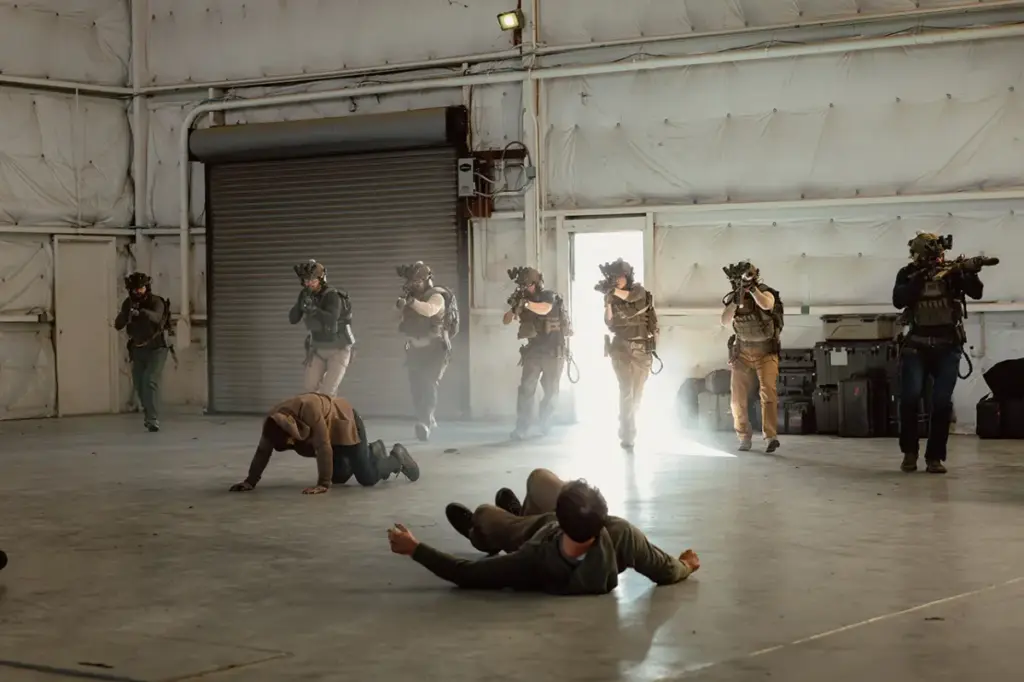
The staggering realism that underpins Lioness is not accidental; it is the product of grueling physical and tactical conditioning. Prior to principal photography each season, the principal cast undergoes an intensive seven-to-ten-day tactical boot camp. Designed to re-forge the actors both physically and psychologically, these sessions bridge the gap between Hollywood performance and the grim reality of contemporary asymmetric warfare.
Furthermore, technical advisors—seasoned veterans of clandestine intelligence and special operations communities—maintain a constant presence on set. According to Jordan, no detail is too small to scrutinize, with the production willing to execute dozens of takes to ensure tactical accuracy.
"We take our work very seriously because the onus is on us to get this right," Jordan emphasized. "We have our technical advisors on set with us every day… We’ll do 100 takes if we have to, and we’re not gonna rest till we get it right."
Official Statements & Key Takeaways
During his comprehensive briefing, James Jordan outlined several core pillars defining his experience on Lioness and within the broader Taylor Sheridan universe:
- The Fulfillment of Childhood Ambitions: Reflecting on his daily duties on set, Jordan noted the surreal convergence of childhood fantasy and professional reality: "One of the things almost every actor of my generation did growing up was play army. Now, I get to play it for real every day. My eight-year-old self can’t believe what he gets to do on set."
- Revering the Intelligence Community: Jordan underscored the deep-seated respect the cast holds for real-world operatives who have operated on the tip of the spear since the post-World War II inception of the CIA. "It’s exciting to learn a little bit about what these folks do out there to protect us and guard us while we sleep every night. It’s extraordinary."
- The Narrative Horizon of Lioness: Addressing the remaining trajectory of the season, Jordan signaled that viewers should prepare for a slow-burn narrative endurance test rather than a rapid, tidy resolution. "This is a marathon, not a sprint. We’ll see what happens, but trust that the QRF team is going to do what it takes to bring our girl home. We’ve got another four or five episodes to go here. Stick around."
Future Outlook
As Lioness charges toward its explosive seasonal climax, the future of Taylor Sheridan’s television empire remains blindingly bright. The narrative architecture of the series has successfully transitioned from sweeping foreign interventions to intimate, high-stakes domestic warfare, proving the adaptability of both the creator’s writing and the ensemble’s execution.
For James Jordan, the immediate horizon involves stepping out of the tactical gear of Two Cups and stepping directly into the oil-soaked sands of Texas for the upcoming season of Landman. Yet, the indelible footprint left by his time on Lioness—anchored by rigorous tactical authenticity, deep character ambiguity, and an unyielding commitment to honoring the unseen guardians of national security—cements the series as a defining chapter in modern television history.
As the QRF team races against the clock to repatriate their captured leader, audiences across the globe remain locked in step, proving that for Sheridan and his company of players, the ultimate validation will always belong in the living rooms of millions of loyal viewers rather than a quiet Los Angeles auditorium.