Executive Overview
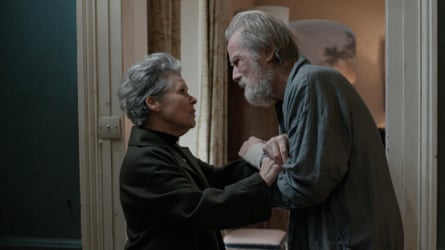
At 76 years of age, British acting titan Bill Nighy occupies a rare and enviable echelon in the global entertainment landscape. Revered for his idiosyncratic cadence, sharp tailoring, and a screen presence that effortlessly balances world-weary melancholy with disarming charm, Nighy continues to defy expectations. His latest cinematic venture, the genre-bending adaptation & Sons, pairs him with an all-star cast including Imelda Staunton, Johnny Flynn, and George MacKay. In the film, Nighy portrays AN Dyer, a reclusive, misanthropic literary titan whose fictional lineage draws immediate comparisons to historical hermits like J.D. Salinger, rendered with the disheveled aesthetic of a modern-day mythic wanderer.
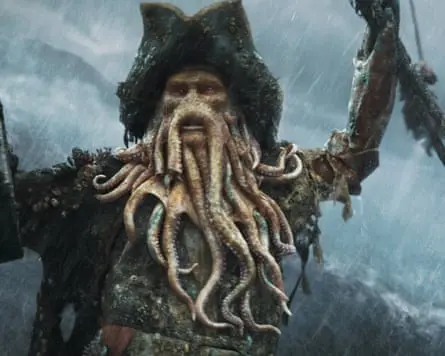
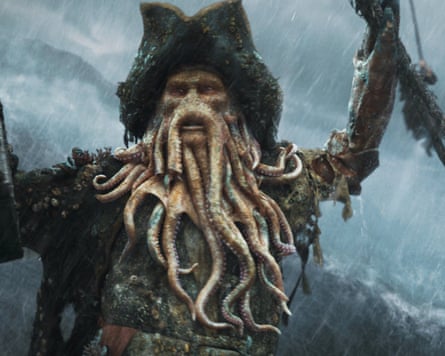
Yet, as Nighy steps into the shoes of a difficult, emotionally distant patriarch, his off-screen reality paints a remarkably contrasting picture. Speaking via telephone from north-west London—having summarily retired from the modern anxieties of Zoom calls and working lunches—Nighy reflects on a career spanning over five decades. From his early, failed aspirations of becoming the next Hemingway in Paris, to his iconic turns as the unvarnished rock star Billy Mack in Love Actually and the tentacled sea captain Davy Jones in the Pirates of the Caribbean franchise, Nighy’s journey is a masterclass in organic evolution.
This deep-dive profile explores the core themes of Nighy’s illustrious career: his aversion to industry pretense, his complex relationship with fatherhood and the literary world, the quiet philosophy that informs his performances, and his unexpected renaissance as an award-winning podcast host.
Detailed Chronology: From Caterham to the Trocadéro and Beyond
Early Influences and the Literary Spark
Born in Caterham, Surrey, Nighy’s formative years were steeped in a traditional British middle-class environment, though his internal landscape was vastly more romantic. The catalyst for his artistic awakening arrived around the age of 14, courtesy of an English teacher at his Catholic grammar school. Mr. Weir planted a seed that would alter the trajectory of the young Nighy’s life, suggesting casually, "You might want to try your hand at the novel."
"It was like a bomb going off in my head," Nighy recalls. Though he is quick to disavow any notions of early literary genius, the proclamation ignited a lifelong obsession with the written word. Hemingway and Fitzgerald became his youthful deities, and the notion of a writer’s life became his ultimate North Star.
The Parisian Misadventure
Following a brief stint at the hunting and fishing magazine The Field—where his responsibilities famously included changing roller towels in the ladies’ typing pool and unintentionally antagonizing the corporate CEO by exuberantly waving at luxury cars—Nighy packed his bags for the French capital.
"I am a walking, talking cliché," he admits with characteristic self-deprecation. "I ran away to be a writer. Like a million others, I went straight to Shakespeare & Company and hung about thinking I’d write killer sentences and find a girlfriend. Neither of which happened. I ended up begging on the Trocadéro."

Realizing that his literary output was severely lagging behind his romanticized notions of bohemia, Nighy allowed his writing dreams to wilt. A casual suggestion to audition for drama school redirected his energies toward the stage and screen. While he still harbors latent thoughts of penning a novel, he readily concedes a lifelong mastery of procrastination.
The Theatrical Grinder and Breakthroughs
Nighy spent decades treading the boards in regional theater and taking on supporting television roles before achieving widespread recognition. His breakthrough into the cultural consciousness was a slow burn, punctuated by critical milestones. In 1991, he starred in the raunchy BBC drama series The Men’s Room, playing a libidinous academic whose explicit scenes managed to ruffle the feathers of the Broadcasting Standards Council.
However, it was Richard Curtis’s 2003 romantic comedy Love Actually that cemented his international stardom. As Billy Mack—an aging, cynical rock star brazenly promoting a holiday single he openly describes as a "festering turd"—Nighy captured the public imagination, securing a BAFTA Award and launching a late-career surge that redefined his trajectory.
Supporting Context & Metrics: The Anatomy of a Modern Icon
Critical Acclaim and Box Office Footprint
While Nighy is globally recognized for high-profile blockbusters—including his CGI-heavy, motion-capture performance as Davy Jones in Gore Verbinski’s Pirates of the Caribbean sequels—his true critical currency lies in nuanced, understated character studies.
| Metric / Milestone | Detail |
|---|---|
| Age | 76 |
| Career Span | 1970s – Present |
| Key Accolades | Academy Award Nomination (Living, 2022), BAFTA Award (Love Actually), Broadcasting Press Guild Podcast of the Year (Ill-Advised, 2026) |
| Notable Franchises | Pirates of the Caribbean, Underworld, Harry Potter |
| Podcast Reach | 300,000+ monthly listeners |
The Philosophy of "Reckless Restraint"
When discussing his craft, Nighy frequently invokes cinematic legends to contextualize his approach. Asked about being typecast or leaning into his signature mannerisms, he embraces the audience’s desire for consistency, drawing a parallel to Hollywood icon Steve McQueen.
"You need a lot of confidence to do what he did," Nighy says of McQueen. "No fireworks, no reaching for prizes. It’s a kind of reckless restraint."
This ethos mirrors Nighy’s own career choices. Whether playing a terminally ill, buttoned-up civil servant in Oliver Hermanus’s Living (which yielded his first Academy Award nomination) or navigating the quiet domestic tensions of Lawless Heart, Nighy eschews grand theatricality in favor of emotional precision. His aversion to pretense extends to his views on modern celebrity behavior. On athletes or artists who excuse poor conduct under the banner of "artistic temperament," Nighy is unequivocal: "Give me a break. That’s anathema to me. I don’t believe it in the least."
Official Statements & Industry Perspectives
Nighy’s professional boundaries are famously strict, built on a foundation of hard-won experience and uncompromising personal comfort. In an era dominated by hyper-connectivity, digital marketing blitzes, and relentless self-promotion, Nighy has deliberately carved out an analog sanctuary.
On Modern Communication and Technology
"I spend a lot of time on the phone," Nighy notes, contrasting his old-school telephony with his aversion to modern video conferencing. "I’m also an enthusiastic texter. I was always very quick on the old Nokia. Quite proud of myself, I was."
When pressed on his stance regarding emojis, his filtering process is characteristically idiosyncratic:
"I used to be philosophically opposed. Most of them are a bit naff. I like the flamingo and the purple dahlia. I like the leaping shark. Sometimes I combine it with the leaping dolphin. Very occasionally, I like the golfer in mid-swing if I’m congratulating someone. I don’t do smiley faces."
His rejection of Zoom is equally absolute: "It got to the point where every time I had a Zoom call, it made me unhappy. I’m old enough to be able to say, ‘Can I retire from Zoom?’"
On Fatherhood and Personal Life
In & Sons, Nighy’s character AN Dyer attempts to justify his emotional unavailability and abrasive parenting through his literary genius—a notion Nighy roundly rejects. Asked about his own approach to raising his daughter, actor-director Mary Nighy (with former partner Diana Quick), the actor laughs off the notion of a grand pedagogical blueprint.
"Blimey. It’s a long time ago," he says. Now a grandfather of two, his philosophy on parenting is disarmingly pragmatic: "You make it up as you go along. You make mistakes, then correct them, and hopefully you arrive at something that works. My parents were not oppressive or unkind, and I didn’t want to be either."
Future Outlook: The Renaissance of Ill-Advised and Beyond
As Nighy enters his late seventies, his creative output shows no signs of slowing down, though it has pivoted in surprising directions. Beyond his cinematic return in & Sons, Nighy has found a massive, unexpected second wind in the audio space with his hit podcast, Ill-Advised.
Averting the standard interview or conversational podcast format, Ill-Advised features Nighy operating as a delightfully meandering, soothing agony uncle. With zero prep work—he famously refuses to see listener queries prior to stepping into the recording booth—he opines on everything from fashion faux pas to the intricacies of lounge suit tailoring.
With over 300,000 monthly listeners and crowned Podcast of the Year by the Broadcasting Press Guild, the show has cemented his status as a modern cultural sage. Yet, true to form, Nighy greets this massive digital success with characteristic diffidence: "I tried not to have a podcast."
As audiences continue to embrace his unique blend of timeless elegance and self-deprecating wit, Bill Nighy remains an anomaly in modern entertainment: a sex symbol who disdains working lunches, a blockbuster villain who prefers quiet afternoons browsing north-west London bookshops, and a cinematic master who proves that true impact requires neither fireworks nor a reach for prizes—just the quiet, devastating power of reckless restraint.