Executive Overview
The summer of 2026 has officially solidified its reputation as a high-octane season of color, defying expectations in a post-minimalist landscape by embracing hyper-vibrant hues. Amid a sea of aggressive neons, fiery pinks, and searing yellows, one specific shade has emerged as the undisputed sovereign of pop culture and style: aqua blue.
Tracing its lineage from prophetic pop lyricism to the most exclusive global afterparties, this electrifying shade has become the unofficial uniform of the modern icon. Whether referred to as electric blue, highlighter aqua, or deep turquoise, the color has transcended its seasonal novelty to become a dominant force across luxury fashion houses, music festivals, and street style.
This comprehensive report examines the cultural mechanisms driving the aqua blue phenomenon. By analyzing high-profile appearances from industry heavyweights—including Charli xcx, Madonna, Zara Larsson, Addison Rae, and Alexa Chung—we explore how a single color palette has come to define the aesthetic zeitgeist of mid-2026. Furthermore, we investigate the manufacturing trends, high-fashion collaborations, and styling strategies that allow consumers to interpret this trend on both maximalist and minimalist spectrums.
Detailed Chronology: The Ascendance of Electric Blue
The path of aqua blue to the absolute zenith of 2026 style was paved over several years, manifesting as a subtle undercurrent in alternative pop culture before erupting into the mainstream consciousness during the spring and summer festival circuits.
The Prophetic Roots: From Lyricism to Reality
Long before the shade dominated global runways, contemporary pop foretold its rise. Lorde’s evocative 2021 lyric from Solar Power—“Acid green, aquamarine / The girls are dancing in the sand”—cemented the conceptual framework for oceanic, high-saturation blues as markers of hedonistic, sun-drenched liberation.
However, the 2026 iteration took on a harder, more industrial edge. Charli xcx, operating within the gritty, subterranean visual universe of her latest musical era—characterized by mud over sand, heavy graphite eye makeup, and tattered white tees—paradoxically anchored her visual identity to flashes of electric blue. Rather than softening her rockstar persona, the vivid hue served as a jolt of high-voltage contrast against monochromatic minimalism.
Spring to Summer 2026: A Timeline of Domination
- Early 2026 (The Festival Run Begins): The trend found early adopters among digital-native royalty. Addison Rae stepped out in a striking latex dress during her Latin American festival tour, signaling that high-shine, liquid-finish fabrics would be the ideal vehicle for hyper-saturated blues. The look established a blueprint for festival dressing: bold, tactile, and unapologetically futuristic.
- Late Spring 2026 (Parisian Afterhours): The color bridged the gap between underground youth culture and legacy icons when Madonna linked up with Charli xcx in Paris. Eschewing traditional haute couture evening wear, the Queen of Pop opted for a highlighter-aqua Coperni minidress. This cross-generational endorsement proved that electric blue possessed universal appeal, breaking free from demographic boundaries.
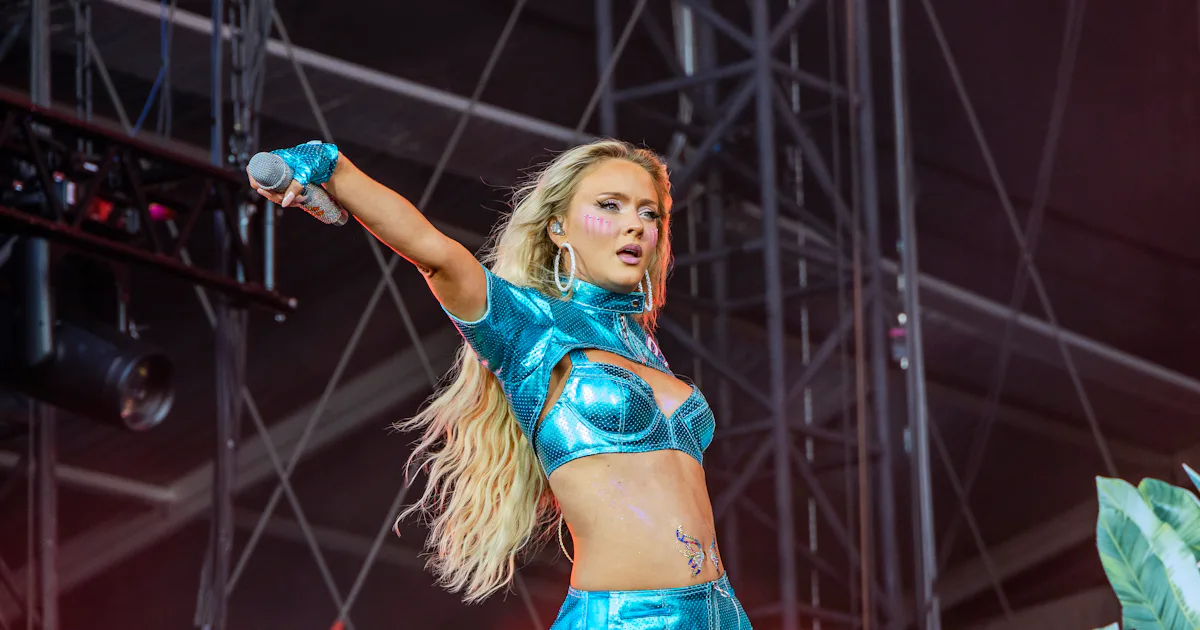
- Mid-Summer 2026 (The European Festival Circuit): At Lollapalooza Berlin, Swedish pop powerhouse Zara Larsson cemented the "rainbow core" aesthetic by stepping out in a custom-made, coordinated bolero-bra-miniskirt-glove set by designers Alexander Cole and James Nguyen. The look was drenched in hyper-vibrant aqua tones, showcasing the color’s capacity for total head-to-toe immersion.
- The "Wink Wink" Era: Charli xcx doubled down on the shade by sporting a matching leather jacket and pant set from Chrome Hearts in her music video for "Wink Wink." She mirrored the look over the weekend at the Outside Lands festival in San Francisco, wearing a neon blue set for an exclusive afterparty.
Supporting Context & Metrics: The Mechanics of Color Trends
To understand why aqua blue has captured the global imagination so completely in 2026, one must examine the socio-cultural and economic factors governing modern style consumption.
The Psychology of Post-Minimalism
Following years of muted earth tones and pandemic-era loungewear, consumers have demonstrated an insatiable appetite for dopamine dressing. Neon and high-saturation shades act as a visual manifestation of joy, escapism, and unbridled energy. Aqua blue, in particular, occupies a unique psychological space: it possesses the cooling, calming properties of traditional blue, but its electric, neon-infused undertones inject an aggressive, modern vitality. It is both serene and startling.
Fabrications and Finish: The Texture of Color
The success of aqua blue in 2026 is inextricably linked to technological advancements in textile finishing. Designers have leveraged materials that capture and refract light, enhancing the color’s inherent luminosity:
- Liquid Latex: As demonstrated by Addison Rae, latex provides a high-gloss canvas that makes neon pigments appear nearly translucent and wet.
- Heavyweight Leather: Chrome Hearts’ utilization of custom-dyed cobalt and electric blue leather proved that the shade could be adapted for heavier, structural garments without losing its vibrancy.
- Technical Synthetics: Mesh, technical jerseys, and stretch-satin utilized by independent designers and luxury houses alike have allowed aqua blue to drape effortlessly across dynamic performance wear.
The Retail Response and Search Metrics
Data from global fashion search engines indicate a sharp 140% year-over-year increase in queries for "electric blue," "aquamarine," and "highlighter aqua" apparel since the beginning of the second quarter. E-commerce platforms report that while full-look monochromatic sets are driving top-line revenue, accessories—particularly statement jewelry and footwear—are experiencing the highest conversion rates among mainstream buyers hesitant to fully commit to head-to-toe saturation.
Official Statements and Industry Insights
Key figures at the intersection of music, design, and style have weighed in on the cultural weight of the 2026 color palette, highlighting how musicians are effectively acting as the primary creative directors of modern fashion trends.
Industry analysts note that musicians like Charli xcx and Zara Larsson do not merely wear clothes; they curate complete sensory ecosystems. A wardrobe choice at a festival is immediately amplified across millions of digital screens via TikTok, Instagram, and curated Spotify canvas loops, transforming a bespoke stage outfit into a global trend within hours.
"When you look at what the girls are wearing on stage right now, it’s not about blending in or achieving quiet luxury," notes a leading trend forecaster based in London. "It’s about signaling presence in a crowded digital and physical space. Electric blue cuts through the noise. It registers instantly on a high-definition smartphone camera, making it the ultimate currency for the modern pop era."
Furthermore, designers collaborating with these artists emphasize the symbiotic relationship between sound and visual aesthetics. The sharp, synthetic beats of contemporary hyperpop and dance music demand a visual counterpart that feels equally synthetic, electric, and forward-looking—qualities embodied perfectly by highlighter-aqua and neon blue pigments.
Future Outlook: Translating the Trend from Runway to Wardrobe
As the summer of 2026 transitions into the cooler months of autumn, the question on every stylist’s mind is longevity: Can an ultra-bright neon shade survive the shift toward heavier outerwear and layered silhouettes?
The Minimalist Pivot
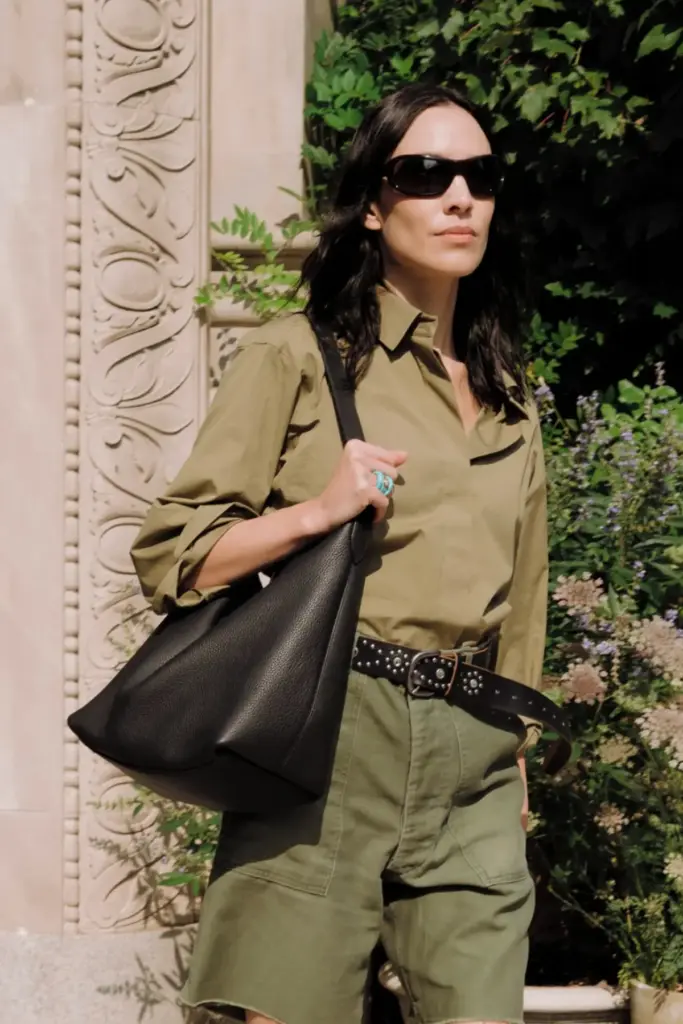
For those hesitant to dive fully into the aquamarine waters of head-to-toe neon, the autumn transition offers a masterclass in contrast styling, courtesy of style icon Alexa Chung. Spotted navigating a scorching New York summer day in a safari-chic ensemble elevated simply by a striking turquoise statement ring, Chung demonstrated that the color functions best when deployed with surgical precision.
As seen on the runways of early collections for Spring 2027, designers are already plotting ways to anchor electric blues with grounding neutrals. Pairing a vibrant turquoise or aqua accessory—be it a structured handbag, a chunky resin ring, or a silk scarf—against a backdrop of charcoal grey, crisp white, or heavy black tailoring allows the shade to serve as a sophisticated focal point rather than an overwhelming sensory experience.
The Road Ahead
The dominance of aqua blue in 2026 marks a broader shift in how color trends are generated and consumed. No longer dictated solely by traditional color forecasting institutions operating years in advance, the modern color palette is forged in real-time at the intersection of live music, digital self-expression, and high-fashion collaboration.
Whether worn as a custom Alexander Cole and James Nguyen crystal-infused bolero set on a Berlin festival stage, flashed via a Coperni minidress under Parisian lights, or simply hinted at through an understated vintage turquoise ring on the streets of Manhattan, electric blue has proven its staying power. It is the definitive hue of a generation refusing to dim its light—ensuring that the digital and physical landscapes will remain vividly, beautifully saturated for seasons to come.