Executive Overview
In the modern fitness landscape, the definition of core strength has undergone a profound paradigm shift. For decades, the prevailing wisdom dictated that a strong midsection was forged through high-volume, isolated floor movements—countless crunches, traditional sit-ups, and static planks performed in isolation. However, sports science and biomechanical research have increasingly demonstrated that the human core does not operate in isolation during real-world activities. Instead, its evolutionary purpose is to act as a central stabilization powerhouse, resisting unwanted spinal movement, transferring force between the upper and lower extremities, and protecting the spine under dynamic loads.
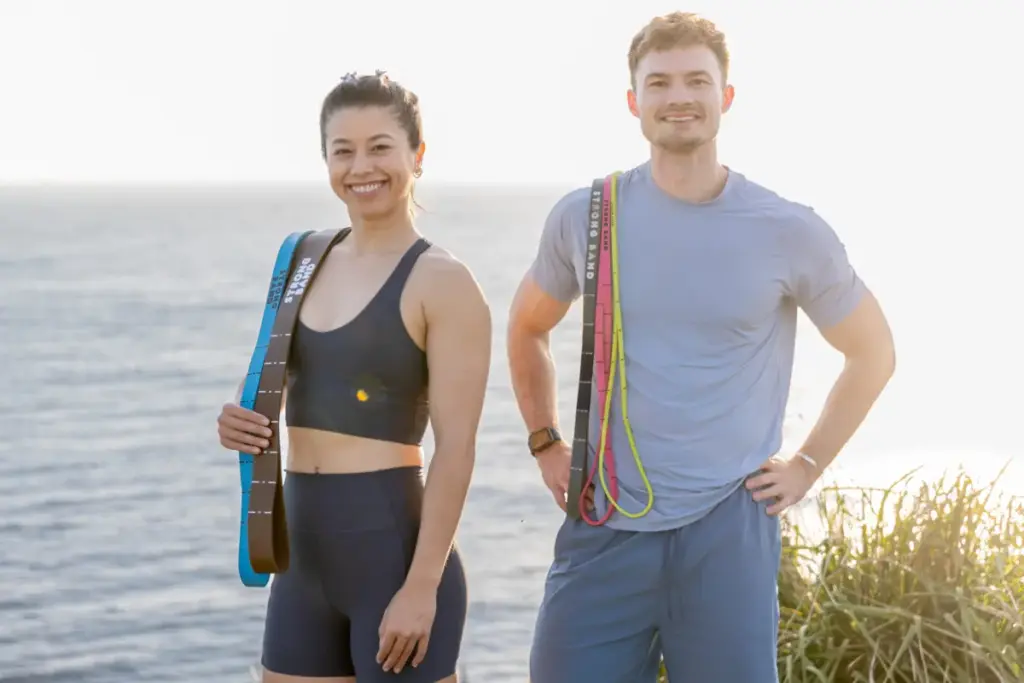
To bridge the gap between gym-floor exercises and real-world functional resilience, fitness innovators Matt Van Mol and Cyan Koay—co-founders of the resistance band brand Strong Band—have developed a novel, science-backed approach. By combining resistance band technology with cooperative partner dynamics, they have engineered a 12-minute, four-move routine designed to stress-test and fortify the core across multiple movement planes.
Beyond the biomechanical advantages of training under continuous tension, this routine leverages social fitness psychology. Backed by research indicating that exercising with a partner significantly enhances mental well-being, this training methodology eliminates the temptation to "slack off" mid-set. With a partner actively providing resistance, bracing, or dynamic counter-pulls, individuals are forced into honest, uncompromising engagement. This article provides an in-depth exploration of the mechanics behind partner resistance training, a detailed breakdown of the routine, expert insights from its creators, and a forward-looking analysis of how collaborative fitness is shaping the future of health and longevity.
Detailed Chronology: The Genesis of the 12-Minute Partner Core Protocol
The conceptualization of the Strong Band partner core routine did not happen overnight; it was born from years of observing common pitfalls in traditional resistance training and rehabilitation settings.
Phase 1: Identifying the Flaws in Solo Isolation Work
Van Mol and Koay, both CIMSPA-qualified personal trainers specializing in strength, rehabilitation, and longevity, spent years evaluating how everyday clients and athletes interacted with free weights and standard gym machinery. They noticed a recurring issue: while traditional exercises built superficial muscular endurance, clients often lacked functional core stability when exposed to multi-directional, real-world forces. Solo exercises using fixed anchors often lacked the dynamic unpredictability required to train the nervous system effectively. Furthermore, solo exercisers frequently compromised their form during the final, fatiguing reps of a set—subtly shifting mechanics to make the movement easier without realizing it.
Phase 2: Integrating Resistance Bands and Human Anchors
The duo recognized that resistance bands offered a unique physiological advantage over traditional iron: accommodating resistance. As a band stretches, tension increases proportionally, forcing the working muscles to recruit a higher density of motor units throughout the entire range of motion.
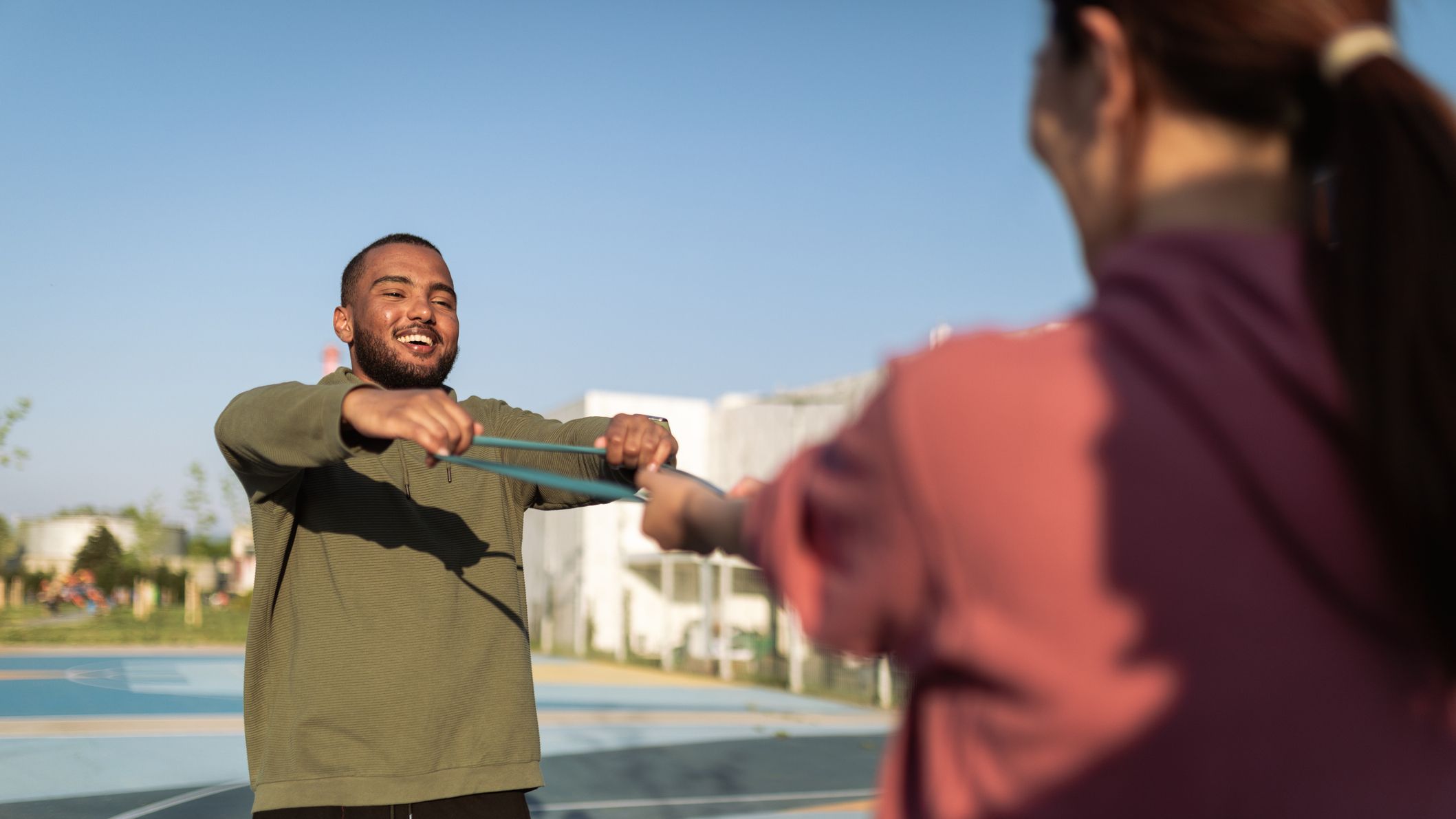
To eliminate cheating and enhance functional stability, Van Mol and Koay began experimenting with human anchors. Instead of securing a band to a rigid rack or door frame, they placed a training partner on the other end. This introduced a variable, responsive load. Whether a partner was actively pulling away to challenge anti-extension or bracing to allow for controlled rotational movement, the human anchor transformed a static exercise into a dynamic, interactive challenge.
Phase 3: Structuring the 12-Minute Flow
Recognizing that modern exercisers face severe time constraints, the creators condensed their findings into a high-efficiency, 12-minute follow-along routine. Designed to flow seamlessly from one movement pattern to the next, the workout was structured to address the four primary pillars of core function:
- Anti-Extension: Challenging the abdominal wall to prevent the lower back from arching under load.
- Spinal/Lower Back Strength: Enhancing posterior chain resilience.
- Lateral Stability: Securing the torso against sideways displacement.
- Rotational Control: Building strength and deceleration capabilities through rotational planes.
Released as a digital follow-along resource on YouTube, the routine was intentionally engineered to be accessible to a wide demographic of fitness enthusiasts—serving equally well as a standalone session or as an intense core-focused finisher at the conclusion of a full-body workout.
Supporting Context & Metrics: The Science of Core Stability and Social Fitness
To fully appreciate the efficacy of the Van Mol-Koay protocol, one must examine the underlying physiological and psychological metrics that govern the routine.
Biomechanics of Functional Core Training
The human core is anatomically complex, encompassing not just the rectus abdominis ("six-pack" muscles), but the transverse abdominis, internal and external obliques, erector spinae, multifidus, and the pelvic floor. According to leading biomechanical studies, the primary job of this muscular complex is lumbo-pelvic-hip stability.
When an individual performs a traditional crunch, they move the spine through repeated flexion—a movement pattern that, when overdone, can place excessive shear stress on the lumbar discs. In contrast, exercises that emphasize anti-movement (such as dead bugs and Pallof presses) train the core to resist unwanted flexion, extension, and rotation.
Resistance bands amplify this effect by creating constant tension vectors. Unlike dumbbells, which rely entirely on gravity and pull straight down, bands can pull from any angle. This allows trainers to mimic real-world vectors—such as carrying a heavy object, absorbing a sudden push, or twisting to lift a toddler—thereby preparing the body for the unpredictable physical demands of daily life.
The Psychology of Partner Training: The 2019 Wellbeing Study
The inclusion of a training partner is not merely a logistical choice for resistance; it is deeply rooted in behavioral psychology. A landmark 2019 study published in the National Institutes of Health (PubMed ID: 31195882) investigated the psychological and physiological impacts of group and partner-based exercise versus solo regimens.
The findings revealed that individuals who trained collaboratively experienced statistically significant improvements in mental well-being, stress reduction, and perceived exertion thresholds compared to solo exercisers. The social accountability inherent in partner workouts triggers positive reinforcement loops, elevating endorphin release and fostering adherence to long-term fitness habits.
As Matt Van Mol notes, having a partner on the opposing end of a resistance band acts as an immediate accountability mechanism: "With someone on the other end of the band… you can’t fake it. Performing these partner workouts consistently will help you develop real-world, functional core strength that supports you in everything that life throws at you."
Official Statements & Expert Breakdown
To provide complete clarity on how to execute the routine safely and effectively, the creators have detailed the specific mechanical objectives of each movement in the 12-minute protocol.
Trainer Insights on Exercise Selection
Cyan Koay emphasizes that the routine is carefully balanced to stress-test all critical functions of the core without overwhelming beginners:
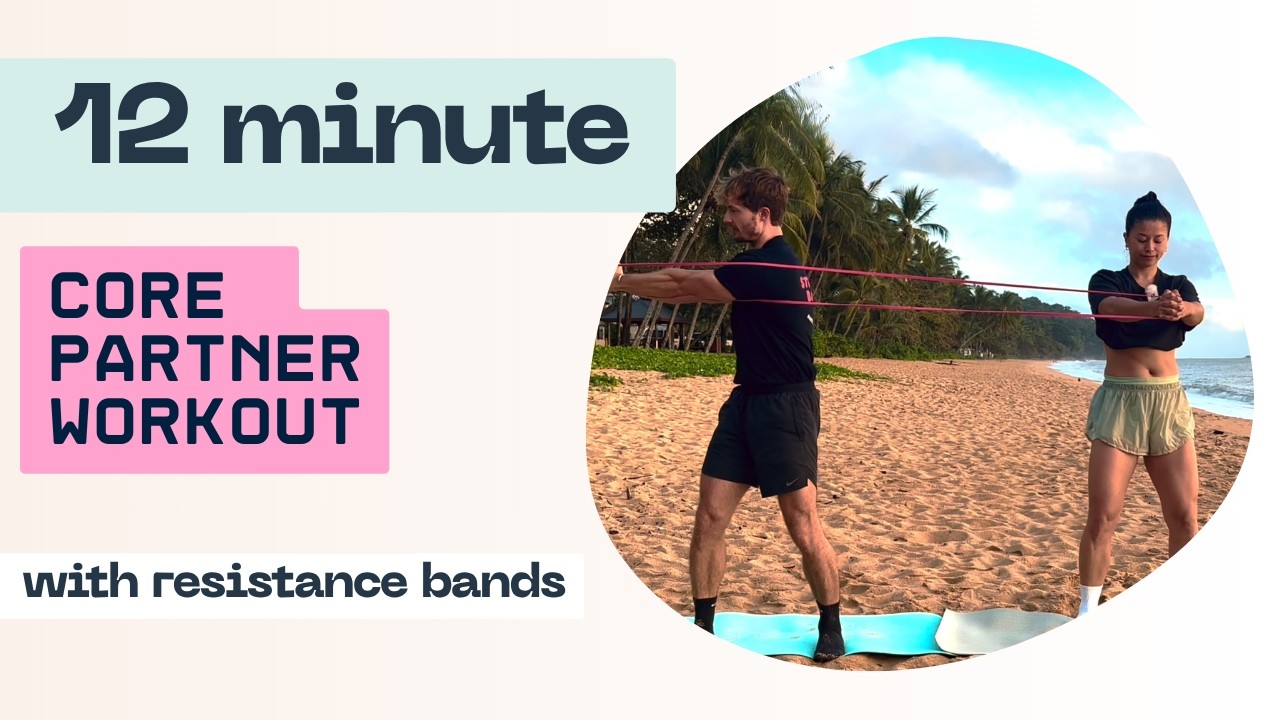
"Dead bugs challenge anti-extension and towel pull-ups improve lower back strength," explains Koay. "While side plank rows work on lateral stability and Pallof presses using your partner as the anchor build control through rotation."
She stresses that while the physiological terminology may sound advanced, the execution is entirely scalable: "It is designed to flow and meet you where you are at, no matter your current level of ability."
Step-by-Step Exercise Guides
For individuals utilizing the routine in gym environments where video streaming is impractical, the following technical breakdown outlines the structure, sets, and execution parameters for each of the four core movements.
1A. Banded Dead Bug
- Prescription: 2 Sets | 8 Reps per side
- Objective: Anti-extension and deep core activation.
- Execution: Lying supine on the floor, partner one engages with the resistance band held or anchored by partner two. The movement requires maintaining strict contact between the lower back and the mat while extending opposing limbs. The band tension increases the challenge against spinal extension, demanding rigorous recruitment of the transverse abdominis.
1B. Banded Pull
- Prescription: 2 Sets | 8 Reps total
- Objective: Lower back strength and posterior chain integration.
- Execution: Designed to target the often-neglected muscles of the posterior chain, this movement requires coordinated pulling mechanics against band tension, reinforcing posture and spinal alignment.
2. Knees-Down Side Plank with Row
- Prescription: 1 Set | 8 Reps per side
- Objective: Lateral stability and oblique engagement.
- Execution: Operating from a modified side-plank position (knees down for accessibility while maintaining strict hip elevation), the working partner performs a horizontal row against the resistance provided by their partner. This challenges the lateral sub-system of the core to resist rotational collapse and lateral shifting.
3. Pallof Press with Rotation
- Prescription: 1 Set | 8 Reps per side
- Objective: Rotational control and anti-rotation stability.
- Execution: Standing or kneeling perpendicular to the band anchor (the partner), the exerciser presses the band outward and introduces controlled rotation. This trains the obliques and deep stabilizers to decelerate force safely, mimicking the rotational demands of sports and daily lifting tasks.
Equipment and Practical Considerations
The creators note that while their proprietary Strong Band resistance bands feature printed "progress lines" to help users accurately gauge and replicate tension levels, any standard long-loop resistance band will yield highly effective results. The routine typically utilizes two distinct bands: one providing medium resistance and the other light resistance, accommodating varying strength profiles between partners.
Future Outlook: The Direction of Collaborative and Functional Fitness
As the fitness industry continues to pivot away from hyper-isolated bodybuilding aesthetics toward longevity, functional capability, and holistic well-being, routines like the Van Mol-Koay partner core protocol point toward the future of physical conditioning.
1. The Rise of Socially Integrated Fitness Ecosystems
The post-pandemic wellness landscape has accelerated the demand for community-driven health solutions. Consumers are increasingly weary of isolated digital workouts performed in silos. Workouts that require interpersonal coordination, shared effort, and human connection are filling a critical psychosocial void. Future fitness equipment design is expected to lean heavily into cooperative resistance tools—products specifically engineered for dual-user interaction, group synchronization, and interactive feedback loops.
2. Longevity and Injury Prevention as Primary Drivers
With aging populations globally seeking ways to maintain independence and vitality, the emphasis on spinal health, core stabilization, and fall prevention has never been more urgent. Traditional gym culture has historically prioritized aesthetic hypertrophy over structural integrity. However, as medical and fitness communities align around the principles of "healthspan" over lifespan, functional routines that protect the spine and enhance joint resilience will become the baseline standard for physical education, corporate wellness programs, and clinical rehabilitation.
3. Democratization of Advanced Training Modalities
Historically, advanced functional training requiring specialized variable resistance and partner-assisted stability drills was restricted to elite athletic training facilities under the supervision of high-performance coaches. Protocols such as the Strong Band 12-minute core routine demonstrate how professional-grade methodologies can be successfully democratized. Through digital follow-along platforms and portable, affordable tools like resistance bands, individuals anywhere in the world can access elite-level biomechanical training.
Conclusion
The convergence of social fitness psychology, evidence-based biomechanics, and accessible equipment has birthed a new era of core conditioning. By trading solo isolation crunches for dynamic, partner-driven resistance work, fitness enthusiasts are not only building a stronger midsection—they are investing in a more resilient, injury-resistant, and socially connected lifestyle. As Matt Van Mol and Cyan Koay continue to champion functional longevity, their collaborative routine serves as a blueprint for how fitness can be simultaneously challenging, scientifically sound, and deeply human.