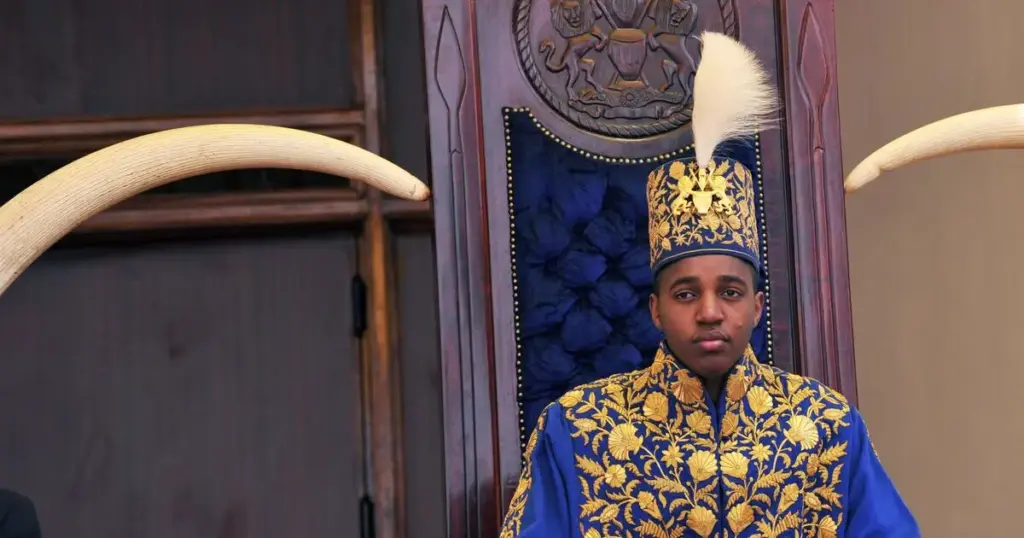
The global and regional community of the Tooro Kingdom in western Uganda is in deep mourning following the death of King Oyo Nyimba Kabamba Iguru Rukidi IV at the age of 34. Ascending to the throne as a toddler of just three years old, King Oyo’s life was defined by the intersection of ancient African monarchy and the modern sociopolitical landscape of a constitutional republic. Recognized globally by Guinness World Records as the world’s youngest reigning monarch upon his accession, his passing on Thursday marks the definitive close of a remarkable, historic chapter in East African history.
While the official cause of death has not been formally released by medical practitioners, local and international media reports indicate that the monarch had been critically ill and receiving specialized medical treatment in the United States prior to his passing. The news was officially announced the following day by the kingdom’s Prime Minister, Calvin Armstrong Rwomiire Akiiki, who described the loss as "immeasurable" to the royal family and the more than two million subjects who looked to the king for cultural continuity, leadership, and moral guidance.
Although Uganda transitioned into a republic governed by an elected president and parliament, its traditional kingdoms retain profound cultural weight and moral authority. King Oyo was the 13th ruler of the Tooro Kingdom, one of the four prominent traditional monarchies that make up Uganda’s historical landscape. Throughout his three-decade reign—first managed through a regency council and later under his direct, independent rule—King Oyo transformed himself from a symbolic child-king into an active, progressive advocate for youth empowerment, education, HIV/Aids awareness, and environmental conservation. As the kingdom prepares for funeral rites and eventual royal succession according to deeply embedded customary laws, tributes continue to pour in from international allies, sports federations, government officials, and fellow traditional leaders.
Detailed Chronology: From Toddler Monarch to Adult Sovereign
The narrative of King Oyo’s life is extraordinary, characterized by early responsibility, global attention, and a gradual growth into a modern statesman within a traditional framework.
The 1995 Accession: A Nation Mourns and Welcomes a Child King
In 1995, the Tooro Kingdom was plunged into grief following the death of King Oyo’s father, the reigning monarch. In accordance with centuries-old royal traditions, the succession was immediate. However, because the heir was merely three years old, the responsibilities of the throne could not be directly exercised. This necessitated the establishment of a regency council—which notably included his mother—to manage the affairs of the palace and act as custodians of the crown until the young prince reached the age of majority.
For the international community, the accession of a three-year-old monarch was a historical anomaly that captured global headlines. Guinness World Records formally recognized him as the youngest reigning monarch in the world, drawing unprecedented international media attention to the small but culturally rich kingdom nestled in the shadow of the Rwenzori Mountains in western Uganda.
The 2010 Coronation: Stepping into Full Sovereignty
Fifteen years after his initial accession, the young prince reached the milestone age of 18. On a grand and widely celebrated day in 2010, King Oyo was officially crowned in a lavish ceremony in Fort Portal, the seat of the Tooro Kingdom. The event was attended by dignitaries, regional royalty, and tens of thousands of jubilant subjects.
This coronation marked a pivotal psychological and administrative shift. No longer a figurehead managed by a regency council, King Oyo stepped into full sovereignty. He assumed direct control over his royal duties, shedding the constraints of childhood to embrace the heavy burdens of leadership in a rapidly modernizing 21st-century Africa.
The Final Years and Critical Illness
Over the ensuing decade and a half, King Oyo balanced his traditional obligations with modern philanthropy and advocacy. However, signs of failing health began to cast a shadow over the latter portion of his reign. Reports indicated that the monarch had been battling a critical illness. In his final weeks, he was transferred to the United States to receive advanced medical care. Despite the best efforts of medical professionals, the king succumbed to his illness, passing away on Thursday at the age of 34, leaving behind a grieving kingdom and an abrupt vacuum in its leadership structure.
Supporting Context & Metrics: The Anatomy of the Tooro Kingdom
To fully comprehend the significance of King Oyo’s reign, one must examine the institutional framework of the Tooro Kingdom and its unique relationship with the broader Republic of Uganda.
Following Uganda’s independence and subsequent political shifts—including the abolition of kingdoms under President Milton Obote in 1967—traditional monarchies were legally restored in 1993 under current President Yoweri Museveni. Today, while these kingdoms possess zero formal political authority or legislative power, their cultural and social influence remains formidable.
The Tooro Kingdom is one of four major traditional entities in Uganda, commanding the allegiance and cultural loyalty of over two million subjects primarily located in the western region of the country. The king serves as the unifying cultural anchor, the custodian of heritage, and a vital bridge between grassroots communities and the centralized national government.
Key Pillars of King Oyo’s Reign
Unlike some traditional rulers who confine their roles strictly to ceremonial pageantry, King Oyo leveraged his platform to champion progressive social causes. Key focus areas during his active reign included:
Youth Empowerment & Education: Recognizing that a significant majority of Uganda’s population is under the age of 30, King Oyo consistently advocated for educational access and vocational training programs tailored to young people.
HIV/AIDS Awareness: Continuing public health advocacy in a nation deeply impacted by the epidemic, the king utilized his visibility to de-stigmatize testing and promote preventive healthcare.
Environmental Conservation: Long before climate change dominated global discourse, King Oyo aligned himself with green initiatives. Notably, following his passing, government and kingdom officials announced plans to plant one million trees in his memory, cementing his legacy as an environmental steward.
Official Statements and Global Reactions
The death of King Oyo has prompted an outpouring of grief, official condolences, and tributes from across Uganda and the international community.
The Royal Household and Government Response
Prime Minister Calvin Armstrong Rwomiire Akiiki formally announced the monarch’s passing on Friday, framing the loss as a profound blow to the stability and emotional well-being of the realm. In a televised and widely distributed address, the Prime Minister stated:
"I call upon all the people of Tooro to remain united, calm and prayerful during this profoundly difficult time. May His Majesty the King rest in eternal peace."
Government officials have also echoed this sentiment. Cabinet Minister Margaret Muhanga described the current atmosphere in the kingdom as profoundly desolate:
"The kingdom is sombre… you can’t see anyone smiling. He had an impact on his kingdom."
Sports and Cultural Tributes
The influence of the young king extended far beyond political and traditional circles. The Federation of Uganda Football Associations (FUFA) released an official statement mourning the monarch, describing him as a "true friend of the beautiful game." In a rare and moving tribute, the federation announced that a minute of silence would be observed before all football matches nationwide through September 4.
Neighboring kingdoms, civil society organizations, and international diplomatic missions have likewise sent messages of condolence, emphasizing King Oyo’s role as a modernizer who successfully bridged ancient tribal customs with contemporary global awareness.
Future Outlook: Succession and the Preservation of Tradition
With the passing of King Oyo Nyimba Kabamba Iguru Rukidi IV, the immediate concern for the Tooro Kingdom shifts toward ceremonial mourning, final funeral rites, and the intricate, time-honored process of royal succession.
The Question of Succession
King Oyo was unmarried at the time of his death, raising initial questions regarding the direct line of succession. However, Prime Minister Akiiki moved quickly to reassure the public that the royal lineage remains secure. According to Tooro customary law, a successor has already been identified from within the royal bloodline.
Akiiki noted that a young prince has been named as the late king’s heir, though his identity is being kept confidential in strict adherence to tradition. The official proclamation and public introduction of the new heir will occur "at the appropriate time," following the conclusion of the rigorous funeral rites and mourning periods dictated by royal protocol.
Looking Ahead
The transition will undoubtedly test the resilience of the Tooro Kingdom. However, the institutional mechanisms established over centuries—combined with the active support of the central government and the enduring loyalty of the Tooro people—provide a stable framework for the days ahead.
As the kingdom prepares to bury its 13th monarch, the legacy of King Oyo—who began his journey as a toddler on a towering throne and matured into a tireless advocate for his people—will remain deeply etched in the cultural fabric of Uganda.