Disclaimer: This article discusses cancer diagnosis and related health matters, which some readers may find upsetting. Support resources and helpline information are provided at the conclusion of this report.
Executive Overview
In a television landscape perpetually saturated with high-stakes crime dramas, domestic betrayals, and explosive romantic entanglements, Britain’s longest-running soap opera is pivoting toward a narrative of profound public health significance. ITV’s Coronation Street has officially announced a pioneering, emotionally charged storyline that will see Weatherfield police officer Kit Green diagnosed with stage three breast cancer.
Developed in close consultation with leading medical charities Macmillan Cancer Support and Breast Cancer Now, the plot aims to shatter long-standing societal misconceptions surrounding male breast cancer. While the disease is frequently perceived exclusively as a female health crisis, this storyline thrusts the reality of male diagnoses into the primetime spotlight.
The arc begins when Kit’s family discovers they carry the BRCA gene mutation—a genetic marker notorious for significantly increasing the risk of certain cancers. While his mother, Bernie, and half-sister, Gemma, seek medical evaluations, Kit quietly battles his own unspoken health concerns. A subsequent, reluctant check-up delivers the devastating news: stage three breast cancer.
Scheduled to hit television screens next month, the storyline promises to explore not only the physical and psychological toll of the diagnosis on Kit himself, but also the ripple effect it sends through his extended family as they navigate an uncertain future. Behind the scenes, producers and actors alike hope that bringing this rare diagnosis to a mainstream audience will eradicate the stigma, embarrassment, and fatal delays that far too often plague male cancer patients.
Detailed Chronology: How the Crisis Unfolds in Weatherfield
The narrative foundations of Kit’s harrowing journey are rooted in genetics and familial health awareness. In upcoming episodes, the broader family unit confronts the reality of hereditary health risks when news breaks that they carry the BRCA gene mutation—a hereditary alteration in the BRCA1 or BRCA2 genes that drastically elevates the lifetime risk of developing breast and ovarian cancers.
Prompted by this revelation, Bernie and Gemma take proactive steps to get themselves checked out, initiating a family-wide conversation about preventative healthcare and genetic vulnerability. However, while the women of the family openly address their risks, Kit handles his emerging symptoms in isolation. Unbeknownst to his relatives, the enigmatic police officer has quietly noticed physical changes in his own body.
Grappling with internal panic and a profound lack of awareness, Kit delays seeking medical advice. When he finally undergoes a professional examination, the clinical reality shatters his world: he is diagnosed with stage three breast cancer.
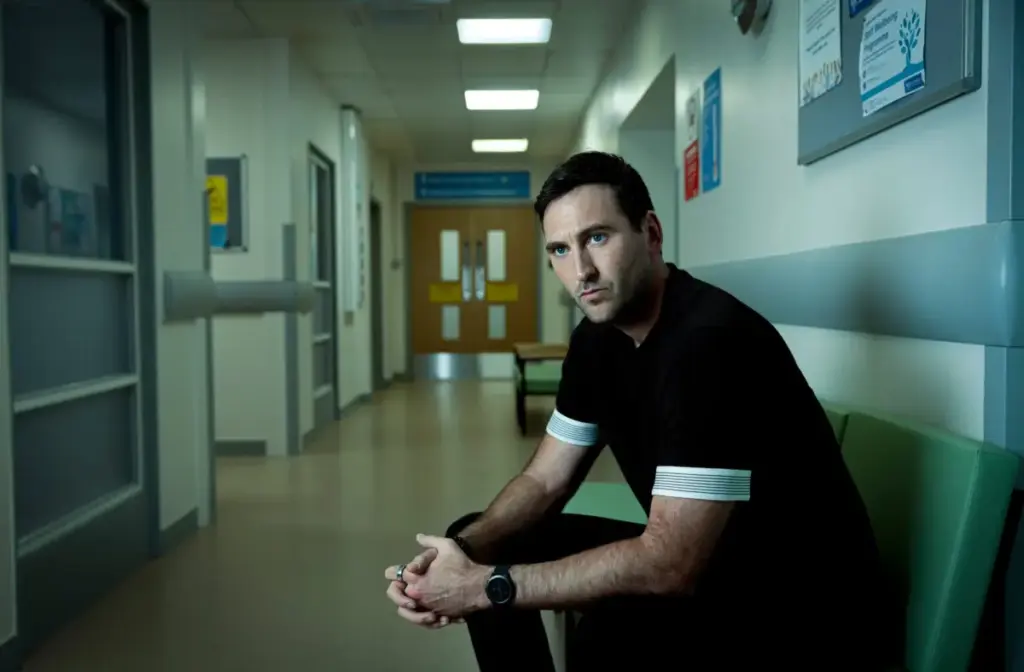
A newly released promotional campaign by ITV depicts the tense, vulnerable moment Kit walks into the hospital—marking the official commencement of an emotional marathon that will dominate the soap’s schedules in the coming weeks. Initially, Kit’s reaction is defined by acute denial and disbelief. As a man in his prime working as a police officer, the concept of breast cancer simply does not compute within his worldview of masculinity and health.
As the reality settles in, Kit and his family are forced to confront the "overwhelming impact" of the diagnosis. The narrative will meticulously track the diverse coping mechanisms adopted by individual family members as they grapple with the sudden upheaval of their lives, showcasing the heavy emotional labor required to support a loved one through advanced cancer treatment.
Supporting Context & Metrics: Shedding Light on Male Breast Cancer
To understand the cultural and social gravity of Coronation Street‘s new storyline, one must examine the stark statistical realities surrounding male breast cancer. While female breast cancer receives extensive global advocacy, research funding, and public awareness campaigns, male breast cancer remains shrouded in a shroud of cultural invisibility.
The Numbers Behind the Diagnosis
Rarity of Cases: Male breast cancer is undeniably rare, accounting for approximately 1% of all breast cancer diagnoses in the United Kingdom.
Annual Incidence: Statistically, it is estimated that over 500 men per year are diagnosed with the disease in the UK alone.
The Danger of Ignorance: Due to a pervasive lack of public awareness, many men simply do not realize that male breast tissue, though minimal compared to women, contains ducts and cells capable of malignant transformation.
Medical professionals point out that this widespread lack of awareness directly contributes to higher mortality rates among male patients. Men who notice unusual changes—such as a lump in the chest area, inverted nipples, skin dimpling, or discharge—frequently experience feelings of intense embarrassment or confusion. This psychological barrier leads to delayed presentations at general practitioner (GP) surgeries. By the time many men seek professional help, the cancer has often advanced to later stages, complicating treatment and worsening prognoses.
By casting a recognizable, complex character like Kit Green in this role, Coronation Street is strategically leveraging its platform to dismantle these dangerous taboos. The soap’s production team hopes that by visually demonstrating the diagnostic process and the emotional fallout, viewers will be empowered to check themselves regularly and consult a doctor at the earliest sign of bodily anomalies.
Official Statements: Behind the Scenes with Cast and Crew
The development of this delicate and vital storyline involved months of intensive research, coordination between scriptwriters, and consultations with medical experts and real-life survivors.
Jacob Roberts on Portraying Kit’s Disbelief
For actor Jacob Roberts, who brings Kit Green to life, capturing the authentic psychological shock of the diagnosis was paramount.
"I genuinely didn’t know that men could get breast cancer," Roberts admitted candidly. "I felt, to make it authentic, that Kit shouldn’t know that men can get breast cancer either.
“Speaking to charities and male survivors has been really insightful. Lots of men don’t know they can get this, and for Kit it’s that utter disbelief of ‘how can this be?’ Not only for his age, but ‘how can I have this as a bloke and who else in the family could be affected?’"
Producer Kate Brooks on Identity and Vulnerability
Coronation Street producer Kate Brooks emphasized that the storyline will delve deep into the psychological fractures caused by the illness, particularly regarding traditional notions of male identity.
"This diagnosis absolutely shakes the foundations of Kit’s life as he struggles to digest what this means not only for him, but also for his family and loved ones," Brooks stated.
"Kit’s a complex character, and he struggles as he navigates this new world he’s been thrust into. His vulnerabilities become all too apparent as he wrestles with what this means to his sense of identity.
“Whilst male breast cancer is rare, it’s important that we show it can happen to anyone. We must normalize conversations around this to encourage people to consult their GP at the earliest opportunity if any changes arise."
Expert Perspectives from Macmillan and Breast Cancer Now
The healthcare sector has welcomed the partnership with ITV, praising the soap’s commitment to medical accuracy.
Dany Bell, Cancer Care Strategic Adviser for Macmillan Cancer Support, remarked:
"The team at Coronation Street has worked tirelessly to represent breast cancer in men accurately and responsibly. I know many people diagnosed with cancer will be able to relate with Kit’s feelings of shock and anxiety… This storyline reminds us that no one has to go through cancer alone. Along with Kit being surrounded by caring family and friends, Macmillan is also there to support everyone affected by cancer."
Echoing these sentiments, Sally Kum, Associate Director of Nursing and Health Information at Breast Cancer Now, added:
"Kit’s story serves as a powerful reminder that breast cancer can happen to anyone. Male breast cancer is very rare, but raising awareness and normalising conversations around the disease is crucial, to encourage men to check their chest regularly and see their GP if they notice new or unusual changes.
“We’ve drawn on our insights and extensive expertise supporting people affected by breast cancer to help guide this storyline and ensure that it’s portrayed authentically."
Future Outlook: The Impact on Weatherfield and Beyond
As Coronation Street prepares to roll out these episodes over the coming weeks, the narrative is poised to leave an indelible mark on both the fictional residents of Weatherfield and the millions of viewers tuning in from home.
For Kit Green, the road ahead is fraught with medical treatments, emotional reckonings, and the arduous task of redefining his personal identity in the face of a life-threatening illness. For the broader family dynamic, the shared trauma of the BRCA gene mutation and Kit’s stage three diagnosis will test their resilience, forcing long-standing interpersonal conflicts to take a backseat to survival and mutual support.
Beyond the immediate dramatic entertainment value, the ultimate success of this storyline will be measured in real-world impact. By bringing male breast cancer out of the shadows of taboo and into millions of living rooms across the United Kingdom, Coronation Street continues its long-standing tradition of using serialized drama as a vehicle for vital public health education. If even a single viewer is prompted to perform a self-check, schedule a GP appointment, or realize they do not have to battle cancer in silence, the initiative will have fulfilled its most important mission.
Coronation Street airs on weeknights at 8:30 PM on ITV1 and is available to stream via ITVX.
Support and Resources
If you or someone you know has been affected by cancer, or if you require further information regarding symptoms, treatment, or living with the disease, professional support is readily available:
Macmillan Cancer Support: Visit macmillan.org.uk for comprehensive guidance, nursing support, and community forums.
Breast Cancer Now: Visit breastcancernow.org for expert information on breast health, male breast cancer, and support services.
Stand Up to Cancer: Visit standuptocancer.org.uk to learn more about groundbreaking research and how to get involved.