Executive Overview
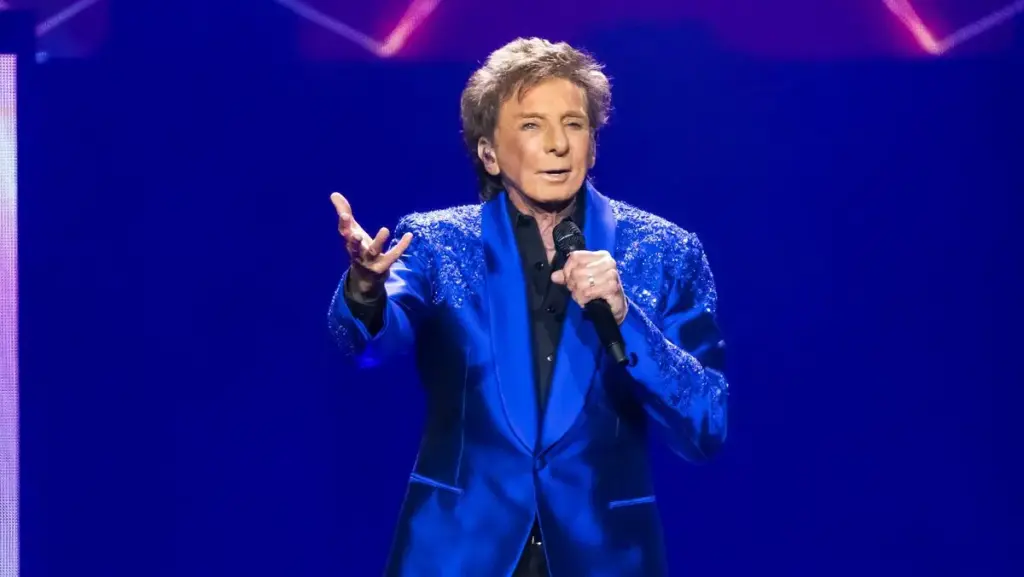
The legendary pop icon Barry Manilow has once again sent shockwaves through the music industry and his vast global fanbase after abruptly cancelling a fresh wave of concert performances. The sudden announcements follow a troubling incident at the Westgate Las Vegas Resort & Casino, where a highly anticipated performance was cut short after a mere 40 minutes on stage, leaving bewildered audience members and crew alike searching for answers.
Attributed officially to a combination of persistent "technical and vocal problems," these recent disruptions have placed the legendary entertainer’s grueling performance schedule under intense scrutiny. Beyond the immediate logistical fallout and disappointed ticket holders, the cancellations have inevitably re-ignited widespread public anxiety over Manilow’s underlying health status. These concerns are rooted in the singer’s relatively recent, highly publicized battle with Stage 1 lung cancer—a condition diagnosed entirely by chance following routine evaluations for unrelated hip pain.
As the music community processes these latest developments, questions regarding the sustainability of high-intensity residency performances for aging legacy artists have once again come to the forefront. This report provides a comprehensive, authoritative examination of the unfolding situation, detailing the chronology of recent show cancellations, the broader context of Manilow’s medical history, the overwhelming outpouring of support from fans, and what the future may hold for the legendary performer’s remaining tour dates.
Detailed Chronology: From Abrupt Las Vegas Shutdowns to Recent Cancellations
The sequence of events leading up to the most recent cancellations paints a picture of an artist struggling to balance the physical demands of live performance with the lingering realities of a major medical recovery.
The trouble began in earnest during a high-profile engagement at the Westgate Las Vegas Resort & Casino. Manilow, a fixture of the Las Vegas entertainment scene whose residencies have long been celebrated as masterclasses in theatrical pop showmanship, took to the stage to deliver another classic performance. However, attendees quickly realized something was amiss. Just 40 minutes into the set, the performance ground to a premature halt. Citing sudden and insurmountable "technical difficulties," the production was called off, sending thousands of disappointed fans streaming out of the venue long before the evening’s scheduled conclusion.
While technical glitches are an occupational hazard in large-scale live productions, the incident set off alarm bells, particularly given Manilow’s recent health history. Those fears were confirmed shortly thereafter when official channels announced that subsequent performances would also be scrapped.
Using social media as the primary conduit for the announcement, representatives for the 83-year-old singer released a brief but concerning statement:
“We’re very sorry, but we have to cancel tonight and tomorrow’s performances. Due to technical and vocal problems, we’re unable to put on our show.”
This latest setback does not exist in a vacuum; it follows a pattern of erratic tour scheduling over the past year. Earlier in the touring cycle, a major performance scheduled at the Rupp Arena in Lexington, Kentucky, was similarly called off at the eleventh hour. That particular show—originally slated for March 9—had already been subjected to a complex rescheduling process designed to accommodate Manilow’s post-operative recovery timeline. At the time, management pointed to vague "unforeseen circumstances," a phrase that, in retrospect, appears to have foreshadowed the vocal and physical strains that continue to plague the veteran performer.
The current Las Vegas residency block—originally mapped out across multiple dates from August 20th to August 22nd, and a subsequent stretch from August 27th to August 29th—now stands in administrative limbo, leaving ticket holders scrambling for refunds or rescheduled dates as management assesses the singer’s immediate viability to return to the stage.
Supporting Context & Metrics: The Cancer Diagnosis and Recovery
To fully understand the gravity of Manilow’s current professional hurdles, one must examine the profound medical trials the singer quietly navigated behind the scenes. In November of last year, the Grammy Award-winning artist behind timeless anthems like "Mandy," "Copacabana," and "I Write the Songs" revealed that he had been diagnosed with Stage 1 lung cancer.
Remarkably, the discovery was entirely incidental. Manilow had sought medical attention not for respiratory issues, but for persistent hip pain. During the diagnostic workup, physicians ordered an MRI scan that encompassed both his pelvis and his lungs. It was during this imaging procedure that medical staff identified a suspicious nodule in his lung—a silent anomaly that could have easily gone undetected until it reached an advanced, untreatable stage.
In subsequent interviews, including a candid and revealing feature with People magazine in March, Manilow reflected on the harrowing near-miss with characteristic candor and disbelief:
*"If he hadn’t done that, man… He [the doctor] saved my life, because there’s no symptoms for what I had. I could go on, nothing hurt—but they found the dot in my lung. They called me and said, ‘Could be cancer.’ That’s a bad word. ‘Not me. F you. I can’t have cancer.’ They don’t even know how long I had this thing sitting on me. It could have been years. If it had gone any further, then I would be up s‘s creek. It just so happened that it hadn’t spread, and boy oh boy, I thought I might be dying."*
The psychological and physical toll of undergoing major thoracic surgery and subsequent oncology protocols cannot be overstated, particularly for an octogenarian performer whose livelihood depends on the immense vocal stamina and cardiovascular endurance required to sustain a multi-hour live show. While Manilow was ultimately given a favorable prognosis due to the early detection of the Stage 1 malignancy, the residual impacts on his vocal cords, lung capacity, and general energy reserves have clearly presented ongoing operational challenges.
The entertainment industry is littered with cautionary tales of legendary artists pushing past their physical limits to appease fans and fulfill contractual obligations. For Manilow, who has dedicated over six decades to entertaining audiences worldwide, the friction between his desire to perform and his body’s new biological boundaries has become the defining narrative of his later career.
Official Statements and Fan Reactions
As news of the rapid-fire cancellations rippled across digital platforms, the reaction from the global fan community—affectionately known as "Fanilows"—was swift, emotional, and overwhelmingly protective.
Unlike the toxic backlash that frequently greets younger pop stars when concerts are canceled, the response to Manilow’s announcements has been defined by an outpouring of empathy, reverence, and deep-seated affection. Across social media platforms, including X (formerly Twitter), Facebook, and Instagram, supporters emphasized that the singer’s health must supersede all commercial and artistic considerations.
One prominent comment read:
"You must take care of yourself Barry!!! You are a national treasure Sir! Big hugs!"
Another loyal supporter echoed these sentiments, writing:
"Sending Barry nothing but love and hope he is feeling better soon! Xxx"
The overarching sentiment among the fanbase is one of unconditional gratitude for the decades of music Manilow has provided, coupled with a firm insistence that he prioritize his twilight years in peace and safety. A third fan posted:
"The only and most important thing is for Barry to take care of himself. As for his music I will continue to love it as I have for a portion of my life."
Another added a personal note of consolation:
"Sorry to hear this. I know you must be disappointed. Take care. Love you dear sweet Barry."
To date, management and official representatives for the singer have maintained a measured public posture, reiterating that the cancellations are strictly precautionary measures necessitated by transient vocal fatigue and technical constraints. However, insiders note that the convergence of these technical explanations with his documented cancer recovery has created an information vacuum, prompting persistent speculation from entertainment analysts regarding whether the singer will be forced to permanently scale back or retire his demanding live residency model.
Future Outlook: What Lies Ahead for the Legend’s Touring Schedule?
Looking toward the horizon, the immediate future of Barry Manilow’s live performance career hangs in a delicate balance. At 83 years of age, Manilow has already achieved an iconic status that few contemporary artists can claim. His contributions to American pop culture, songwriting, and adult contemporary music are permanently etched into history.
However, the physical realities highlighted by the 40-minute Las Vegas truncation and the subsequent string of show cancellations signal a critical juncture. Medical experts who specialize in geriatric performing arts medicine note that vocal cord resilience and lung elasticity naturally diminish over time, a process that can be severely exacerbated by thoracic surgery, general anesthesia, and the rigorous atmospheric conditions found in high-powered arena and casino sound stages.
For Manilow’s production team and venue partners, the operational calculus moving forward will require difficult decisions. Promoters at the Westgate Las Vegas Resort & Casino, as well as arenas across the country, must weigh the financial investments of residency contracts against the unpredictable nature of an octogenarian recovering from lung cancer.
Several potential trajectories emerge for the legendary singer:
- Prolonged Medical Hiatus: A complete suspension of all touring activities for the remainder of the calendar year to allow for comprehensive vocal therapy, physical rehabilitation, and complete physiological recovery.
- Permanent Residency Curtailment: Transitioning away from high-density, multi-night residency blocks in favor of sporadic, strictly limited one-off special events or televised performances that minimize travel and physical strain.
- Graceful Retirement: Choosing to hang up the touring boots entirely, cementing his legacy through recorded archives, television specials, and occasional public appearances without the pressure of live concert execution.
Whatever path Barry Manilow and his medical advisors ultimately choose, one immutable fact remains: the enduring bond between the singer and his audience transcends the physical stage. While ticket holders may mourn the loss of specific concert dates, the overwhelming consensus across the entertainment world is that Barry Manilow has earned the right to step back, prioritize his health, and rest a voice that has defined generations of popular music.