Executive Overview
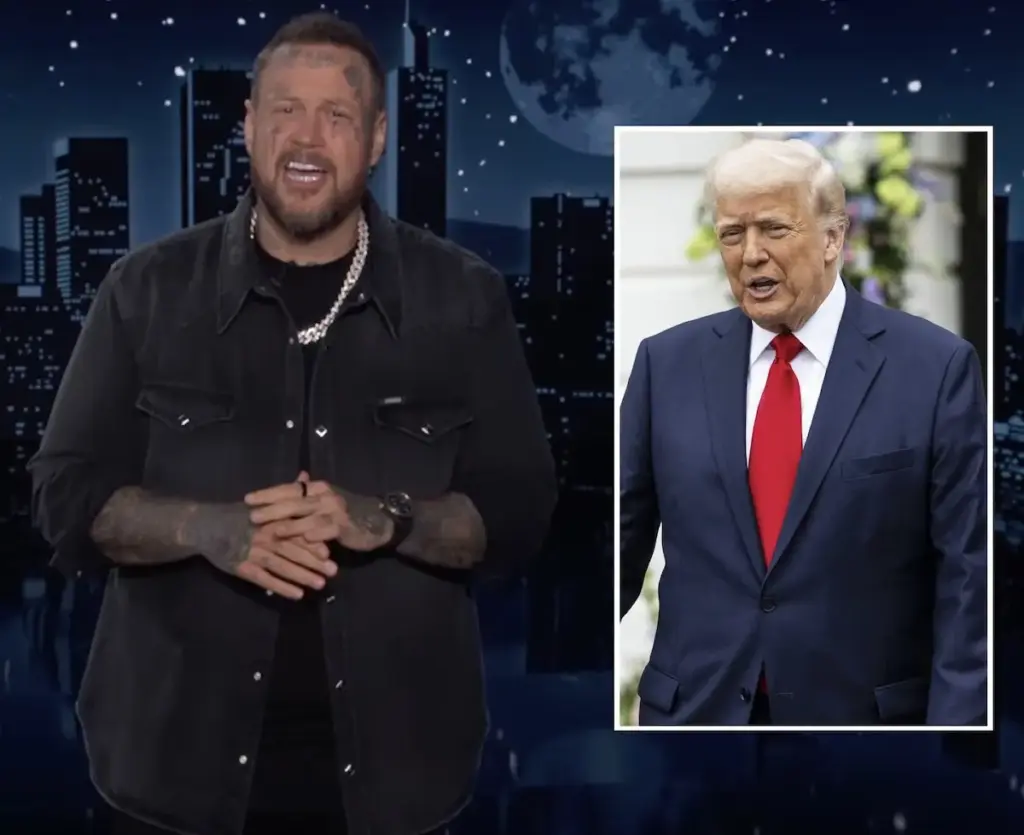
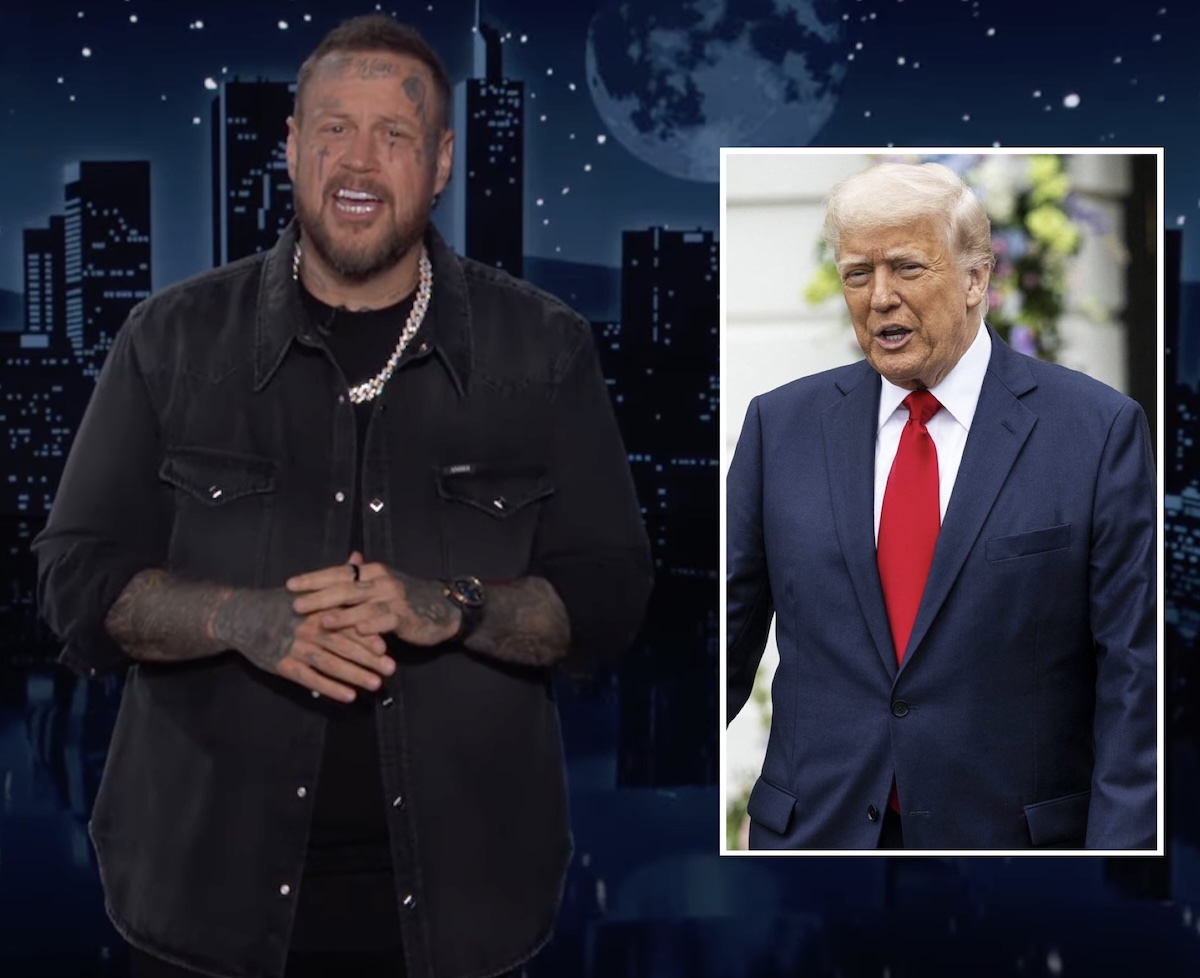
In late August 2026, Grammy-winning recording artist Jason DeFord—professionally known as Jelly Roll—stepped into the spotlight as a guest host on ABC’s Jimmy Kimmel Live!. What was intended as a routine summer late-night hosting stint quickly transformed into a high-profile media flashpoint after the country-hip-hop crossover star delivered an opening monologue containing sharp satirical jabs directed at former U.S. President Donald Trump.
The commentary sparked immediate backlash across social media platforms and conservative commentary channels, with critics calling for boycotts of the singer’s music and accusing him of alienating his core country music fanbase. Rather than issuing a standard public relations apology or distancing himself from the broadcast, Jelly Roll addressed the outrage head-on during subsequent episodes. Employing a mix of self-deprecating humor and candid defense of free expression, he challenged dissatisfied listeners to follow through on their boycott threats, asserting that political satire remains a fundamental element of American late-night television.
The incident highlights the evolving dynamics at the intersection of popular culture, political polarization, and the music industry. It underlines how non-traditional artists navigate fan expectations, media scrutiny, and brand identity in an increasingly segmented landscape.
Detailed Chronology of the Incident
[Day 1: Initial Monologue]
• Jelly Roll hosts 'Jimmy Kimmel Live!'
• Delivers jokes targeting Donald Trump (weight, political rhetoric, policy).

[Day 2: Social Media & Cable News Response]
• Viral clip circulates across X, TikTok, and YouTube.
• Conservative commentators & fans voice backlash; boycott threats emerge.

[Day 3: On-Air Retort]
• Jelly Roll addresses critics in follow-up monologue.
• Issues direct response: "Go right ahead" to boycotters; defends political satire.
The Initial Monologue
During his opening night as host, Jelly Roll took the stage to deliver a traditional late-night monologue crafted by the show’s writing staff alongside his own personal comedic input. The routine touched on current events, political developments, and public figures, with several jokes focusing on former President Donald Trump. Topics ranged from Trump’s public statements and physical demeanor to ongoing policy debates, including political friction surrounding U.S.-Canada relations and media coverage on networks like Fox News.
The studio audience reacted with enthusiasm, but as clips of the performance were uploaded to digital platforms, the broader public reaction diverged sharply along ideological lines.
The Digital Fallout and Boycott Calls
Within hours of the broadcast, snippets of the monologue circulated widely across X (formerly Twitter), TikTok, and YouTube. A wave of criticism emerged from segments of Jelly Roll’s fanbase, particularly traditional country music listeners who viewed political humor directed at conservative figures as an affront to their values.
Online campaigns calling for a boycott of his music, streaming tracks, and concert tours began gaining traction. Cable news commentators and digital media personalities weighed in, questioning whether a mainstream country artist could survive challenging a demographic that traditionally leans conservative.
The On-Air Counteroffensive
Rather than retreating or ignoring the commentary, Jelly Roll used his platform on subsequent broadcasts of Jimmy Kimmel Live! to address the pushback directly. On Tuesday night’s episode, he opened the show by reviewing the digital outrage generated over the previous 72 hours.
During the follow-up monologue, he framed his comedy within the historically established context of late-night television, questioning why lighthearted political ribbing had elicited such intense hostility. He addressed critics threatening to purge his music from their playlists, delivering a blunt response: "Go right ahead."
Supporting Context and Cultural Metrics
+-----------------------------------------------------------------------+
|                       JELLY ROLL: AT A GLANCE                          |
+-----------------------------------------------------------------------+
| Real Name:            Jason DeFord                                    |
| Genre Crossover:      Underground Hip-Hop / Outlaw Country / Rock     |
| Major Accolades:      3x Grammy Award Winner                          |
| Personal Background:  Former felon, advocate for addiction recovery   |
| Physical Journey:     Documented 300 lb weight-loss transformation    |
+-----------------------------------------------------------------------+
Modern Country Music and Political Polarization
The relationship between country music artists and political discourse has historically been fraught with commercial risk. The most famous precedent occurred in 2003, when The Chicks (then known as The Dixie Chicks) faced a devastating radio ban and career setback following anti-war comments made on stage in London.
However, the media ecosystem of 2026 differs fundamentally from that of the early 2000s:
- Direct-to-Consumer Distribution: Streaming platforms (Spotify, Apple Music) reduce dependency on traditional terrestrial country radio gatekeepers.
- Diversified Audience Base: Modern crossover artists draw listeners from pop, rock, and hip-hop demographics alongside traditional country fans.
- Algorithmic Amplification: Controversies often drive increased search volume, streaming engagement, and overall brand visibility, offsetting localized fan attrition.
Jelly Roll’s Unconventional Path to Stardom
Understanding Jelly Roll’s resilience in the face of public criticism requires examining his non-traditional trajectory within the entertainment industry. Born Jason DeFord in Antioch, Tennessee, his early life was marked by repeated incarcerations, struggles with substance abuse, and years operating on the fringes of the independent hip-hop scene.
Over the past decade, DeFord engineered one of the most remarkable career turnarounds in modern music history:
- Genre Fusion: Blending country lyricism with hip-hop beats and southern rock hooks, creating hits such as "Need a Favor" and "Save Me."
- Critical Recognition: Winning three Grammy Awards and multiple Country Music Association (CMA) honors.
- Public Transformation: Documenting a public journey of losing over 300 pounds while serving as a vocal advocate for prison reform and addiction recovery programs nationwide.
Because his brand is built on radical honesty, vulnerability, and surviving severe real-world hardship, standard public relations pressure tactics tend to exert far less leverage over his career decisions than they might over conventionally manufactured pop stars.
Official Statements and Rhetorical Breakdown
During his follow-up appearances on Jimmy Kimmel Live!, Jelly Roll delivered a series of unscripted and scripted remarks analyzing the situation. His commentary offers insight into how contemporary performers evaluate free speech, audience expectations, and celebrity culture.
On Political Satire in Public Life
Addressing the core argument that public figures should be immune from late-night comedy, Jelly Roll remarked:
"Any U.S. president should be able to handle a few jokes, right?"
This statement invokes a long-standing norm of American civic culture: that political leaders of all parties are legitimate targets for public satire. By framing his jokes as standard late-night tradition rather than a personal partisan attack, he positioned his critics as overly sensitive to conventional political discourse.
On Audience Autonomy and Boycotts
In response to social media users declaring their intent to stop streaming his catalog, he declined to plead for fan loyalty:
"Go right ahead."
This brief response highlights a growing trend among established artists who prioritize artistic independence over appeasing every segment of a divided audience.
On Perspective and Public Outrage
Perhaps the most telling point of his monologue came when Jelly Roll reflected on the absurdity of the controversy relative to his personal history:
"As a former felon and drug dealer, who has lost 300 pounds, has tattoos all over his face—and won three Grammys—this is the weirdest thing I’ve ever done to ‘stun’ people."
+---------------------------------------------------------------------------+
|                      RHETORICAL STRATEGY ANALYSIS                         |
+---------------------------------------------------------------------------+
| Technique             | Application in Jelly Roll's Monologue             |
+-----------------------+---------------------------------------------------+
| Self-Deprecation      | Cites face tattoos and physical journey to break  |
|                       | tension and humiliate moral outrage.              |
| Contextual Disarming  | Juxtaposes prison/addiction history against       |
|                       | social media anger to minimize the controversy.  |
| Direct Challenge      | Invites boycotters to leave, demonstrating that   |
|                       | his career is not reliant on compliance.          |
+-----------------------+---------------------------------------------------+
By contrasting actual life struggles—such as incarceration, severe obesity, and addiction—with online outrage over television jokes, he effectively disarmed his critics by reframing the backlash as trivial.
Future Outlook and Industry Implications
The fallout from Jelly Roll’s late-night hosting stint provides a case study for the contemporary music and television industries. Several key takeaways emerge for artists, networks, and brand managers navigating political volatility:
                      [INDUSTRY IMPACT VECTOR]
                                 │
     ┌───────────────────────────┼───────────────────────────┐
     ▼                           ▼                           ▼
[Late-Night Strategy]    [Artist Autonomy]         [Commercial Viability]
Broader talent pool;     Authenticity insulates    Cross-genre appeal
guest hosts drive        creators against traditional mitigates localized
viral digital reach. boycott efforts. demographic losses.- The Evolution of Guest Hosting: Networks will likely continue inviting non-comedian music stars to host late-night programs. While it introduces unpredictability, the resulting viral moments generate significantly higher digital engagement than standard junket interviews.
- Resilience of Authenticity: Jelly Roll’s experience demonstrates that artists with authentic, self-made backstories possess greater immunity to boycott campaigns. When an artist’s identity is founded on overcoming personal flaws and systemic barriers, political commentary rarely undermines their core appeal.
- The Shifting Country Music Ecosystem: As country music expands globally and integrates elements of hip-hop and pop, the requirement for artists to adhere to a single political or cultural orthodoxy continues to diminish.
Ultimately, Jelly Roll’s week on Jimmy Kimmel Live! proved that while political commentary in late-night television remains a polarized arena, artists who approach criticism with humor, self-awareness, and unyielding candor can successfully turn potential public relations crises into moments of cultural commentary.