Executive Overview
In the fast-paced ecosystem of contemporary streaming platforms, the journey from literary success to screen adaptation is rarely linear. While official greenlights and corporate press releases typically dictate the news cycle, the most compelling developments often occur behind closed doors. This is precisely the case for The Last Sunrise, the romantic drama adapted from the work of bestselling author Anna Todd. Although Prime Video has yet to officially confirm a sequel, a careful examination of industry signals, creative choices, and intellectual property trajectories reveals that the foundation for an expansive cinematic universe is already being laid.
According to insider information that has surfaced in recent weeks, the possibility of transforming Anna Todd’s atmospheric narrative into a sprawling film saga is far from remote. Two major structural pillars support this assertion: the active involvement of the original screenwriter in developing a second chapter linked to an upcoming Todd novel, and the author’s own stated ambitions to expand The Last Sunrise into a comprehensive literary trilogy. Should these plans materialize, the ultimate objective is clear: to bring all three books to the screen, cementing the property as a multi-film franchise.
Furthermore, the creative forces behind the camera and the talent in front of it are already aligned. Lead actors Fernando Lindez and Maia Reficco have expressed genuine enthusiasm regarding the prospect of returning to the sun-drenched landscapes of Mallorca for a potential sequel. Yet, despite the creative momentum, the final decision rests squarely in the hands of Prime Video executives and Anna Todd herself. Consequently, while the project cannot yet be officially confirmed, the narrative infrastructure, audience demand, and creative alignments are firmly in place, pointing toward a much larger project than initially perceived.
Detailed Chronology: From Page to Screen and Beyond
To understand the trajectory of The Last Sunrise 2, one must retrace the steps that brought the original story from the written page to the streaming screen. Anna Todd, a literary phenomenon known for cultivating deeply engaged, global fanbases, crafted a narrative that immediately resonated with readers seeking emotionally charged romance set against picturesque backdrops.
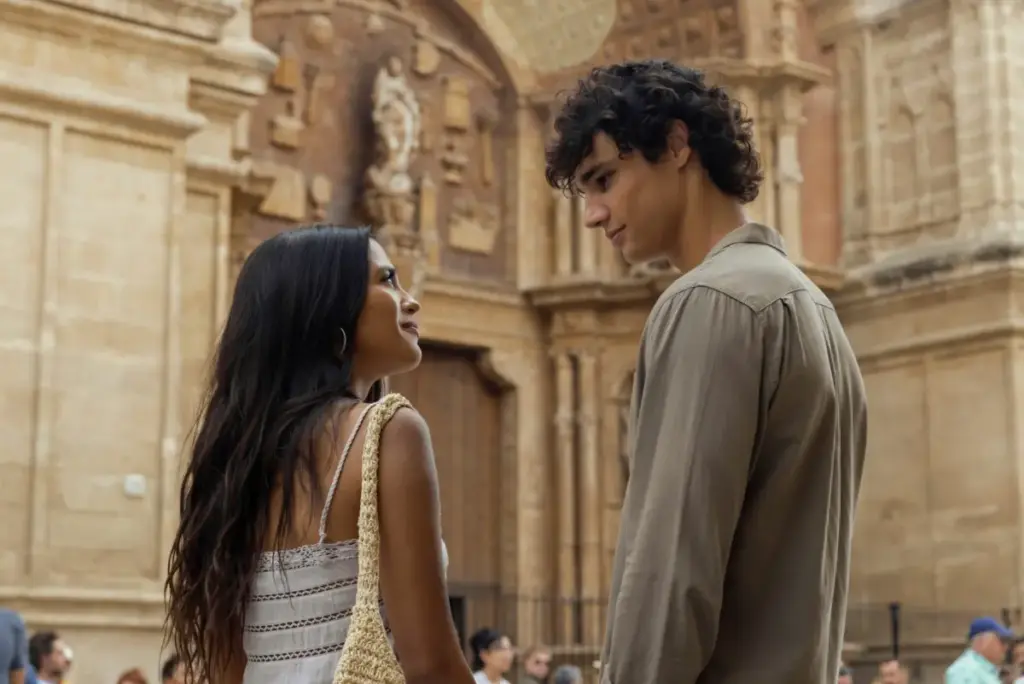
When the adaptation rights were acquired and the project made its way to Prime Video, expectations were high. The casting of Fernando Lindez and Maia Reficco injected palpable chemistry into the production, grounding the sweeping emotional beats of the story in authentic performances. Filming on location in Mallorca provided a breathtaking visual backdrop that elevated the film from a standard romance into an immersive sensory experience.
However, the timeline of a potential sequel begins well before the release of the first installment. Industry whispers suggest that even as the initial film was moving through post-production, discussions about the broader universe were quietly taking shape. Anna Todd’s vision for the property was never confined to a standalone story. By conceptualizing The Last Sunrise as the opening salvo of a projected literary trilogy, the author engineered a narrative framework capable of sustaining long-form storytelling.
In recent months, this literary blueprint has begun to translate into screenwriting reality. Reports indicate that the screenwriter of the first film is already actively engaged in developing a second chapter. Crucially, this script is reportedly being designed to tie directly into an unreleased, forthcoming novel by Todd. This synergistic approach—where new literary works and cinematic scripts are developed in tandem—reflects a sophisticated transmedia strategy designed to maximize audience engagement across both publishing and streaming verticals.
While formal pre-production has not commenced and studio greenlights remain pending, this underground momentum suggests that the creative machinery is already turning. If the corporate entities give their final blessing, the transition from speculative whispers to active production could happen much faster than the public realizes.
Supporting Context & Metrics: Decoding the Adaptation’s Crucial Pivot
The most compelling argument for a sequel to The Last Sunrise lies not in corporate strategy or authorial ambition, but within the narrative fabric of the first film itself. Adapting a beloved novel always involves difficult choices, excisions, and alterations. Yet, the creative team behind The Last Sunrise made a deliberate, calculated divergence from the source material—a structural shift that fundamentally rewrites the rules of the narrative and paves the way for a continuation.
In Anna Todd’s original novel, the character of Ry does not suffer from memory loss following her pivotal surgery. The narrative path is straightforward, bringing the characters to a definitive, closed resolution. Had the film adapted this plot point faithfully, a sequel would have faced the formidable challenge of manufacturing artificial conflict to keep the central couple apart or forcing a new plot onto a concluded arc.
Instead, the film’s adaptation team introduced a profound ambiguity. In the cinematic version of events, Ry’s medical outcome is left deliberately uncertain. Rather than retaining a seamless memory of her past, Ry explains that her cognitive faculties are gradually returning. This subtle yet earth-shattering change leaves the door wide open for fragments of her past to resurface incrementally over time.
[Novel Narrative]
   └── Surgery Performed ──> Full Memory Retained ──> Definitive Conclusion (No Natural Sequel Hook)

[Cinematic Adaptation]
   └── Surgery Performed ──> Induced Memory Loss ──> Gradual Recovery ──> Organic Sequel Foundation
This narrative pivot is nothing short of brilliant from a screenwriting perspective. A hypothetical second film could pick up precisely at the cliffhanger of the first, thrusting Ry into an emotional odyssey to fully recover her memories—and, alongside them, the profound, life-altering experiences she shared with Julián.
This framing introduces a dynamic psychological layer that transforms the potential sequel from a standard continuation into a sophisticated exploration of identity and rediscovery. Viewers would not merely watch a couple maintain their relationship; they would witness them falling in love all over again from an entirely fresh, fragile, and compelling perspective. Ry would be forced to reconcile the stranger in her mirror with the deep emotional truths inscribed upon her heart. By deliberately altering the ending to mirror the uncertainties of human trauma and healing, the filmmakers ensured that a trilogy would not feel forced, but rather like the inevitable next chapter of an unfinished song.
Official Statements and Cast Sentiment
While corporate gatekeepers at Prime Video maintain a guarded silence regarding official confirmations, the primary stakeholders—the actors tasked with breathing life into these characters—have been notably vocal about their willingness to return.
Fernando Lindez and Maia Reficco have both addressed the prospect of a sequel in recent press interactions, striking an optimistic and enthusiastic tone. For actors who have invested intense emotional energy into complex, high-stakes romantic dramas, the opportunity to revisit a character arc is often an enticing prospect. Both Lindez and Reficco have spoken positively about the potential of returning to Mallorca, signaling that the on-screen chemistry translating so effortlessly to audiences is matched by a genuine off-screen camaraderie and professional dedication to the material.
Their willingness to reprise their roles serves as a vital anchor for the franchise’s viability. In the landscape of modern streaming franchises, cast availability and enthusiasm are frequently the primary bottlenecks for sequel production. With the leading duo already expressing open readiness to step back into character, production logistics are streamlined significantly.
Nevertheless, both actors and industry observers remain grounded in the reality of the entertainment industry. Creative enthusiasm and screenwriter involvement, while necessary, are not sufficient on their own. The ultimate authority rests with the decision-makers at Prime Video, who must weigh metrics, budget allocations, algorithmic performance data, and strategic release calendars. Anna Todd, as the originating creative force, also holds significant sway over the direction of her intellectual property.
Thus, a fascinating tension exists: the creative team, the cast, and the author are creatively aligned and practically ready, waiting only for the formal corporate nod to ignite the engines of production.
Future Outlook: When Can We Expect The Last Sunrise 2?
For an ardent fanbase eagerly dissecting every hint, rumor, and behind-the-scenes photograph, the most pressing question remains temporal: When will The Last Sunrise 2 actually hit screens?
Even under the most optimistic projections—assuming that corporate greenlights are finalized in the near future and that pre-production has been quietly humming along—audiences should temper their expectations regarding an imminent release. Filmmaking is an intricate, time-intensive industrial process.
Should the second film receive an official greenlight, it must progress through several distinct, non-negotiable phases:
- Screenplay Finalization: Translating the structural outlines and tie-ins to Anna Todd’s upcoming novel into a shooting script.
- Pre-Production: Securing locations (including potential returns to Mallorca), casting supporting roles, and finalizing crew schedules.
- Principal Photography: The physical shooting phase, which requires months of intensive on-location work.
- Post-Production: Editing, sound design, scoring, color grading, and visual effects integration.
- Global Marketing Rollout: Strategic promotional campaigns, trailer drops, and press tours managed by Prime Video.
When accounting for these monumental operational requirements, a realistic timeline begins to take shape. Industry analysts examining current production pipelines suggest that 2028 represents a plausible, highly realistic window for the release of The Last Sunrise 2.
While a four-year gap between installments might test the patience of a dedicated fandom, it is entirely consistent with the prestige YA and romance adaptation models employed by major streaming services today. High production values, meticulous location scouting, and coordinated multi-platform book releases require careful, unhurried execution.
Until an official, corporate-backed date is announced by Prime Video, the projected timeline must be viewed strictly as an informed industry estimate rather than a carved-in-stone premiere. Yet, for those who found themselves captivated by the sun-dappled romance, the ambiguous final glances, and the unspoken promises of the first film, the wait—though potentially long—promises a narrative payoff well worth enduring. The sun may have set on the first chapter, but in the carefully orchestrated world of Anna Todd adaptations, a new dawn is quietly gathering strength behind the scenes.