Executive Overview
The security architecture of Europe is facing an unprecedented, multi-domain challenge as the shadow war between Russia and the West spills far beyond the physical front lines of Ukraine. In a stark and alarming intervention, Denmark’s national counter-intelligence agency, the PET (Politiets Efterretningstjeneste), has issued a formal warning that Moscow is actively planning and preparing sabotage operations targeting Danish and European defense companies.
As a steadfast NATO member and one of Kyiv’s most vocal and committed military supporters, Denmark has found itself squarely in the crosshairs of Russian intelligence operations. According to high-ranking security officials in Copenhagen, Russian operatives are systematically attempting to recruit ordinary Danish citizens—leveraging digital spaces, social media platforms, and online gaming communities—to conduct reconnaissance, photograph sensitive infrastructure, and lay the groundwork for physical disruptions.
This chilling development does not occur in a vacuum. It forms a critical chapter in a broader, escalating campaign of Russian hybrid warfare designed to fracture Western political resolve and choke off the supply chains sustaining Ukraine’s armed forces. Across the continent, European governments are grappling with a wave of covert activities, ranging from suspected arson and infrastructure mapping to drone attacks, such as the alarming incident at Germany’s Leipzig/Halle Airport.
Simultaneously, the geopolitical friction has migrated north into the delicate geopolitical waters of the Arctic. In a high-stakes legal maneuver executed at the behest of Ukraine, Norwegian authorities seized a Russian commercial vessel in the Svalbard archipelago. The seizure, tied to a multi-billion-dollar arbitration award won by Ukraine’s state energy giant Naftogaz over the 2014 annexation of Crimea, has drawn explosive condemnation from the Kremlin. Russian President Vladimir Putin has blasted the move as "state terrorism," even as he sidesteps direct threats regarding potential Russian strikes on British military installations supporting Ukraine.
The convergence of these events—spanning domestic intelligence warnings in Scandinavia, tactical sabotage plots across Western Europe, legal-maritime confrontations in the Arctic, and aggressive rhetorical sparring from the Kremlin—underscores a perilous new reality. The confrontation between Moscow and the North Atlantic Treaty Organization (NATO) is no longer confined to the geopolitical margins; it has transformed into a pervasive, low-intensity war that threatens civilian safety, critical logistics, and international maritime law.
Detailed Chronology of Escalation
The friction points stretching from Copenhagen to the Svalbard archipelago highlight a rapid acceleration of hostile measures and countermeasures between Russia and Western allies. A chronological breakdown reveals the systematic intensification of this geopolitical standoff:
- 2014–Present (The Legal Precedent): Following the illegal annexation of the Crimean Peninsula and the seizure of extensive Ukrainian energy assets, Kyiv’s state-owned energy company, Naftogaz, initiates prolonged international legal battles. These efforts ultimately culminate in a landmark $4.22 billion arbitration award against the Russian Federation—a debt Moscow steadfastly refuses to acknowledge or pay, prompting Ukraine to pursue Russian commercial assets globally.
- August 2026 (The German Incident): European security alarms are amplified when German authorities formally accuse Russia of orchestrating a brazen attempted drone attack targeting the critical Leipzig/Halle Airport, signaling an escalation from cyberespionage and surveillance to direct physical threats against European logistics hubs.
- Early September 2026 (The Danish Counter-Intelligence Warning): Denmark’s PET intelligence service breaks its silence to publicly warn that Russian intelligence services are actively building a network of local saboteurs. Targeting Danish defense manufacturers tied to Ukraine’s military supply chain, Moscow’s operatives utilize digital recruitment techniques, targeting vulnerable individuals via social media and online gaming chat rooms.
- September 3, 2026 (The Arctic Seizure): In a dramatic cross-border enforcement of the Naftogaz arbitration ruling, Norwegian authorities intercept and seize the Russian vessel Professor Molchanov in the Svalbard archipelago. The ship, functioning as a commercial expedition cruiser, is locked down in Barentsburg, triggering swift and furious diplomatic retaliation from Moscow.
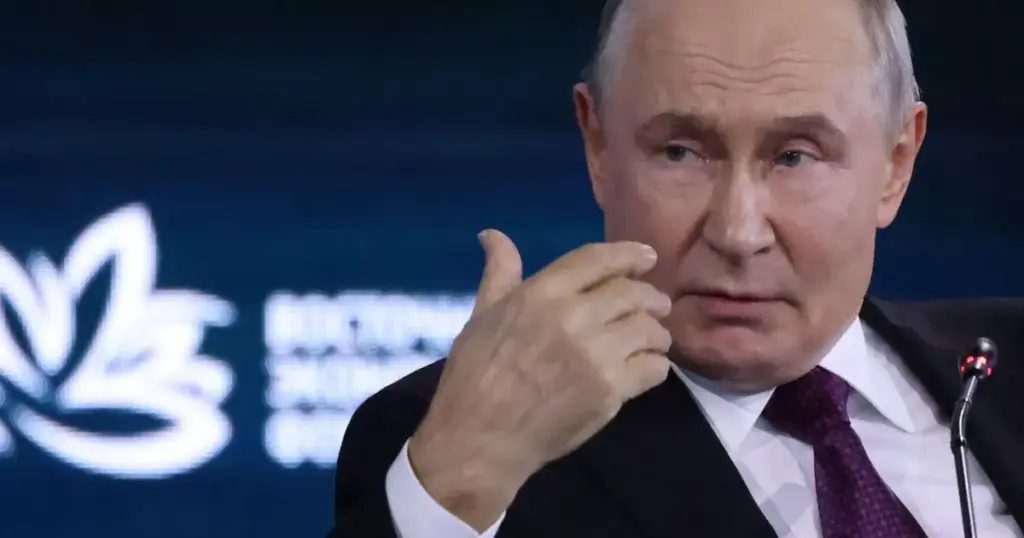
- Mid-September 2026 (Rhetorical Retaliation from the Kremlin): Russian President Vladimir Putin responds to the maritime seizure by branding the action and broader Western maritime restrictions as "state terrorism." Simultaneously, Putin rebukes Ukrainian warnings to international airlines regarding long-range drone strikes in Russian airspace, accusing Western backers of complicity, while coyly dodging direct questions about potential Russian retaliation against British military installations supplying Kyiv.
Supporting Context & Metrics: The Mechanics of Hybrid Warfare
To fully understand the gravity of Denmark’s warning, one must examine the operational blueprint of modern Russian hybrid warfare. Unlike traditional state-on-state warfare characterized by massed armored divisions and formal declarations of hostilities, hybrid warfare exploits the gray zone—the space just below the threshold of triggering NATO’s Article 5 collective defense clause.

The Anatomy of Proxy Recruitment
According to Emil Gresholm, PET’s head of counter-espionage, Russian intelligence agencies have shifted away from heavy reliance on traditional, highly monitored diplomatic personnel to conduct sensitive operations. Instead, they have turned to digital crowdsourcing.
- Digital Footprints: Operatives trawl social media platforms, encrypted messaging applications, and multiplayer gaming forums to identify discontented, financially strained, or ideologically pliable individuals across Scandinavia.
- Low-Level Tasks: Recruits are rarely asked to build bombs or detonate facilities initially. Instead, the tradecraft begins with seemingly innocuous assignments: photographing a specific defense contractor’s perimeter fence, mapping the shift changes of security personnel, or documenting the logistics routes used to transport military hardware destined for Eastern Europe.
- Plausible Deniability: By utilizing local proxies, Russian handlers maintain distance, ensuring that if a operative is compromised, the link back to Moscow’s state apparatus is obscured, complicating the host nation’s ability to mount a formal diplomatic or military response.
Denmark’s Strategic Vulnerability
Denmark’s position as both a foundational NATO member and a disproportionately large financial and military contributor to Ukraine makes its domestic industrial base an attractive target. While Denmark does not possess a massive continental landmass, its specialized technological sectors—ranging from maritime defense systems and communications hardware to advanced drone components—play an essential role in sustaining Ukraine’s asymmetric defense capabilities.
PET has clarified that critical infrastructure (such as national power grids, water supplies, and telecommunications networks) is not currently being prioritized as a primary standalone target for sabotage by Russian actors. However, the intersection between commercial defense manufacturing and national infrastructure creates a perilous overlap. A successful sabotage operation against a single mid-sized Danish component manufacturer could create a cascading bottleneck that ripples directly through European supply chains and onto the battlefields of the Donbas.
The Arctic Frontier and Maritime Law
The seizure of the Professor Molchanov in Svalbard demonstrates that the theater of confrontation has expanded northward. The Arctic has historically been regarded as a zone of relative diplomatic exception—an area where environmental cooperation and scientific research superseded geopolitical posturing. However, melting ice caps, rich mineral deposits, and strategic maritime corridors have turned the High North into a heavily militarized theater.
By utilizing Norwegian courts to enforce an international arbitration award against Russian state assets, Ukraine has opened a novel legal front. Because Moscow refuses to settle its $4.22 billion debt to Naftogaz voluntarily, Kyiv has forced its European partners to choose between upholding international commercial jurisprudence and placating an increasingly belligerent Kremlin. The immobilization of a civilian research and expedition vessel flying the Russian flag underscores that no asset belonging to Moscow—commercial, scientific, or otherwise—is entirely safe from legal requisition while the war in Ukraine rages on.
Official Statements & Diplomatic Fallout
The escalating war of words between Moscow, Copenhagen, Oslo, and London reflects a complete breakdown of trust and an alarming hardening of diplomatic postures.
In Copenhagen, the tone of the intelligence community is measured yet urgent. PET officials have emphasized that the threat is active and ongoing, requiring heightened vigilance from both corporate security teams and ordinary citizens who must remain skeptical of unsolicited online solicitations.

In Oslo, the defense and judicial establishments have defended the seizure of the Professor Molchanov as a routine, lawful enforcement of international legal obligations. However, the diplomatic cost has been immediate. Nikolai Korchunov, Russia’s ambassador to Norway, did not mince words, labeling the impoundment a "politically motivated violation of international law" and vowing that Moscow would exhaust every legal avenue to overturn the ruling.
The most explosive commentary, however, emanated directly from Russian President Vladimir Putin. During high-profile public appearances, Putin adopted a combative and dismissive stance toward Western warnings:
- On Maritime Seizures: Putin condemned the actions against Russian commercial shipping in the Arctic not merely as illegal, but as acts of "state terrorism," arguing that Western nations are dismantling the foundational rules of international maritime commerce.
- On Ukrainian Airspace Warnings: Responding to Kyiv’s warnings advising foreign commercial carriers to steer clear of Russian airspace due to ongoing long-range drone campaigns, Putin accused Ukraine’s allies of complicity in terrorism for maintaining a tacit silence on the matter, warning that such hazards severely complicate any horizon for peace negotiations.
- On the United Kingdom: When pressed by journalists regarding whether Russia would consider direct kinetic strikes against British military facilities in retaliation for London’s robust supply of long-range cruise missiles and armaments to Ukraine, Putin offered a chillingly ambiguous, smiling response: "It’s a military secret."
Future Outlook: The Widening Gyre of Conflict
As the calendar moves deeper into 2026, the structural trajectory of European security points toward a prolonged, highly volatile state of confrontation. The warnings issued by Denmark’s PET serve as a harbinger of a reality that security analysts have long predicted: the war in Ukraine cannot be permanently firewalled from the rest of the European continent.
Several critical trends will shape the security landscape in the months ahead:
- The Militarization of Counter-Espionage: European intelligence agencies are expected to significantly ramp up counter-intelligence operations, expanding surveillance around defense manufacturing hubs, naval yards, and logistics corridors. Cross-border intelligence sharing between NATO allies will become even more vital as networks of hybrid saboteurs are unmasked.
- Corporate Hardening: Defense contractors across Scandinavia and Western Europe are being forced to transition from standard commercial security postures to military-grade threat mitigation. This includes vetting digital supply chains, insulating employees from online recruitment vectors, and implementing strict physical access controls.
- The Risk of Accidental Escalation: With Russian vessels being seized in the Arctic, Western airports targeted by hybrid drone probes, and Russian leadership issuing veiled threats against British military assets, the margin for error is razor-thin. A botched sabotage operation, a miscalculated interception at sea, or a kinetic strike landing outside Ukraine’s borders could quickly trigger an uncontrolled escalation under NATO’s mutual defense umbrellas.
Ultimately, the revelations from Copenhagen confirm that the battle for Ukraine’s survival is intimately bound up with the internal resilience of Western democracies. As Moscow shifts increasingly toward the covert tools of hybrid warfare, the frontline has effectively expanded to encompass every factory, digital network, and coastline in Europe.