In an era where the fashion industry is perpetually searching for its moral compass, the intersection of high-end minimalism and radical sustainability has rarely looked this compelling. Enter The Park, a circular fashion label founded in 2024 by visionary designer and Fashion Institute of Technology (FIT) alumna Sarah Bonello. Stocked at elite luxury e-tailers like Moda Operandi and Net-a-Porter, and championed by style-heavyweights such as actress Angelina Jolie, The Park is quietly transforming how modern women dress for both the boardroom and casual weekend errands.
What sets The Park apart from a sea of generic minimalist direct-to-consumer (DTC) brands is its uncompromising commitment to material science. By utilizing textiles harvested from the pulp of eucalyptus, spruce, and pine trees, clothing waste, and recycled plastic bottles, the brand has solved a long-standing paradox in luxury fashion: how to create garments that feel weightless, look impeccably tailored, and harbor zero environmental guilt.
As upcoming European Union (EU) regulations threaten to outlaw conventional synthetic-heavy manufacturing models, The Park’s arrival feels less like a trendy experiment and more like a masterclass in future-proofing. This in-depth look explores how the brand is rewriting the rules of modern wardrobe staples, bridging the gap between comfort and high-fashion aesthetics, and proving that circularity is the ultimate luxury.
Detailed Chronology & Brand Evolution
2024: The Genesis of The Park
The seed for The Park was planted long before its official launch, born out of Bonello’s personal frustration with the traditional retail landscape. Having spent countless hours rifling through closets trying to find pants that accommodated the daily fluctuations of a woman’s body, Bonello recognized a massive blind spot in contemporary womenswear. Most luxury garments are engineered for static, rigid measurements—ignoring the reality that a woman’s waistline, comfort level, and body shape shift fluidly from morning to night.
To combat this, Bonello drew on her technical training at FIT, focusing heavily on color theory, textile composition, and timeless silhouettes. When The Park officially debuted in 2024, it introduced a tightly curated collection of foundational garments. Rather than participating in the hyper-fast churn of micro-trends, the brand launched with a core ethos: build garments that last for decades, utilizing innovative, circular supply chains.
The Rise of the "One-and-Done" Wardrobe
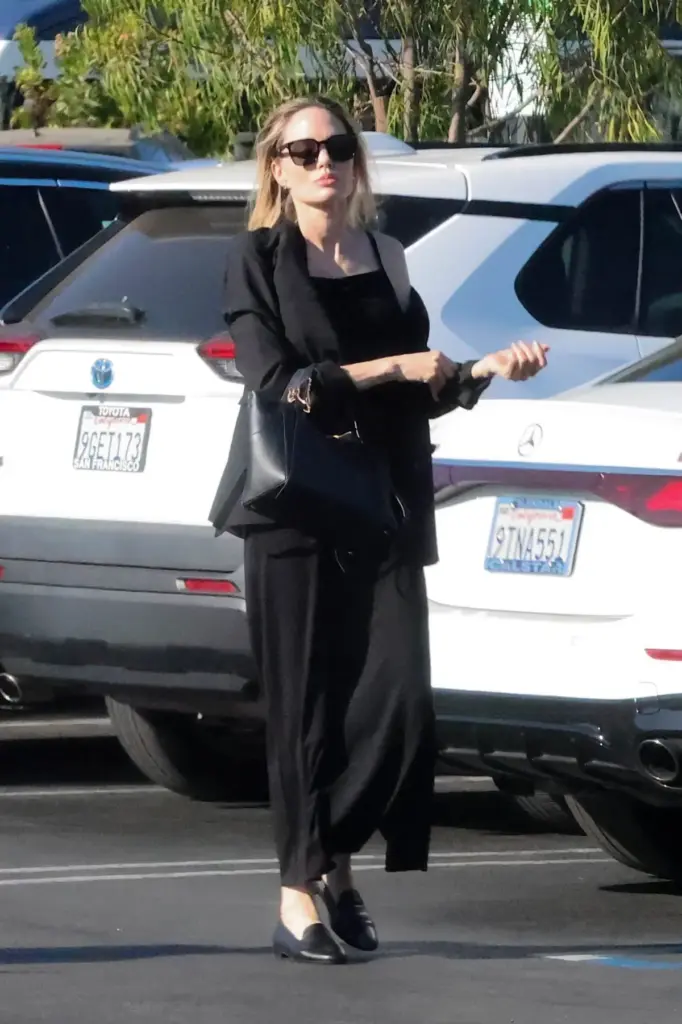
By late 2024 and heading into 2025, The Park’s signature pieces—such as the Alexandra dress, the Sheryl pencil skirt, and the ubiquitous Joy skirted leggings—began appearing on prominent fashion editors and Hollywood A-listers alike. The viral moment was cemented when Angelina Jolie was spotted stepping out in Los Angeles wearing The Park’s sleek, fitted silhouettes during low-key errand runs.
The appeal was immediate. These were not pieces confined to a single season or a specific occasion; they were adaptable, hyper-functional items capable of transitioning from airport terminals to high-stakes business meetings, and finally to evening dinners without missing a beat. Bonello’s focus on versatile design resonated with an increasingly fatigued consumer base tired of disposable fashion.
Supporting Context & Material Metrics: The Science Behind the Style
The core innovation driving The Park’s success lies in its strategic partnerships with cutting-edge textile developers, most notably Madrid-based Pyratex. Traditional fashion often relies heavily on virgin polyester, nylon, and resource-intensive conventional cotton. The Park, conversely, anchors its production in proprietary, next-generation materials designed for circularity and biodegradability.
Breaking Down The Park’s Core Fabrics
Power 3: Perhaps the brand’s most celebrated textile, Power 3 is a fully biodegradable fabric infused with natural wood pulp (including eucalyptus, spruce, and pine). Cool to the touch and remarkably breathable, it powers the Alexandra dress. Thanks to Tencel-derived properties, the fabric actively absorbs moisture, keeping the skin dry and comfortable whether worn on a sticky summer afternoon or layered under heavy winter coats.
Rewear: Tapping directly into cotton-based waste streams, Rewear transforms discarded garments and post-consumer textile scraps into a structured, butter-soft jersey. It provides the heavy-duty integrity needed for tailored separates while keeping millions of tons of textile waste out of landfills.
Act 169: A conscious alternative to conventional polyester, Act 169 is spun from recycled plastic bottles. Blended with high-grade elastane, it gives garments an extraordinary four-way stretch, accommodating a woman’s ever-evolving body without losing its shape or structural memory.
Pricing Strategy and Accessibility
Positioned firmly in the contemporary luxury market, The Park’s pricing reflects the high cost of sustainable innovation and ethical production methods. Entry-level essentials, such as the Allie Cami or lightweight tanks, start around $135 to $275. Mid-tier items like the Sheryl Skirt and Tessa Long Pants range from $375 to $415, while heavy-duty seasonal investments—such as tailored outerwear, the Kelly Bomber, and the Edith Gown—range from $750 to $995.
Despite the luxury price tag, consumers are increasingly willing to pay a premium for longevity. The brand’s tightly controlled color palette—centering on timeless neutrals like rich black, vanilla cream, deep navy, and chocolate brown, punctuated by an occasional seasonal bordeaux—ensures that each piece functions as a 20-year wardrobe investment.
Official Statements & Industry Perspectives
The fashion industry has historically been slow to adopt circular practices, frequently citing prohibitive manufacturing costs as the primary deterrent. However, industry insiders argue that these conventional price tags are a dangerous illusion.
"A lot of synthetic and conventional materials look competitively priced today, but that price doesn’t reflect the real cost of how they’re made, nor the broader impact they can have on people and the environment," explains Regina Polanco, CEO and founder of Pyratex.
Pyratex has earned international acclaim for supplying sustainable innovations to luxury giants like Dior and Loewe—the latter of which recently made headlines for debuting a t-shirt engineered from recycled orange peels and pulp. According to Polanco, the external pressure forcing brands to pivot is no longer just consumer demand; it is legislative necessity.
"What’s shifting now is regulation," Polanco notes. "Upcoming EU frameworks around traceability, chemical use, and extended producer responsibility mean a lot of what’s currently on the market simply won’t be legal to sell in a few years."
In this shifting landscape, brands like The Park possess a distinct competitive advantage because their foundational DNA was built around traceability and zero-waste frameworks from day one.
"The Park is actually a great example of the kind of brand that will endure," Polanco adds, "one that understands innovation isn’t a risk; it’s part of who they are."
This sentiment is echoed by founder Sarah Bonello, whose design philosophy centers around liberating women from the exhausting daily ritual of wardrobe anxiety.
"From one day to the next, my body changes," Bonello explains candidly. "That 26-inch jean that fit yesterday might not fit tomorrow. That medium might need to be large after I [eat]. I don’t want my girl to have to think about that, because I don’t want to think about that. I’ve spent so many days in my closet taking three hours to try and find the pair of pants I want to wear that day. Now… I just go and put on my Tessa pants and know I’m good to go."
When pressed about her personal favorite piece from her collections, Bonello admits an unabashed bias toward the item that started it all: the Joy skirted leggings.
"They’re the first piece I designed," she laughs. "They transitioned me through seasons, through airports, from drop-offs to nighttime. They’re my everything. So I have literally one whole rack of Joy leggings, and I wear them pretty much every day. My husband is probably like, ‘Can you change your clothes at this point?’"
Future Outlook: The Horizon of Circular Luxury
As The Park looks toward upcoming seasonal collections, the brand’s trajectory signals a broader tectonic shift within high fashion. The era of mindless overconsumption is giving way to a more thoughtful, utility-driven approach to personal style.
The impending arrival of strict international environmental legislation—particularly concerning microplastic shedding, textile recycling mandates, and supply chain transparency—will inevitably weed out fast-fashion imposters and greenwashed labels. Brands that fail to integrate circular materials like those developed by Pyratex risk facing severe legal and financial penalties in key global markets.
Conversely, labels like The Park are poised to capture a loyal, discerning demographic of consumers who demand elegance without compromise. By treating sustainability not as a marketing buzzword, but as an invisible, high-performing engineering standard, Sarah Bonello has proven that the future of fashion is comfortable, conscious, and endlessly enduring.
As Harper’s Bazaar continues to track the evolution of sustainable luxury, one thing remains certain: the minimalist wardrobe of the future will not be defined by how little you own, but by how intelligently what you own was made.