Executive Overview
In the sprawling, high-stakes ecosystem of Hollywood fitness, where cinematic transformations often demand that actors undergo dramatic physical shifts in mere months, few names command as much respect as Jason Walsh. As a premier strength and conditioning coach with over three decades of professional experience, Walsh operates at the absolute zenith of his field. His client roster reads like a cinematic roll call of Academy Award winners and blockbuster headliners: Matt Damon, Bradley Cooper, Emily Blunt, John Krasinski, Brie Larson, Miles Teller, and Jake Gyllenhaal.
Yet, beneath the glossy veneer of red-carpet premieres, billion-dollar box office franchises, and dramatic body transformations for roles like Captain Marvel, Top Gun: Maverick, and Road House, Walsh’s philosophy is surprisingly unglamorous. He does not rely on transient fitness trends, flashy social media fads, or high-tech gimmicks. Instead, the 50-year-old founder of West Hollywood’s renowned RISE MOVEMENT and plant-based protein brand RISE311 anchors his entire methodology in primitive, foundational human movement patterns.
According to Walsh, true physical longevity, sustainable fitness, and elite performance do not stem from isolating muscles on state-of-the-art machines. Rather, they are built upon the mastery of six fundamental, everyday movement patterns: lunging, squatting, carrying, rotating, pushing, and pulling.
This comprehensive report examines Walsh’s foundational training philosophy, explores the mechanics behind his transformative work with A-list clientele, details the anatomy of his corrective movement assessments, and provides a structured, practical framework for everyday fitness enthusiasts looking to build a body designed for lifelong resilience.
Detailed Chronology: From Industry Outsider to Hollywood’s Go-To Strength Coach
To understand how Jason Walsh became the secret weapon for Hollywood’s most demanding physical roles, one must trace a career defined by an unwavering commitment to functional anatomy over aesthetic shortcuts.
The Early Years and Philosophical Development
Long before training Oscar-winning actors in private West Hollywood facilities, Walsh immersed himself in the science of human movement. During an era when bodybuilding splits and isolation exercises dominated commercial gyms, Walsh recognized a glaring disconnect between how people trained and how the human body was actually designed to move.
The human body, Walsh observed, does not operate in isolated planes of motion. Everyday life—let alone the rigorous physical demands of action cinema—requires integrated, multi-planar coordination. Early in his career, he focused heavily on structural integrity, joint mobility, and neuromuscular efficiency. He understood that before an athlete or actor could safely load heavy weight or execute explosive movements, their central nervous system and foundational joints needed to be properly aligned.
The Rise of RISE MOVEMENT and A-List Collaborations
In 2015, Walsh cemented his status as a fitness innovator by launching Rise Nation in West Hollywood, pioneering a high-intensity, low-impact vertical climbing workout that quickly attracted Hollywood’s elite. Shortly thereafter, his private strength and conditioning facility, RISE MOVEMENT, became the epicenter for cinematic physical preparation.
As studios began demanding hyper-realistic physical transformations for superhero epics, war dramas, and action thrillers, directors and producers turned to Walsh. His ability to safely prepare actors for grueling filming schedules without catastrophic injuries made him indispensable.
- John Krasinski in 13 Hours (2016): Walsh transformed the comedic actor into a shredded, combat-ready security contractor through relentless structural conditioning and foundational strength work.
- Brie Larson in Captain Marvel (2019): To prepare Larson for Marvel’s first standalone female-led superhero film, Walsh spent nine months building monumental functional strength, enabling the actress to hip-thrust 400 pounds and push a 5oned Jeep Wrangler up a hill.
- Miles Teller in Top Gun: Maverick (2022): To withstand the punishing G-forces experienced inside Navy F/A-18 Super Hornets, Teller trained extensively under Walsh’s supervision, developing the neck, core, and structural stability required for high-altitude aviation.
- Jake Gyllenhaal in Road House (2024): Most recently, Walsh has overseen the rigorous conditioning of Gyllenhaal, choreographing remote and in-person sessions that balance raw explosive power with absolute joint preservation.
Supporting Context & Metrics: The Six Pillars of Human Movement
Walsh’s core thesis is simple yet profoundly often overlooked: the human body relies on six foundational movement patterns. If any one of these patterns is compromised by postural imbalances, past injuries, or sedentary habits, the entire kinetic chain breaks down.
1. The Squat
The cornerstone of lower-body strength and mobility. A proper squat demands synchronized flexion and extension across the ankles, knees, and hips, engaging the quadriceps, glutes, hamstrings, and core stabilisers.

2. The Lunge
A unilateral movement pattern that exposes and corrects left-to-right asymmetries. Lunges test dynamic stability, single-leg strength, and core anti-rotation, mimicking the mechanics of running, walking, and changing direction.
3. The Push
Encompassing both horizontal and vertical pressing movements (such as push-ups, overhead presses, and bench presses), the push pattern builds upper-body power across the chest, anterior deltoids, and triceps while requiring robust scapular stability.
4. The Pull
The counter-balance to the push pattern. Pulling movements (such as rows, pull-ups, and lat pulldowns) strengthen the posterior chain, including the latissimus dorsi, rhomboids, and rear deltoids—crucial for reversing the postural degradation caused by modern desk-bound lifestyles.
5. The Carry
Often considered the ultimate test of functional strength, loaded carries (such as Farmer’s Walks) challenge grip strength, core endurance, postural integrity, and metabolic conditioning under load.
6. The Rotation
Human movement is inherently rotational. From throwing a punch to swinging a golf club or simply turning to look over your shoulder, rotational strength and anti-rotation stability protect the lumbar spine and transmit force efficiently through the torso.
The Cost of Ignoring the Foundation
According to Walsh, skipping these basics in pursuit of flashy, aesthetic-driven workouts is the primary catalyst for the fitness burnout cycle.
"If you don’t [master the fundamentals], you’re going to get hurt," Walsh explains. *"You’re going to get frustrated. You’re going to get p***d off and you’re going to stop. Then this whole cycle starts over again."
Official Statements & Industry Insights
In exclusive commentary and recent interviews, Jason Walsh has continually emphasized that physical longevity is an art form rooted in rigorous scientific discipline.
Reflecting on his approach to new clients, Walsh notes:
"I treat everybody like they’re new. We do an assessment. I look to see how their body moves, look for the red flags, and then I address those issues."
This diagnostic-first philosophy is precisely how Walsh salvaged Matt Damon’s training trajectory. When Damon first sought Walsh’s expertise years ago prior to physical franchise work, the actor was plagued by chronic pain.
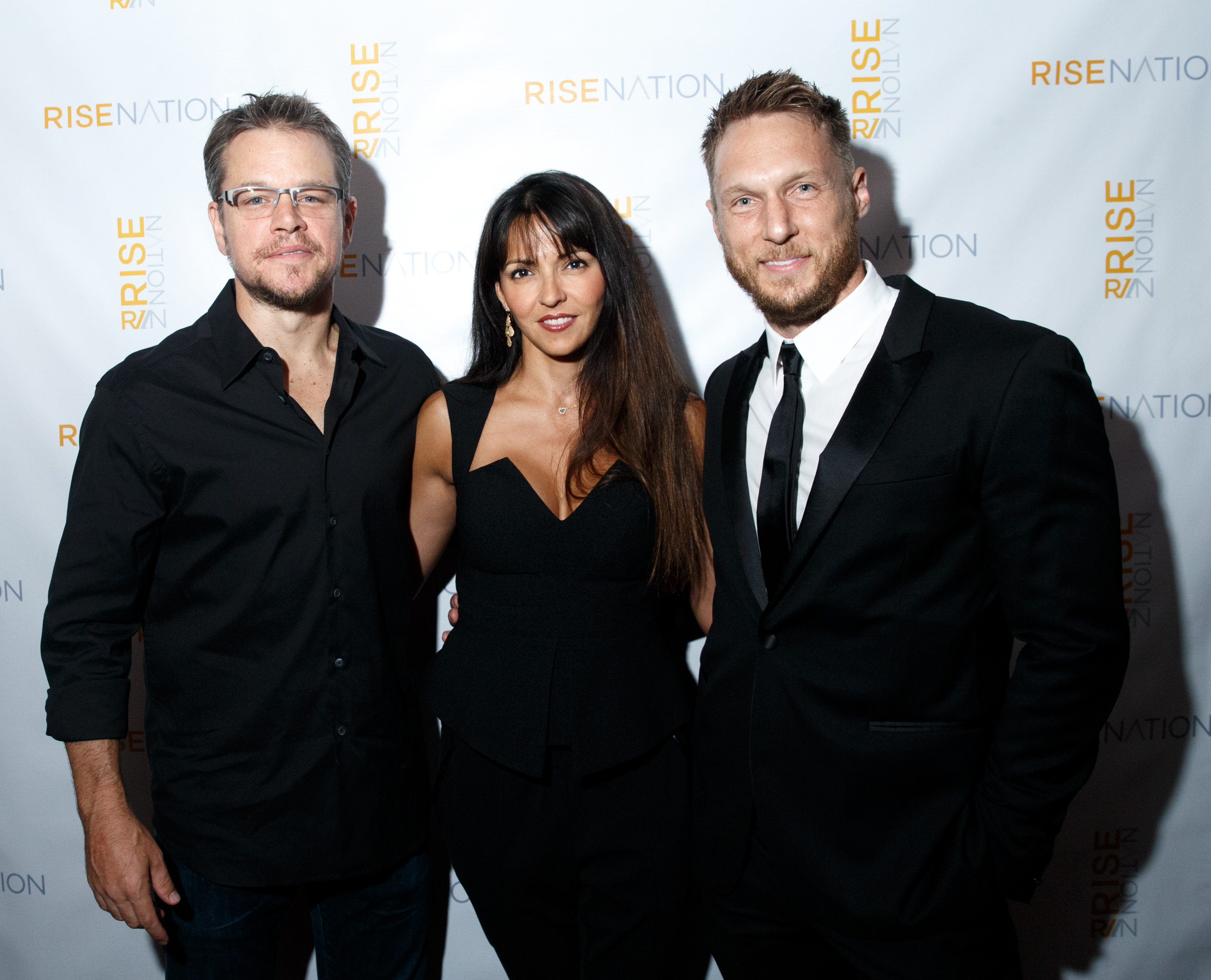
- "He was very frustrated," Walsh recalls. "He told me his shoulder hurt and he couldn’t lift his arm over his head. He couldn’t play with his kid because his back hurt."
Rather than handing Damon a pair of heavy dumbbells or prescribing a generic bodybuilding routine, Walsh initiated a meticulous diagnostic protocol. It took two uninterrupted weeks of targeted corrective work to unlock Damon’s frozen, restricted shoulder. Another two weeks were dedicated to resolving underlying lower back asymmetries.
- "It was like this weird ah-ha moment," says Walsh. "At that point, he was like, ‘Dude, I’m all yours. You’ve earned it.’ All of that stuff gave Matt the foundation and ability to train hard."
When asked if his A-list celebrity roster ever graduates past these basic movement patterns, Walsh’s answer is unequivocal:
"Everyone. Every day. We work them into our warm-ups. We never ever lose the fundamentals. It’s not an Instagram workout. It’s not flashy or cool. We teach people. We stress them. We rinse and repeat."
Future Outlook: Putting Walsh’s Blueprint into Practice
For fitness enthusiasts, weekend warriors, and aspiring athletes eager to incorporate Jason Walsh’s Hollywood-tested methodology into their own routines, the path forward does not require million-dollar studio equipment or an A-list movie budget. It demands patience, diagnostic self-awareness, and strict adherence to structural integrity.
Step 1: The Movement Screen
Before adding heavy external loads to any exercise, conduct a self-assessment. Can you perform a deep bodyweight squat without your heels lifting off the floor or your lower back rounding? Can you raise both arms overhead without arching your spine to compensate for tight shoulders or restricted lats? Identify your physical red flags before attempting to push through them.
Step 2: Build the Cornerstone Warm-Up
Prioritize movement preparation over passive stretching. Integrate bodyweight variations of the six fundamental movement patterns into every training session to prime the nervous system, lubricate the joints, and activate stabilizing musculature.
Step 3: Implement Structured, Foundational Strength Sets
Below is a practical, beginner-to-intermediate workout template inspired by Walsh’s foundational approach. Choose one exercise per movement pattern. Each option increases in technical complexity from left to right. Perform 2 to 3 straight sets of 10 to 12 repetitions (or 30 to 60 seconds for loaded carries), resting precisely 60 seconds between sets. Select a weight that challenges your stability without compromising form.
Jason Walsh-Inspired Foundational Workout Template
- Squat Pattern: Sit-to-Stand / Goblet Squat / Barbell Back Squat
- Prescription: 2-3 sets × 10-12 reps (60s rest)
- Lunge Pattern: Split Squat / Reverse Lunge / Walking Lunge
- Prescription: 2-3 sets × 10-12 reps per leg (60s rest)
- Push Pattern: Wall Push-Up / Incline Push-Up / Standard Floor Push-Up or Dumbbell Bench Press
- Prescription: 2-3 sets × 10-12 reps (60s rest)
- Pull Pattern: Inverted Row / Resistance Band Row / Bent-Over Dumbbell Row
- Prescription: 2-3 sets × 10-12 reps (60s rest)
- Carry Pattern: Farmer’s Carry / Suitcase Carry / Overhead Carry
- Prescription: 2-3 sets × 30-60 seconds duration (60s rest)
- Rotation Pattern: Russian Twist / Pallof Press / Woodchopper
- Prescription: 2-3 sets × 10-12 reps per side (60s rest)
Conclusion
In an era dominated by quick-fix fitness apps, dubious wellness supplements, and viral social media workouts promising overnight transformations, Jason Walsh stands as a beacon of uncompromising professional integrity. By prioritizing foundational human movement patterns over ephemeral aesthetics, he has built the bodies behind some of modern cinema’s most iconic characters.
Yet, the true genius of Walsh’s philosophy lies in its universal applicability. Whether preparing Matt Damon for an action thriller or helping an everyday client reclaim a pain-free lower back, the formula remains identical: anchor the house with an unshakeable foundation, respect the biomechanics of the human body, and embrace the unglamorous work of daily discipline. As Walsh himself emphatically reminds us: "You can’t replicate it. There’s no pill for it. There’s no shortcut."