Executive Overview
Daytime television thrives on a delicate equilibrium of high-stakes confrontation, psychological friction, and deeply rooted personal betrayals. When writers successfully place historical rivals, estranged exes, and volatile opportunists in close physical and emotional proximity, the narrative engine hums with undeniable magnetism. Recently, however, the landscape of daytime dramas has highlighted a stark dichotomy in how these conflicts are executed.
While flagship programs like General Hospital, The Young and the Restless, and the newcomer Beyond the Gates have leaned heavily into deliberate, tension-building provocations—often described colloquially as "poking the bear"—other series have struggled to achieve the same organic resonance. Specifically, The Bold and the Beautiful and Days of Our Lives have occasionally missed the mark, relying on out-of-nowhere plot machinations and stylistic crutches that strain audience credibility.
This report provides an in-depth, analytical breakdown of current daytime storylines, evaluating narrative successes, character motivations, and the critical missteps that threaten to derail viewer engagement across the genre.
Detailed Chronology: The Anatomy of Conflict
General Hospital: High-Yield Confrontations and Domestic Tensions
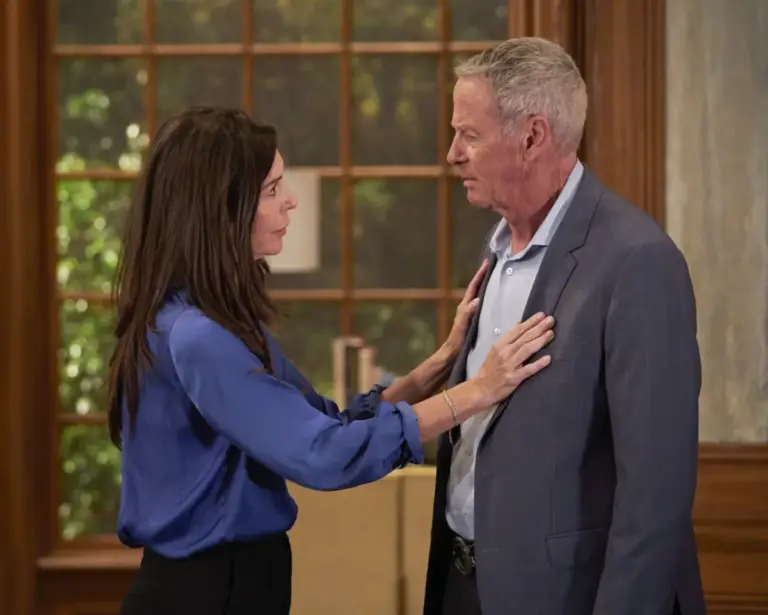
The writers’ room at General Hospital (GH) has masterfully orchestrated a series of narrative bottlenecks, forcing characters into unavoidable face-offs that have been months, and in some cases years, in the making.
The primary catalyst for this narrative friction involves Michael’s calculated blackmail of Willow, forcing her relocation to the Quartermaine gatehouse. This single strategic decision immediately revitalized dormant character dynamics. Willow finds herself sparring endlessly with the formidable Tracy and Brook Lynn, wearing the patience of Olivia thin, batting her eyes at her well-meaning ex Chase, and locking horns with Michael himself.
The pressure-cooker environment soon reached a boiling point when Willow confronted Nina regarding her escalation tactics:
Willow: "You warned me not to escalate. I was so stupid. If I hadn’t pushed so hard, maybe Kai and Trina wouldn’t have gotten involved."
The arrival of Kai, bearing a resignation letter and a newly discovered spine, delivered a long-awaited emotional payoff:
Kai: "I get that Drew is a jerk, but shooting him? I sat on this for months, but then you tried to take Michael’s kids away. I’m done."
Willow: "Walking away unscathed won’t be as simple as you think."
Kai: "Watch me."
Simultaneously, the fallout from Josslyn and Britt’s shared history regarding Jason yielded profound dramatic fruit. Josslyn wasted no time confronting Britt about her complicity:
Josslyn: "You knew Cassius was pretending to be Nathan and you said nothing. And then you told him I’m WSB."
Britt: "I’m sorry for what happened to you."
Josslyn: "No, it’s what you did to me."
While Britt attempted to defend her actions by claiming self-preservation and terminal illness, her justifications rang hollow. Every calculated move Britt made was designed to shield herself, regardless of the collateral damage inflicted upon Liesl, Lucas, Rocco, and Josslyn. This moral ambiguity makes Jason’s lingering devotion to Britt a difficult pill to swallow—a sentiment Josslyn articulated directly to Jason:
Josslyn: "Give her time. She’s going to sell you out the same way she did me."
Though Jason ultimately reaffirmed his commitment to Britt with a chaste hug, the narrative groundwork for future betrayal has been securely laid.
Perhaps the most culturally incisive smackdown involved Carly and Valentin delivering a harsh reality check to Lulu. Infuriated after tracking Charlotte on a boat with Danny, Lulu stormed over to Carly’s home to berate Valentin over his parental supervision:
Lulu: "It’s dark outside!"
Valentin: "That happens at nighttime."
Refusing to coddle Lulu’s frantic narrative regarding Charlotte’s supposed peril, Carly and Valentin urged her to redirect her obsessive energy toward her own personal development:
Carly: "You have nothing going on in your life except chasing after your children. It’s pushing them away."
Ironically, Charlotte being out after nightfall is the least of Lulu’s problems. The teenager is currently deeply embroiled in a blackmail scheme against Drew alongside Danny, cataloging Drew’s extensive indiscretions—including sleeping with Willow during her marriage to Michael, carrying on with Willow’s mother, and substance abuse scandals—leaving "Dark Charlotte" poised to unleash maximum chaos.
Supporting Context & Metrics: The Mechanics of Serialized Drama
To understand why certain storylines resonate while others flounder, we must examine the structural elements that underpin successful soap opera writing:
- Proximity and Containment: Drama requires friction. Confining adversarial characters within shared spaces (e.g., the Quartermaine estate, a hospital room, or corporate boardrooms) accelerates emotional combustion.
- History and Continuity: Audiences reject sudden romantic pairings or unearned personality shifts. Storylines that draw upon decades of established character history consistently outperform sudden narrative pivots.
- Pacing and Payoff: Long-tail storytelling—such as the multi-month buildup of Kai’s secret or Billy Abbott’s corporate crusade—rewards viewer loyalty, whereas rushed trysts diminish character integrity.
Official Statements & Character Dynamics Across Networks
Beyond the Gates: The Poisonous Web of Bill and Hayley
Over at Beyond the Gates (BTG), Bill Hamilton is slowly awakening to the treacherous reality of his marriage to Hayley, thanks largely to the persistent intervention of his ex-wife’s family. Hospitalization transformed Bill into a captive audience, paving the way for Vernon’s pointed bedside interrogation:
Vernon: "We all want you well, especially Hayley, I’m sure."
Bill: "Why you bringing up Hayley? Whatever you heard about Hayley running around with some other guy is wrong."
Vernon: "Cut the crap. You already told me you regret leaving my daughter. You trying to rekindle something?"
Though Bill denied harboring residual feelings for his former family, his actions suggest otherwise. Hayley’s Machiavellian maneuvers—including consorting with her cousin Randy (who is secretly aiding her in poisoning Bill)—are beginning to unravel. When Hayley later crawled into bed with a recovering Bill, setting off frantic alarms on his heart monitor, nurse Ashley intervened to enforce hospital protocol. Refusing to be managed, Bill insisted he was a healthy man, prompting Ashley to summon security and eject Hayley from the premises. A clear victory for narrative justice.
The Bold and the Beautiful: Chemistry Deficit and Unearned Infidelity
Conversely, The Bold and the Beautiful (B&B) faltered significantly by upending two established marriages solely to engineer a drunken office-couch tryst between Steffy and Carter. Out-of-the-blue plot twists rarely succeed when the participating characters share zero romantic history, palpable chemistry, or logical motivation—especially given Steffy’s historical disdain for her rival Hope’s former partners.
The immediate morning-after fallout highlighted the absurdity of the pairing:
Steffy: "Oh my God, we shouldn’t have done this. Where’s my phone? Finn texted me a million times!"
Carter: "We might need to talk about this."
Steffy: "No talking. I need to get out of here."
While Daphne gravitated back to Carter and Finn begged Steffy for a second chance, the secret threatens to implode their respective worlds. Carter’s desperate plea—"You can’t say a word to Finn. It was one stupid, drunken night"—was abruptly interrupted by Ridge’s entrance. While Ridge uncovering the truth and keeping it from Brooke offers a glimmer of soapy redemption, the entire arc suffers from a foundational lack of believability. Viewers are left bracing for the inevitable, trope-heavy pregnancy reveal.
Days of Our Lives: Stylistic Missteps vs. Compelling Family Feuds
Days of Our Lives (DAYS) offered a frustrating mixed bag. The dramatic potential of Rafe and Gwen’s jailhouse confrontations was severely undermined by heavy-handed dialogue. Gwen’s repetitive use of British colloquialisms—referencing the "bloody plane," being a "right bloody mess," avoiding "bloody sightseeing," fleeing her "ex bloody husband," and fearing "all the bloody horrific things EJ has done"—within a single episode felt less like character voice and more like caricature.
Despite the linguistic fatigue, Rafe introduced a compelling narrative door by dangling immunity before Gwen in exchange for testimony against EJ DiMera, teasing a delicious ex-partner showdown.
Meanwhile, the DiMera family matrix delivered genuine dramatic weight through a bitter cousin rivalry. Upon discovering that Lexie had been slowly deteriorating in the basement while information was withheld from him, Theo unleashed his fury upon Johnny:
Johnny: "How’s your mom?"
Theo: "If you actually cared, she’d have been in the hospital long before now."
Johnny: "I only found out a few hours ago."
This organic family friction proves that internal DiMera warfare remains a cornerstone of the DAYS appeal.
The Young and the Restless: Billy Abbott’s Corporate Crusade
True to form, The Young and the Restless (Y&R) relies on Billy Abbott to stir the narrative pot until it boils over. His relentless pursuit of the mysterious benefactor who rescued Chancellor Industries from financial ruin ultimately led him straight to his own father, establishing the Abbotts as the rightful owners of Chancellor.
Billy’s triumphant declaration met predictable pushback from his brother:
Billy: "I am going to run this company and enjoy every minute of it."
Jack: "You are deluding yourself."
Billy: "Thanks for the support, as always."
Recognizing Billy’s unstoppable momentum, the Abbott siblings braced for impact, with Ashley dryly observing: "The bloodbath begins."
True to form, a smug Billy marched into Cane and Lily’s offices demanding they vacate the premises. Rather than capitulating, Lily countered with a high-stakes proposal to Jack: Chancellor would repay John Abbott’s foundational loan with interest, allowing her to retain operational control—a proposition that visibly gave Jack pause.
Not content with destabilizing Chancellor, Billy concluded his week by locking horns with Victor Newman. "The Mustache" made his absolute displeasure known:
Victor: "You will not put your grubby little hands on Katherine’s legacy. I will destroy you first."
Future Outlook
As the autumn television calendar progresses, the trajectory of daytime dramas hinges entirely on writers’ willingness to honor character continuity and emotional logic.
- General Hospital and The Young and the Restless have established a masterclass in tension-building, ensuring that upcoming corporate battles, legal threats, and long-concealed secrets will yield maximum dramatic dividends.
- Beyond the Gates continues to find its footing by leaning into traditional melodramatic tropes with contemporary sharpness, keeping villains like Hayley on a precarious tightrope.
- Conversely, The Bold and the Beautiful and Days of Our Lives must course-correct away from forced dialogue crutches and unearned romantic pairings if they hope to retain critical viewer trust.
Ultimately, when characters are permitted to poke the bear with authentic motivation, the audience reaps the rewards of unforgettable, high-octane daytime drama.