Executive Overview
What do NFL icon Tom Brady, boundary-pushing rapper Rico Nasty, and downtown nightlife icon Sophia Lamar have in common? Until very recently, the answer was practically nothing. Yet, in the high-stakes chess match of contemporary luxury fashion, they now share a marquee billing as the faces of Gucci’s sprawling Fall/Winter 2026 "Primavera" campaign.
Flanked by a generational super-cast that includes pop royalty Shawn Mendes, BTS vocalist Jin, aespa powerhouse Ningning, supermodel archetype Kate Moss, and trans-icon breakout star Alex Consani, this ensemble represents a seismic realignment for one of Italy’s most storied fashion houses.
Under the creative direction of Demna, Gucci has undergone a radical metamorphosis. Known for a design philosophy that is slick, hyper-sexed, unapologetically fast, and larger-than-life, Demna has consistently held a mirror up to the anxieties of the digital age. He has interrogated the artificial intelligence-driven homogenization of faces, weaponized the sex appeal that underpins the luxury economy, and shut down the beating heart of Manhattan—Times Square—in a dazzlingly disruptive display of cultural panopticon dominance.
Yet, with the Primavera campaign, Demna has pivoted. In a surprising left turn that subverts expectations of relentless irony and technological spectacle, the designer has turned his lens toward a deeply human subject: the radical, redemptive art of connection and love.
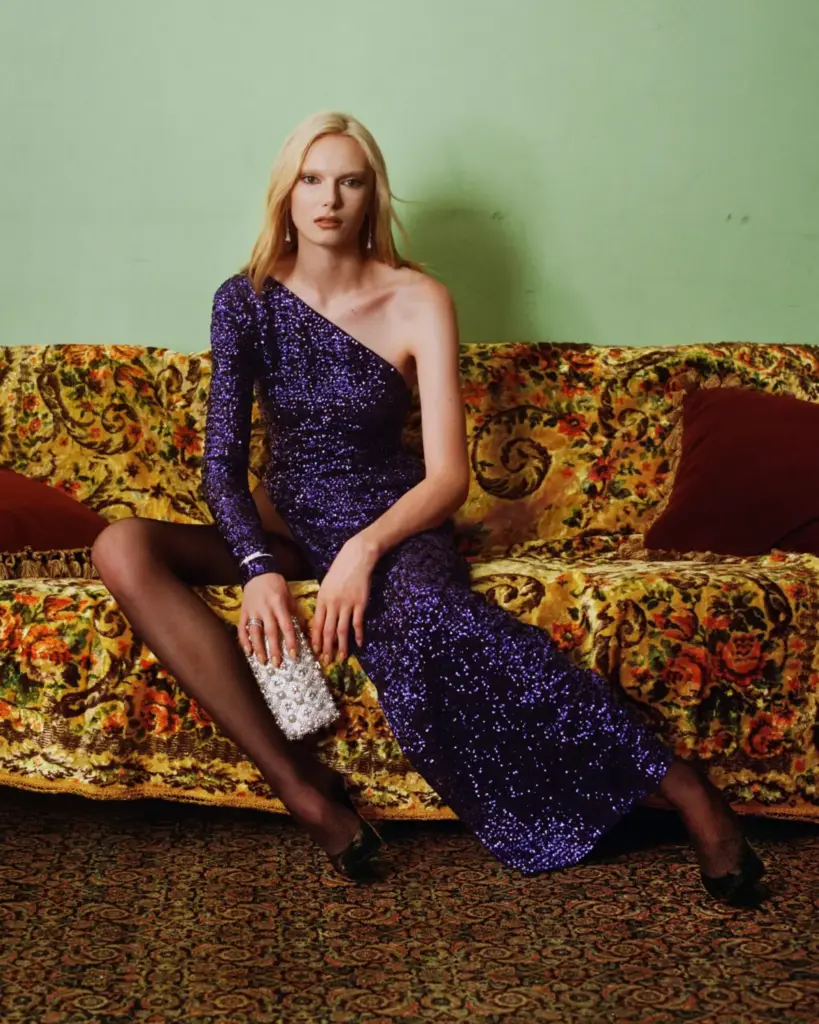
Captured through the lens of photographer Michal Chelbin, the campaign’s ten central figures invoke the chiaroscuro lighting, classical angles, colors, and textures of Renaissance portraiture. Yet, this high-art homage is brilliantly disrupted by the unmistakable urgency of the present moment. Chelbin’s subjects are swathed in the ultra-modern, tight jersey tops, buttery tailored leather jackets, and blinding sequined party dresses that define Demna’s vision for the house.
This in-depth investigation explores the cultural mechanics of the Fall/Winter 2026 Primavera launch, charting its lineage from the museum-like runway debut in Milan to its cinematic centerpiece, and assessing what this pivot means for the future of luxury storytelling.
Detailed Chronology: From the Marble Busts of Milan to the Global Campaign
The February Runway Debut
The narrative of Gucci Primavera began earlier this year in February, unfolding inside a cavernous, museum-like venue populated by looming marble busts—a physical manifestation of classical permanence colliding with transient modernity. Front-row observer Shawn Mendes watched alongside a star-studded audience as a diverse pantheon of models marched down the runway.
The casting was as eclectic as the clothing was singular. It was a space where the goth-adjacent allure of Gabbriette coexisted with the svelte, effortless cool of Emily Ratajkowski and the fiercely enduring, magnetic sex appeal of Kate Moss. The clothes themselves offered a masterclass in high-low juxtaposition: casual-yet-sculptural silhouettes that signaled Demna’s democratization of Gucci without sacrificing a single ounce of opulence.
The Stills: Renaissance Meets Modernity
Fast-forward to the rollout of the still-life campaign imagery shot by Michal Chelbin. The execution is a masterwork in historical pastiche and contemporary subversion. Chelbin pulls inspiration from the psychological depth of Renaissance painting—evoking the masterworks of Caravaggio and Rembrandt through dramatic light shafts, deep shadows, and rich, jewel-toned velvets and brocades.
Yet, this historical gravitas is anchored firmly in the 21st century by the sheer diversity of the cast. Tom Brady’s clean-cut, all-American crispness is juxtaposed against Rico Nasty’s untamed, avant-garde hip-hop aesthetic. Sophia Lamar brings the gritty, archival glamour of New York’s underground drag and club scene to the mix, while K-pop titans Jin and Ningning inject an electrifying, globalized youth culture that commands the attention of millions across digital ecosystems.
The Pièce de Résistance: The Cinematic Masterpiece
While the print and digital stills offer a breathtaking catalog of faces, the true crown jewel of the launch is its accompanying video campaign—a cinematic vignette that has set industry circles ablaze.
Kate Moss, who does not appear in the static portraits, takes center stage in a narrative-driven film directed by legendary music video visionary Johan Renck. Renck, whose iconic filmography includes Madonna’s "Hung Up" and Kylie Minogue’s "Love At First Sight," brings his signature atmospheric tension to the project.
Set within a moodily lit, wood-paneled room filled with an awkward assembly of strangers, Moss delivers a mesmerizing, deadpan lip-sync performance of Chris Isaak’s timeless torch song, "Wicked Game."
The tension in the room is palpable at the outset. Attendees exchange furtive glances while Moss settles into her performance, her movements at once vulnerable and commanding. As she reaches the song’s emotional crescendo—delivering the immortal, melancholic lyric “Oh I, don’t wanna fall in love”—the psychological dynamic in the room inverts entirely. The melancholy serves as a catalyst. The strangers begin to pair off, shedding their isolation, and finding genuine human connection against all odds.
Industry insiders have been quick to note the deliberate homage to Renck’s legendary 2003 music video for The Knife’s "Pass This On," which similarly utilized a dimly lit, intimate room and a blonde protagonist lip-syncing for a hesitant crowd. By translating this indie-sleaze cinematic language into a global luxury campaign, Gucci has weaponized nostalgia not as a marketing gimmick, but as an emotional bridge.
Supporting Context & Metrics: Decoding Demna’s Sociological Strategy
To fully grasp the weight of the Primavera campaign, one must examine the broader socio-economic and cultural metrics driving Demna’s tenure at Gucci. The luxury market in 2026 is grappling with "campaign fatigue." Consumers—particularly Gen Z and Millennials—have grown increasingly skeptical of traditional, sterile glossy advertisements featuring homogenized casts shot against neutral backdrops.
[Traditional Luxury Advertising] -> Homogenized Casts -> Sterile Studio Backdrops -> Consumer Fatigue
[Demna's Gucci Strategy]        -> Eclectic Subcultures -> Narrative Cinematic Depth -> High Digital Engagement
Demna’s strategy relies on radical juxtaposition and high-engagement narrative framing. By assembling an ensemble that spans disparate cultural quadrants—athletes, rappers, supermodels, K-pop idols, and underground icons—Gucci is not merely selling clothes; it is engineering a cultural micro-climate.
- Cross-Demographic Reach: The inclusion of BTS’s Jin and aespa’s Ningning guarantees unprecedented dominance across Asian digital markets, where luxury engagement metrics are heavily skewed toward idol-led marketing.
- Legacy Meets Subculture: Pairing Kate Moss and Tom Brady provides institutional credibility and mainstream American/European anchoring, while Rico Nasty and Alex Consani inject contemporary avant-garde credibility.
- The Video Economy: In an era where short-form video dominates TikTok, Instagram Reels, and YouTube Shorts, Johan Renck’s narrative-driven cinematic piece is custom-built for algorithmic sharing, driving organic view loops far exceeding standard runway footage.
Furthermore, this campaign serves as a sociological study of post-pandemic isolation. While Demna is universally recognized as an architect of spectacle—exemplified by his staggering decision to shut down Times Square for a previous presentation—Primavera reveals a softer, more urgent underlying thesis: humans crave IRL (in real life) connection. And if we are going to connect, Demna insists we do it while draped in gold lamé trousers and sparkly micro-mini dresses.
Official Statements and Industry Reception
While formal press statements from luxury conglomerates are often guarded, the underlying sentiment from the house of Gucci emphasizes a return to the emotional core of fashion design.
In pre-collection briefings, representatives for the brand noted that the Primavera collection was conceived as an antidote to digital alienation. "Fashion has spent the last half-decade trying to outrun the screen," one senior brand strategist noted off-the-record. "Demna’s approach with this campaign is to lean directly into the awkwardness, the tension, and ultimately the beauty of physical proximity."
Critical reception has been overwhelmingly positive. Fashion critics across major publications have lauded the campaign for its audacity. By casting individuals who carry their own distinct mythologies—such as Tom Brady’s post-athletic reinvention and Alex Consani’s meteoric rise as a trailblazing trans supermodel—Gucci has bypassed the traditional hierarchy of modeling in favor of a true "pantheon of characters."
The internet’s response has been equally fervent. Within hours of the campaign’s drop, clips of Kate Moss lip-syncing "Wicked Game" amassed millions of views across platforms, sparking viral discourse, meme iterations, and immediate demand for the collection’s statement accessories, notably the updated Horsebit heels and tailored leather outerwear.
Future Outlook: Where Gucci Goes From Here
The Fall/Winter 2026 Primavera campaign marks a watershed moment for Demna’s era at Gucci. It proves that the designer’s creative vocabulary extends far beyond satirical streetwear commentary and dystopian spectacles. By proving he can handle intimacy, emotional resonance, and historical pastiche with the same technical precision he brings to high-concept stunts, Demna has solidified his status as a defining creative force of the decade.
Looking ahead, the success of Primavera sets a high-water mark for the brand’s upcoming seasons. The hybrid casting model—blending mainstream icons with subcultural disruptors—will likely become the gold standard for luxury houses attempting to capture fragmented global audiences.
As consumers continue to navigate an increasingly digital, AI-saturated reality, Gucci’s message is clear: the future of fashion does not lie in the virtual ether, but in the friction, warmth, and electricity of human bodies colliding in a room—preferably while wearing head-to-toe Demna-designed opulence.
The Gucci Primavera collection is now officially available for purchase on gucci.com and across global flagship boutiques.